
WHAT IS TIGERBOB?
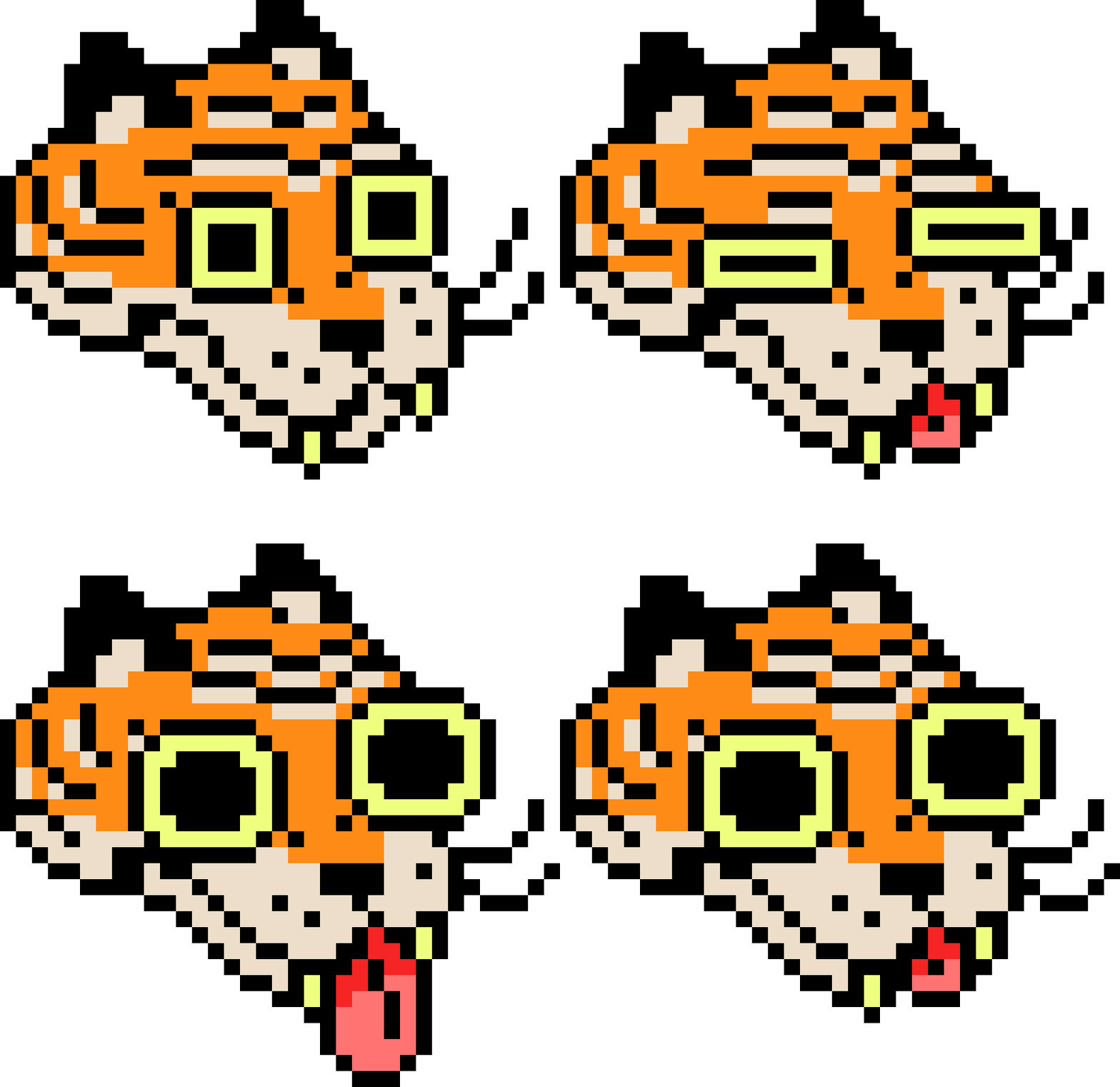
Tigerbob is an artist-founded, artist-led fine art, fashion, and character brand. The purpose of the brand is to highlight the one-of-a-kind work of the artist, Gossamer Rozen, and to scale up the work with sustainable manufacturing practices and collaborations.Tigerbob, the titular character, takes the form of a pixel motif and hand-drawn tiger head. The design appears in apparel, hand-drawn illustrations, sculpture, accessories, digital art and more.Tigerbob’s existence is active resistance against the systemic issues that have created an unfair, unsustainable creative economy by empowering the artist to retain full creative control of the brand and its products and services.Among Tigerbob's many projects is Gossamer's formal studio practice, which explores personal questions about knitting as an art form versus its domestic connotations, and draws connections between grid inputs and the digital and physical outputs they produce.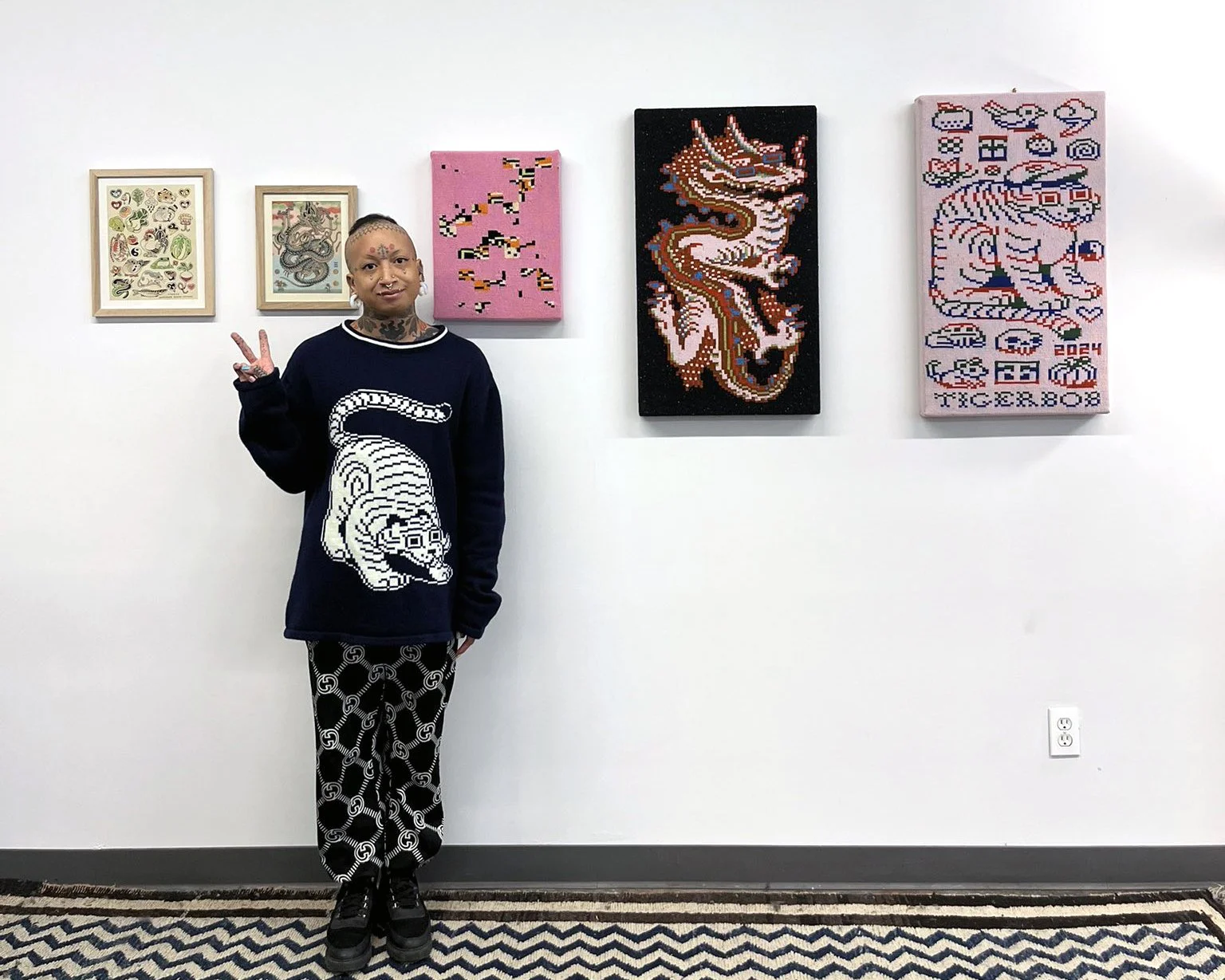
BUSINESS & PROJECT STRUCTURE
Tigerbob is the platform for the artist Gossamer Rozen, providing creative freedom and exploration. In turn, the artist creates art objects and programs that support the growth of the business. The push and pull of the artist’s unbound creativity versus the requirements needed to maintain a sustainable business becomes a model constraint that guides the artist, the business, and the work produced.The work is presented in-person at the studio, based in New York, and online via the online store.Ongoing Projects
Evolving explorations following a product line or processClosed Projects
Specific concepts utilizing multiple processes presented as complete art projects
THE TIGERBOB MOTIF
Tigerbob unifies the work of Gossamer Rozen under the banner of their signature tiger head, a logo originally designed for their tattoo practice, which has since been iterated in the form of illustrations, sculptures, fiber art, and digital collectibles.Designed primarily for knitted textiles, the distinct square shapes of the tiger motif allow the artist to resize, adjust, and reinterpret the Tigerbob tiger head in a multitude of designs that transcend medium - from pixel art to knitting pattern.The Tigerbob motif is also realized in a hand-drawn illustrative style and a soft sculpture form.
LOGO DESIGN
Inspired by their love for cats, Gossamer began drawing tigers and other animals for their tattoo flash (pre-drawn designs) in a similar three-quarter view starting in early 2019. The evolution of the Tigerbob motif continues to be influenced by Gossamer’s hand-drawn practices, including their existing tattoo practice, tattoo flash designs, and illustration projects (Tigerbob Bestiary, Mrammou Project, Grimoire).Gossamer’s first tiger design was based on a Korean rendition of the tiger illustrated in 2019. Since then, Gossamer tattooed many versions of big cats (and sometimes canines) in this style. Execution of the work is inspired by American Traditional tattoos and medieval European and Asian art, particularly work that makes use of atmospheric perspective with flora and fauna like Korean Minhwa, Japanese folding screens, Chinese hand scrolls, and French Aubusson tapestries.Learn more about the visual language of Tigerbob and Gossamer Rozen here.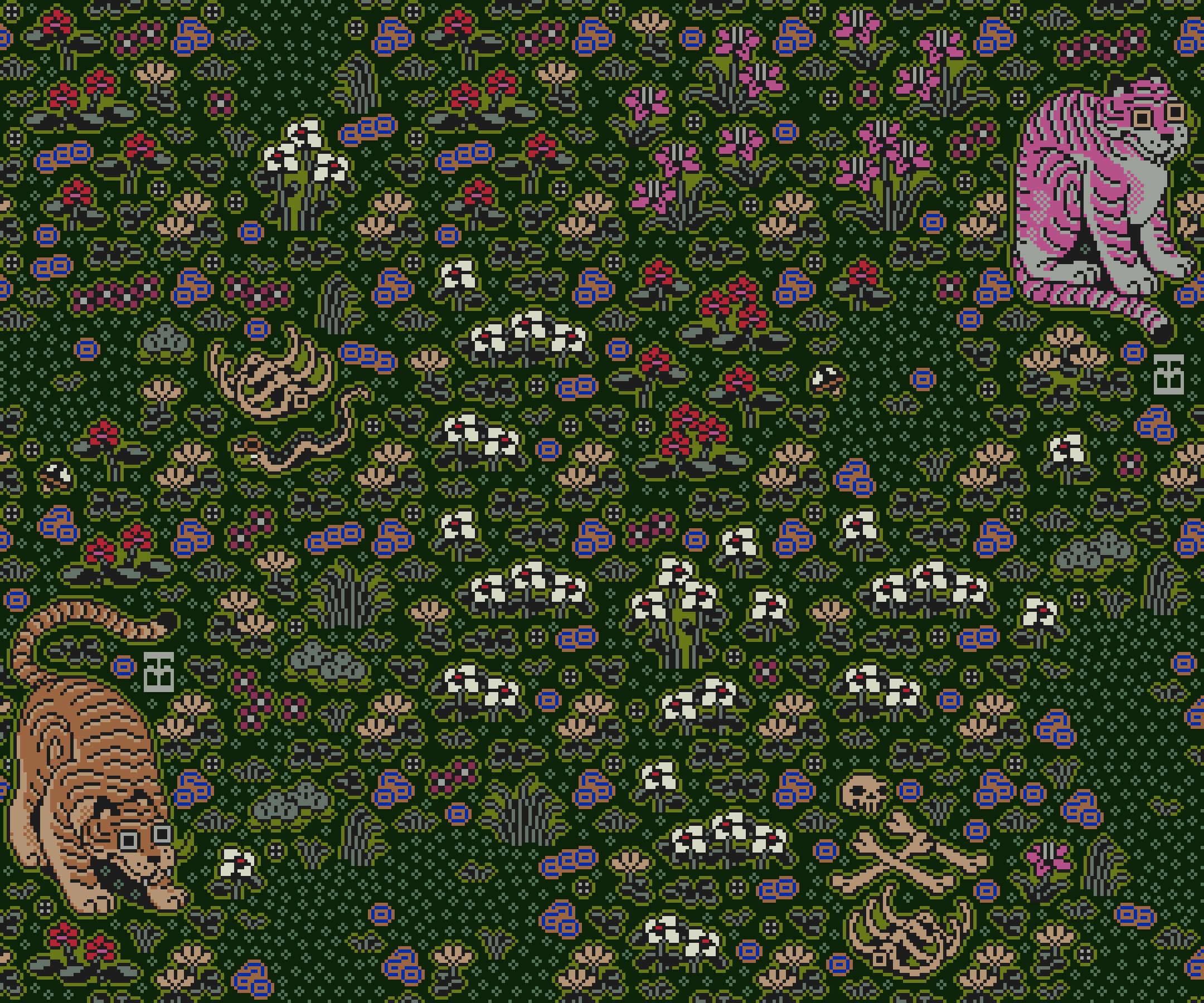
NARRATIVE & EXPLORATION
Tigerbob is an otherworldly creature who resides in the Elysian Garden alongside other unnatural beasts and nature spirits. A respected beast spirit of the garden, Tigerbob was one singular creature until an event caused it to be split into thirteen different equal dimensions and one thousand pieces. Today, these thirteen Tigerbob breeds live on thirteen mountain peaks in the Elysian Garden.The story of Tigerbob is preceded by a collection of illustrations called Grimoire made 2017-2019. The lore of Tigerbob is explored organically through art products and experiences created by Gossamer Rozen in the form of interactive art games (digital & physical), wearable art, illustrations, tapestries & more.
GOSSAMER ROZEN
Founder of GROZEN FA LLC and Tigerbob, Gossamer Rozen is a nonbinary, femme, transgender, Filipino and African-American fine artist and tattooer. They have been creating work professionally since 2008, exploring a variety of media including illustration, tattooing, and fiber art.An alum of Massachusetts College of Art and Design (2012), Gossamer is mostly self-taught in illustration, fashion, and tattooing, and has a formal art education in sculpture. Gossamer’s sculpture explorations focused on hand-sewn garments, plush toys, and ornaments which stem from childhood interests in fashion, video game, and toy design.Gossamer's work primarily explores their identity and heritage, drawing inspiration from East Asian contemporary art and folklore, mythology, religion and spirituality, and old world textiles. The work is process-oriented and the subject matter reflects soothing and reflective moments in life, exploring nature themes and relationships with animals.Visit the artist’s website for more projects made independently from Tigerbob, including Gossamer's tattoo practice.