MACHINE KNITTING
2022 - Ongoing
Statement
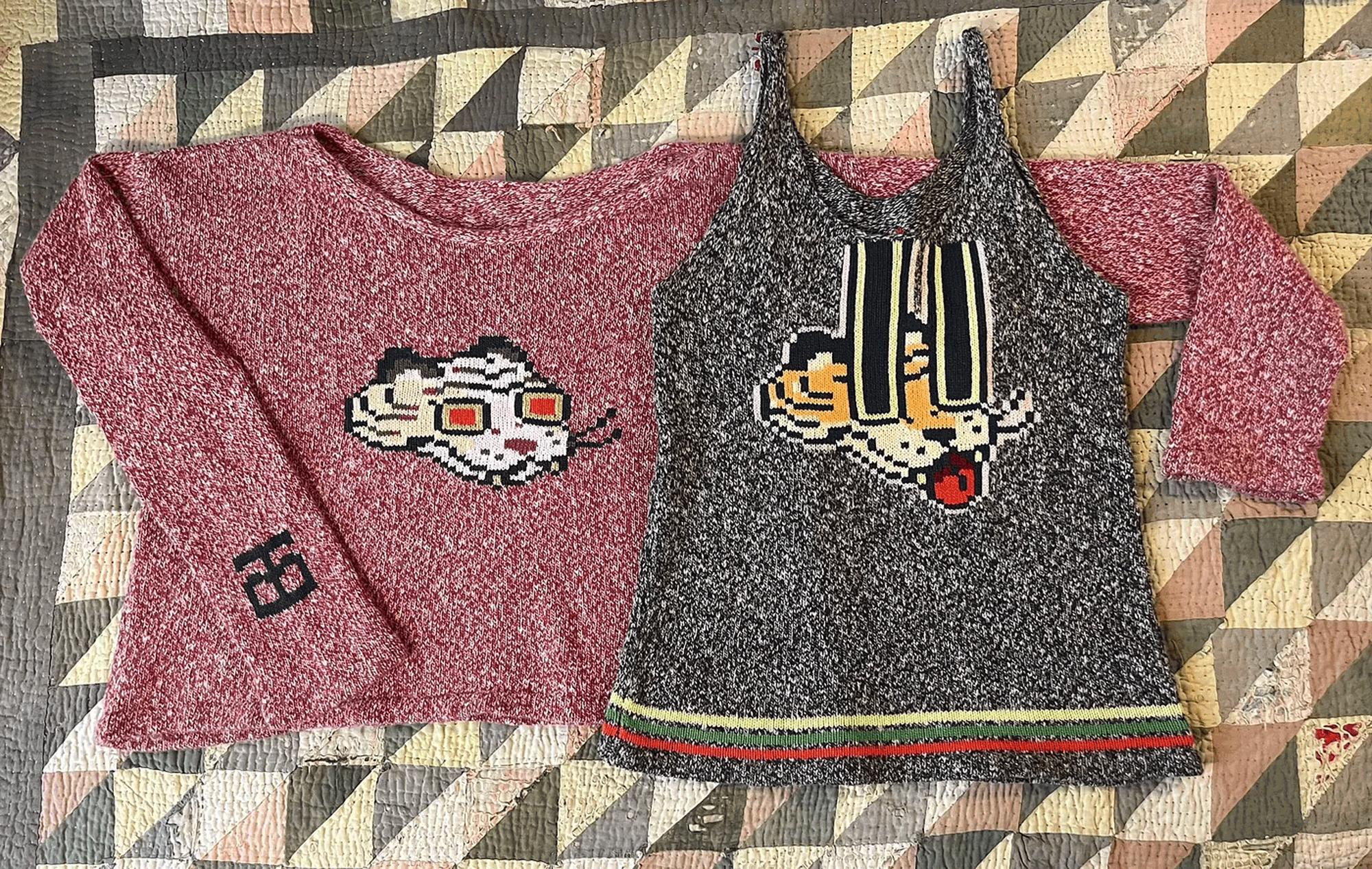
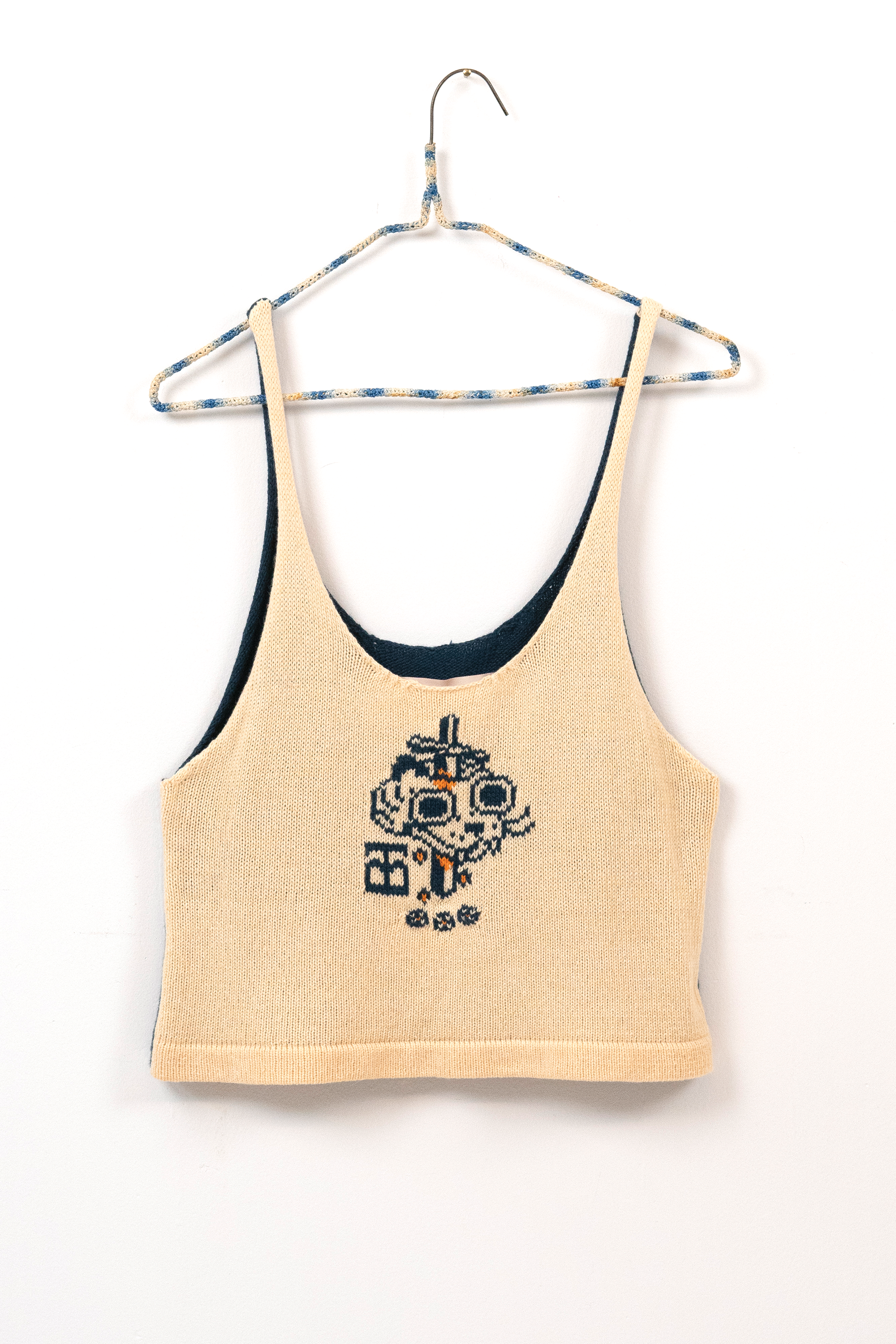
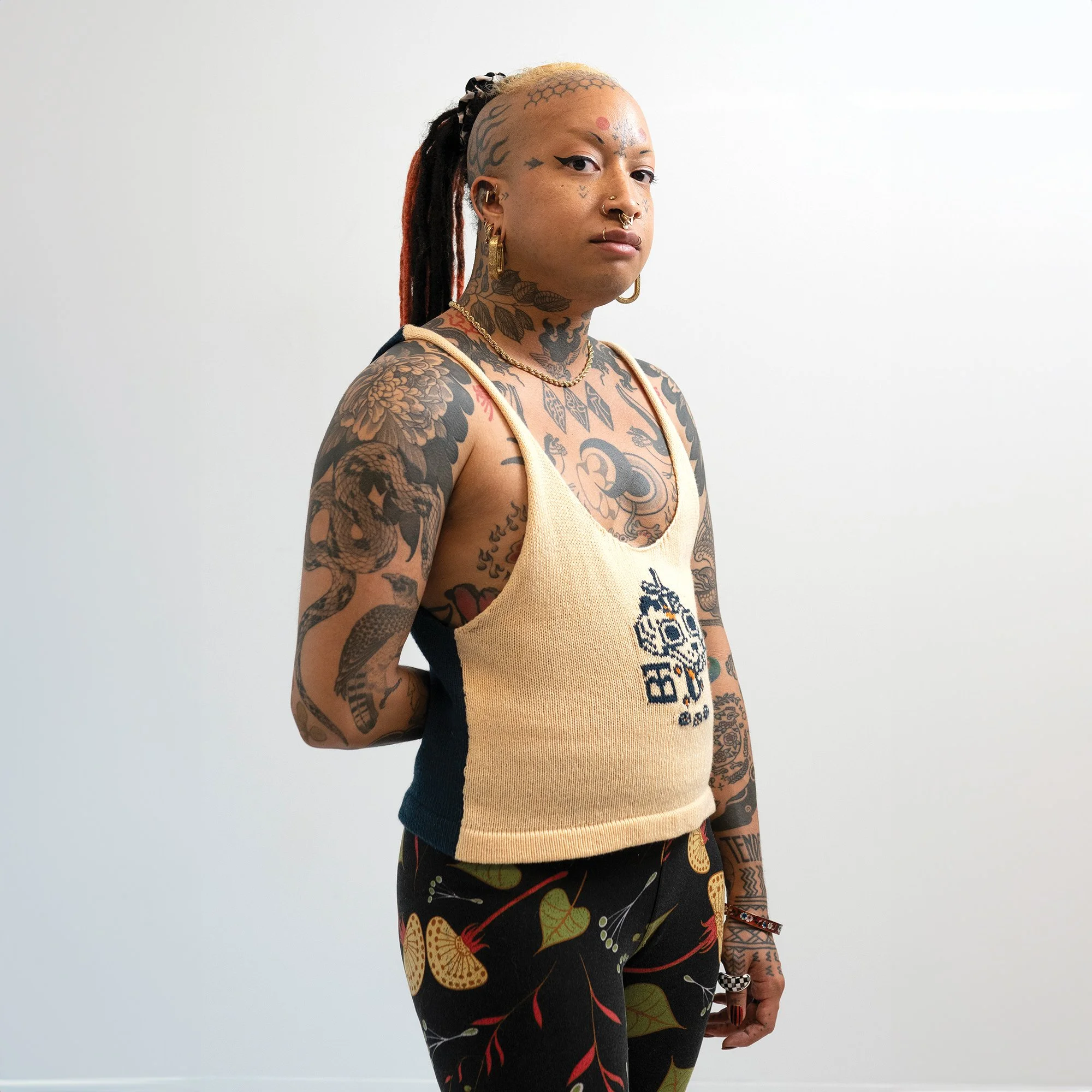
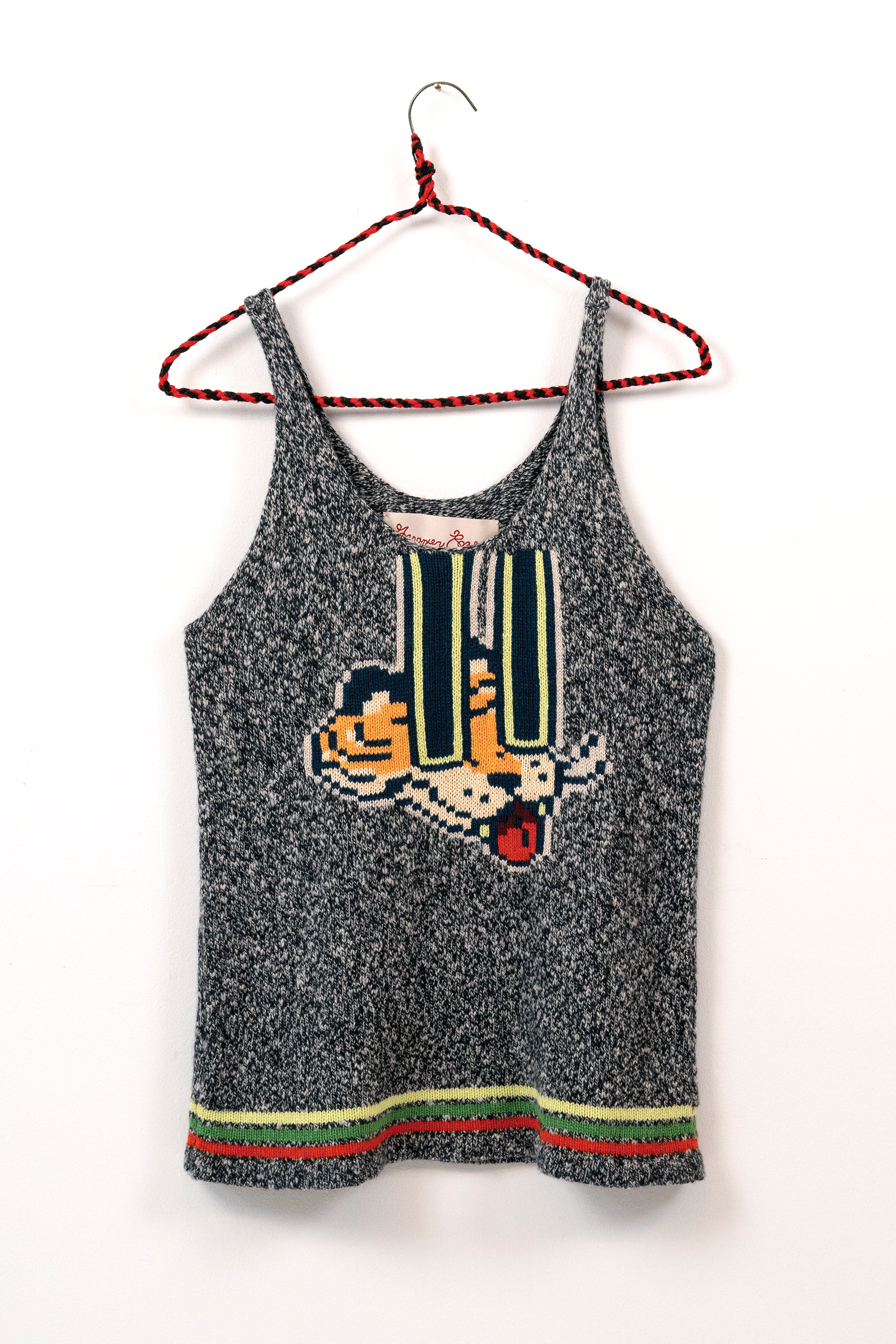
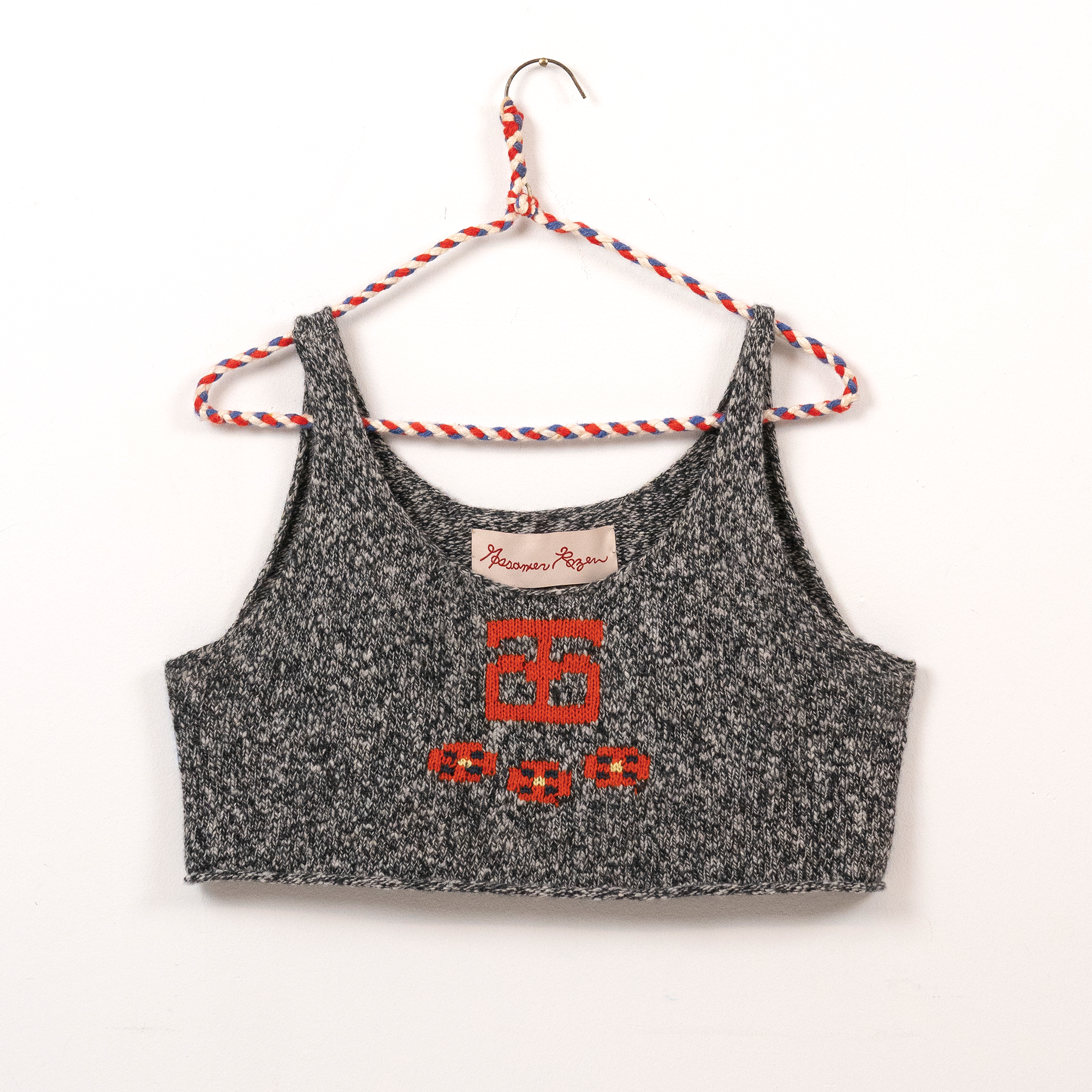
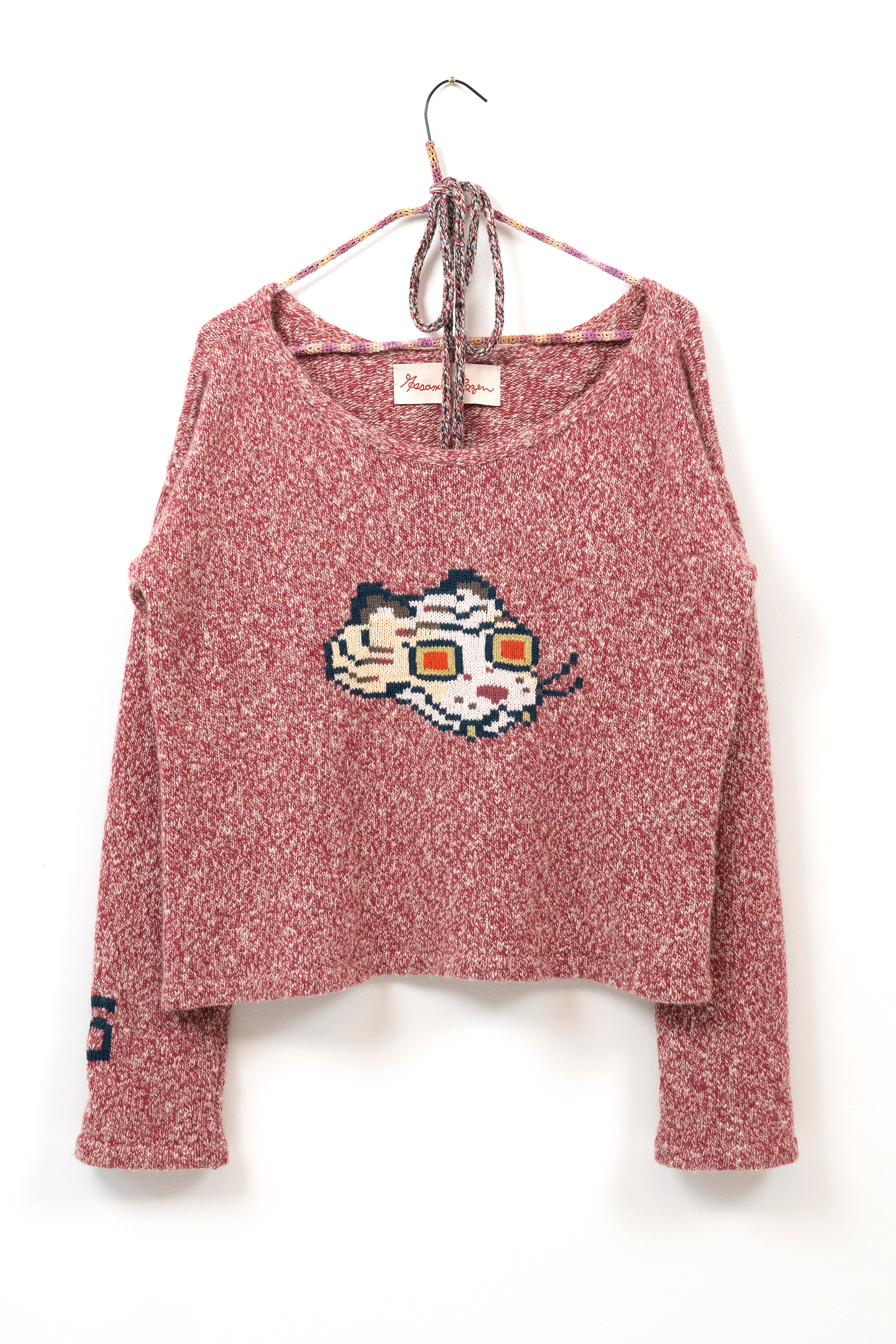
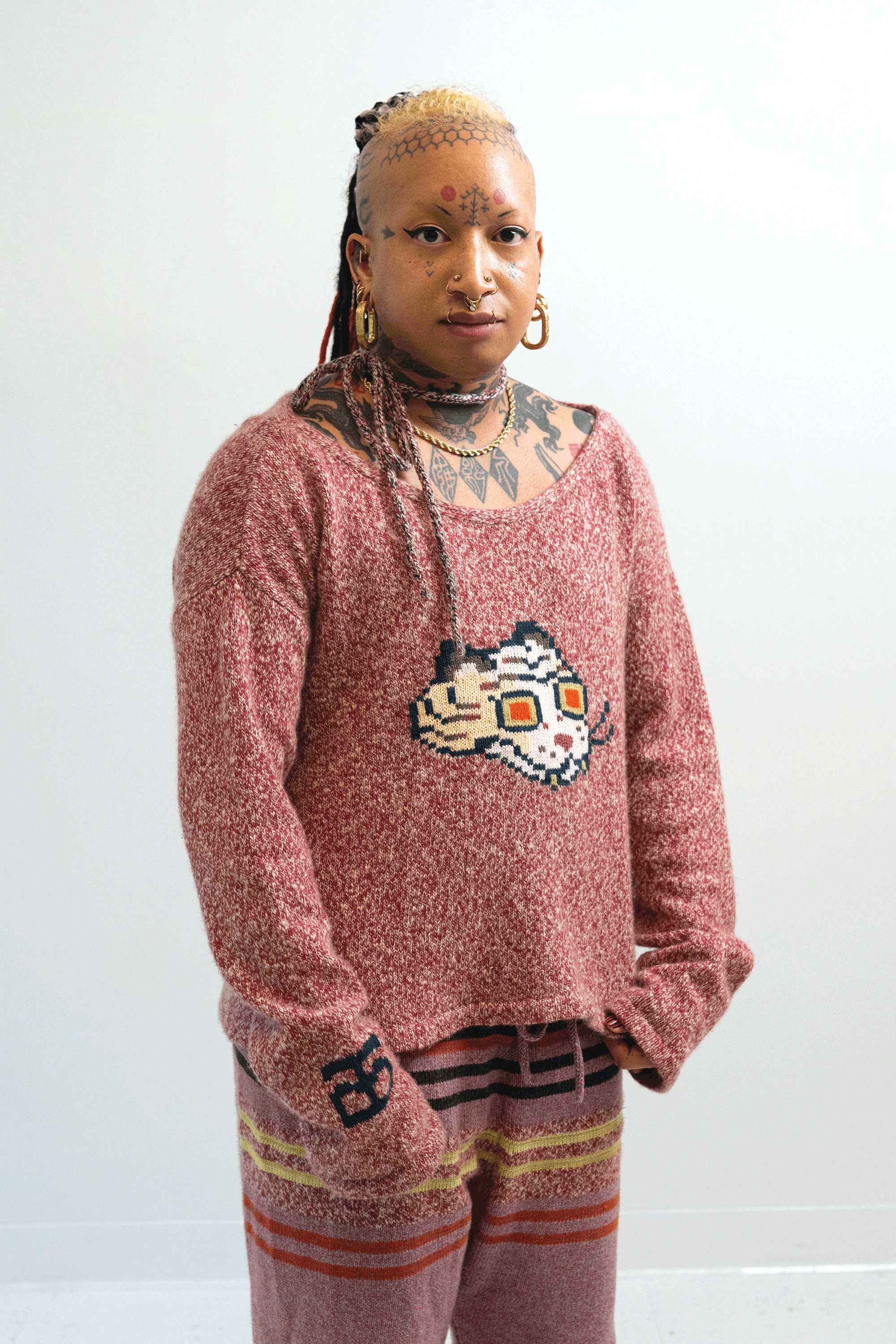
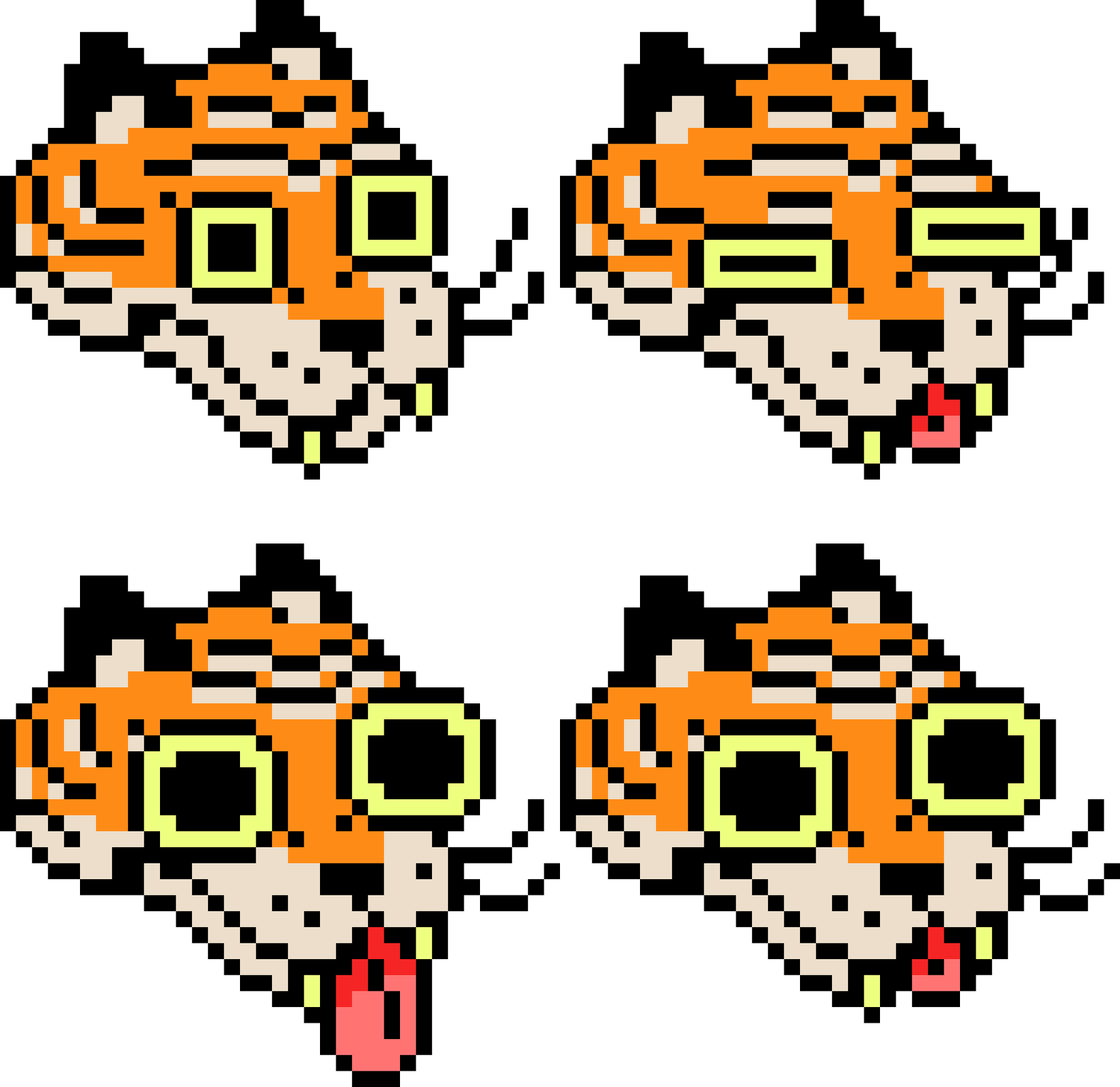
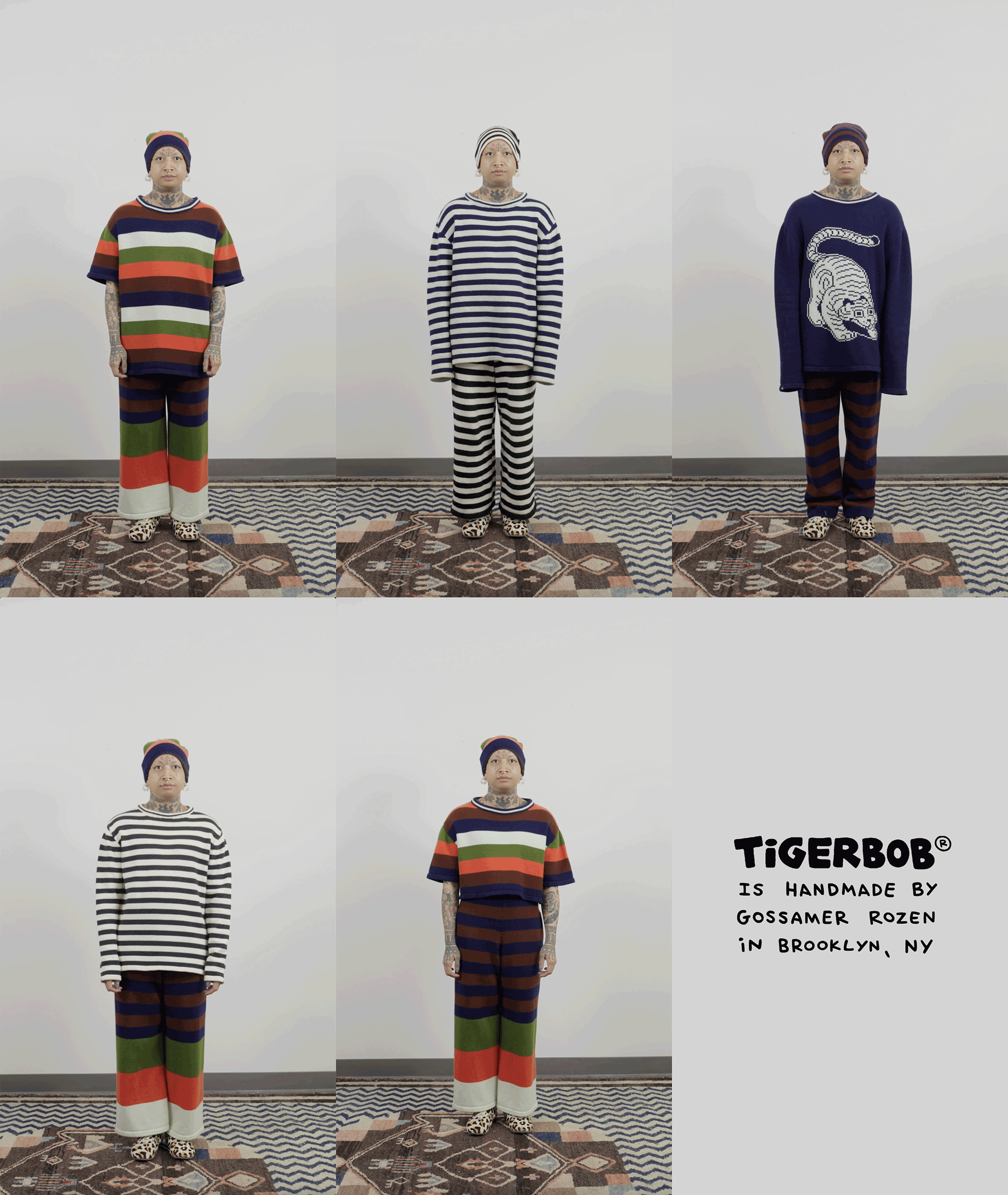
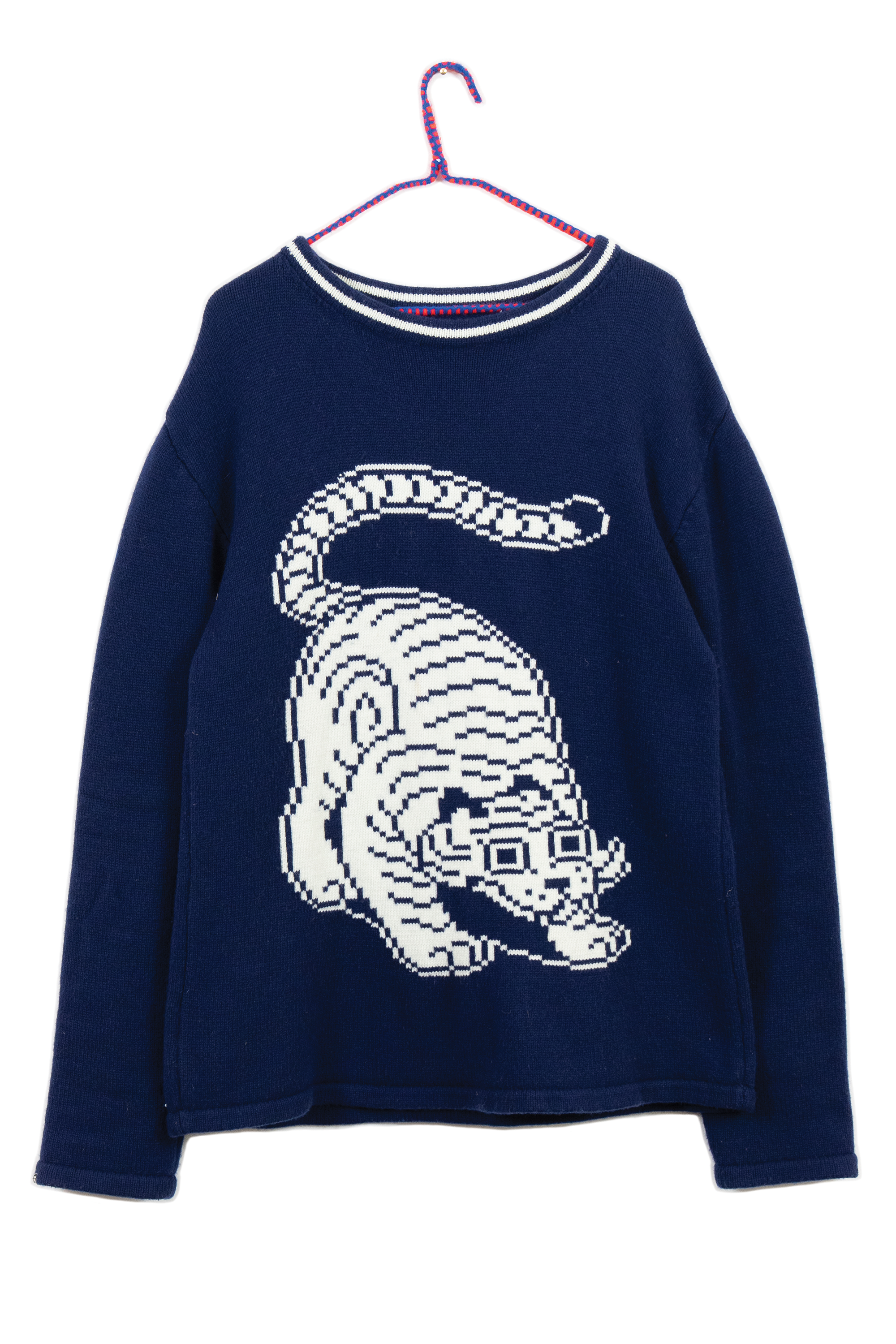
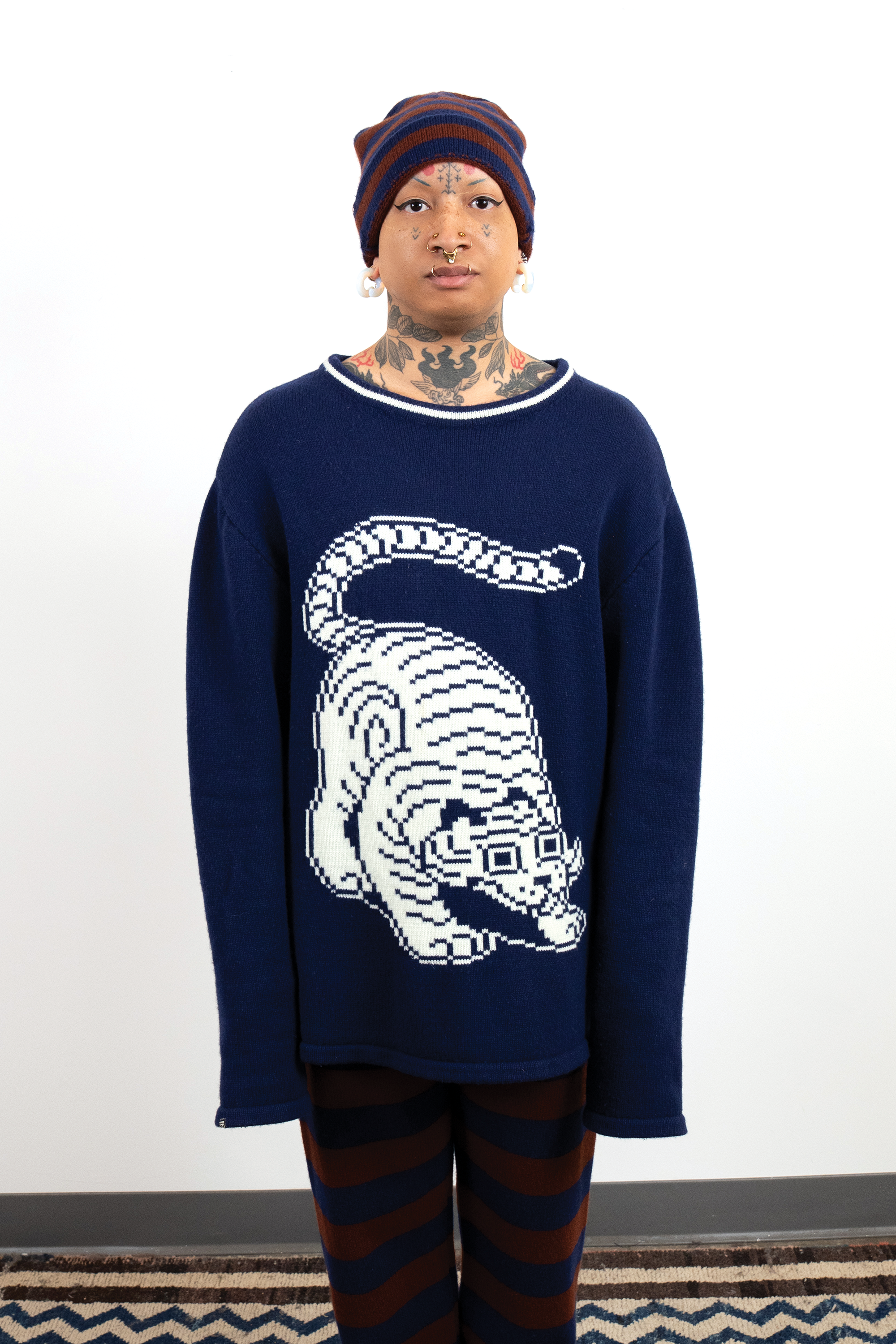
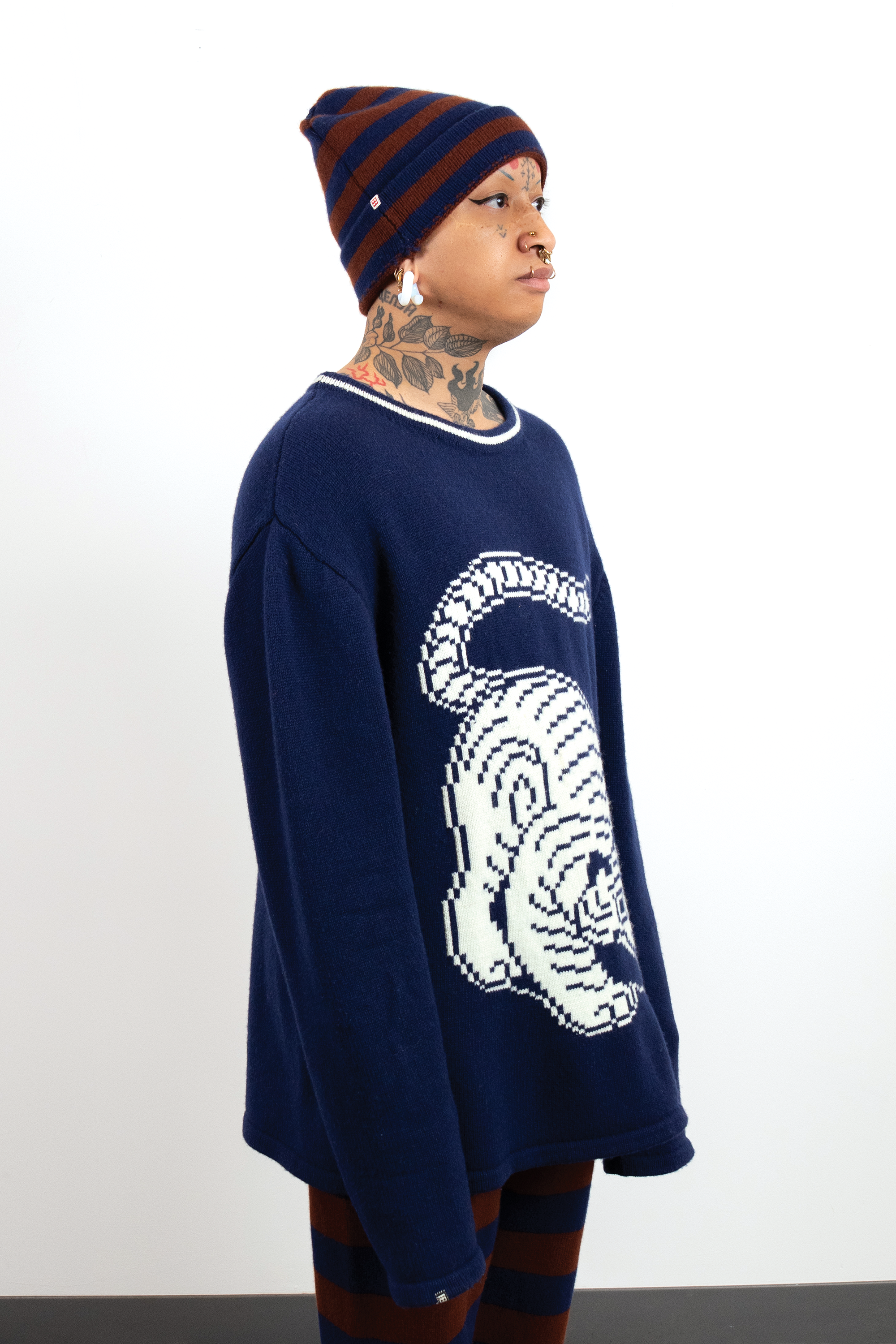
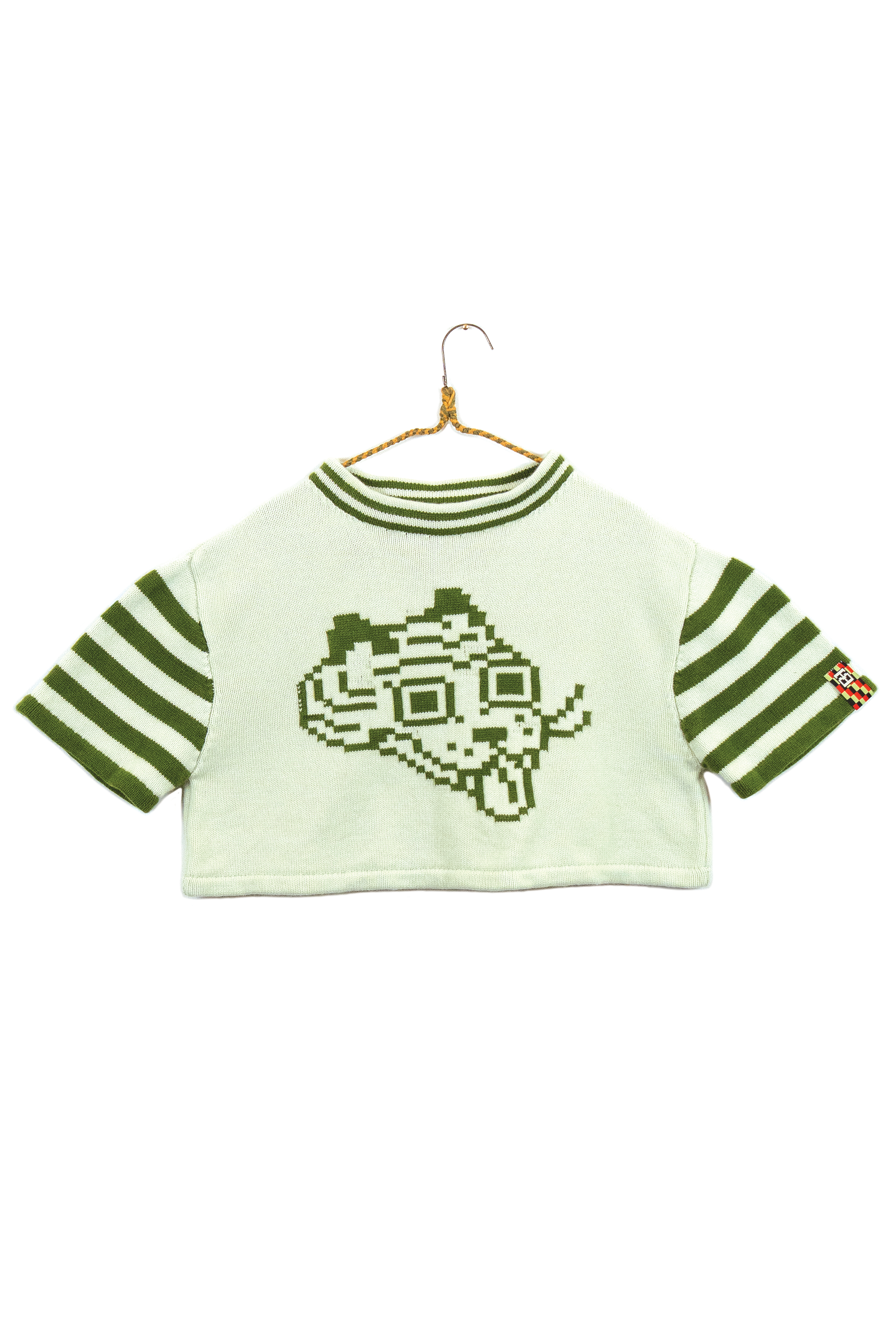
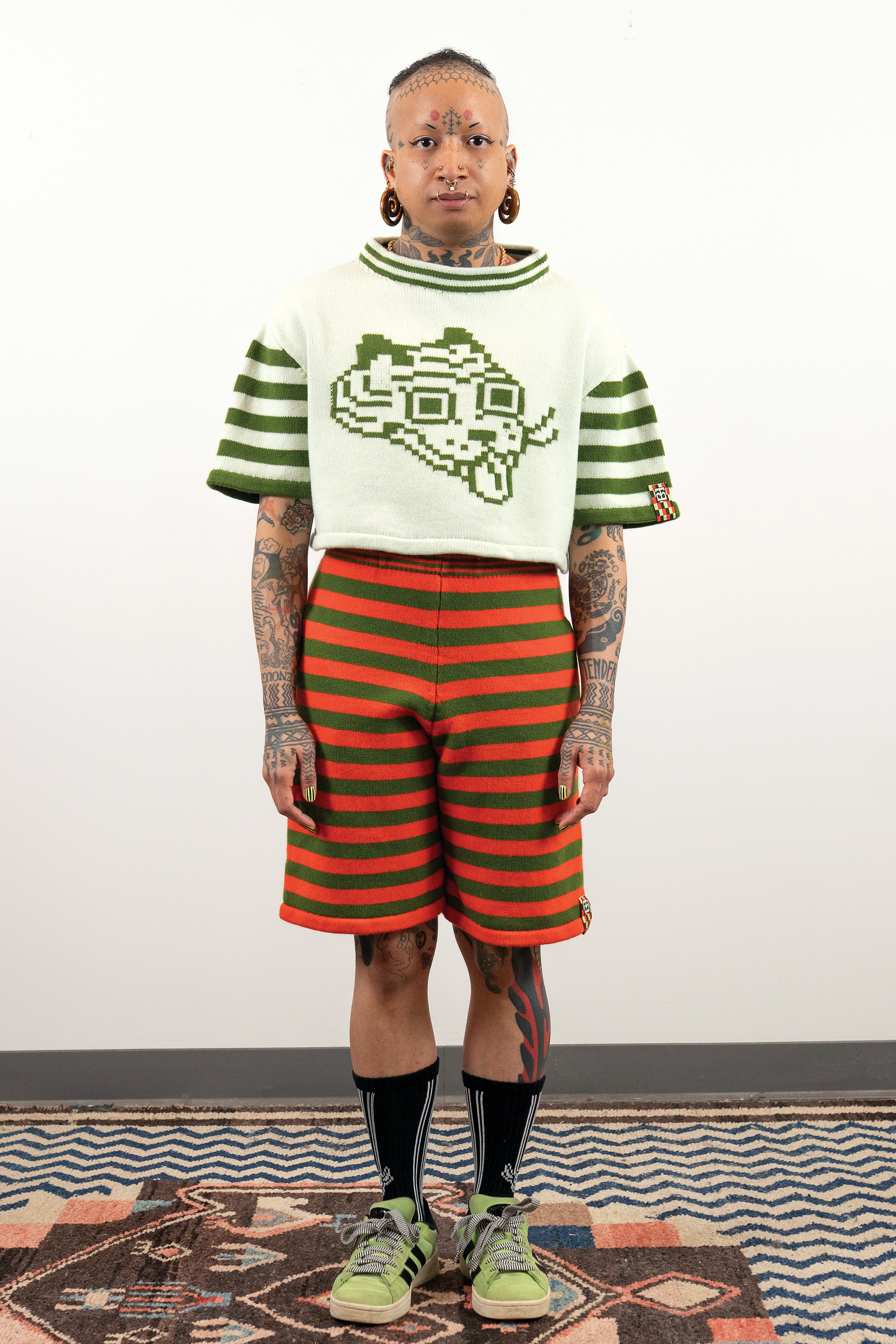
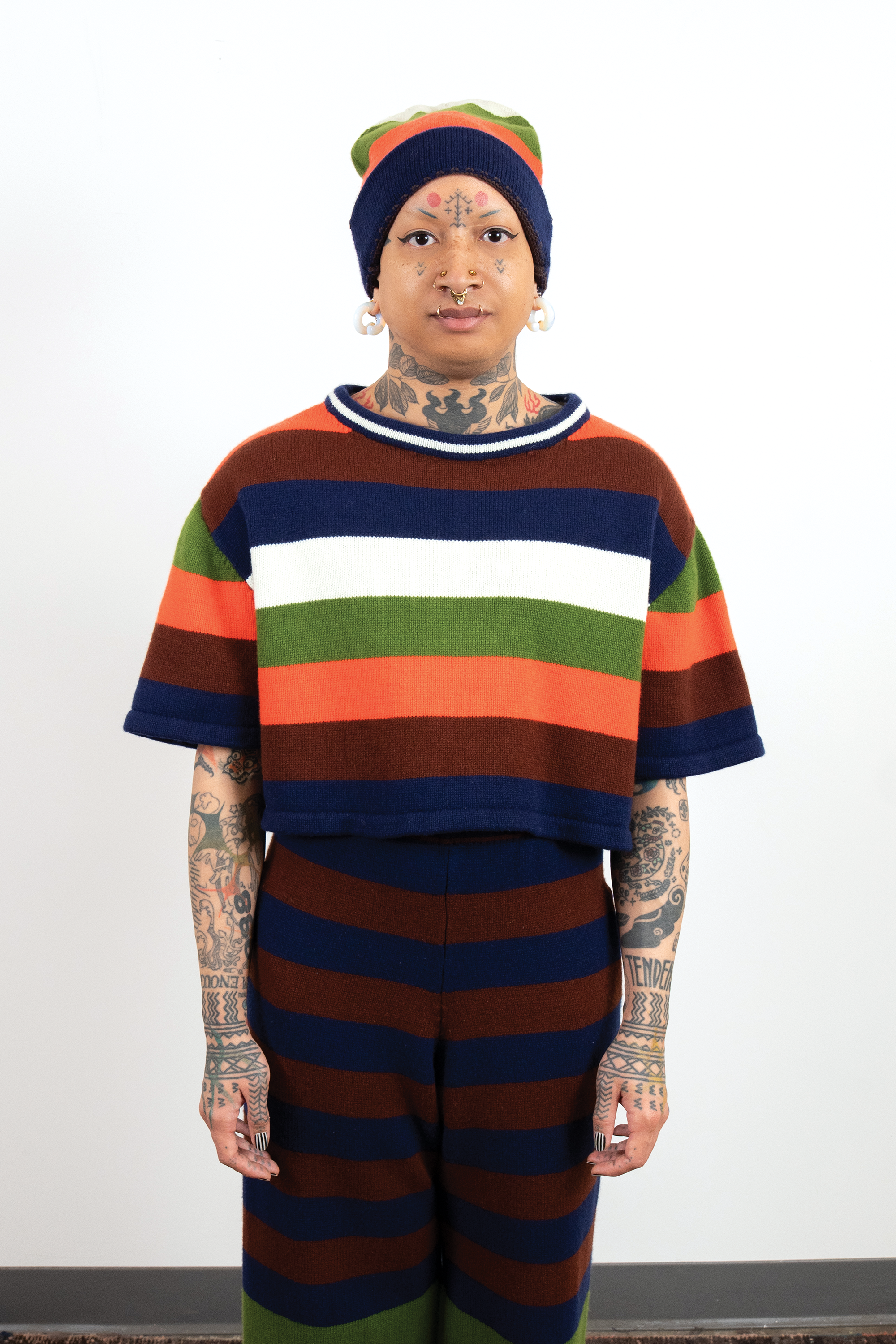
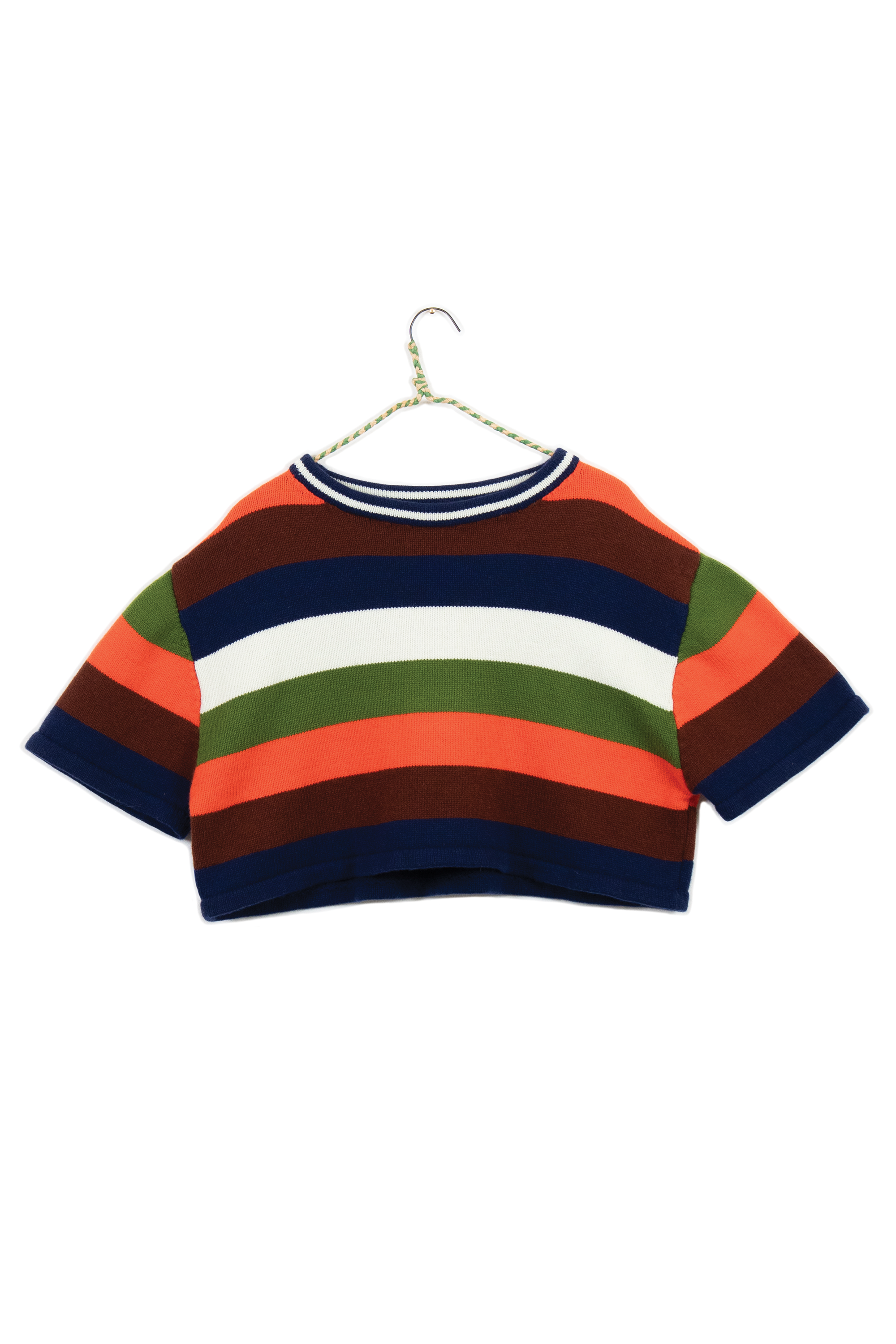
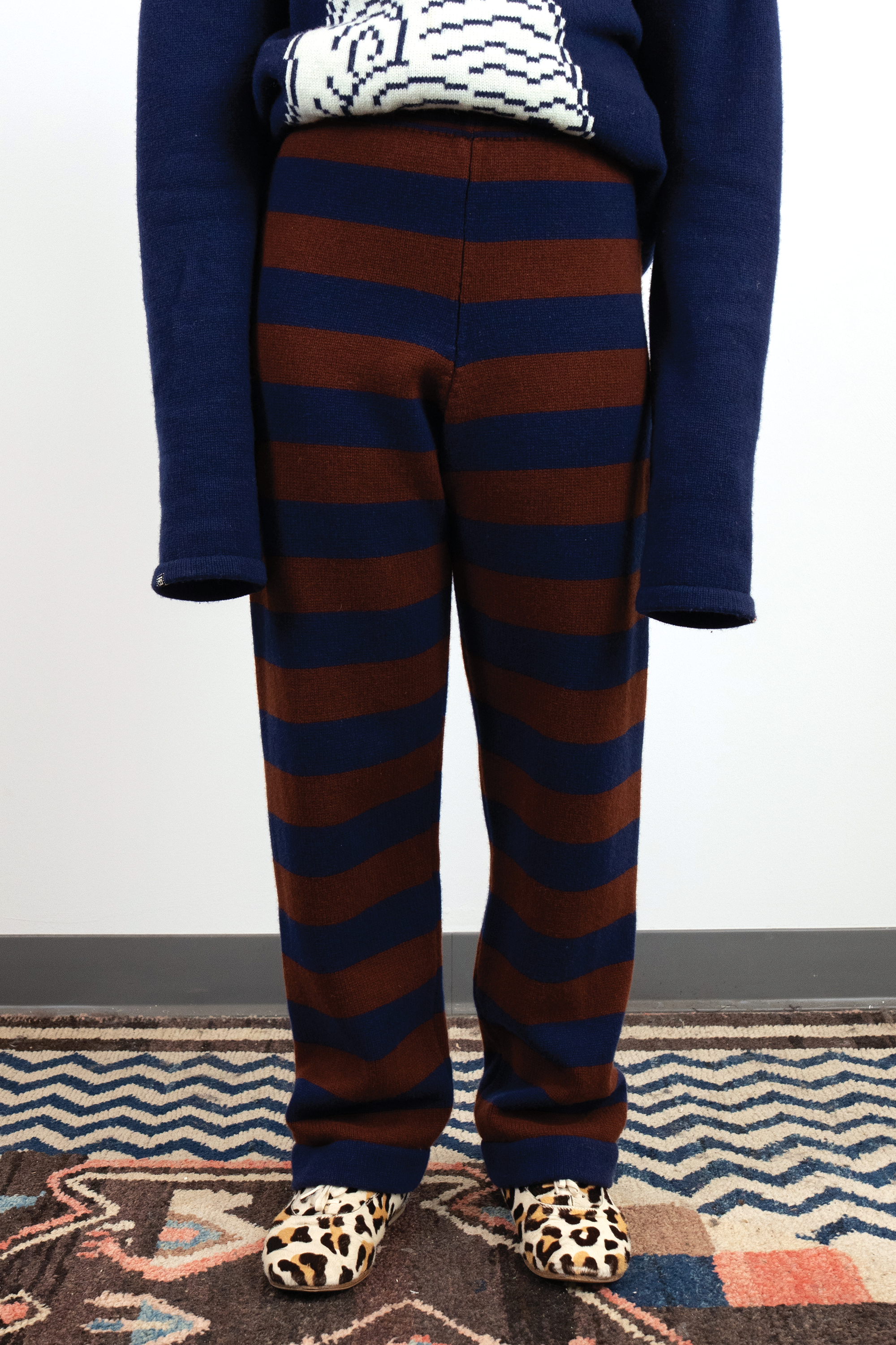
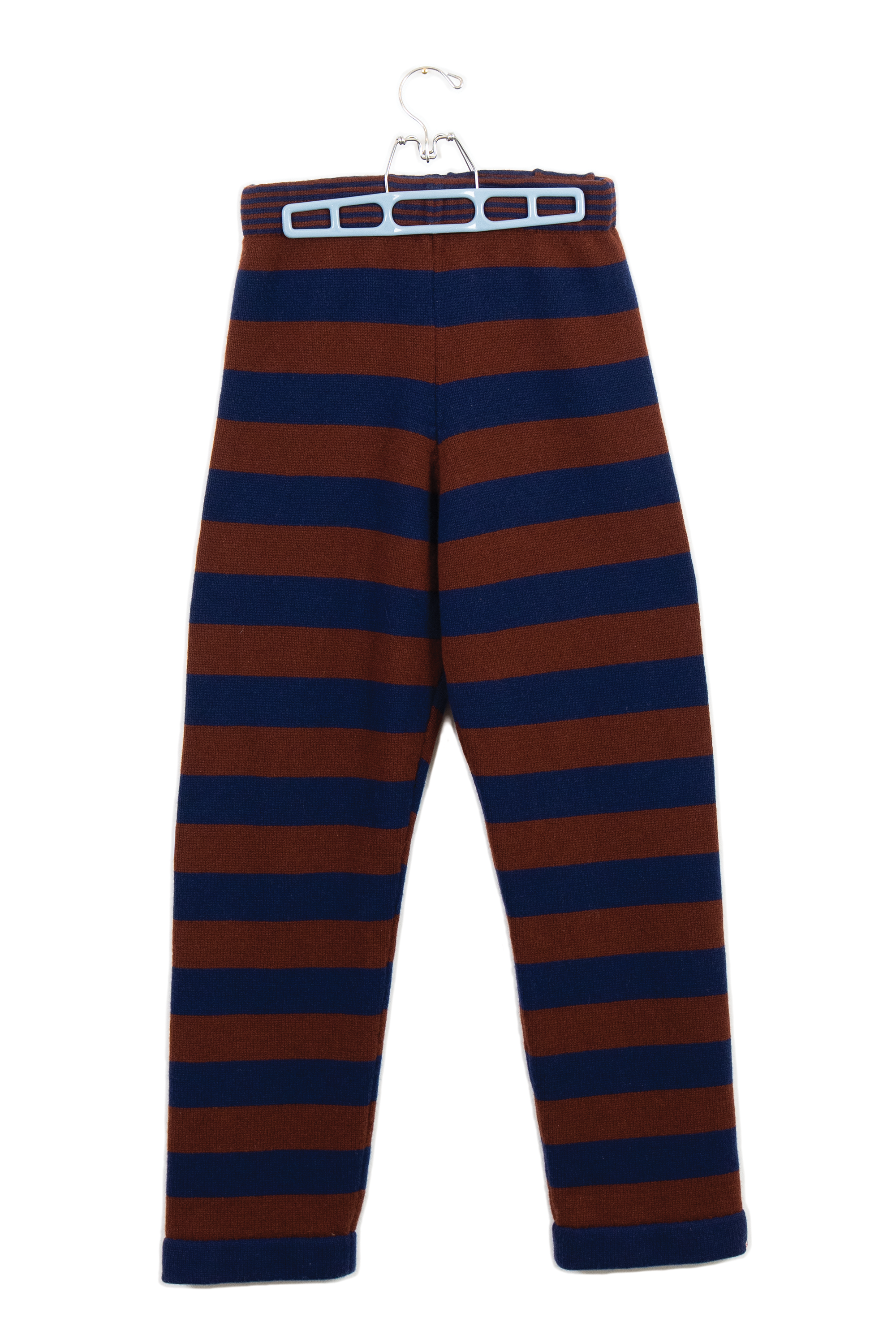
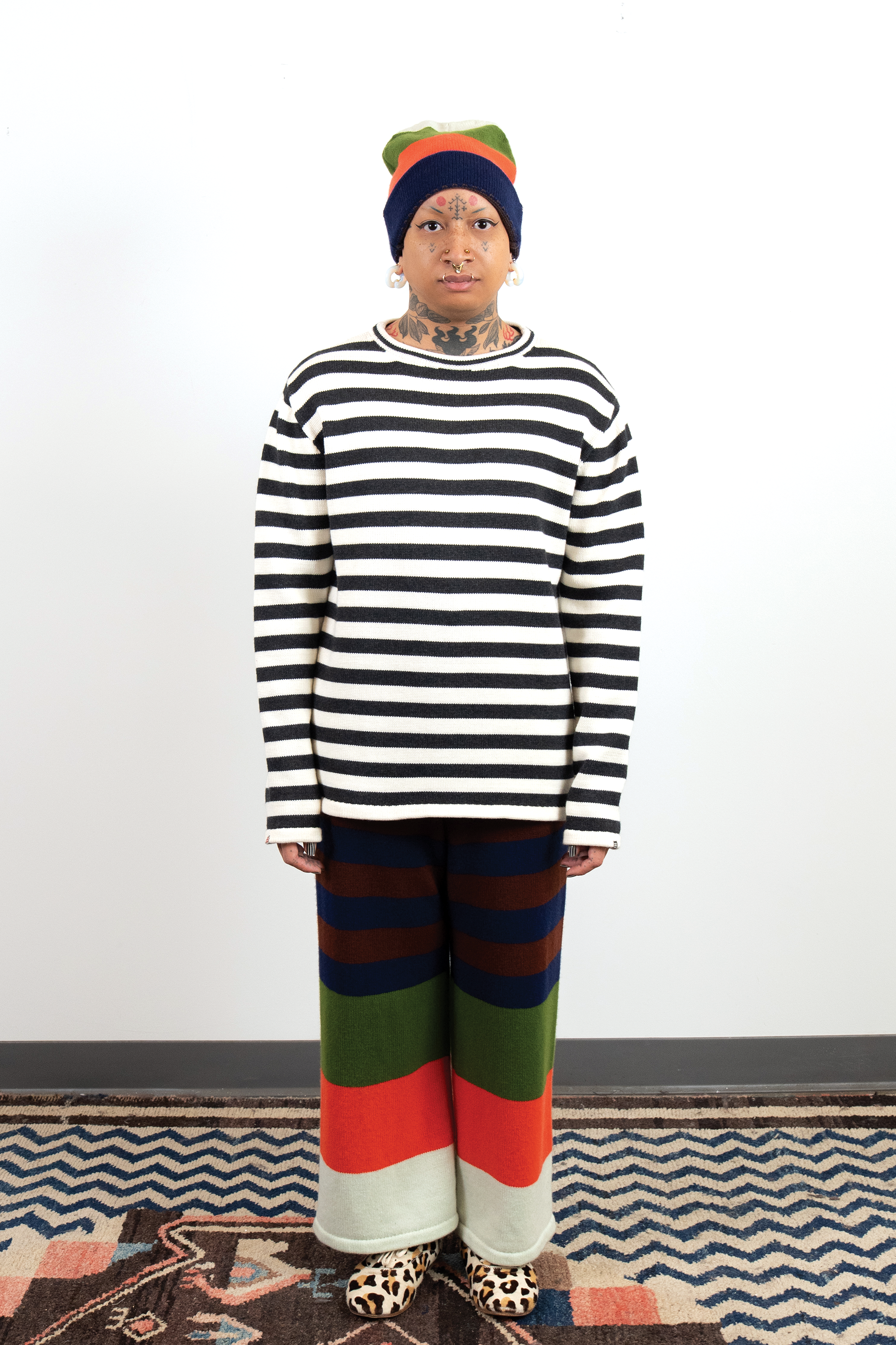
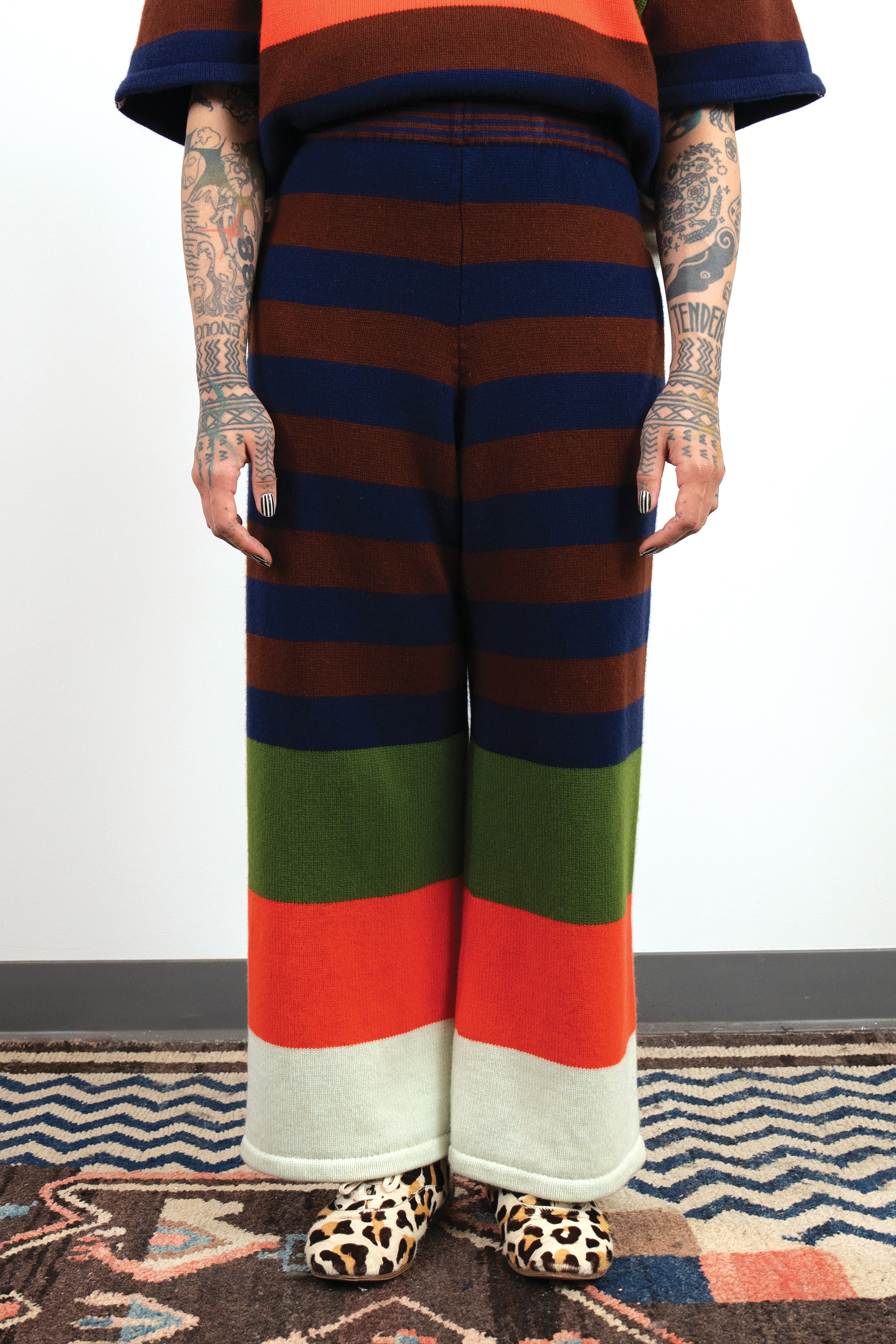
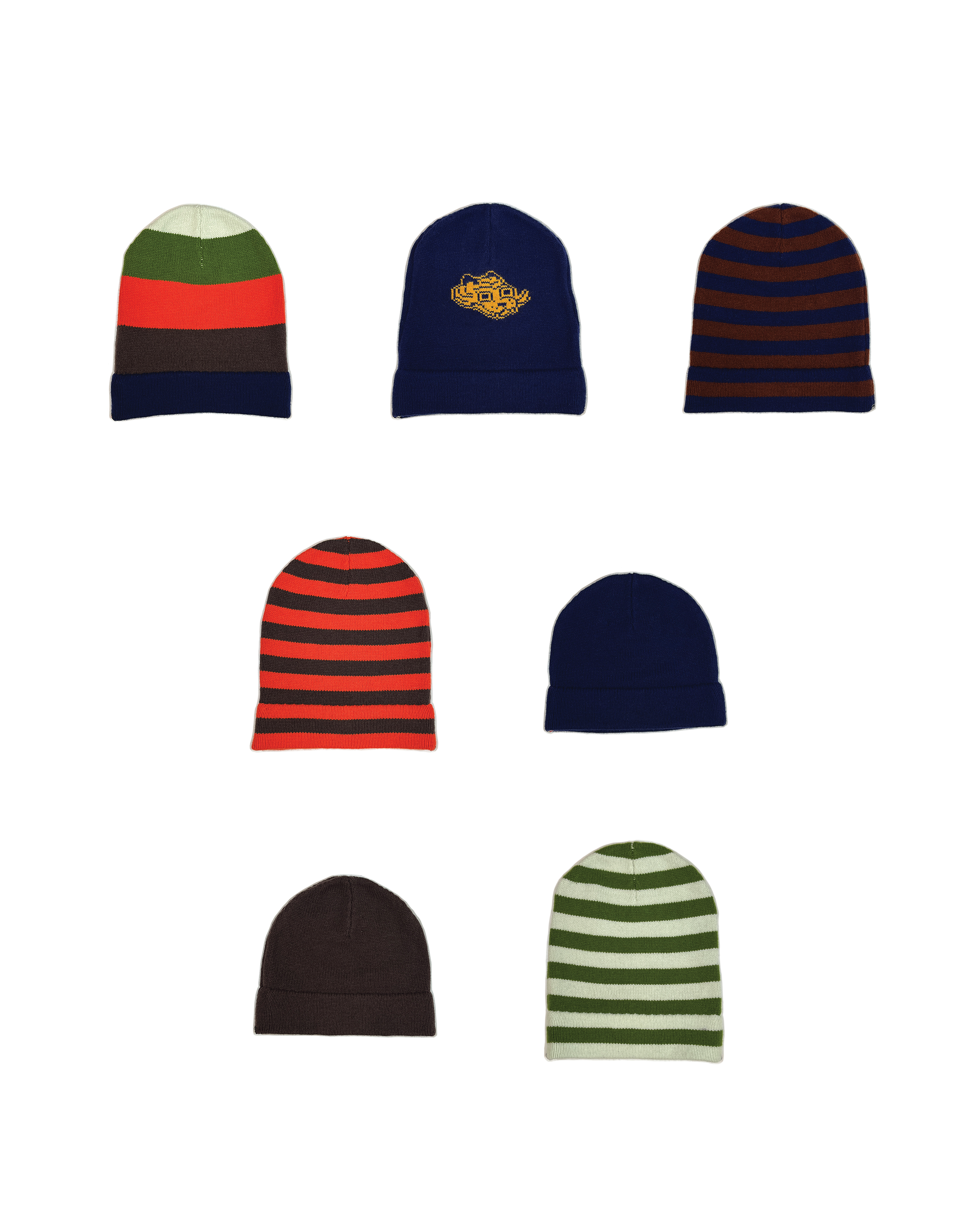
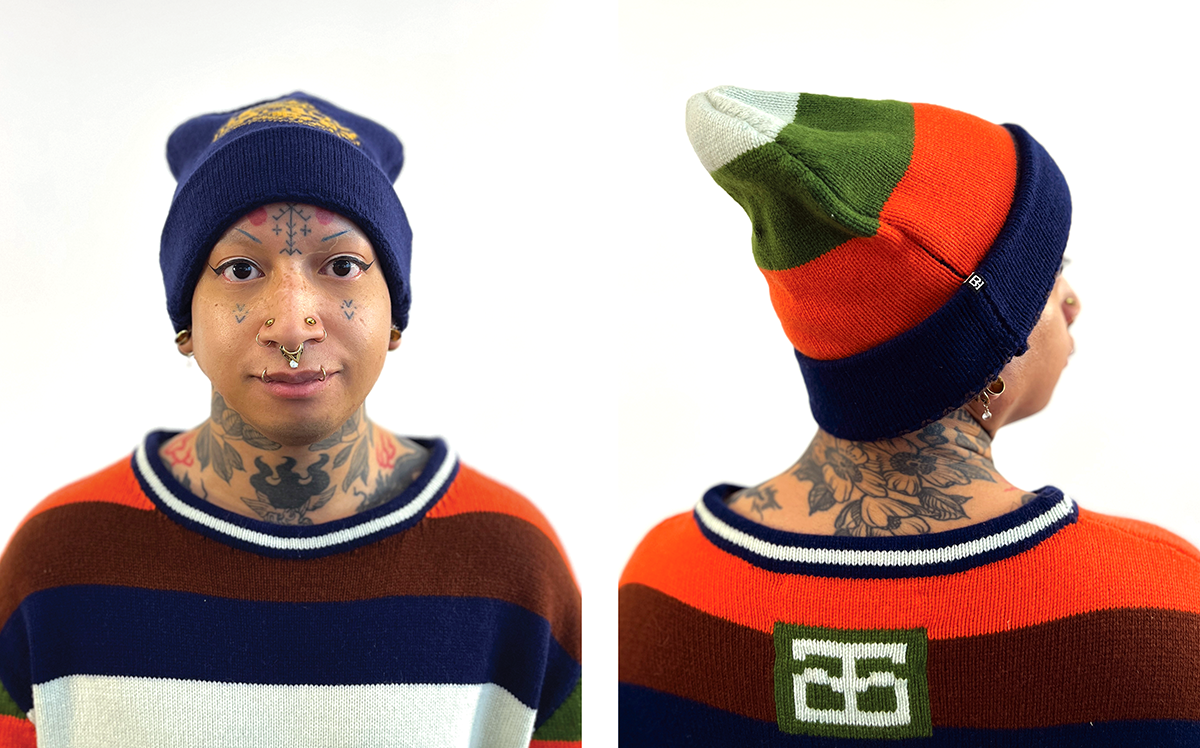
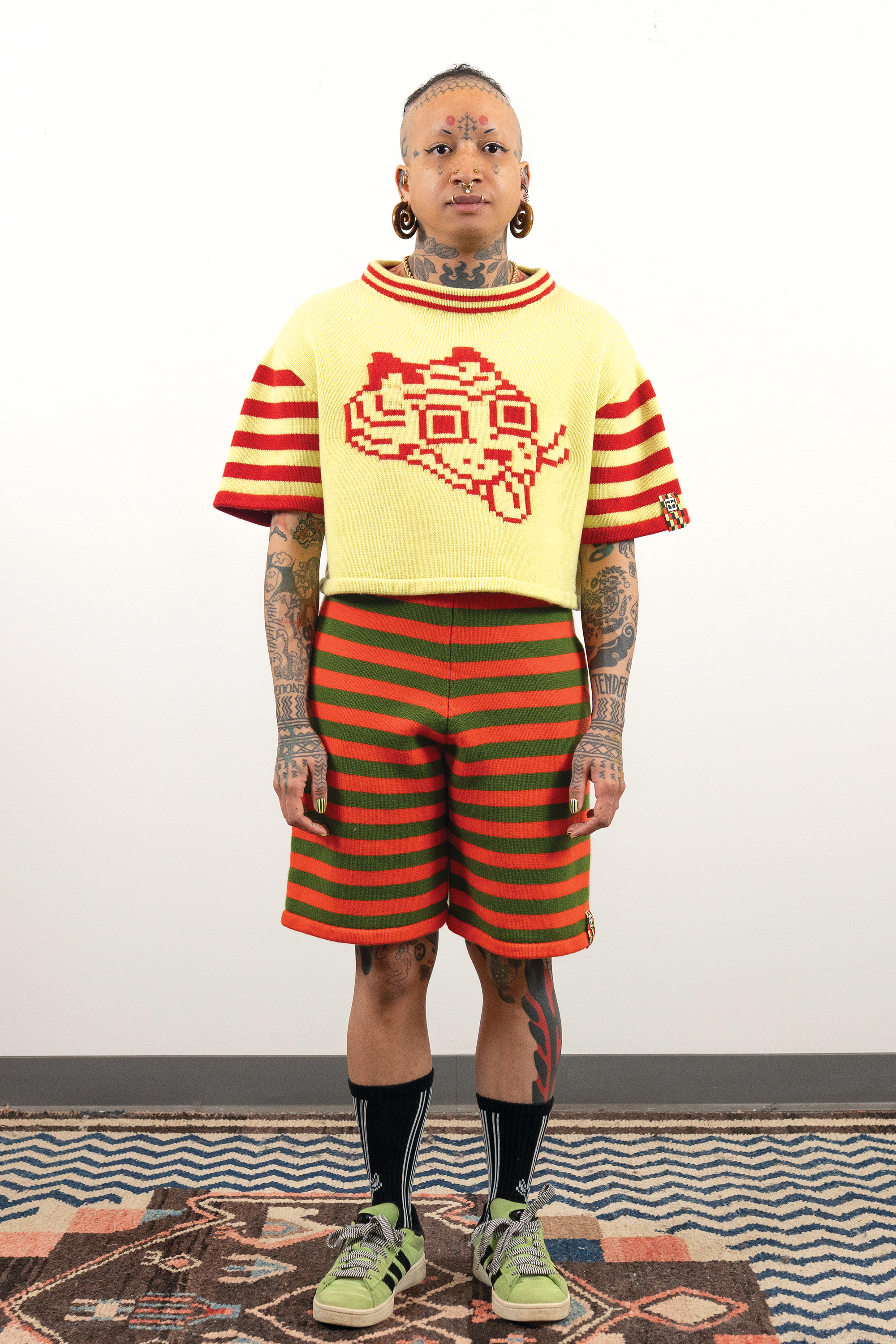
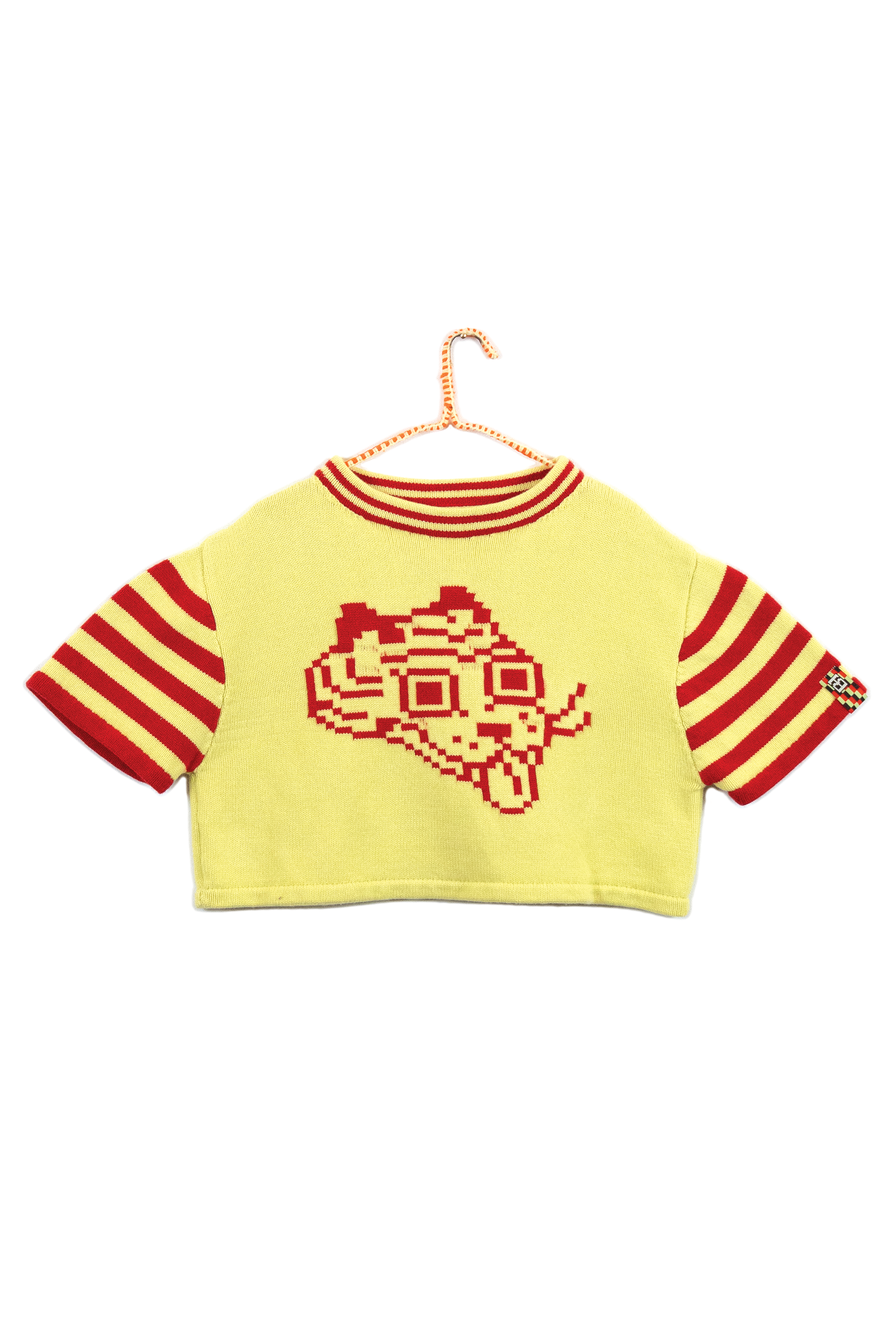
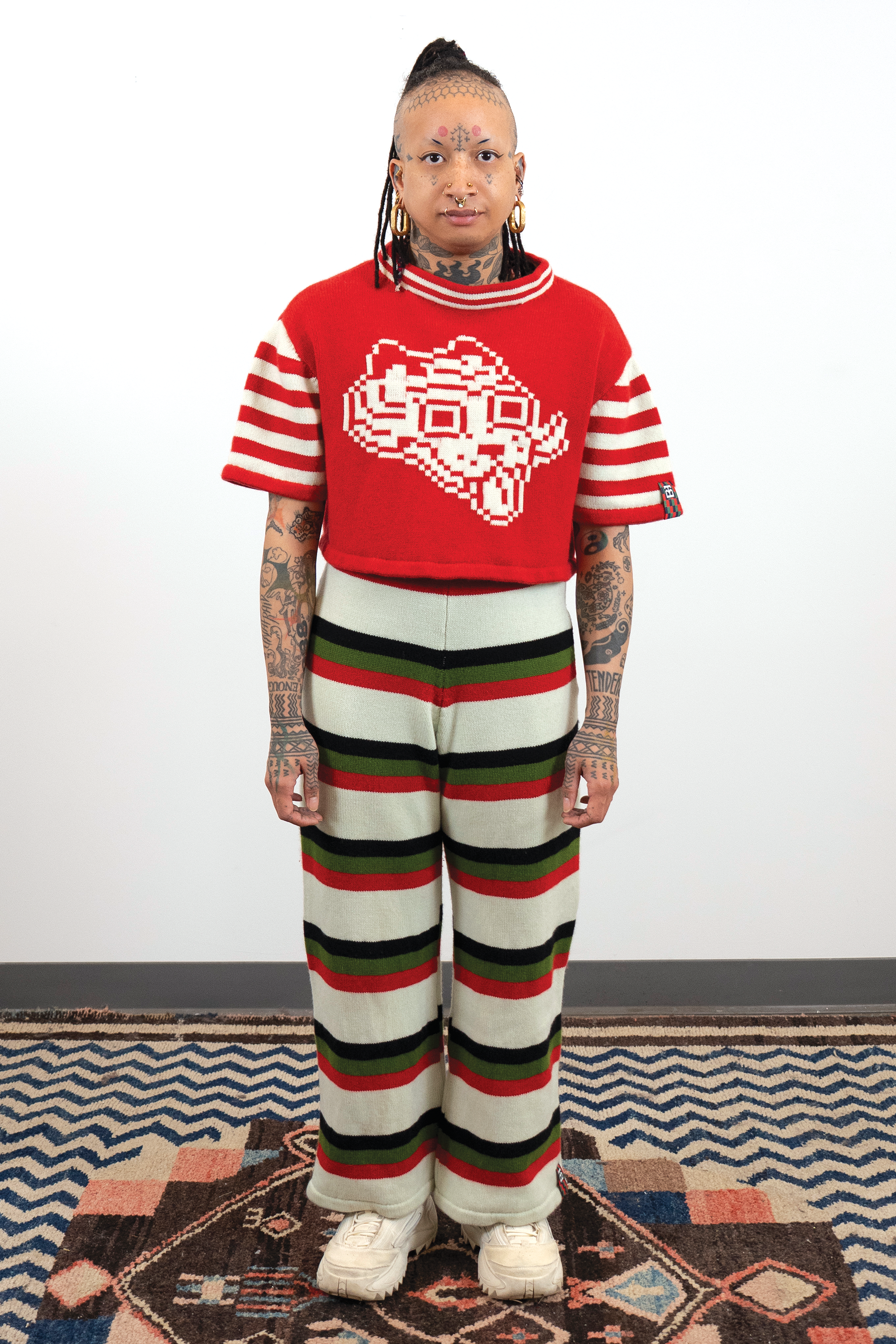
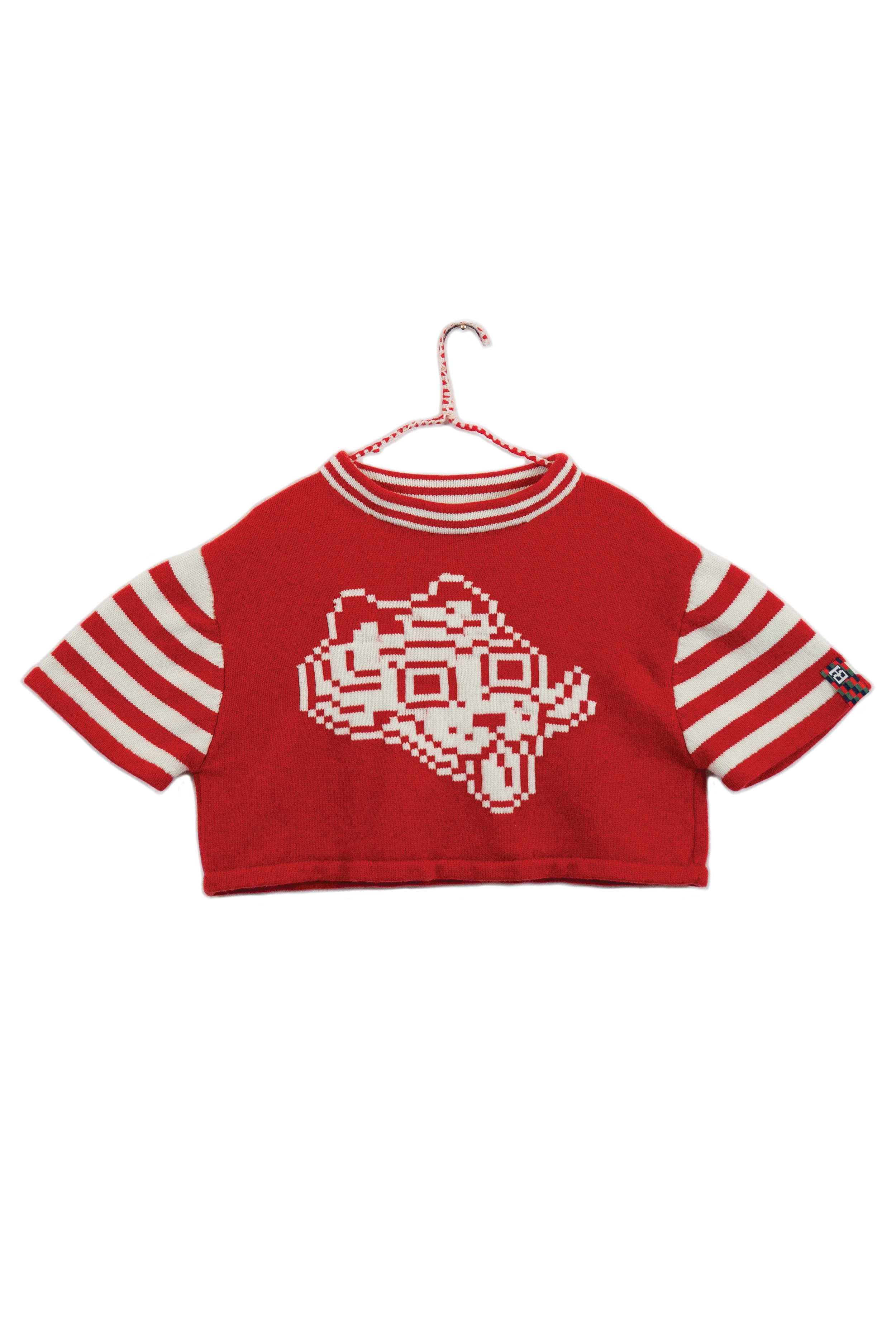
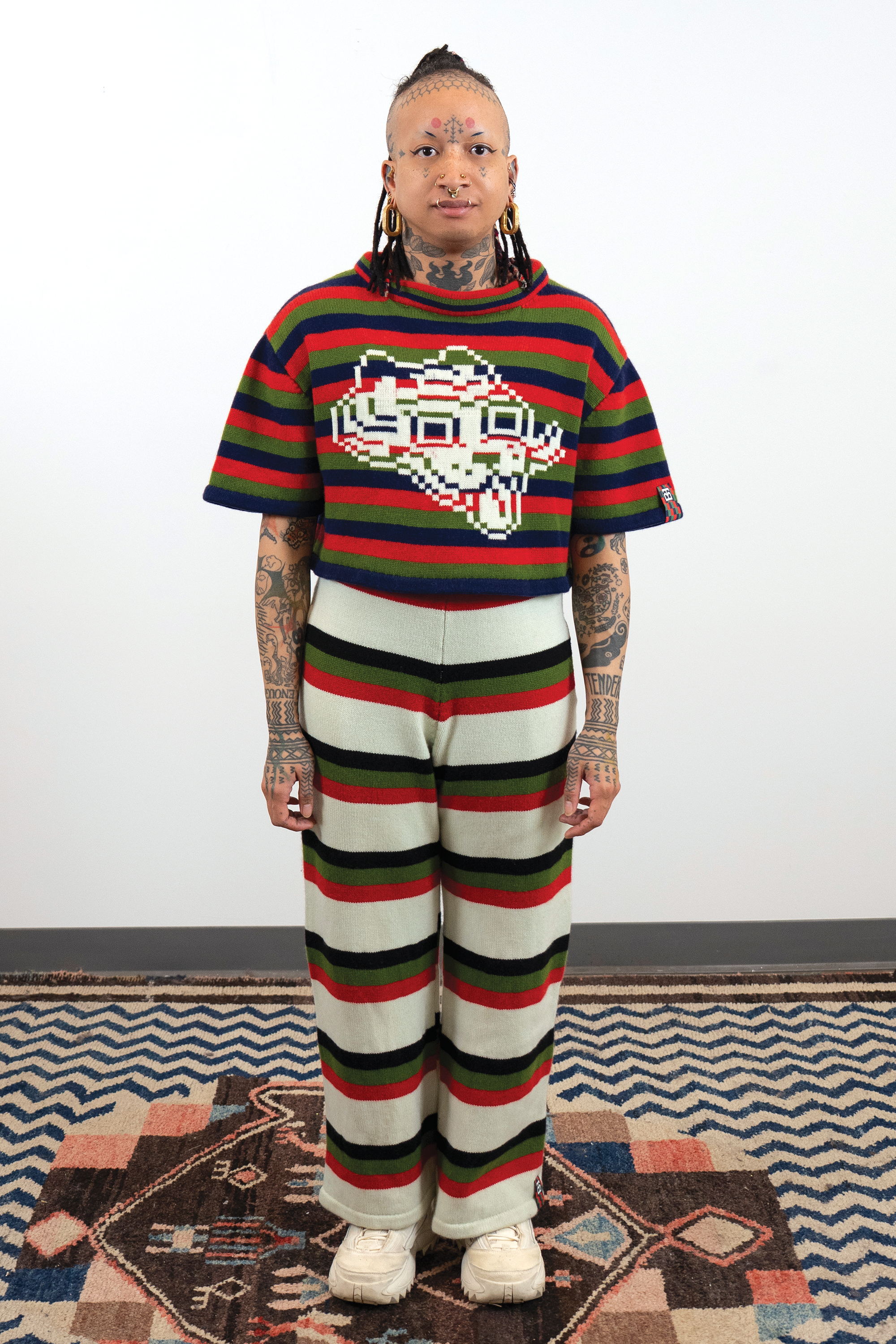
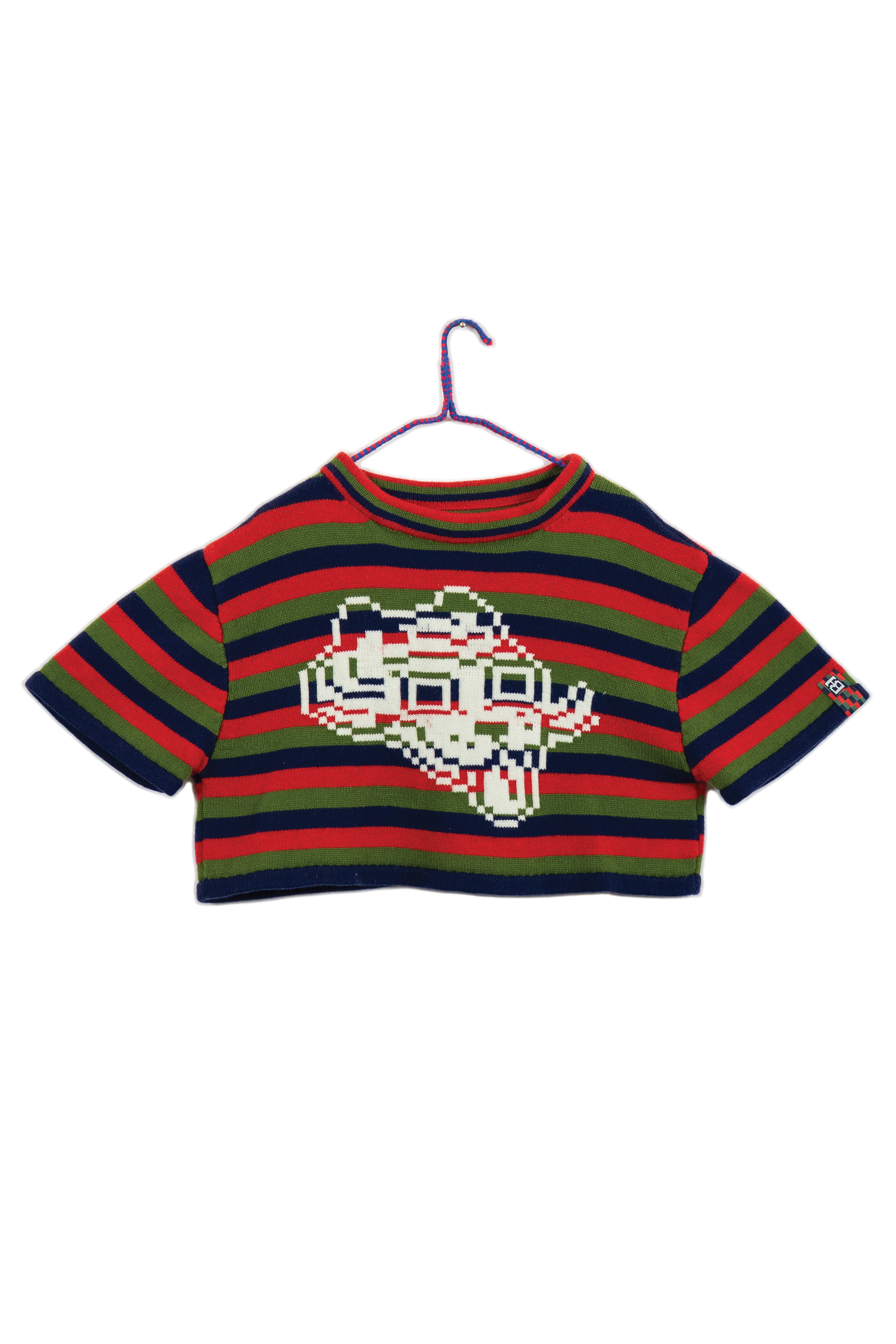
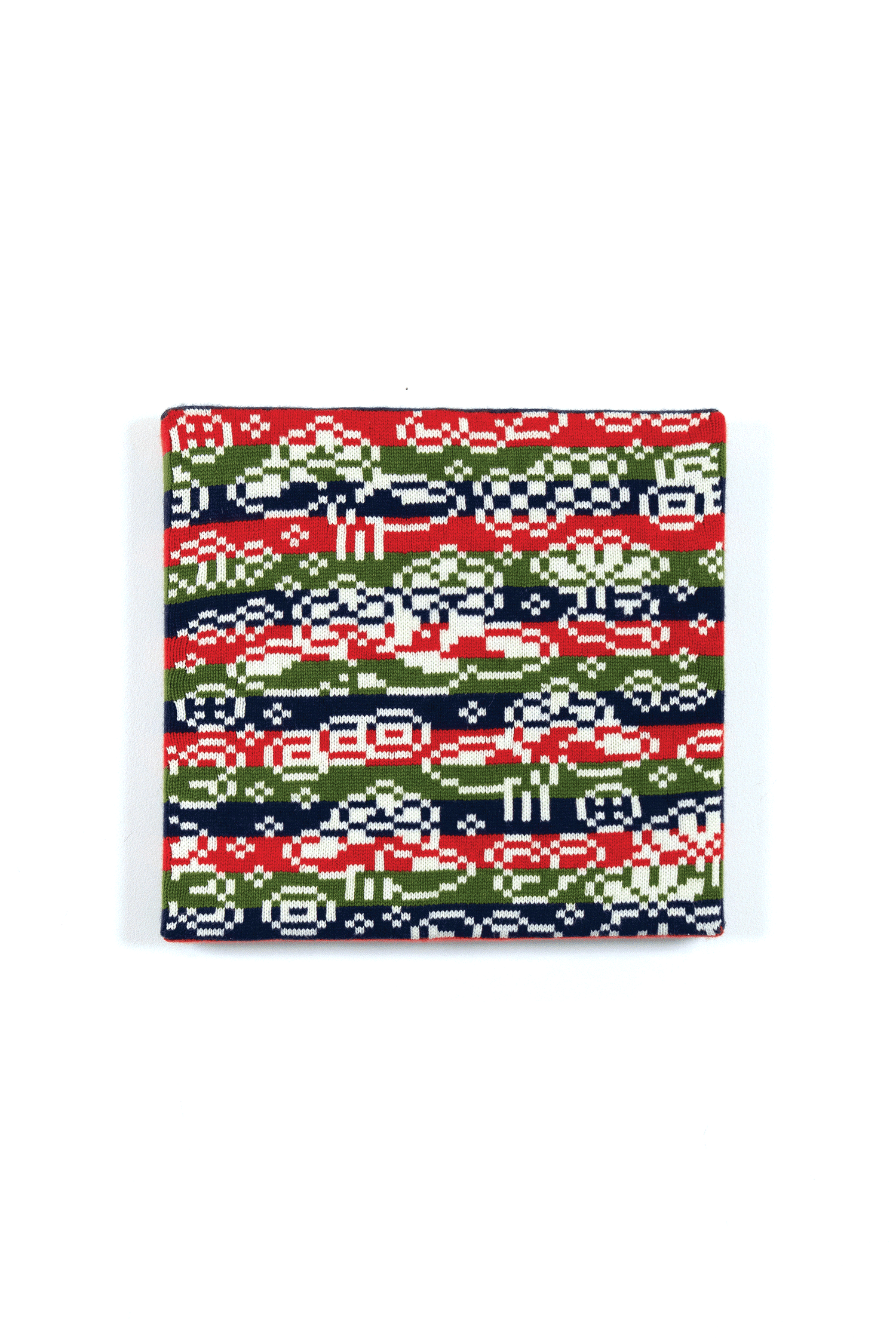
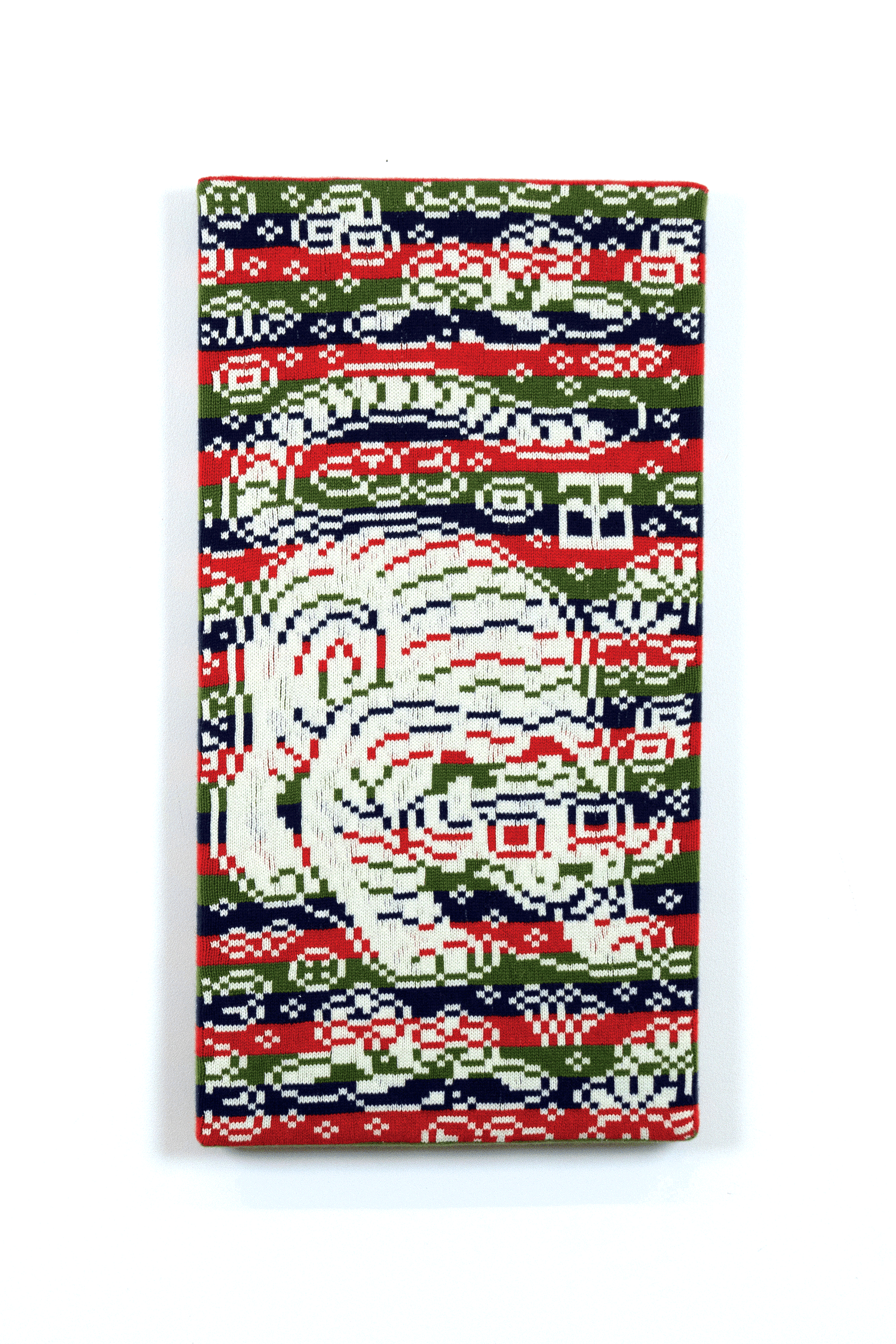
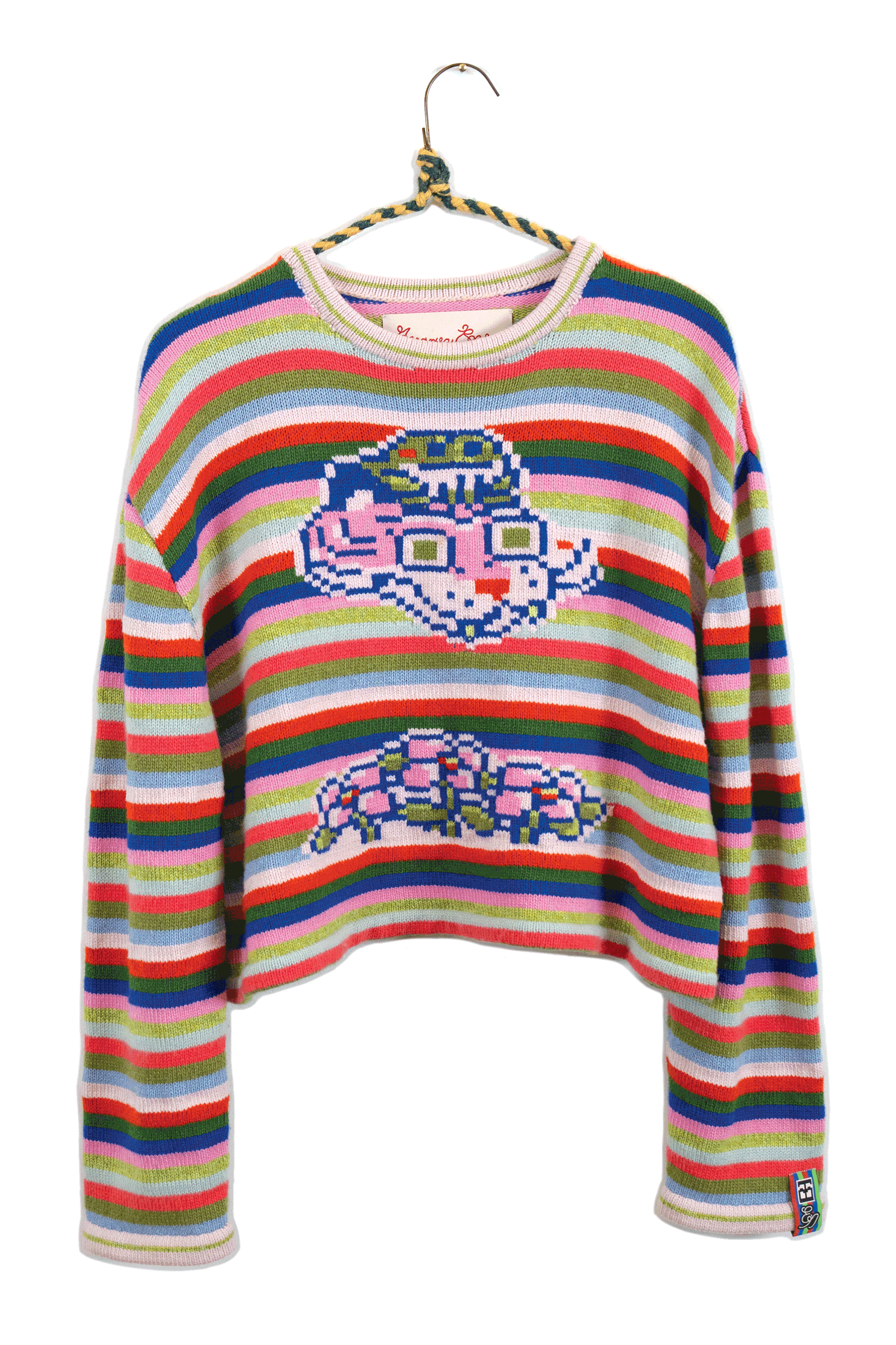
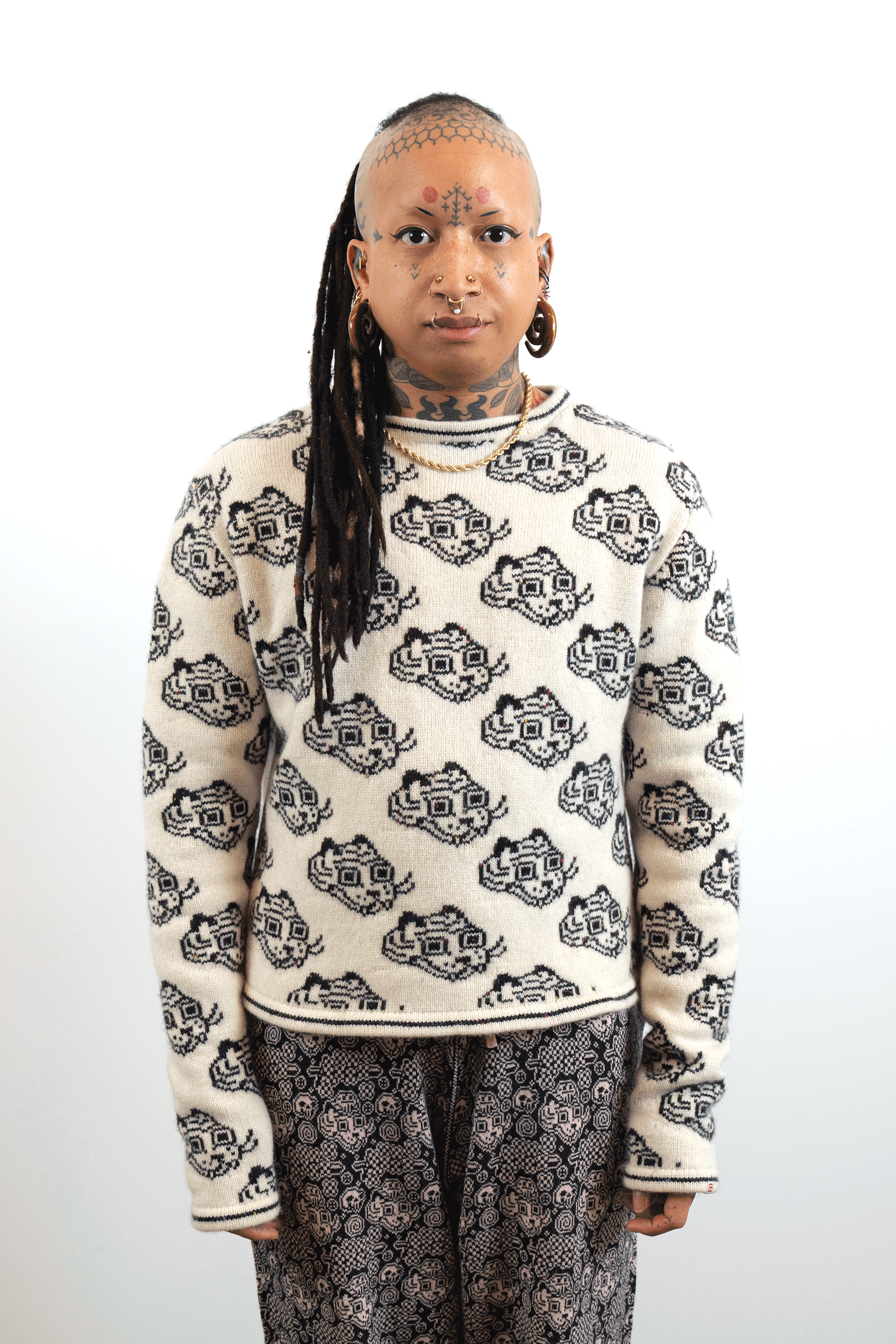
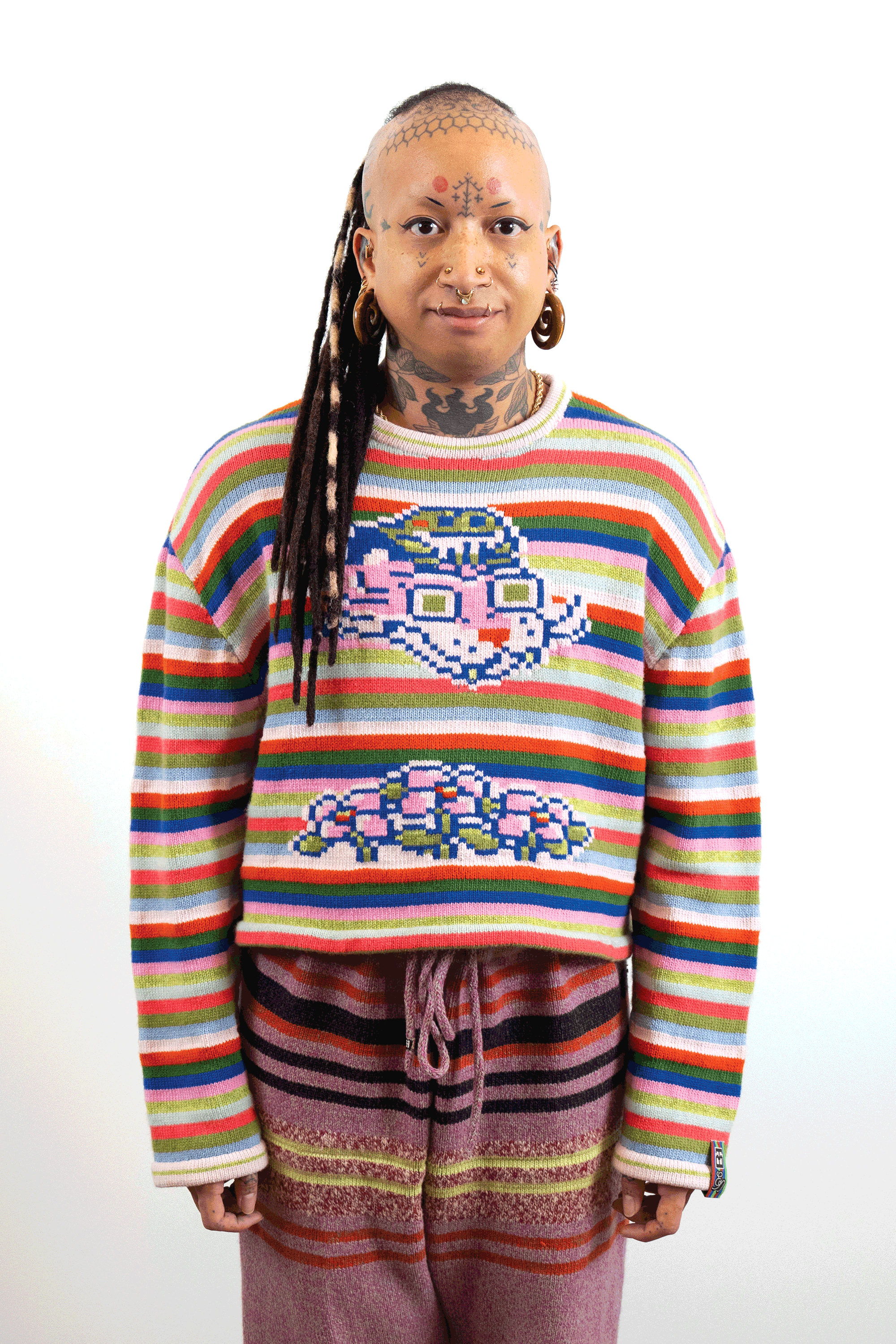
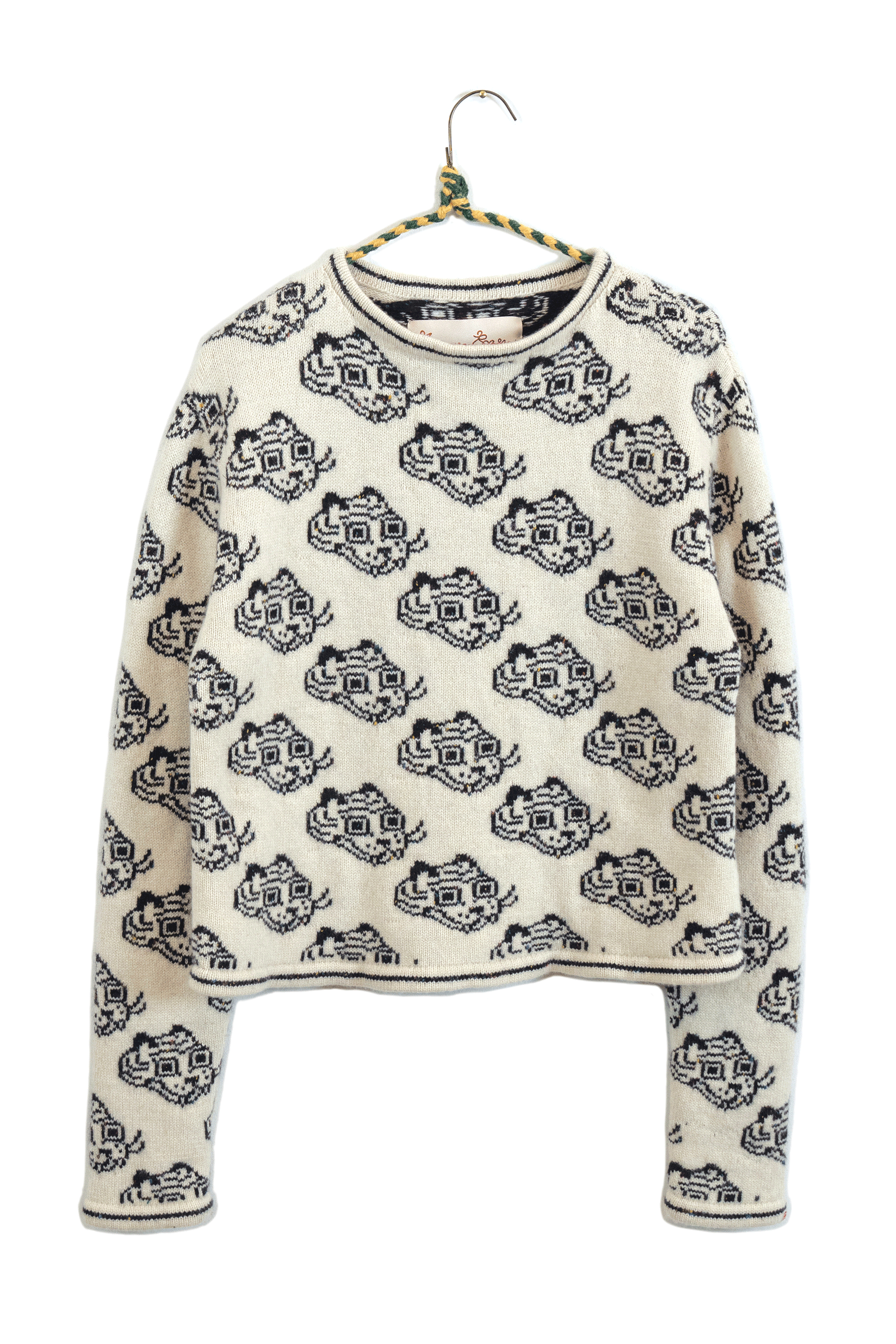
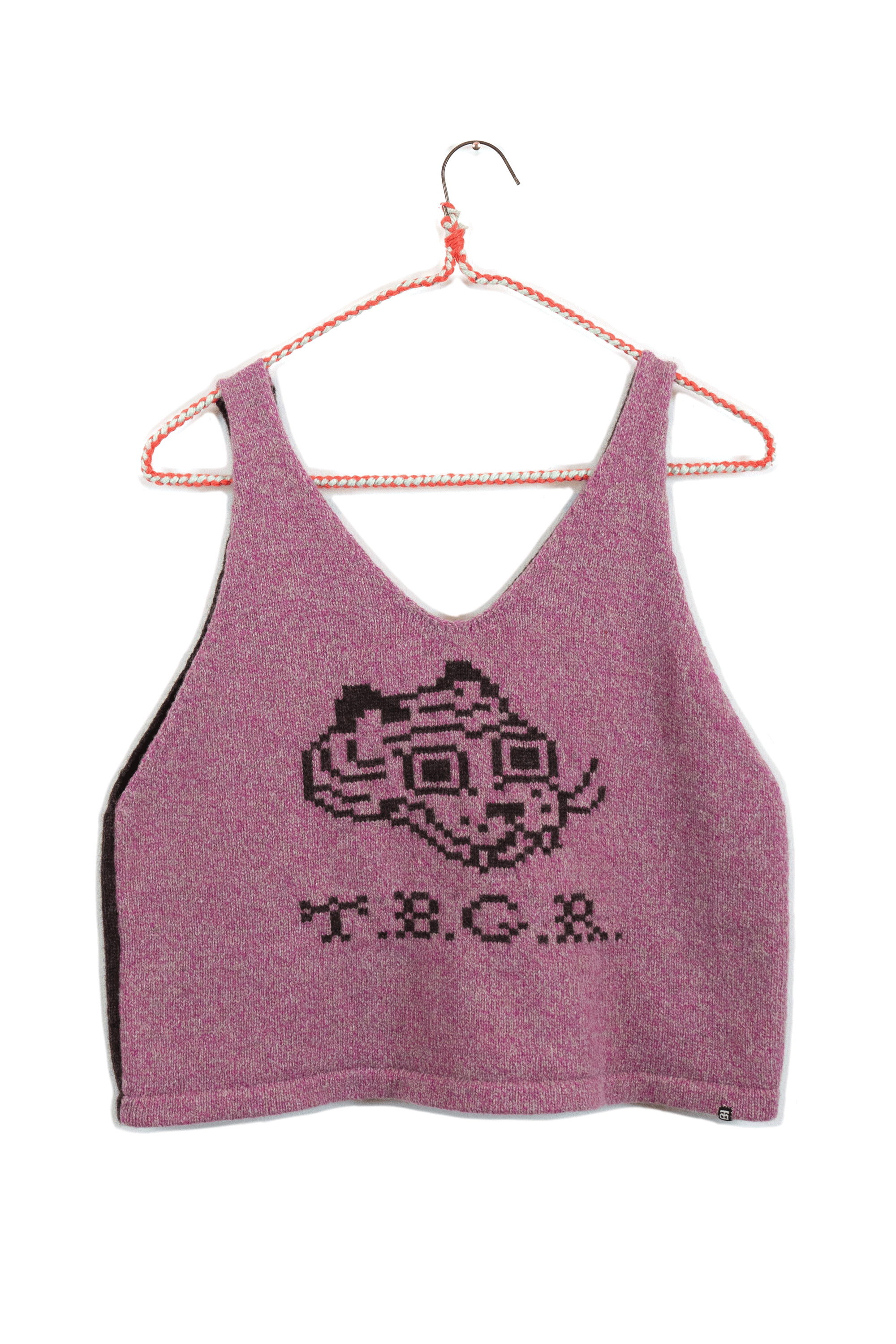
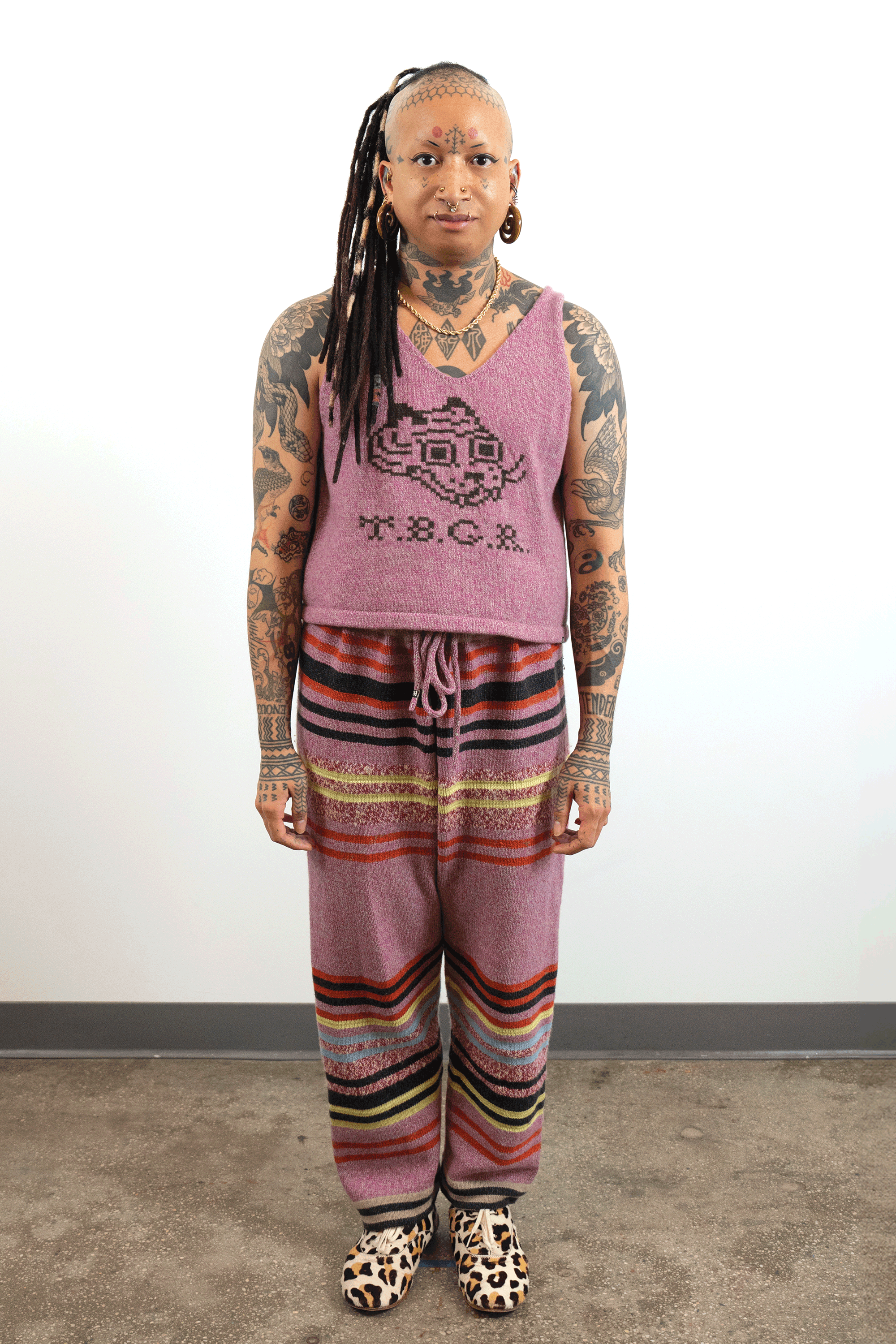
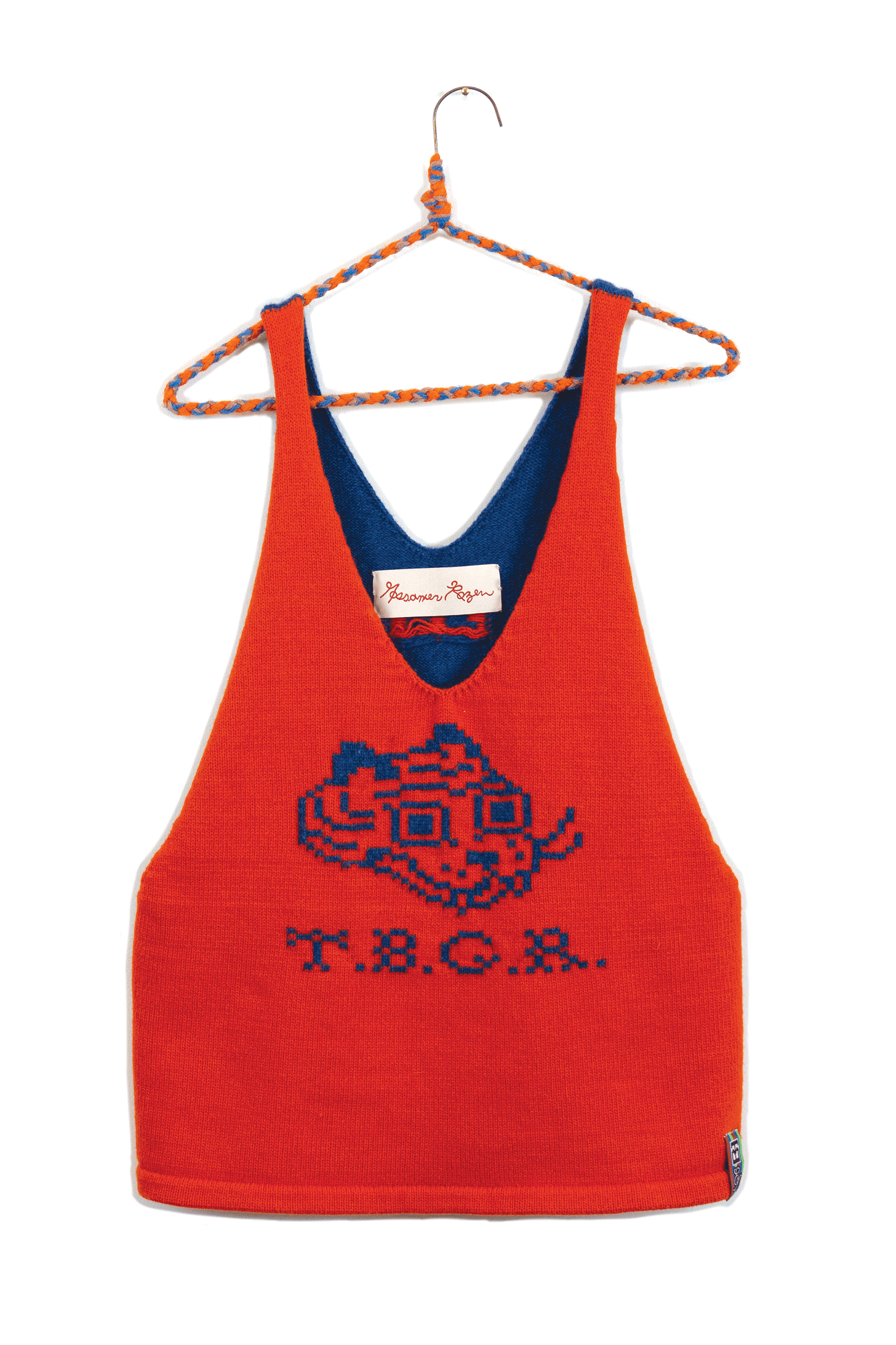
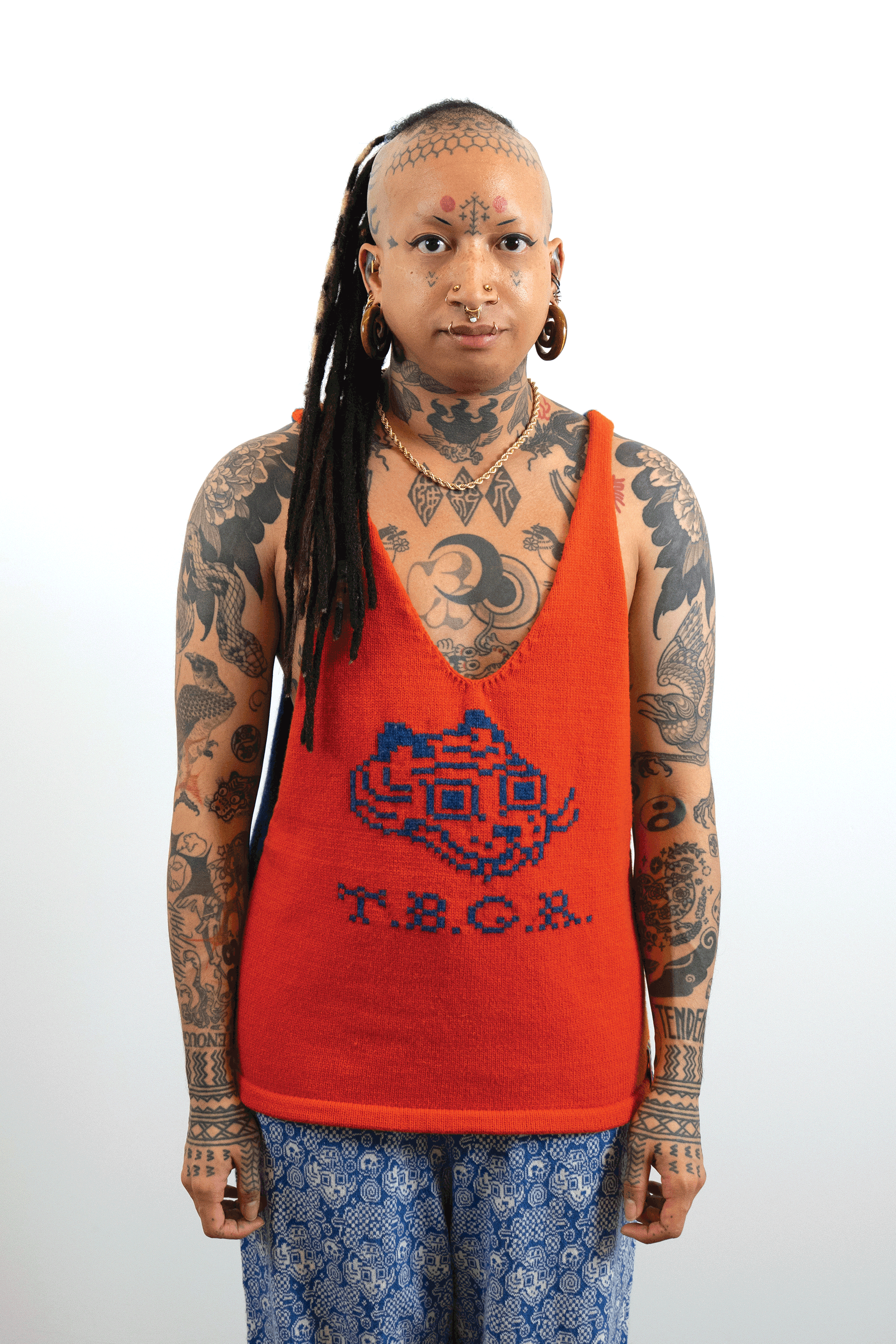
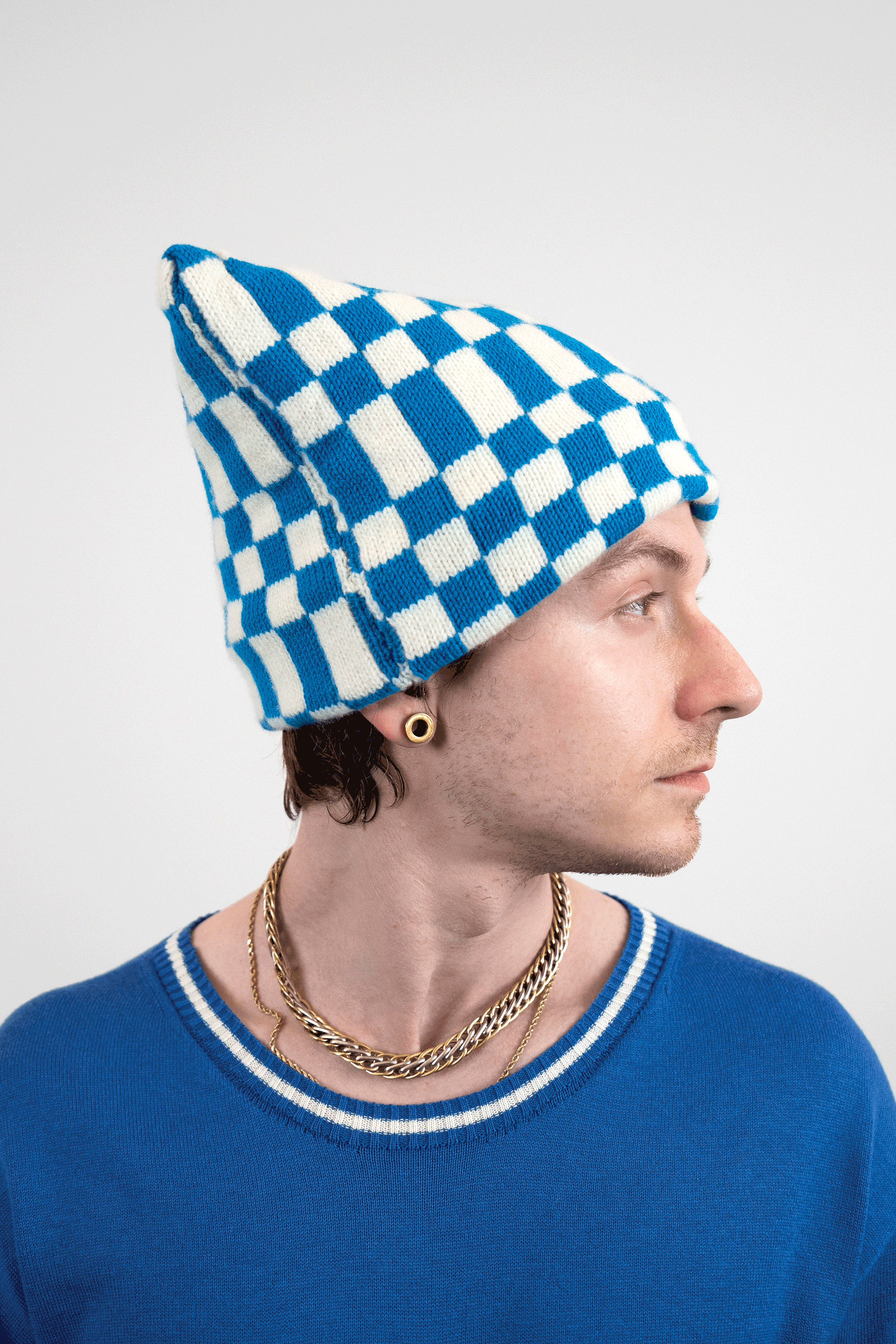
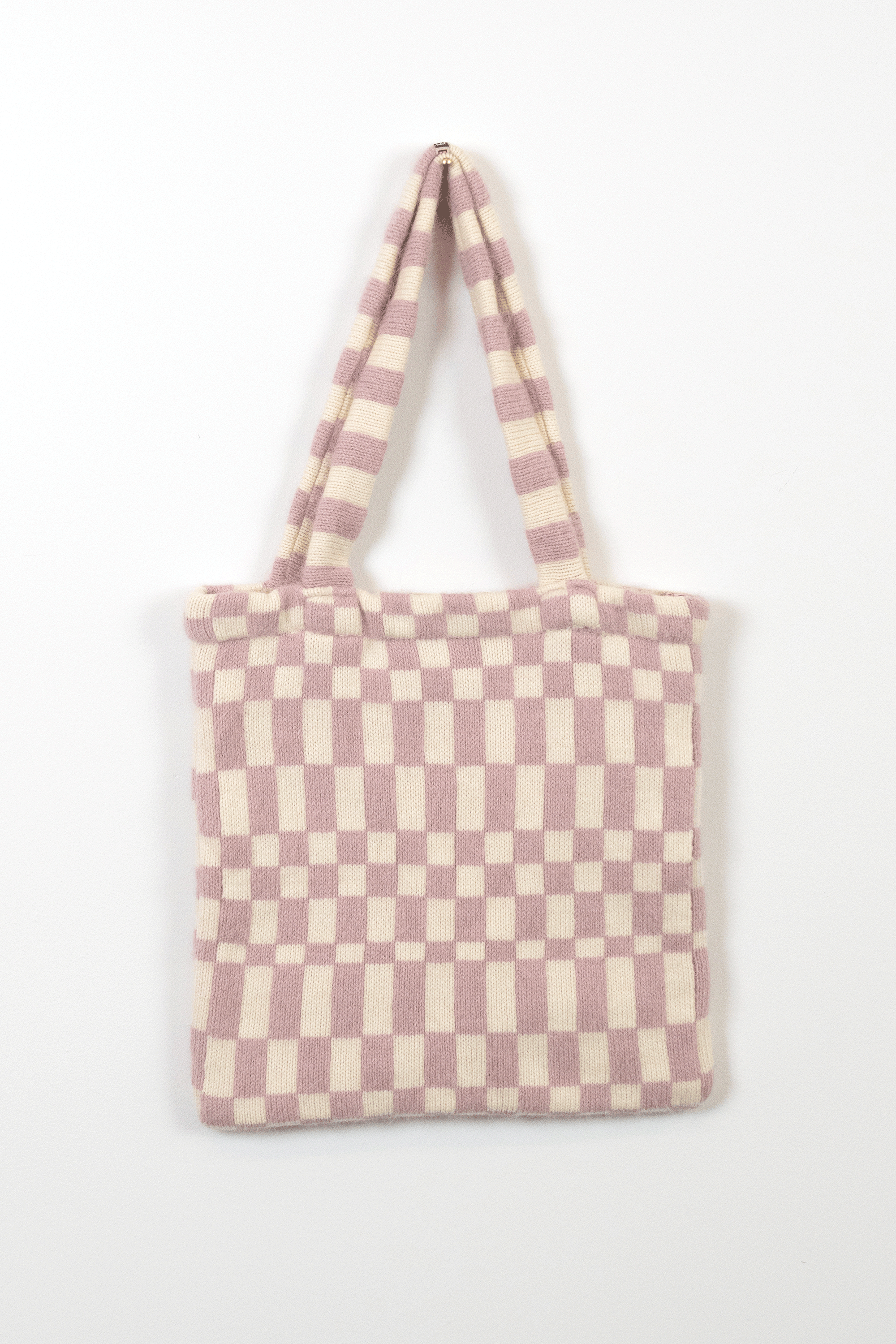
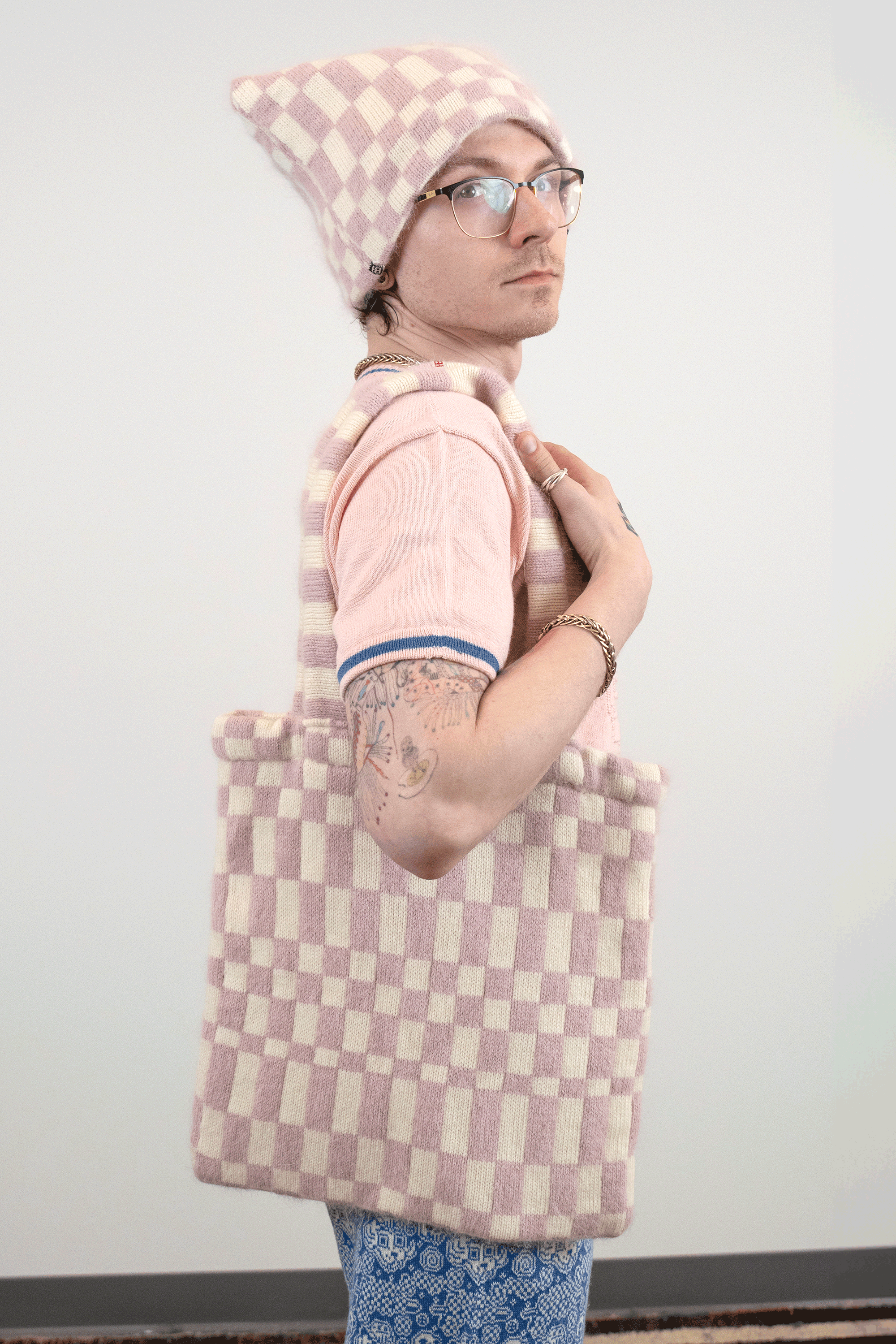
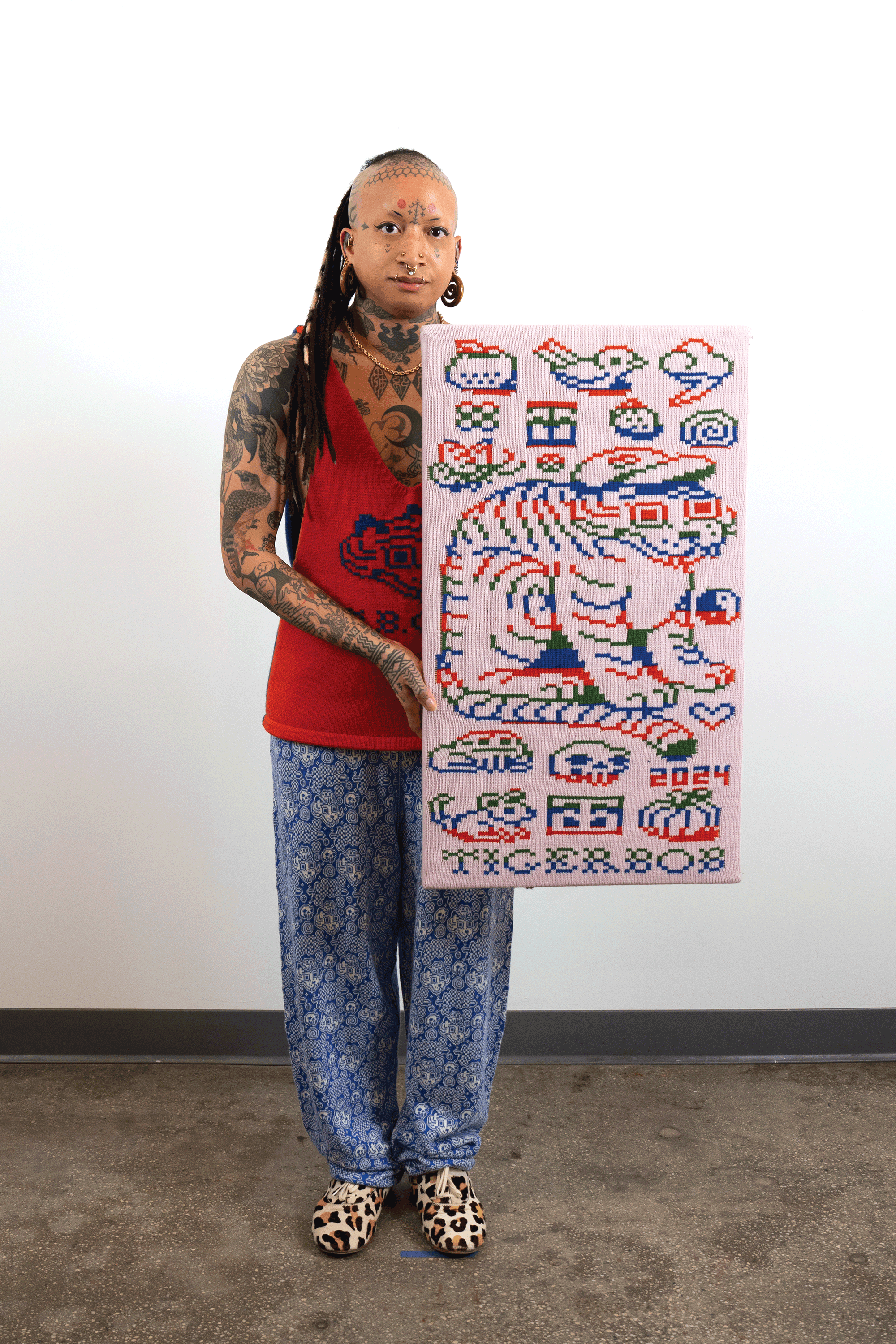
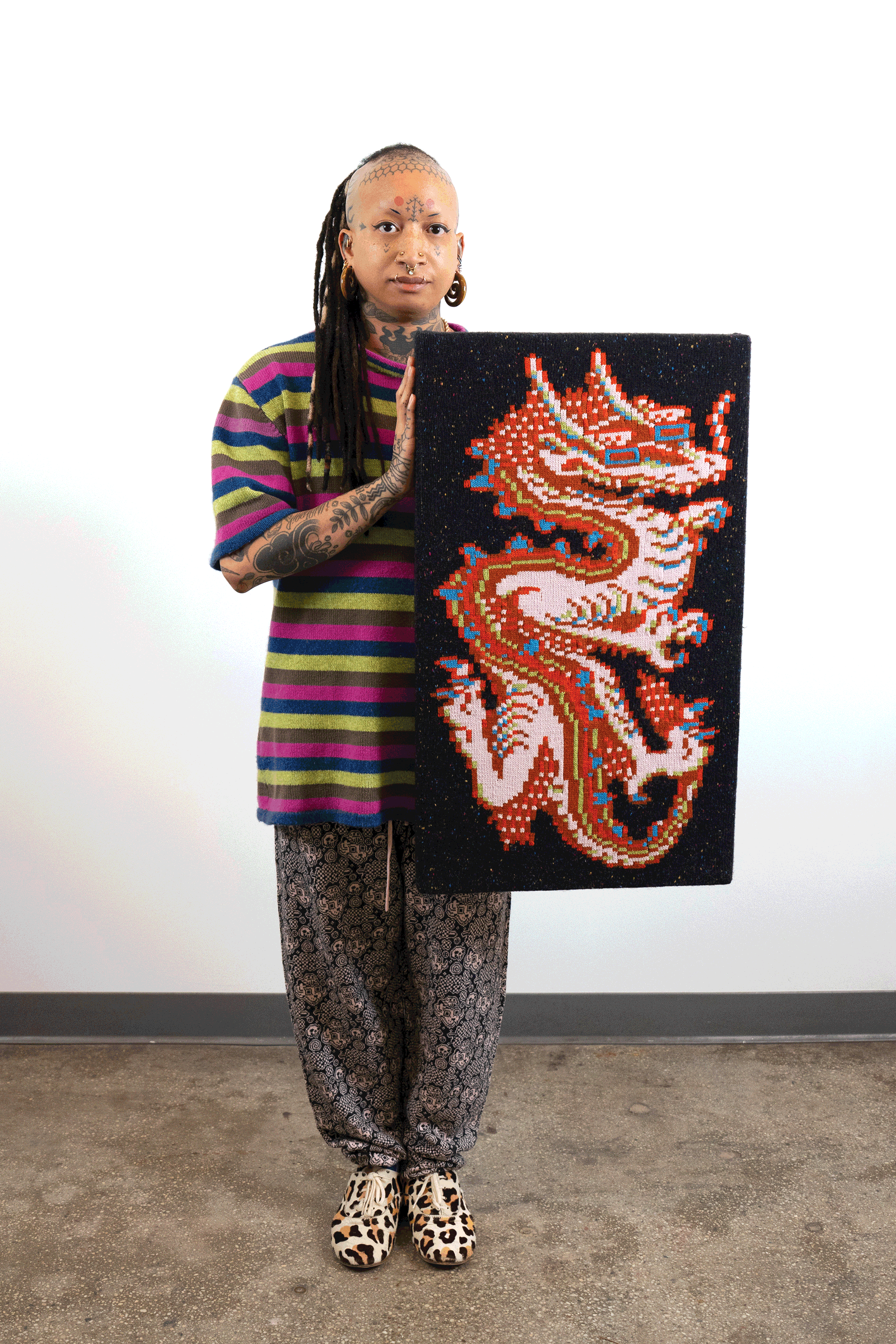
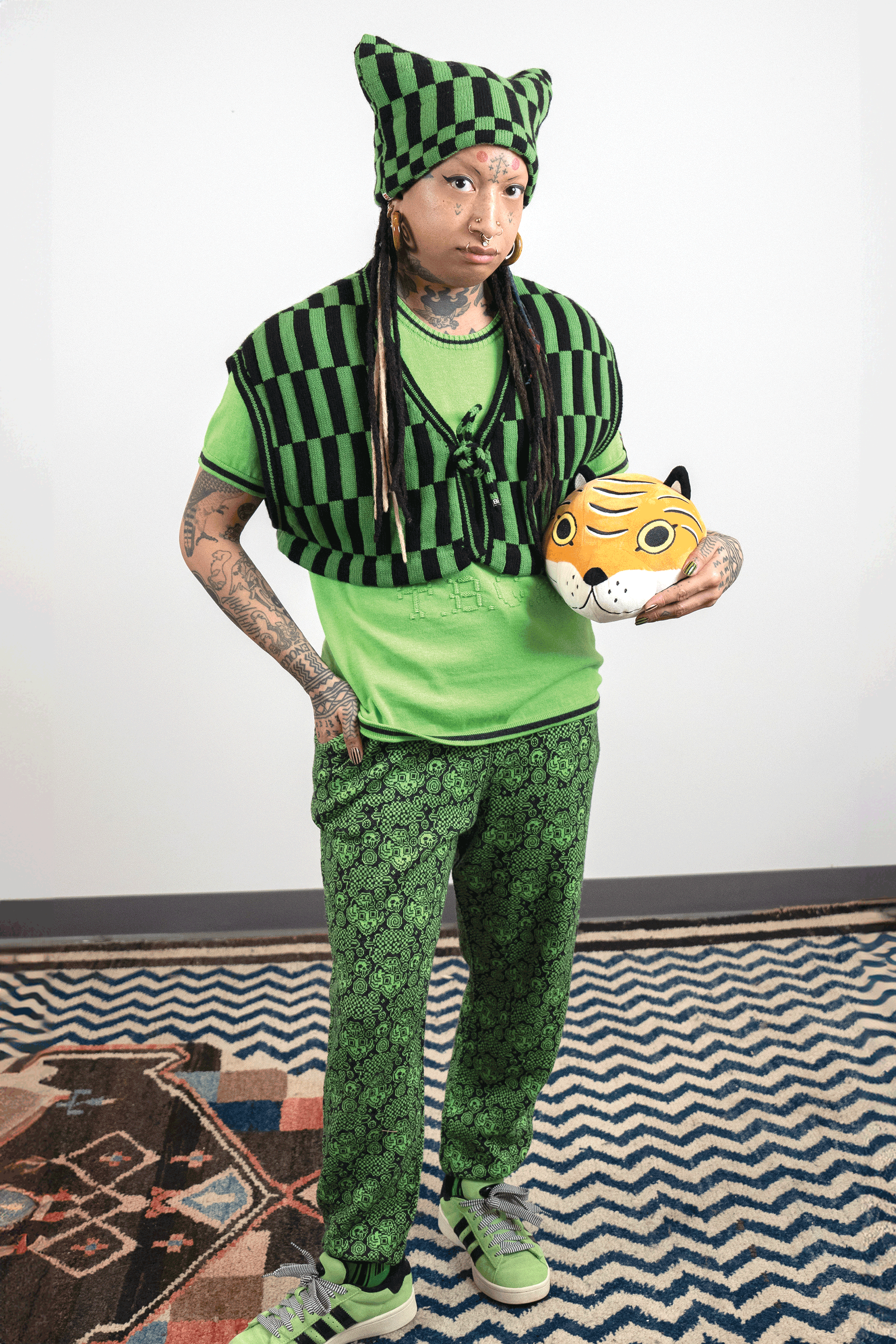
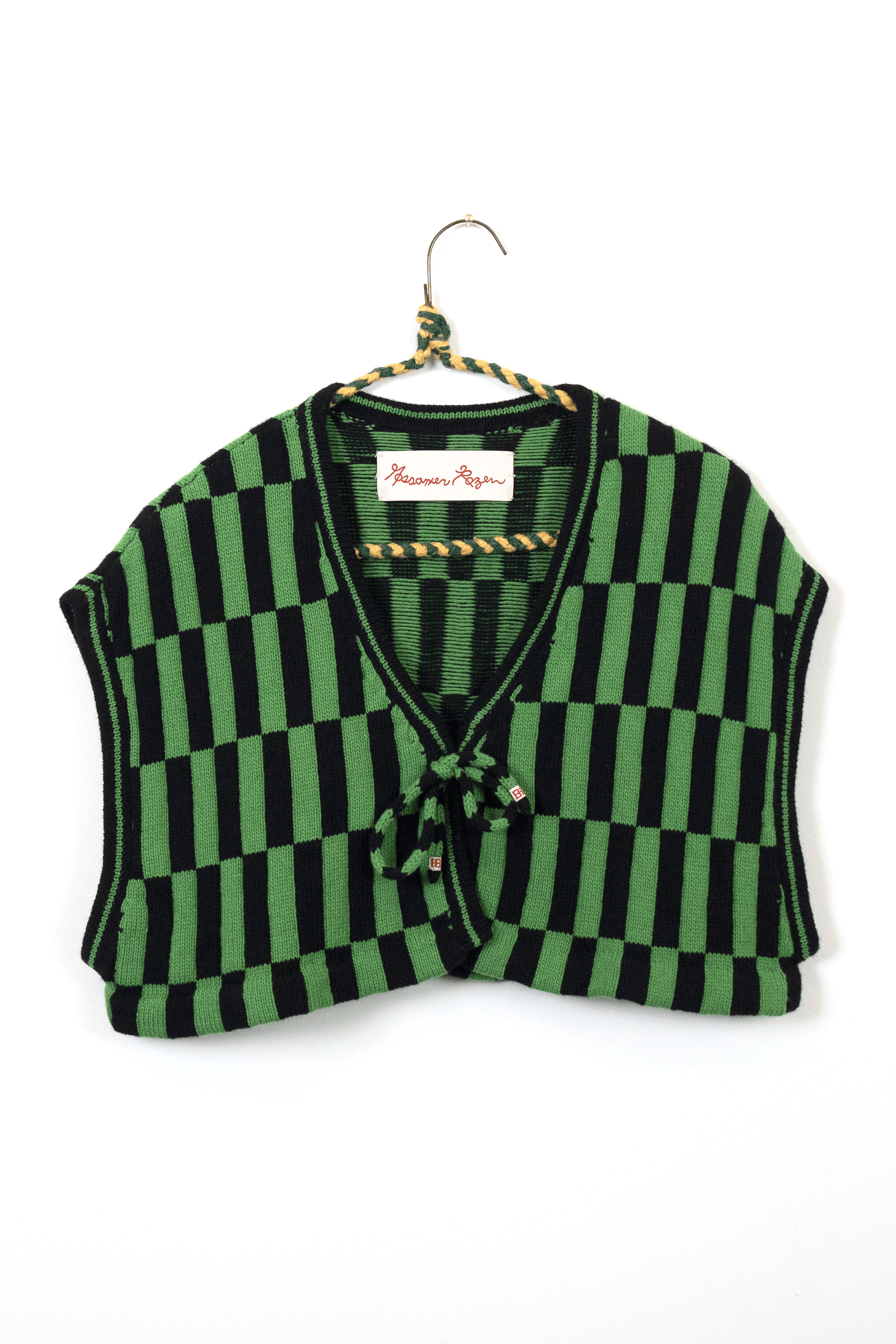
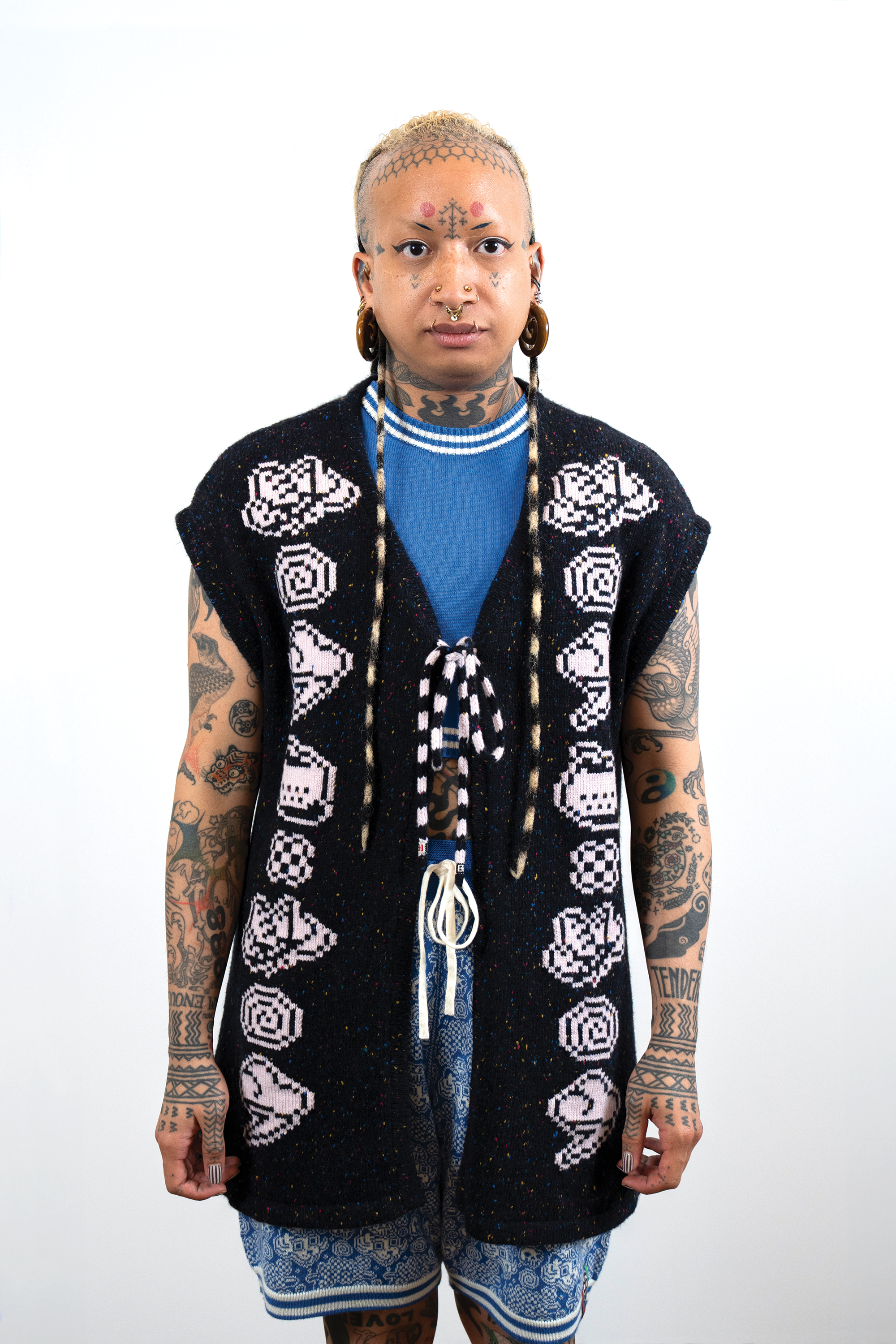
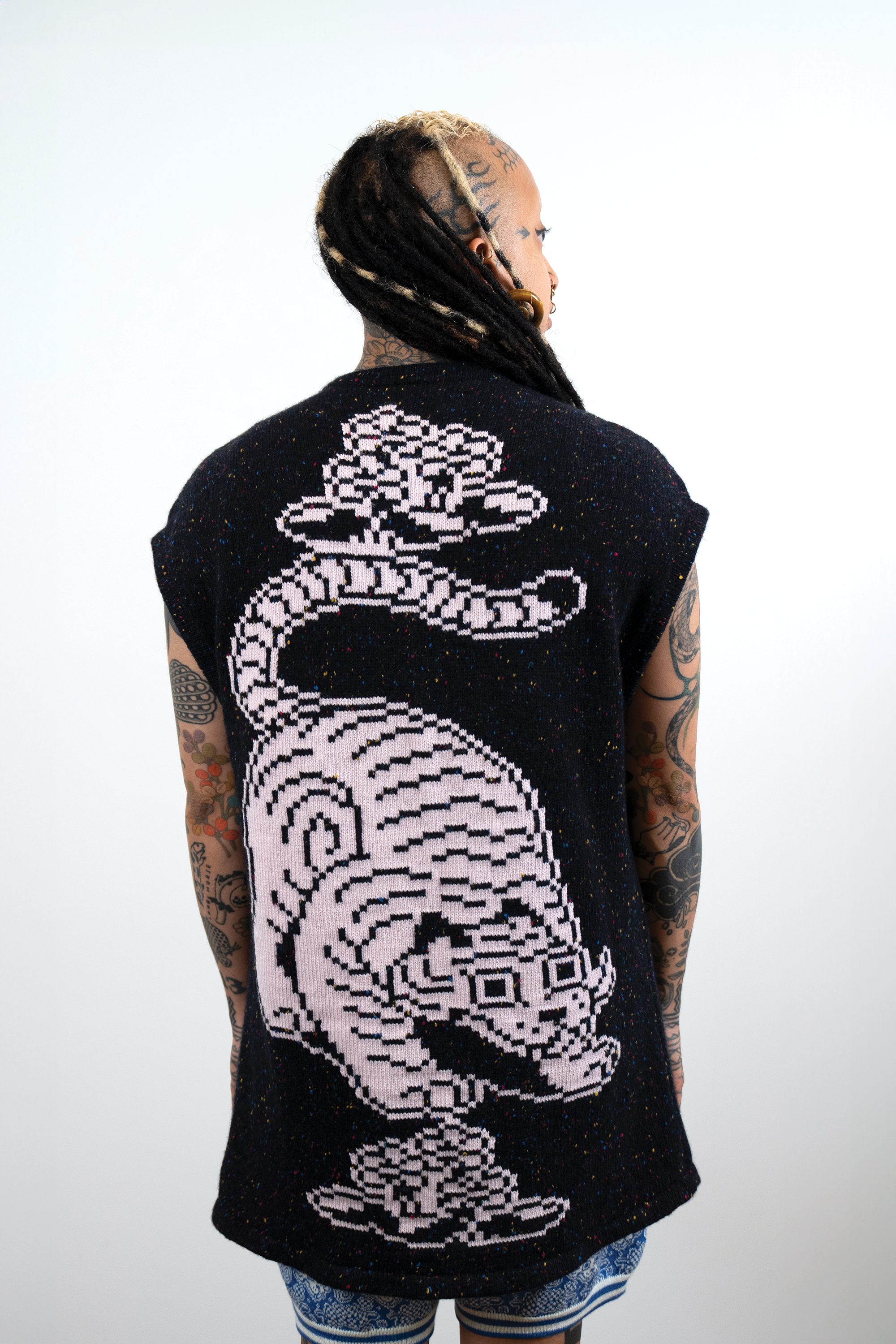
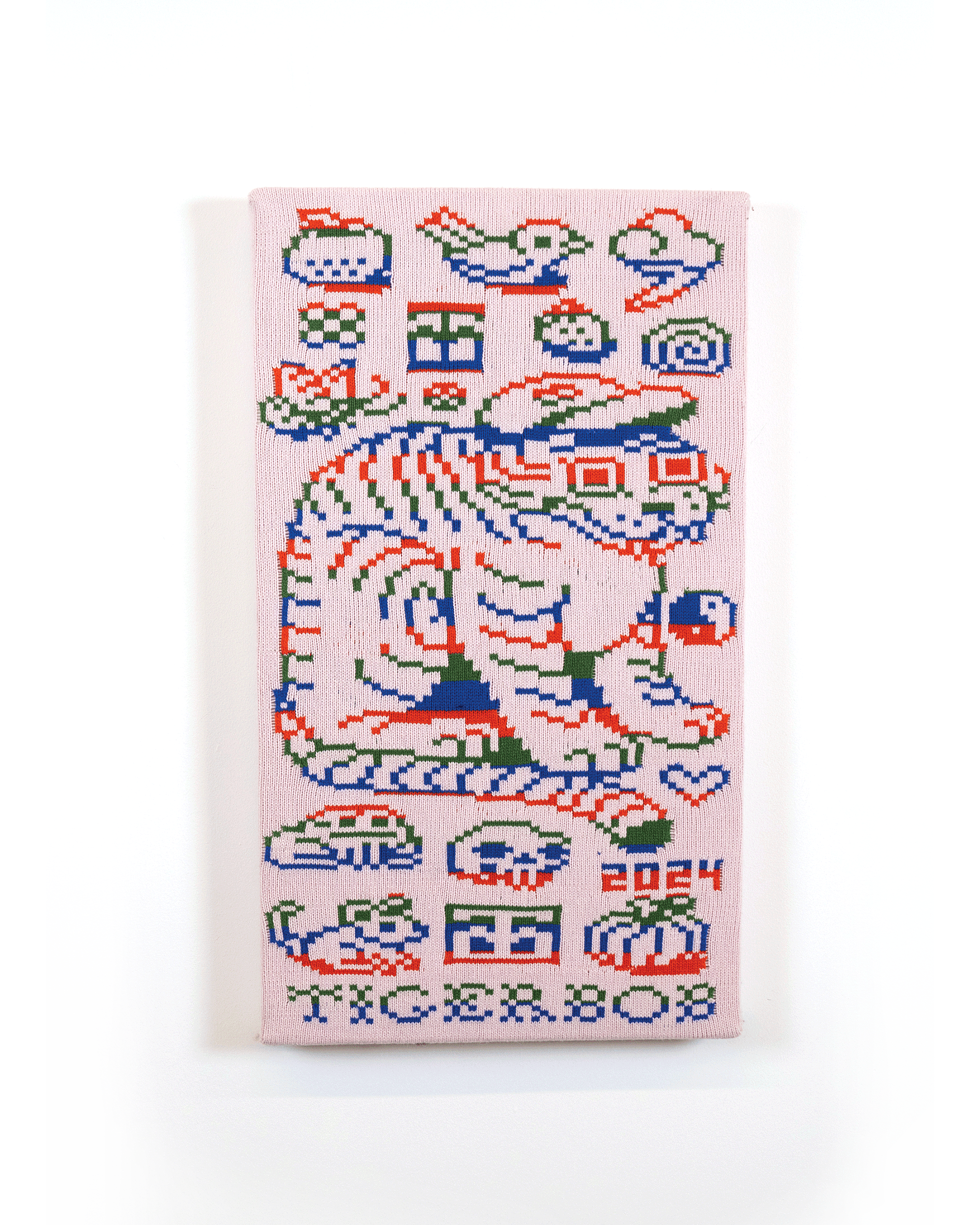
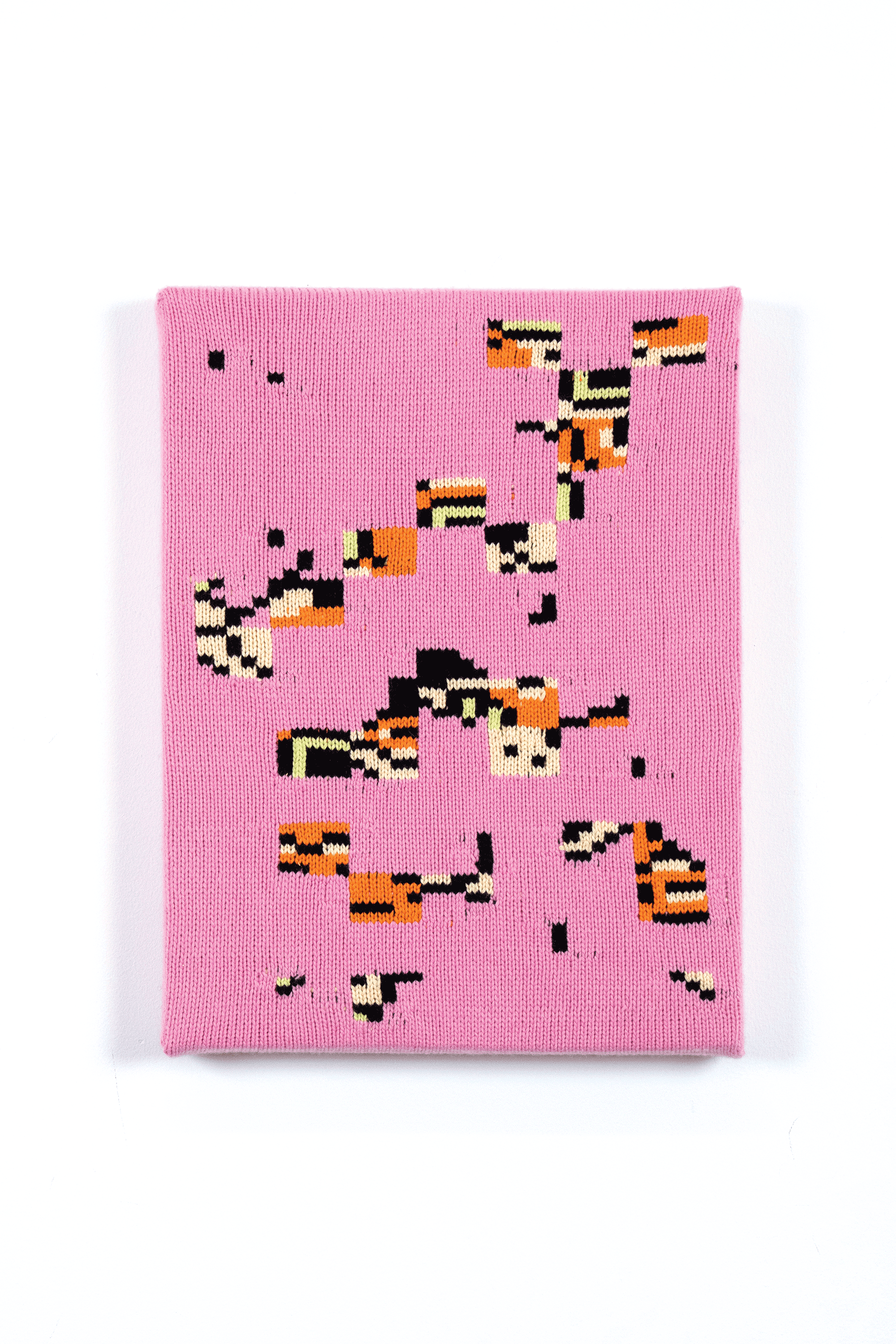
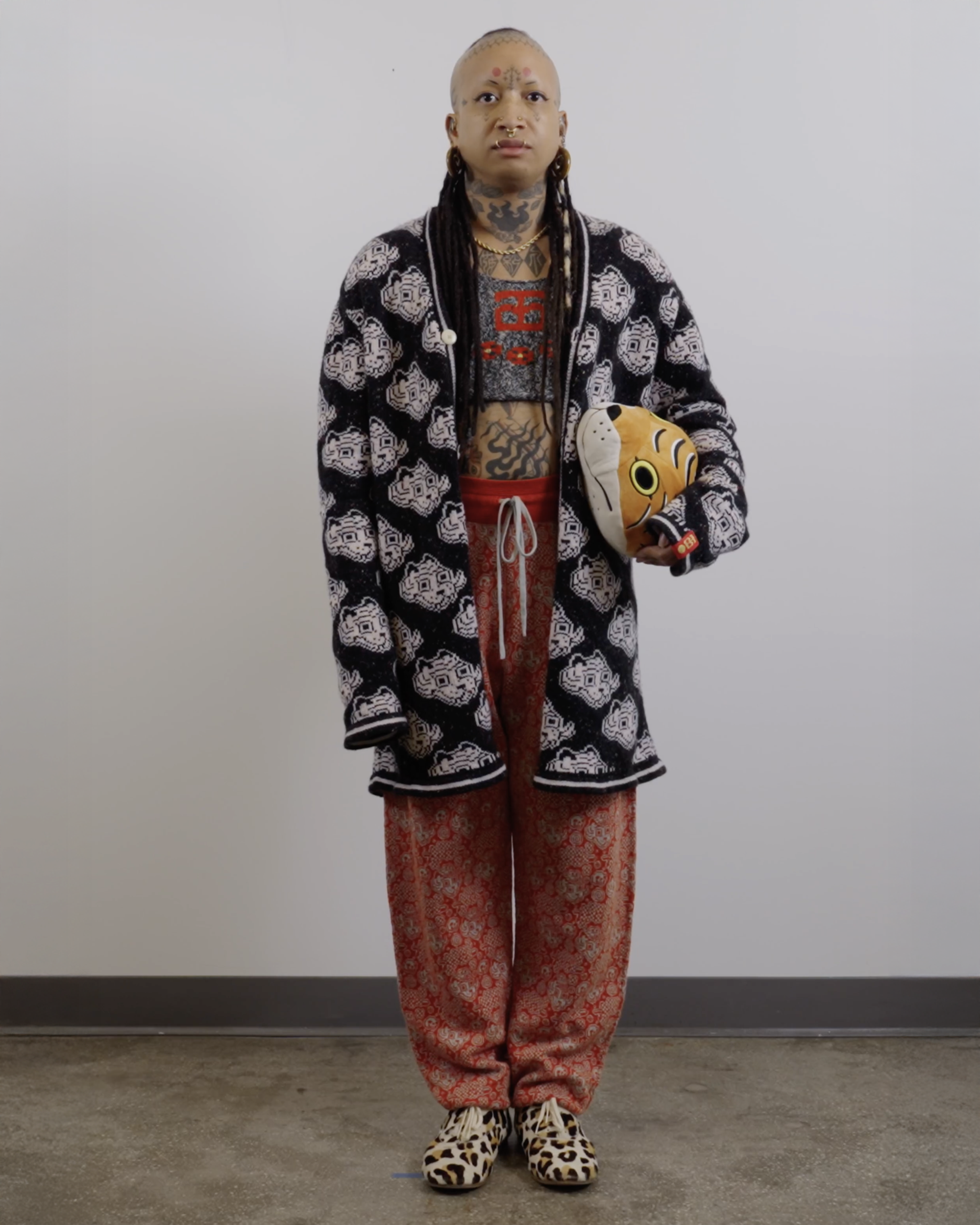
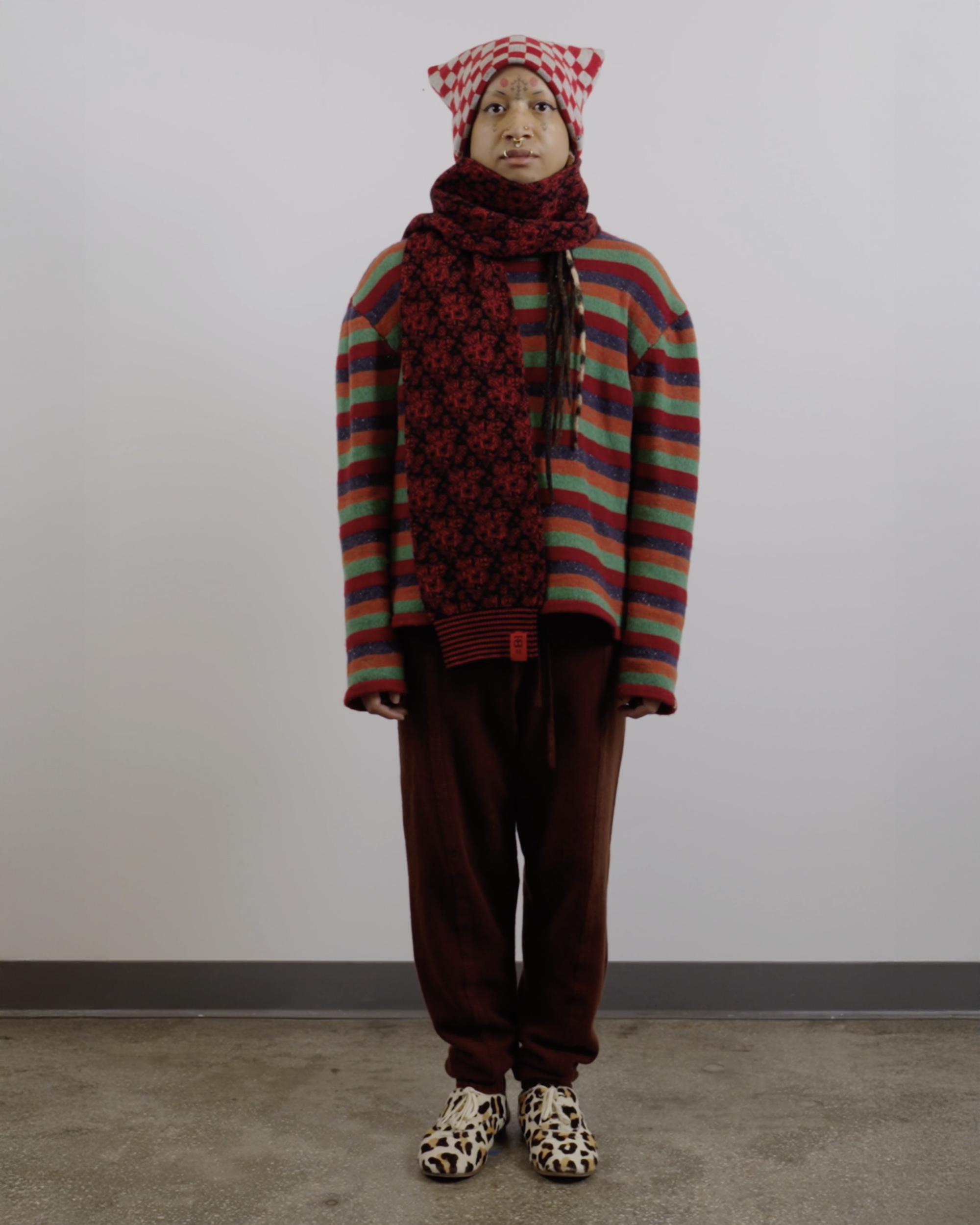
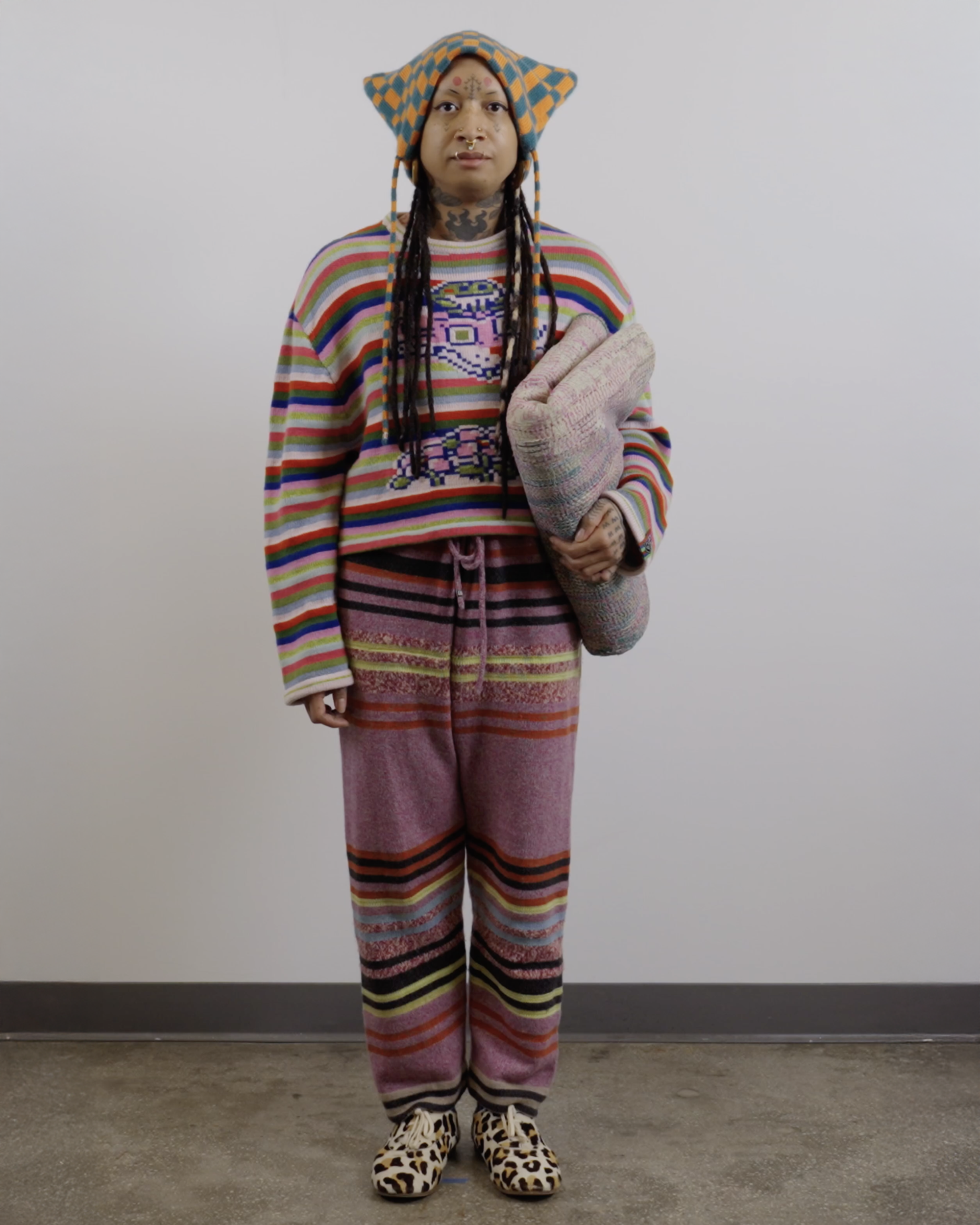
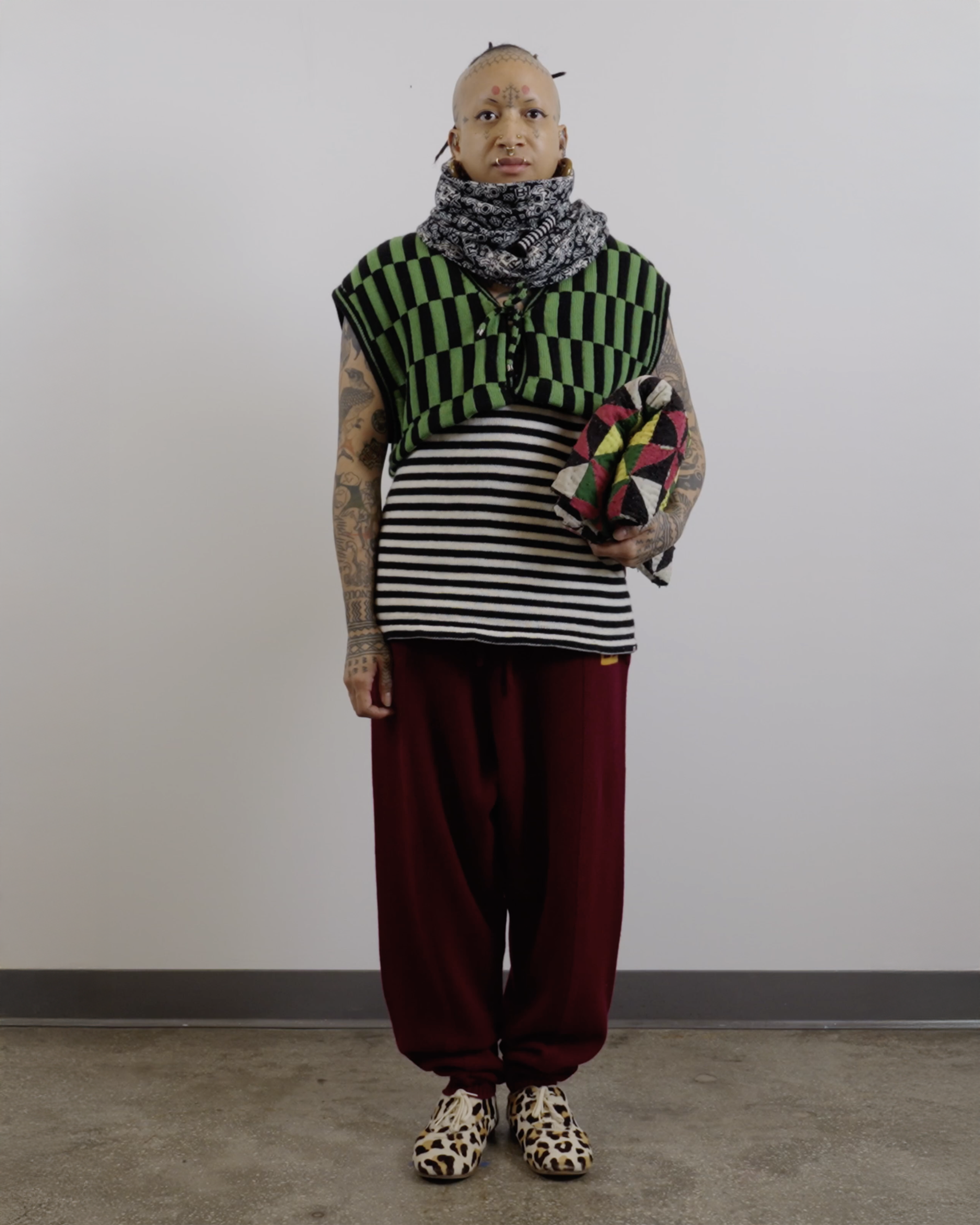
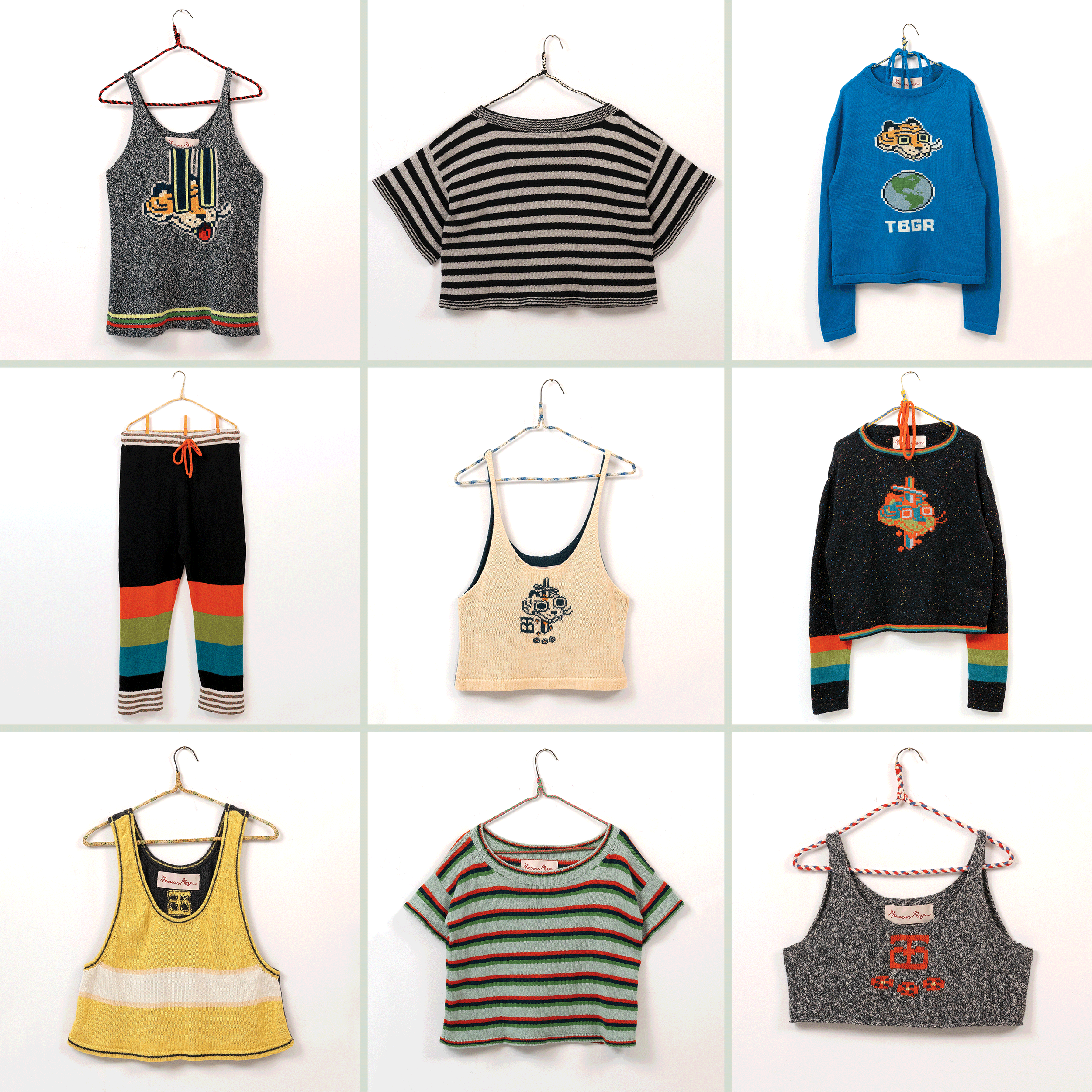
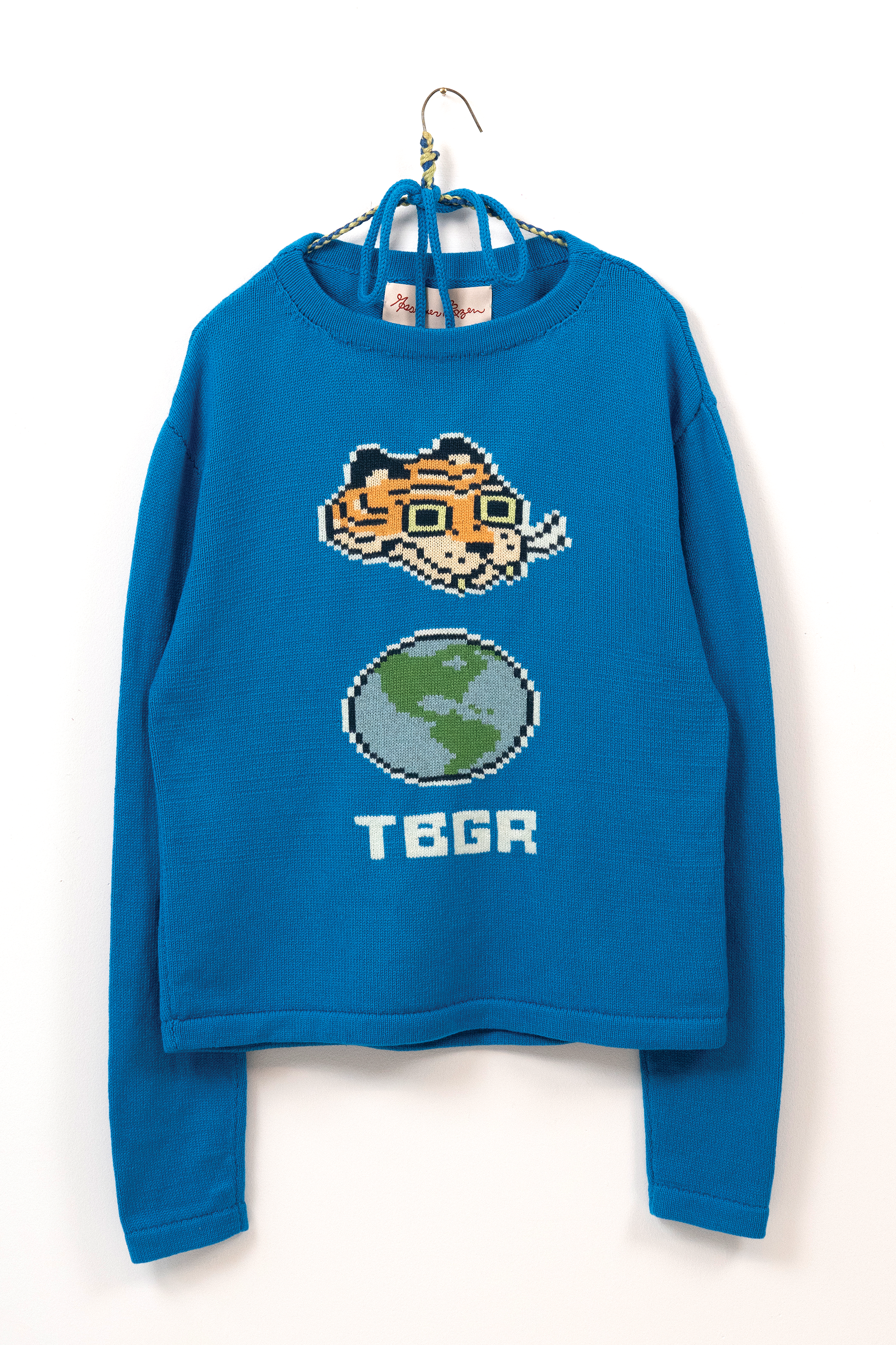
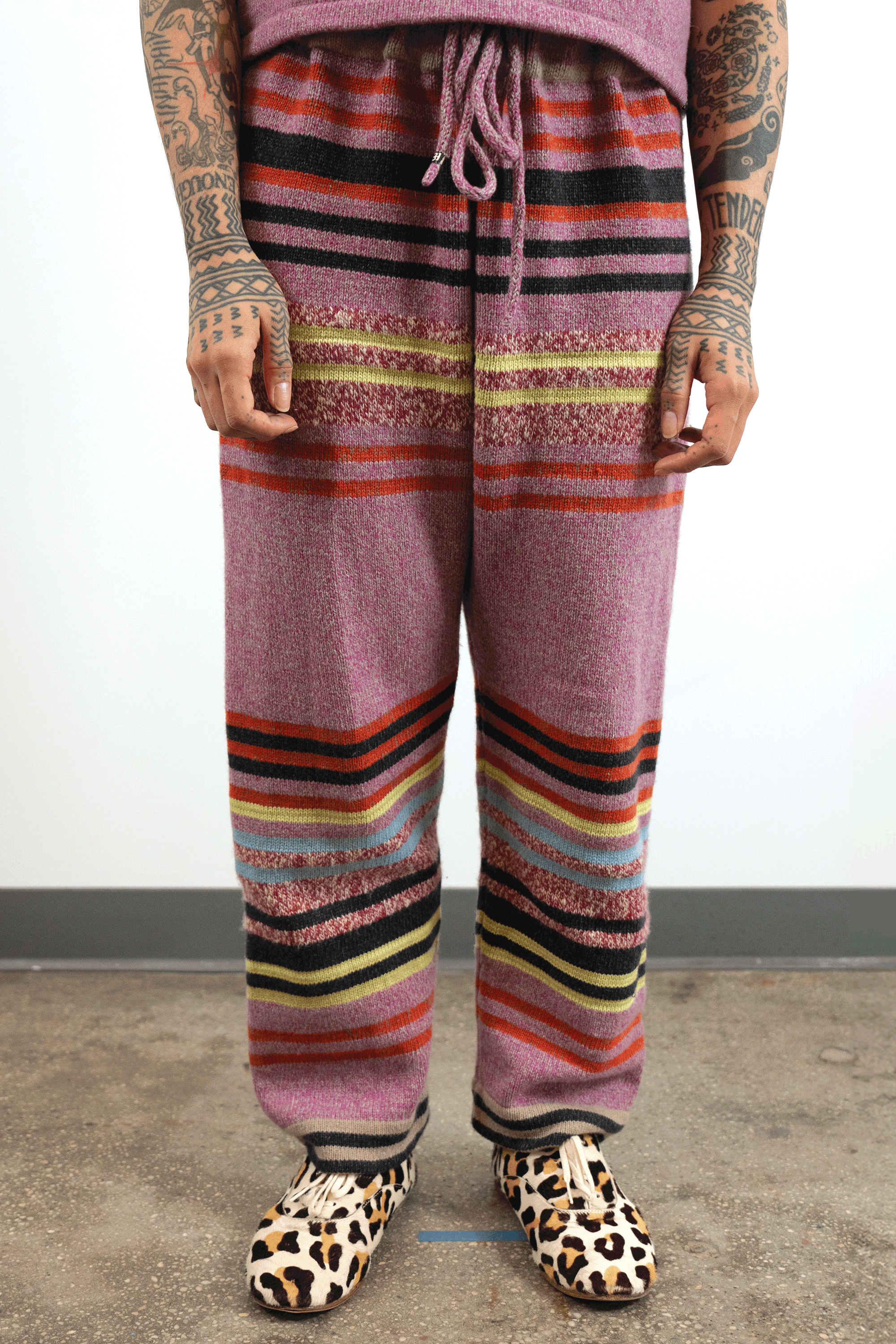
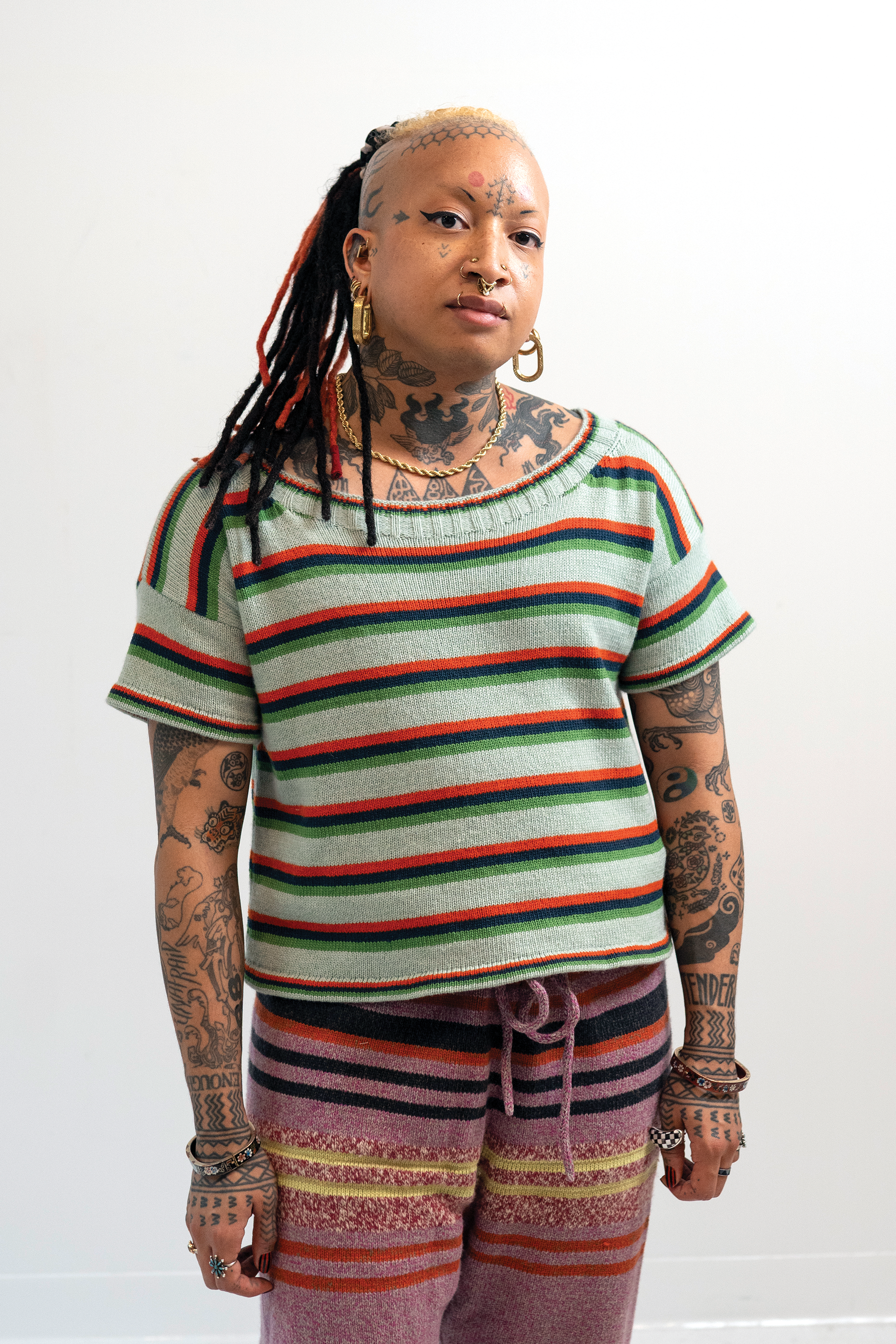
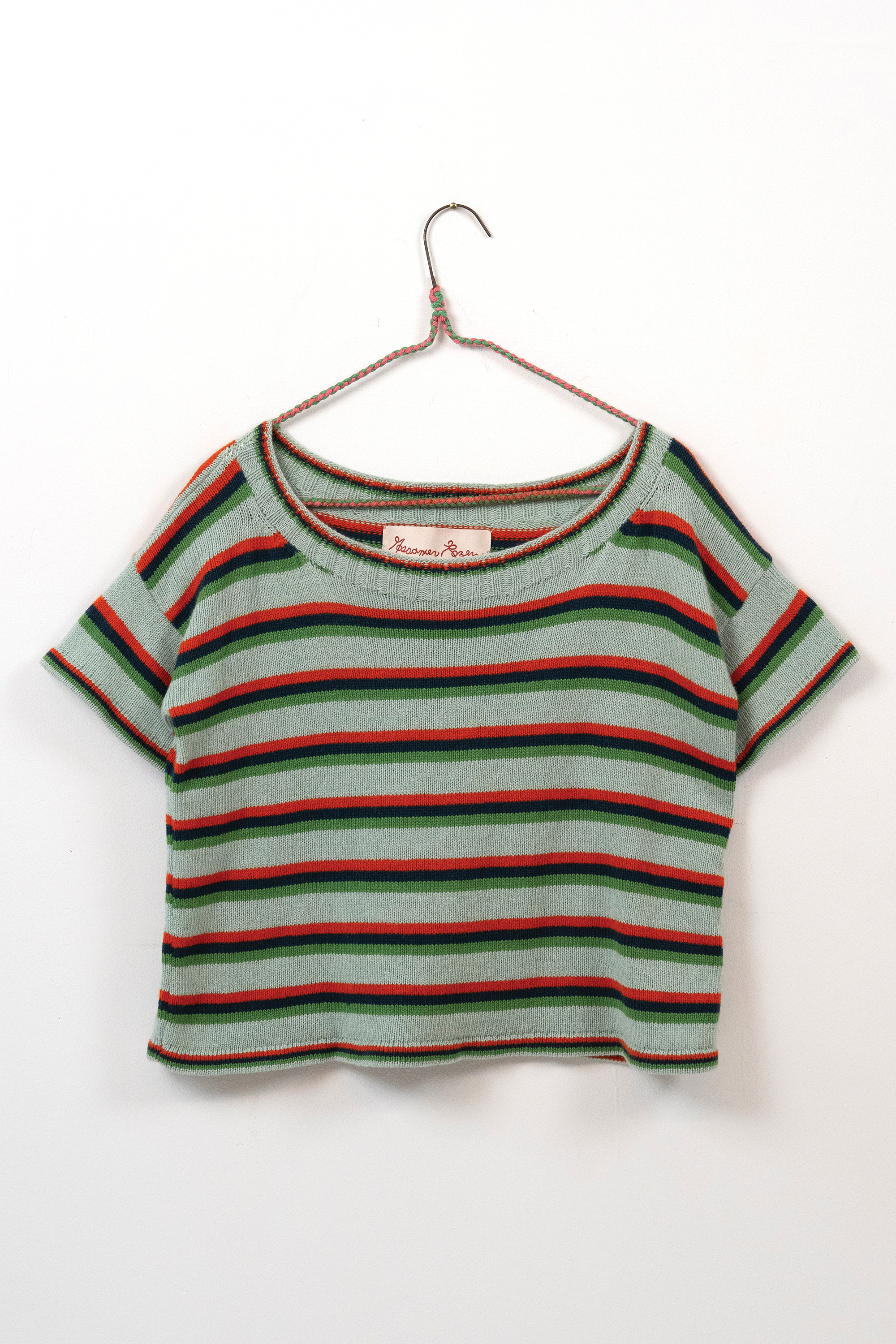
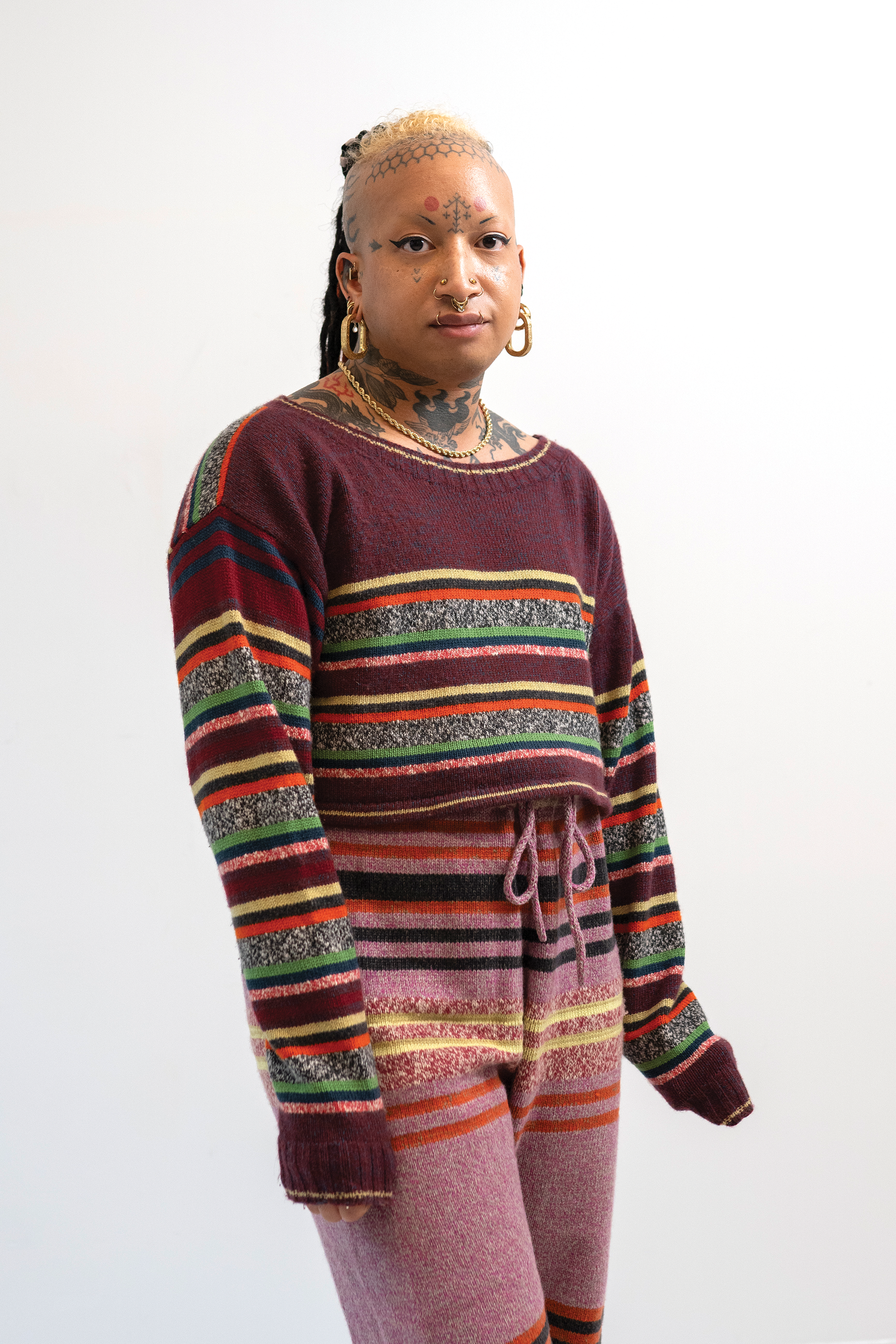
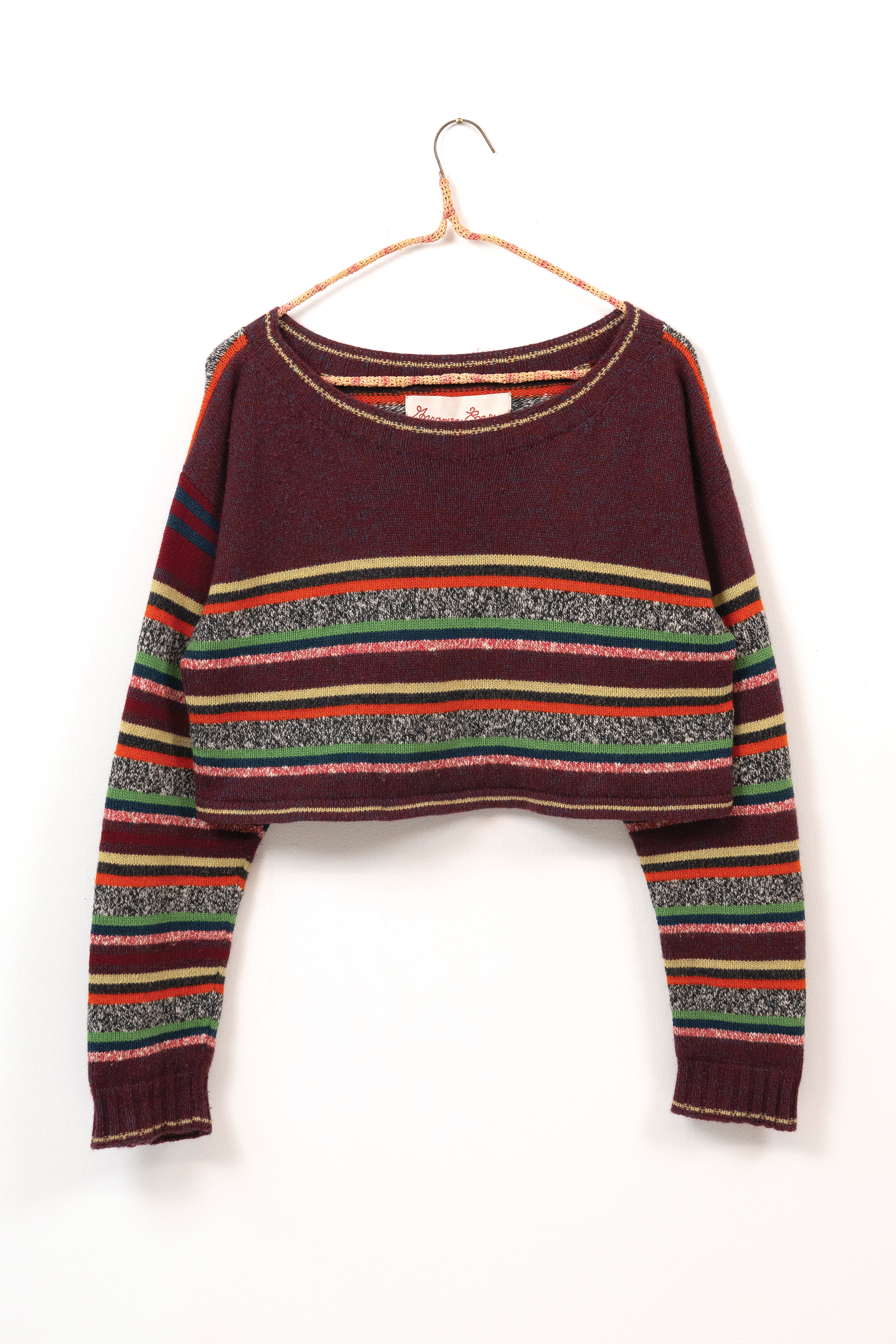
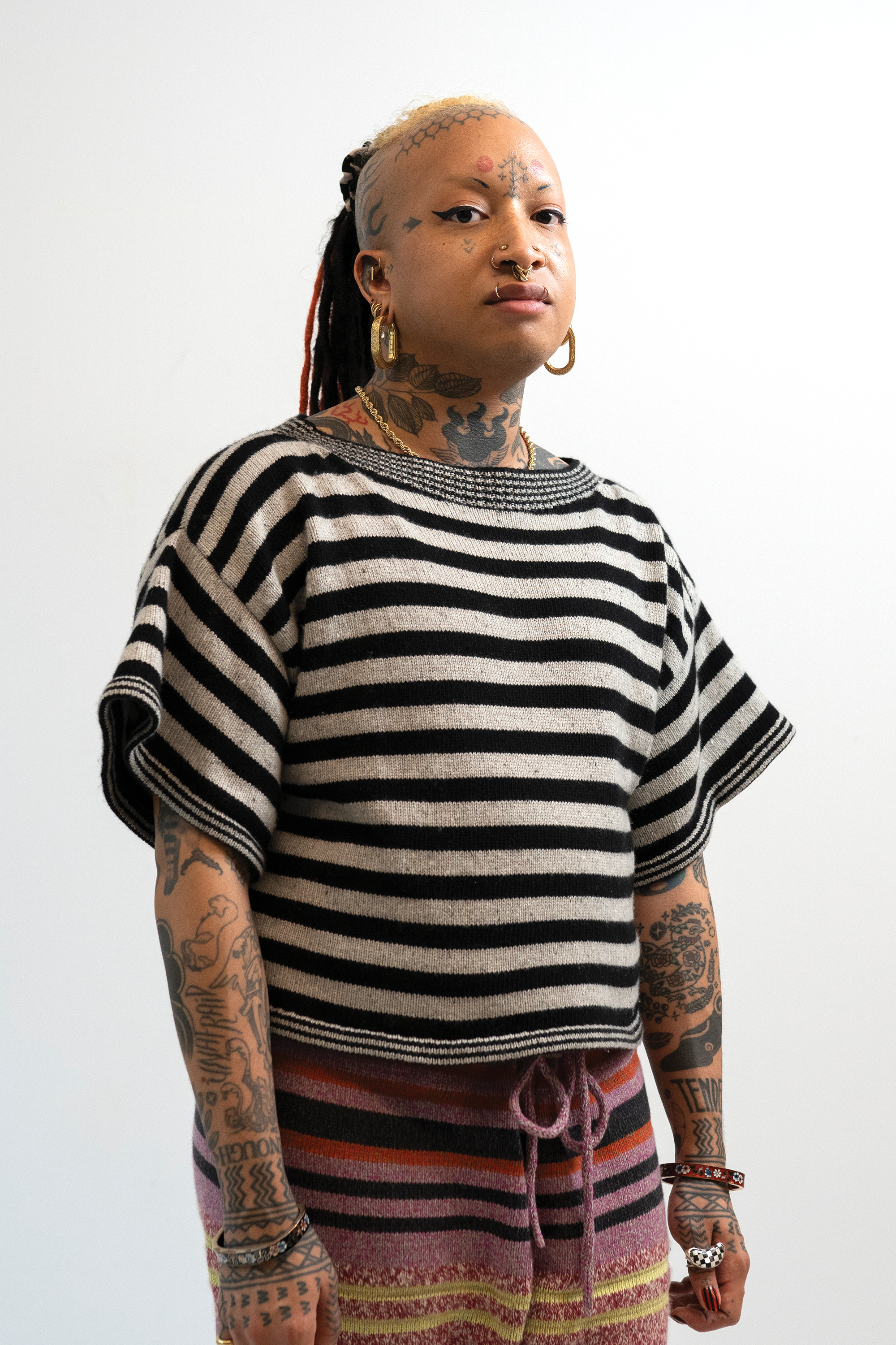
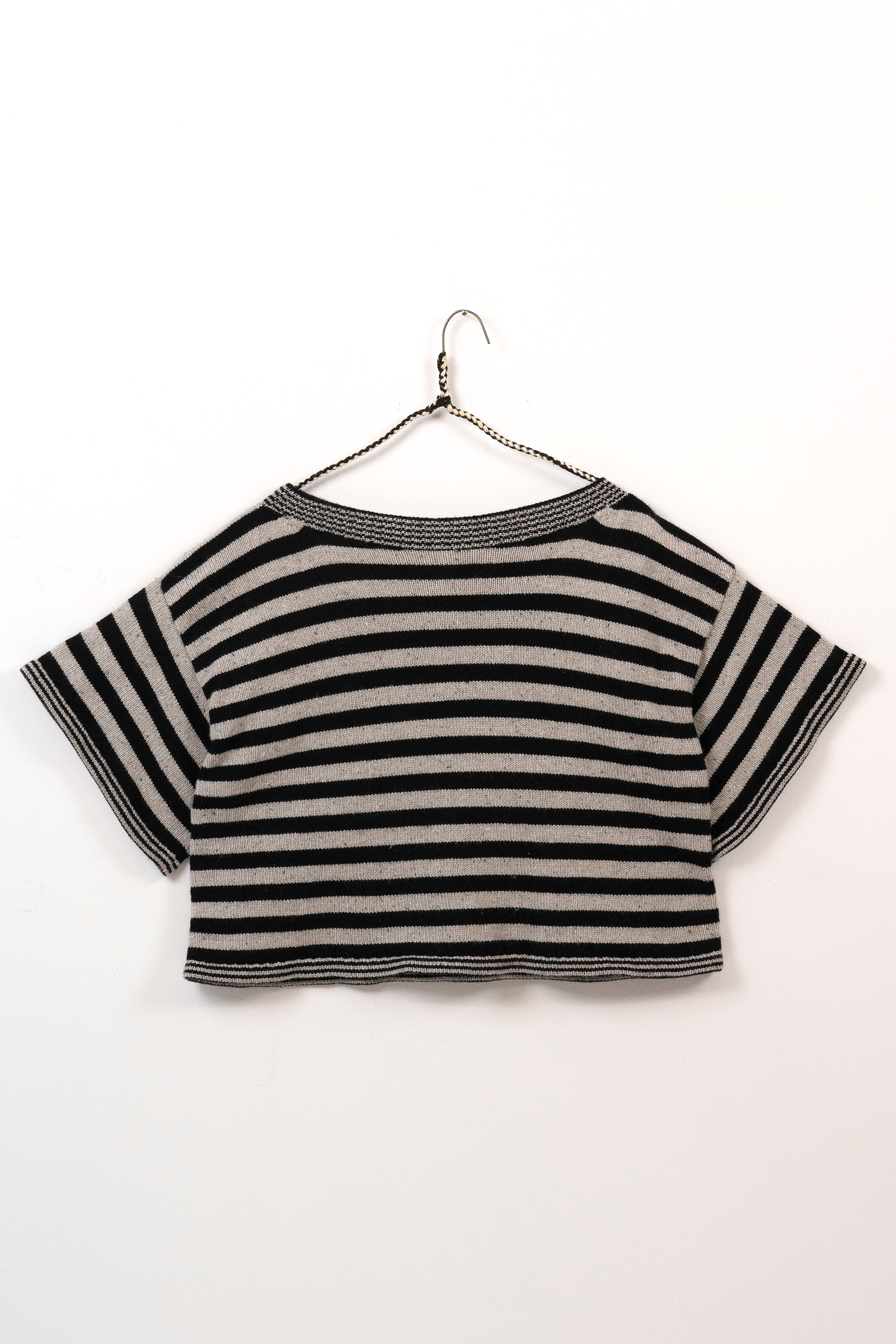
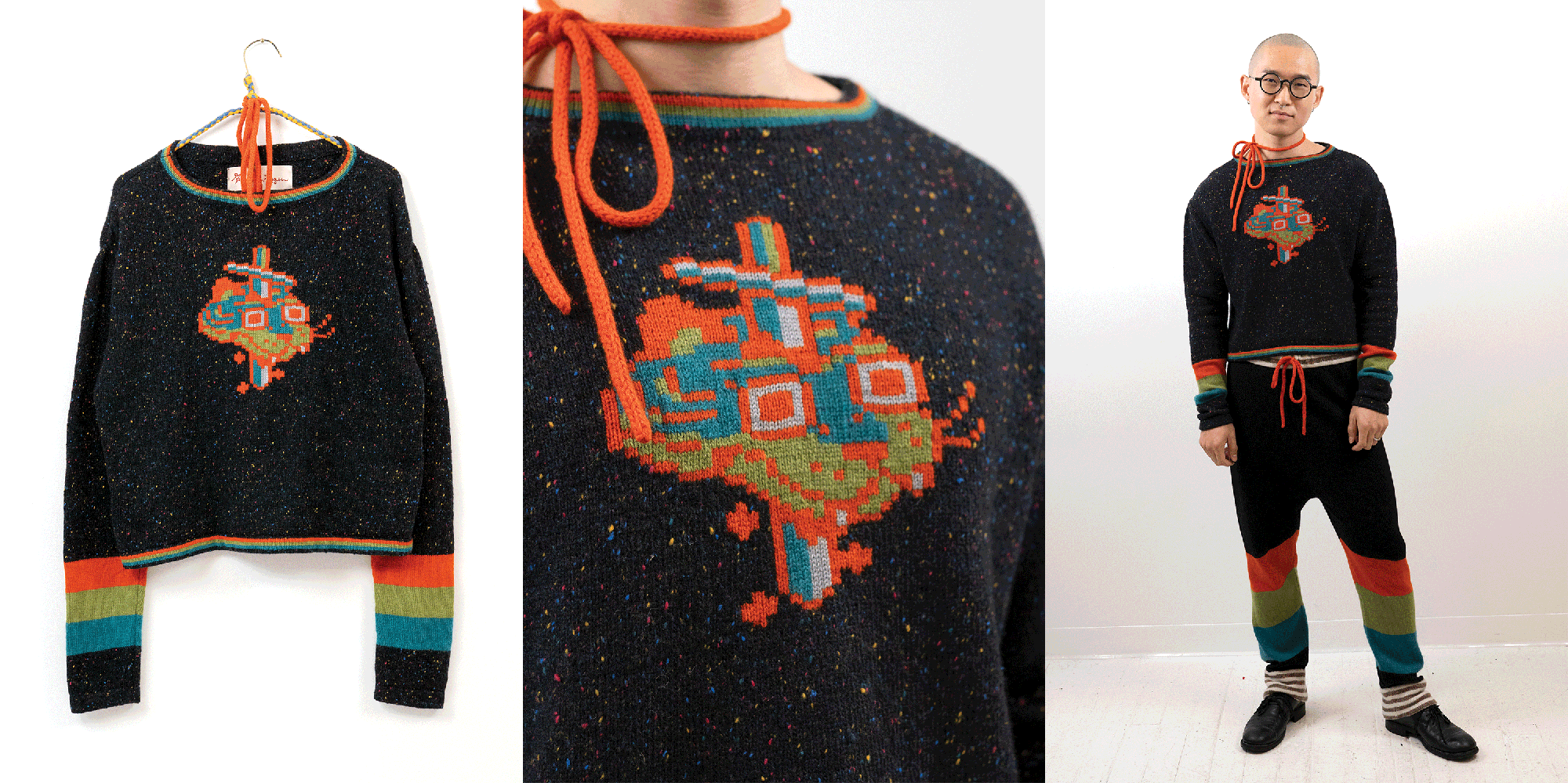
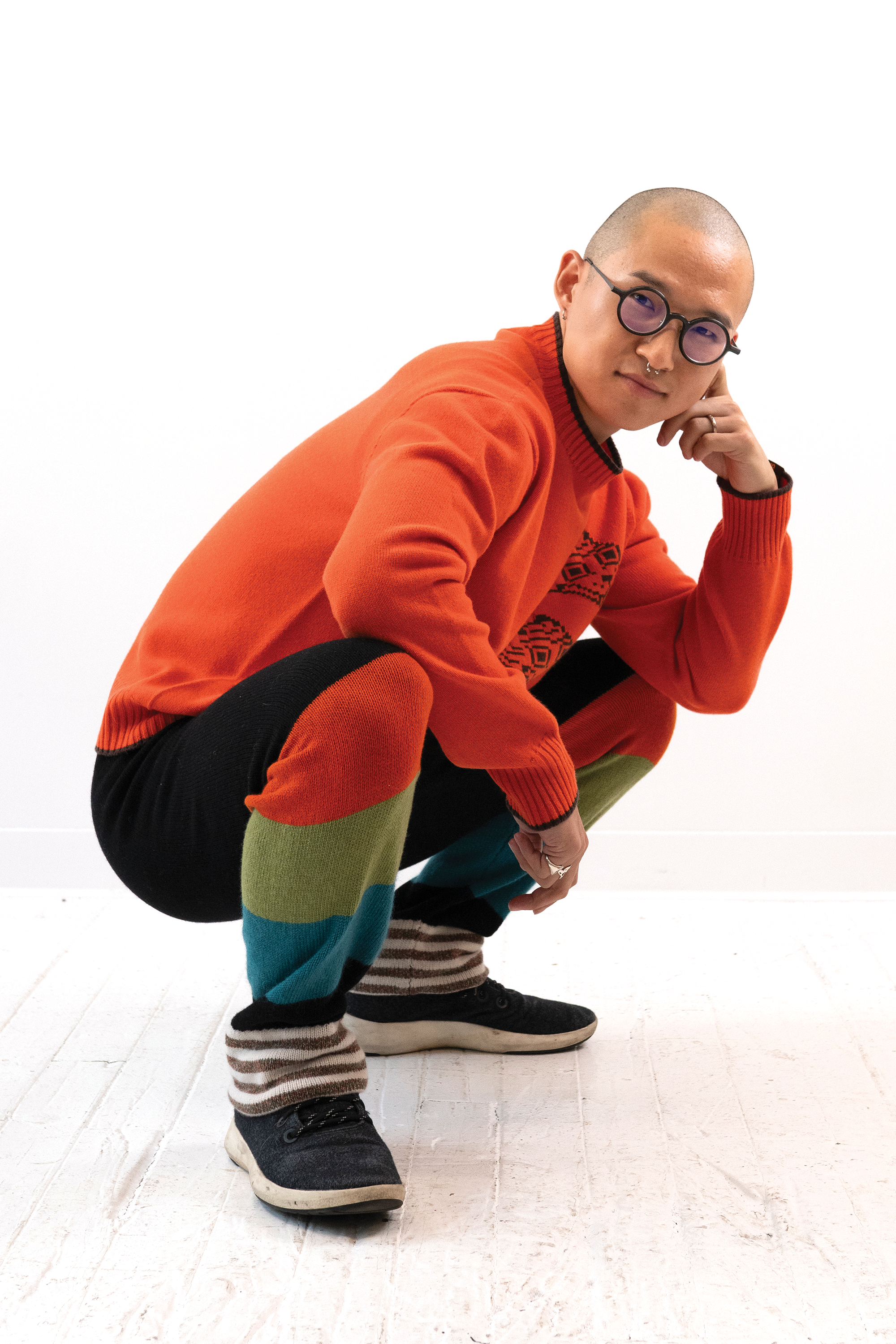
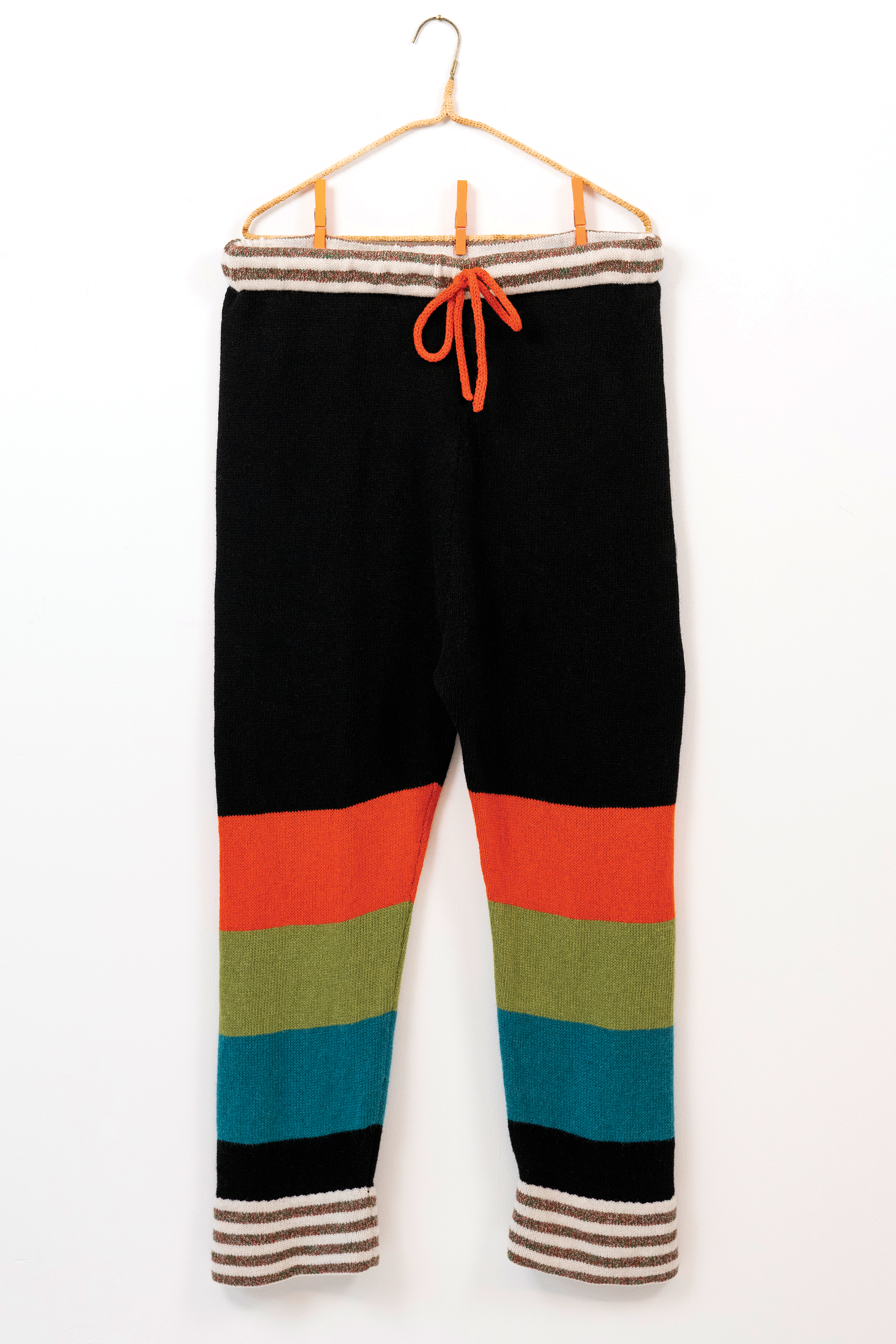
I chose knitting to produce garments and objects because the process allows me to design not only the garment but also the fabric itself. I choose to use the knitting machine, instead of hand knitting, because the process to design and work one row of stitches at a time is interesting to me. The visual pattern on the garment is architectural and becomes a helpful constraint for the body of work. The grid input scales my hand-drawn visual language into a digestible format that works with multiple mediums in my repertoire. The Tigerbob pixel tiger motif was designed with knit outputs in mind.Background
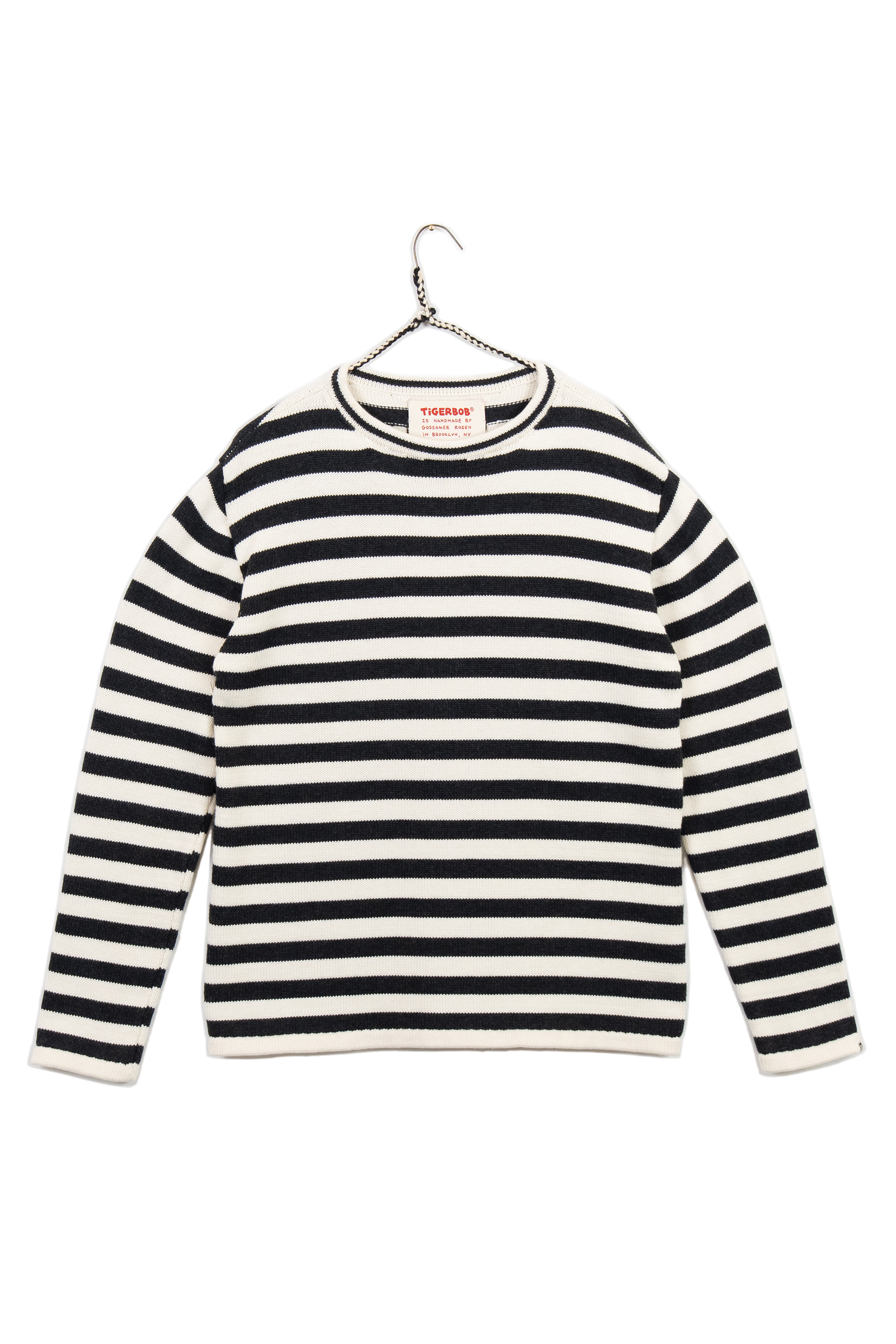
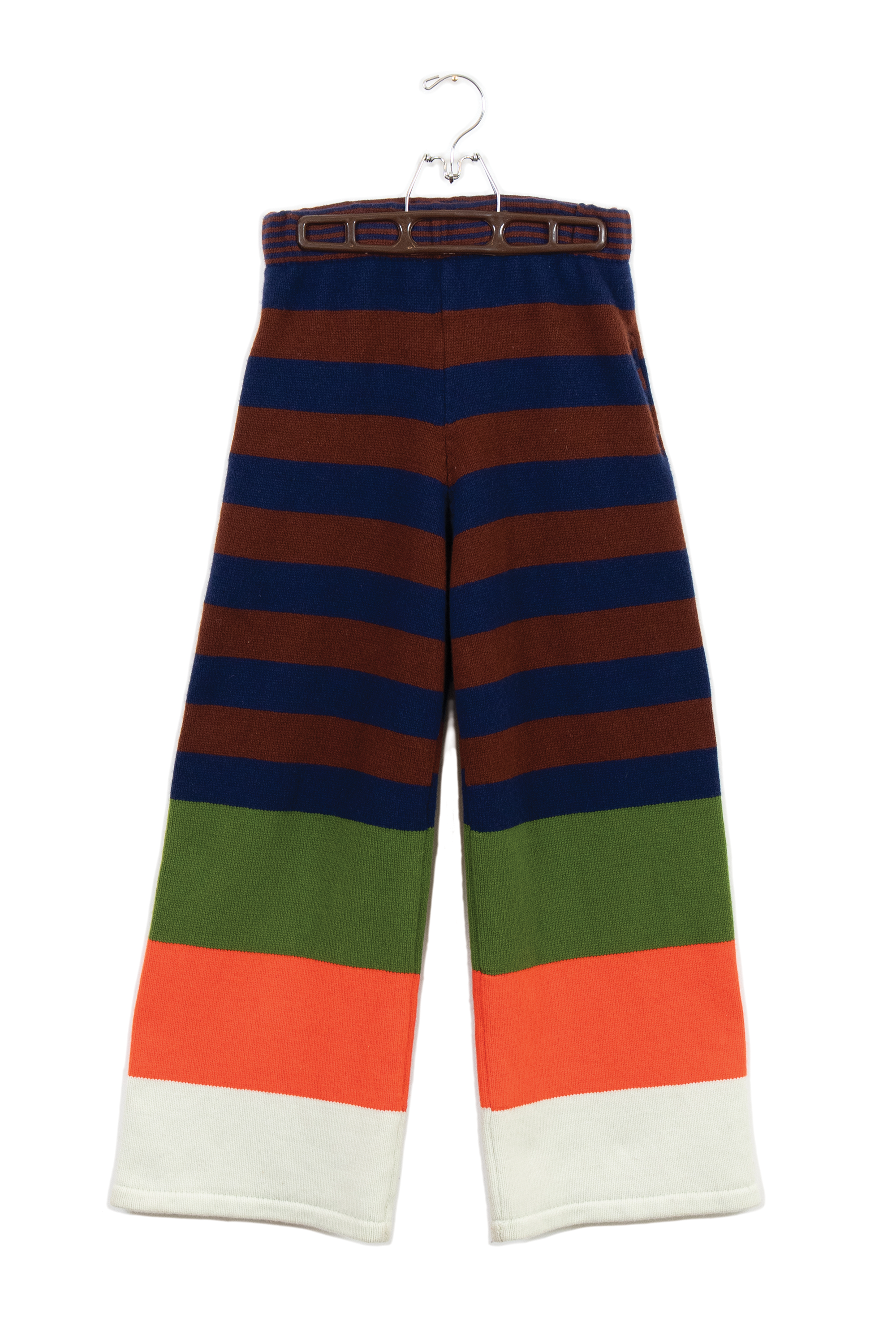
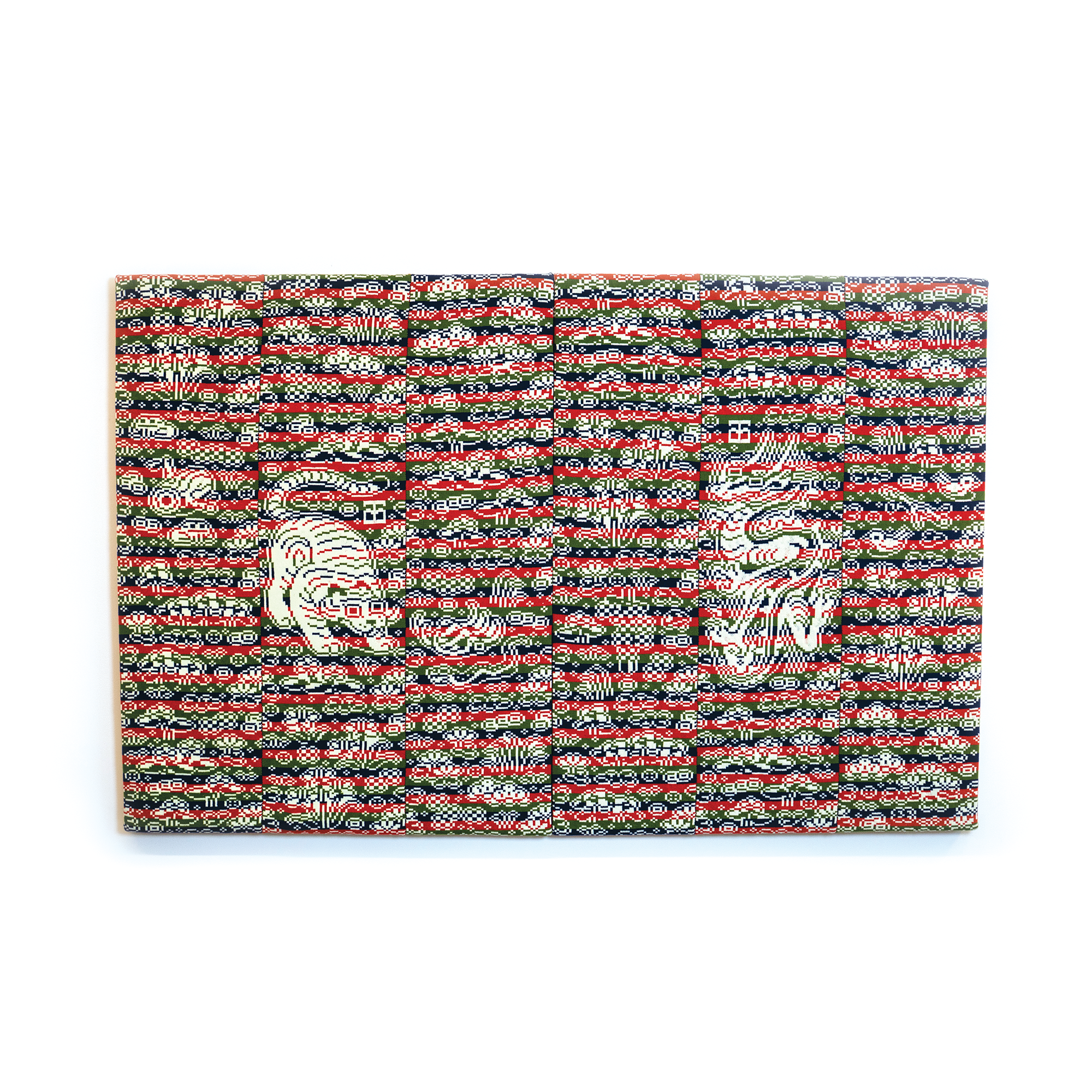
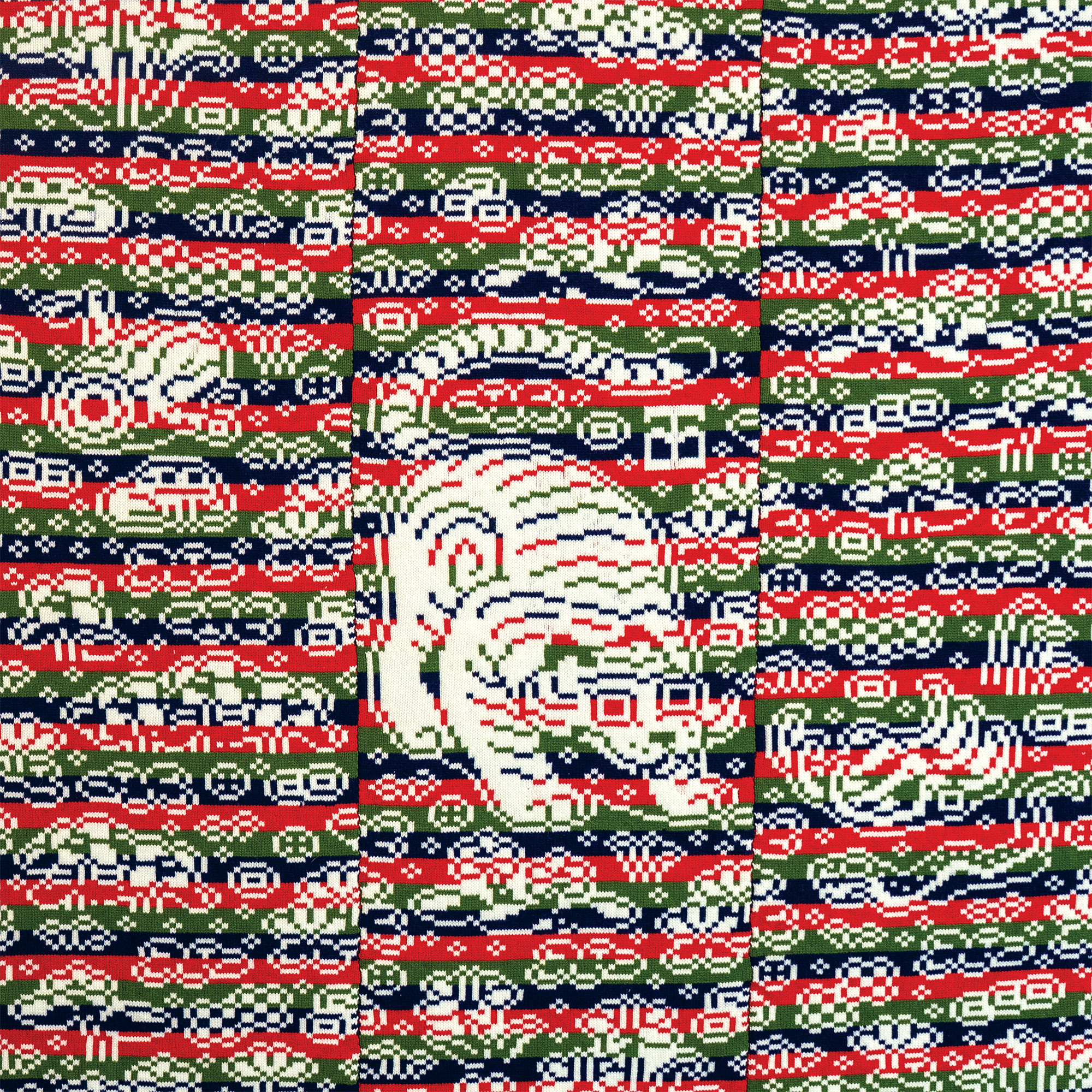
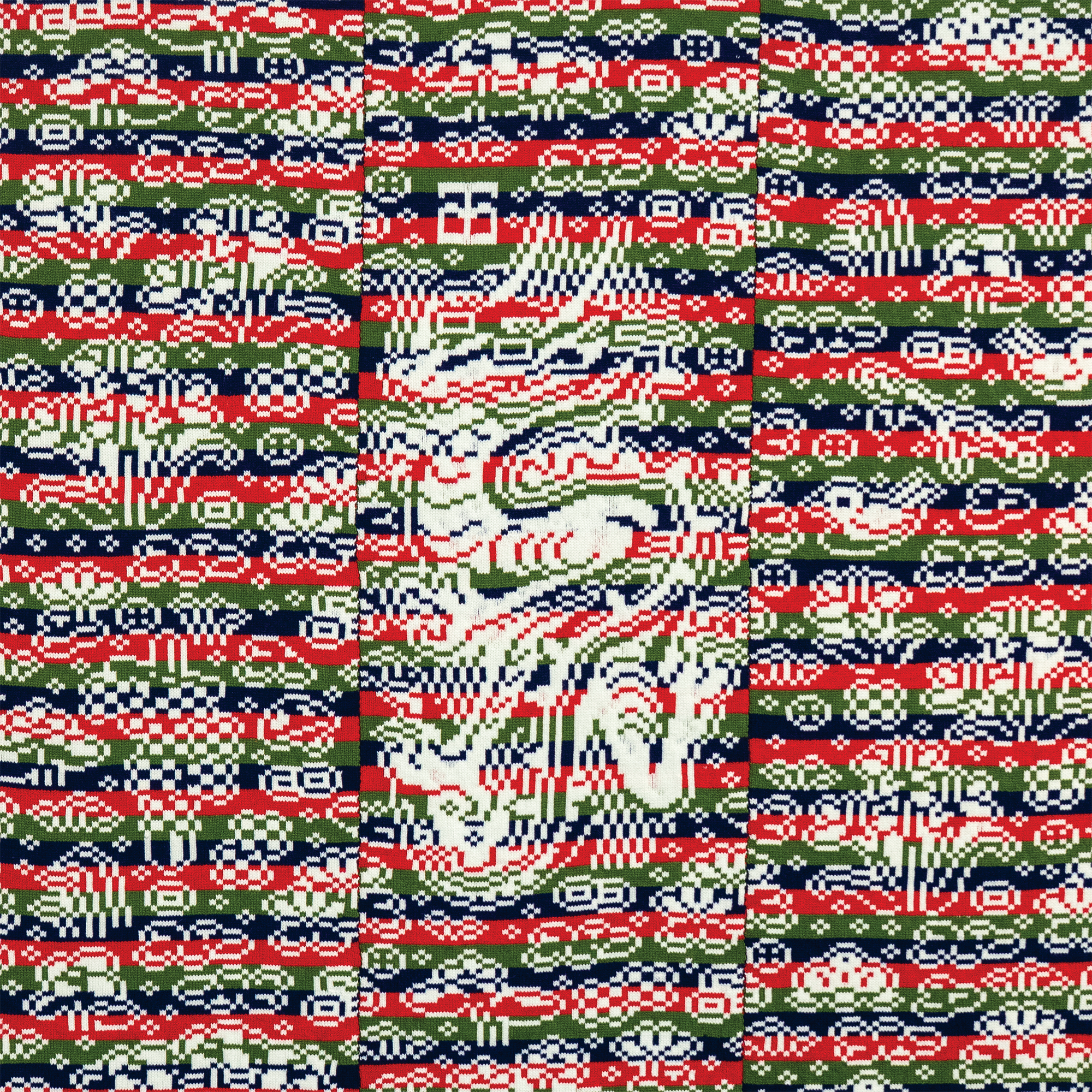
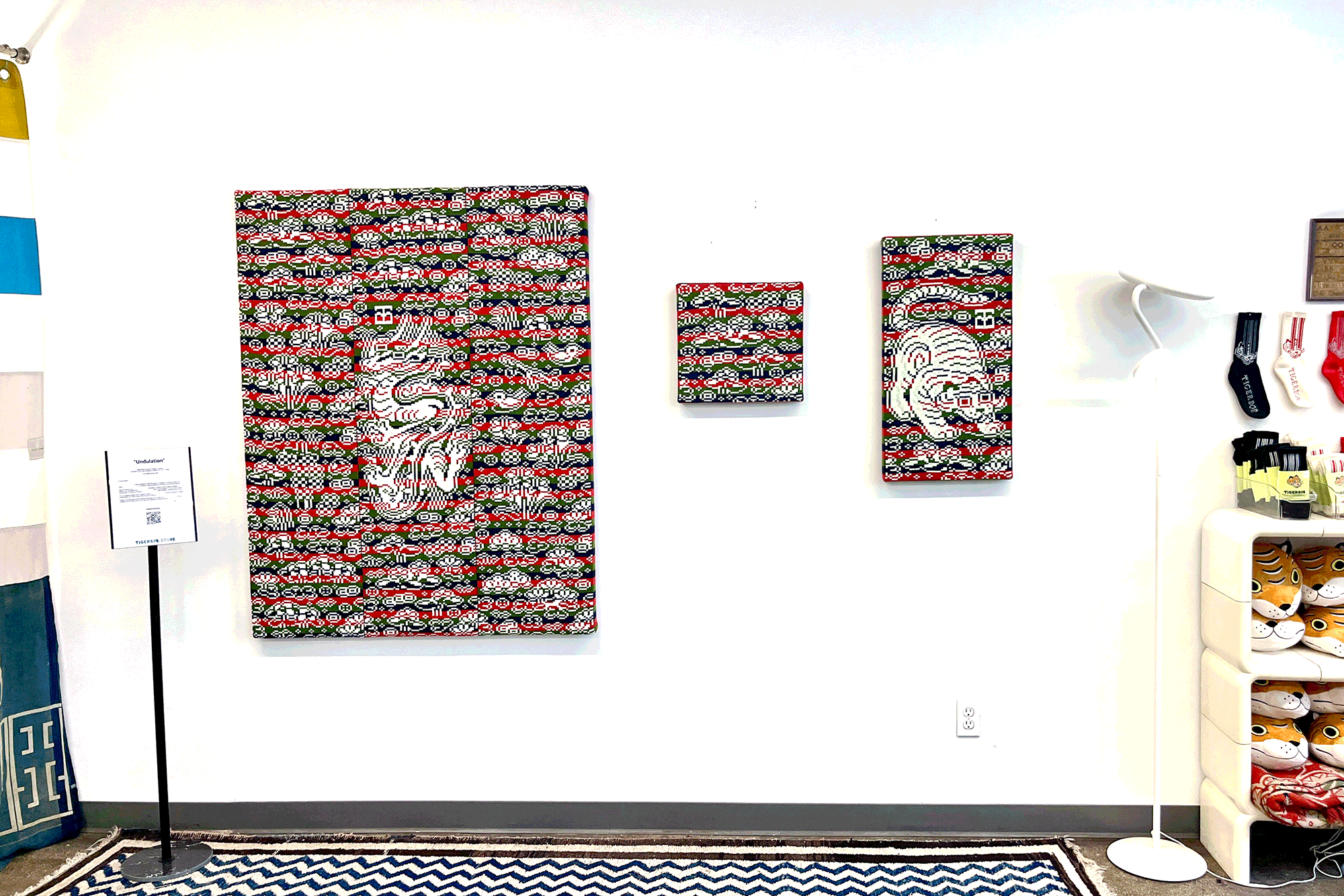
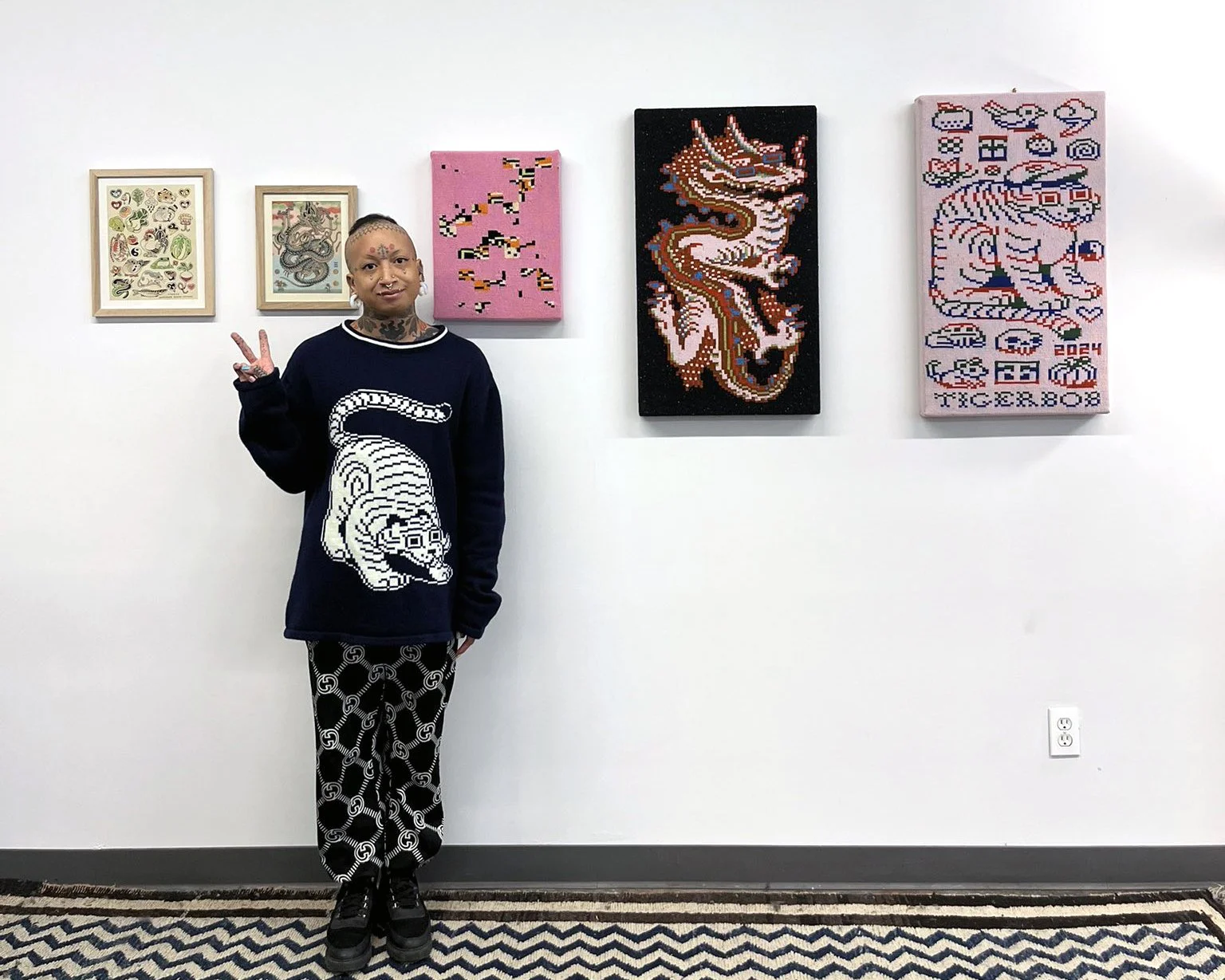
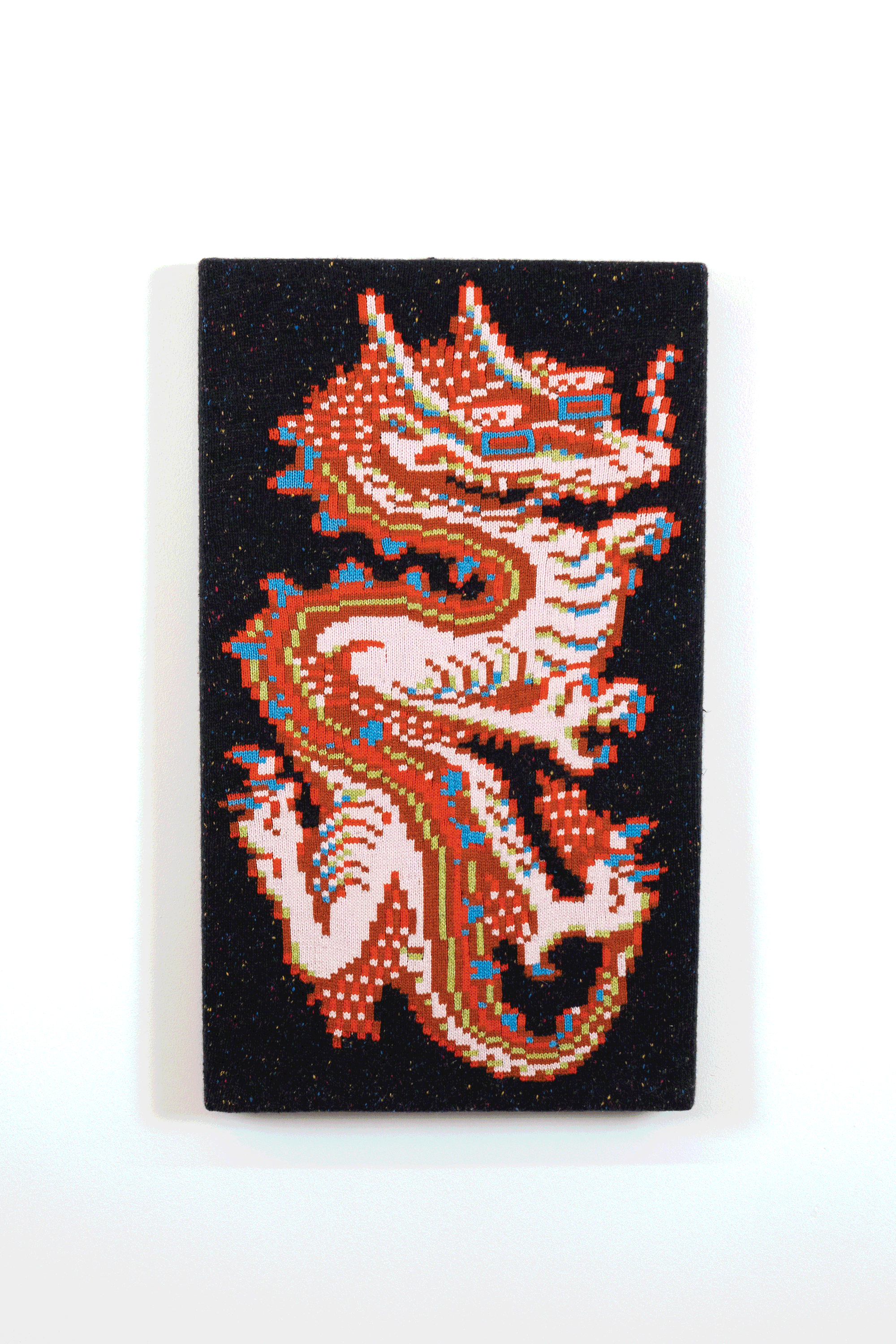
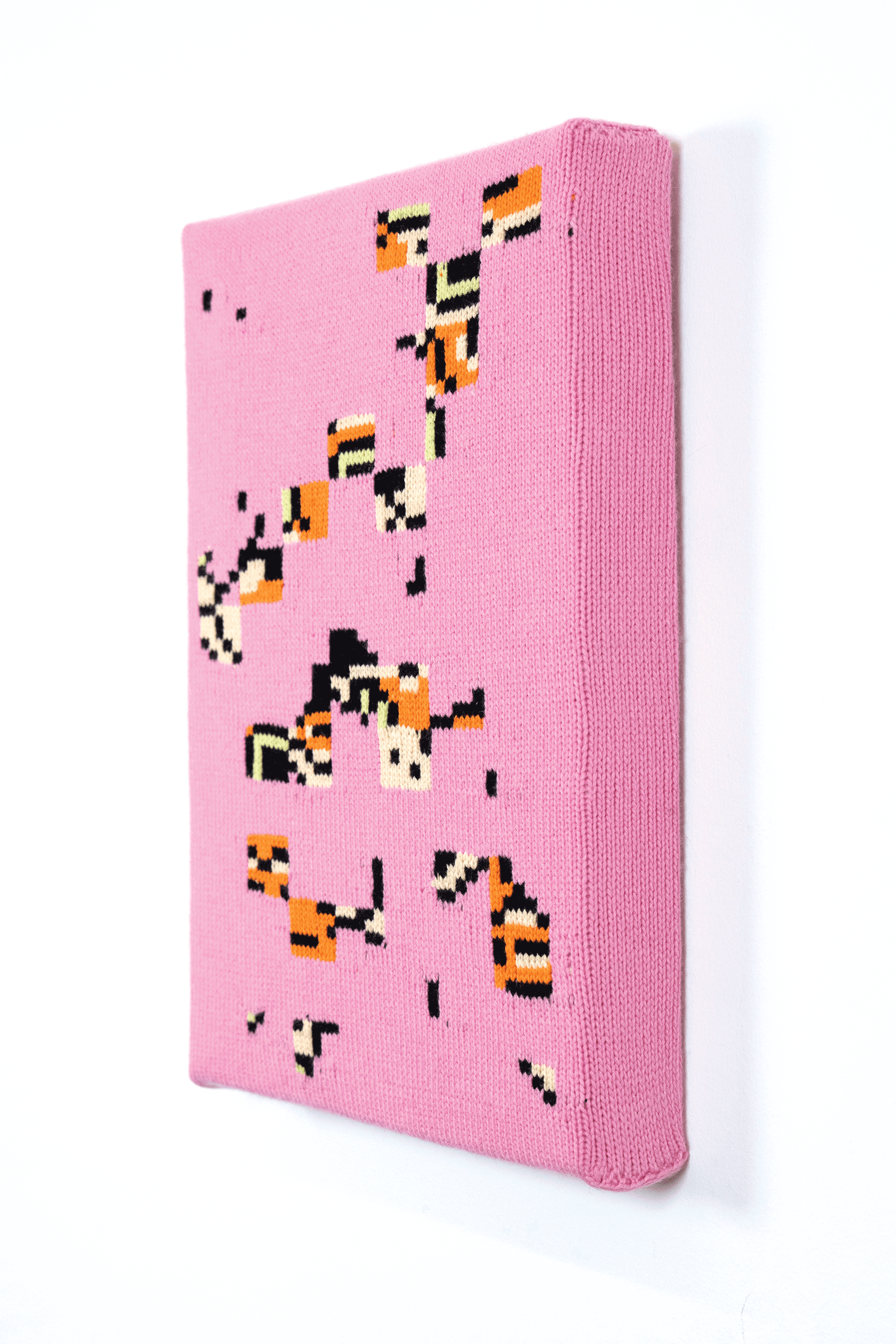
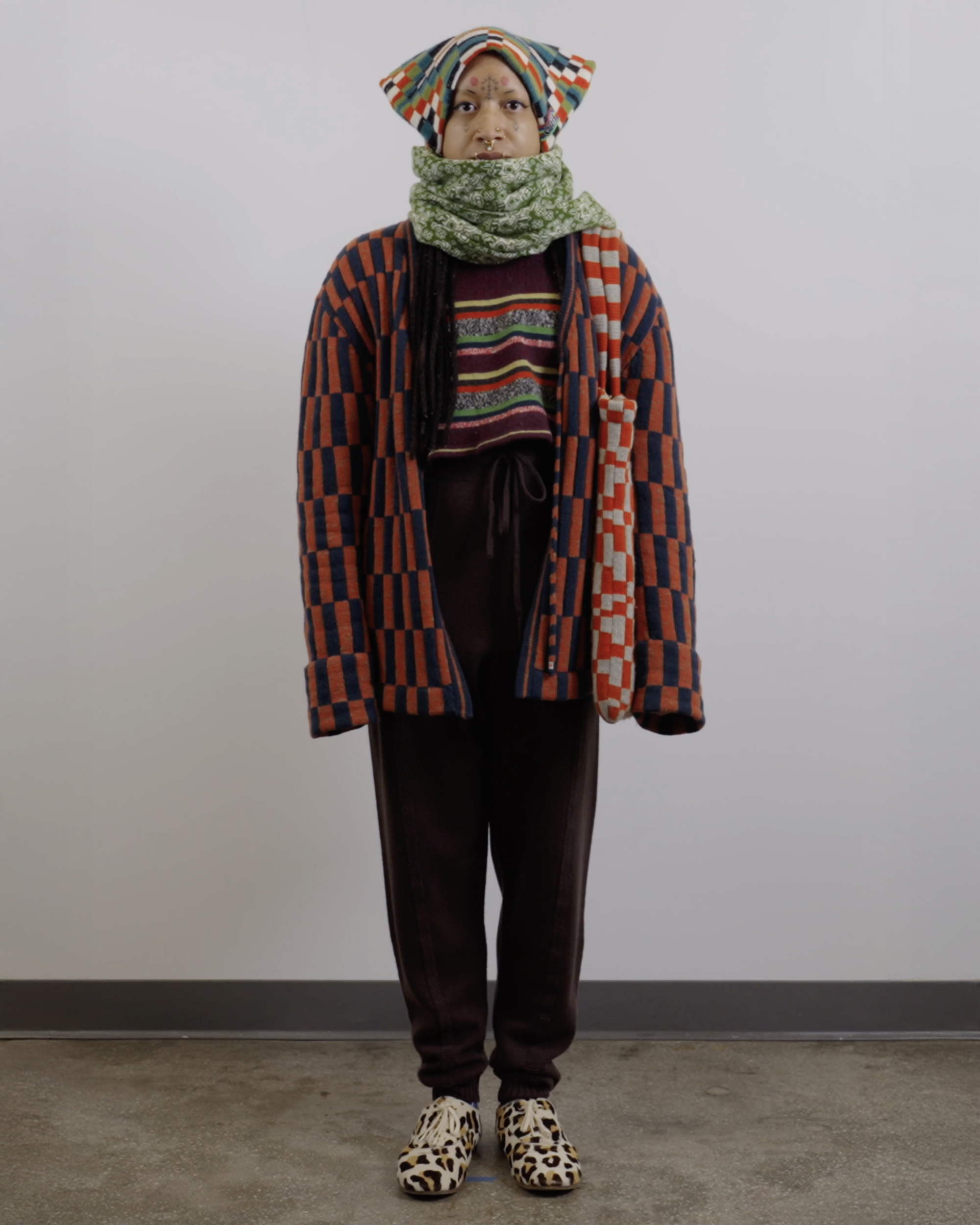
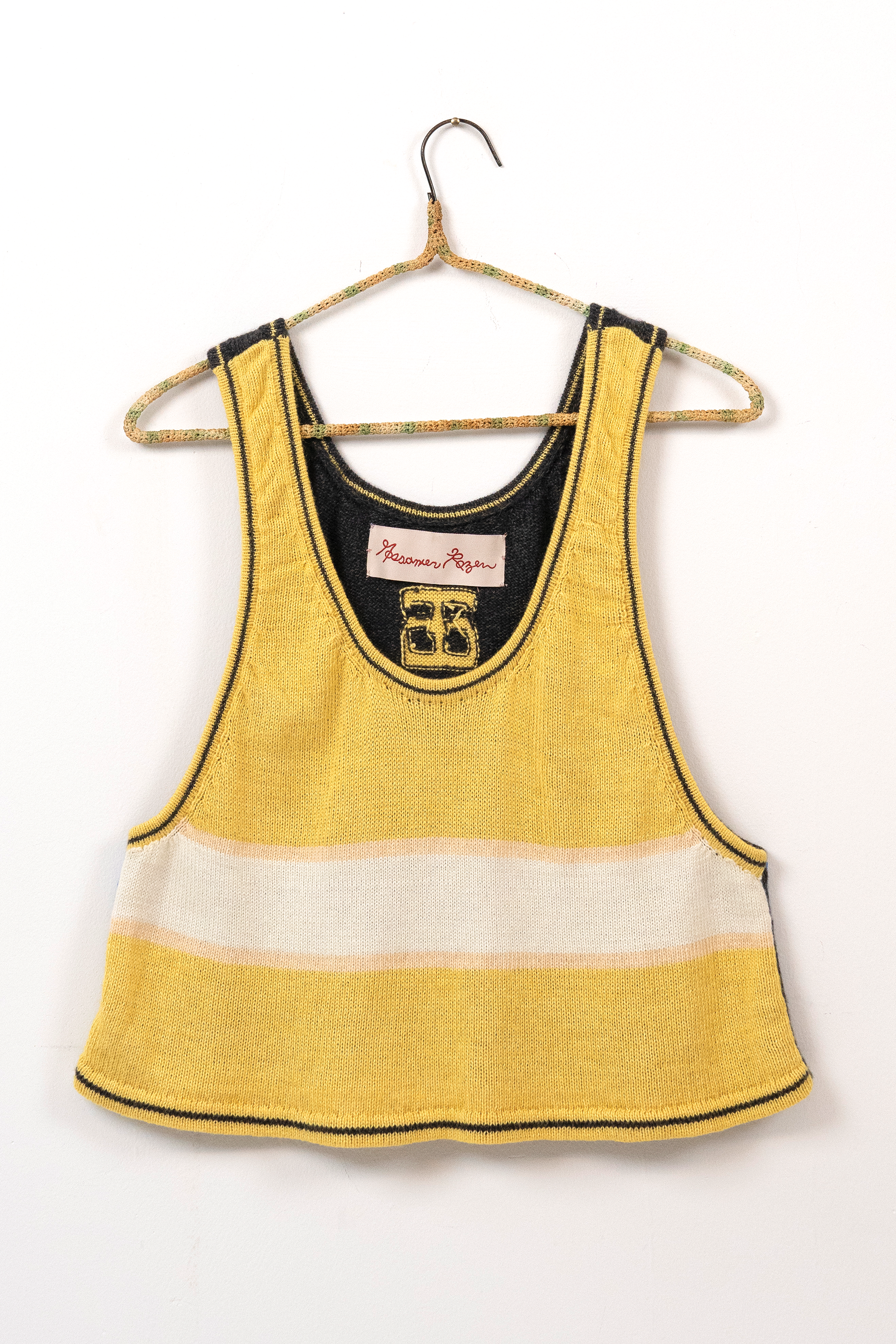
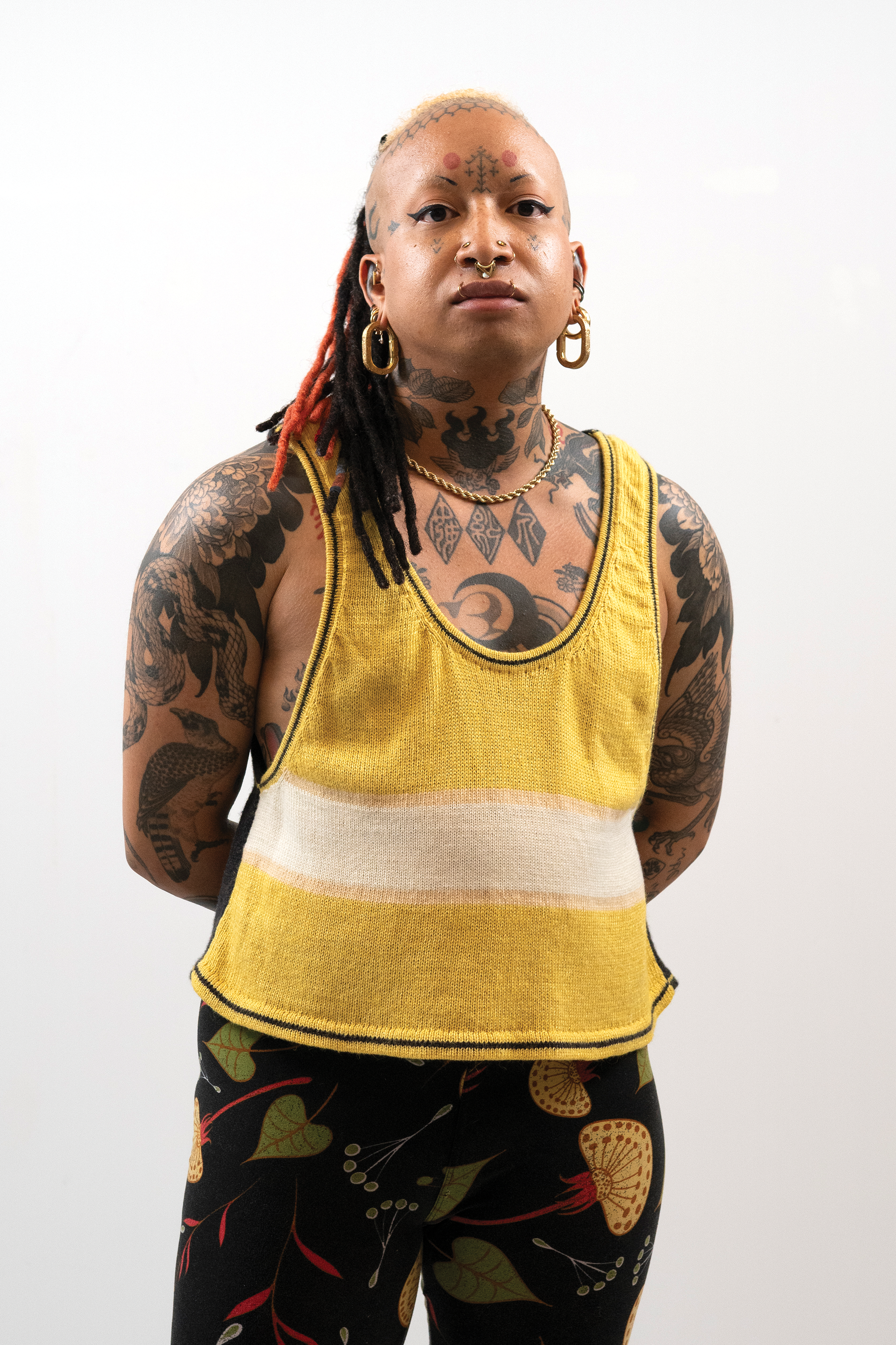
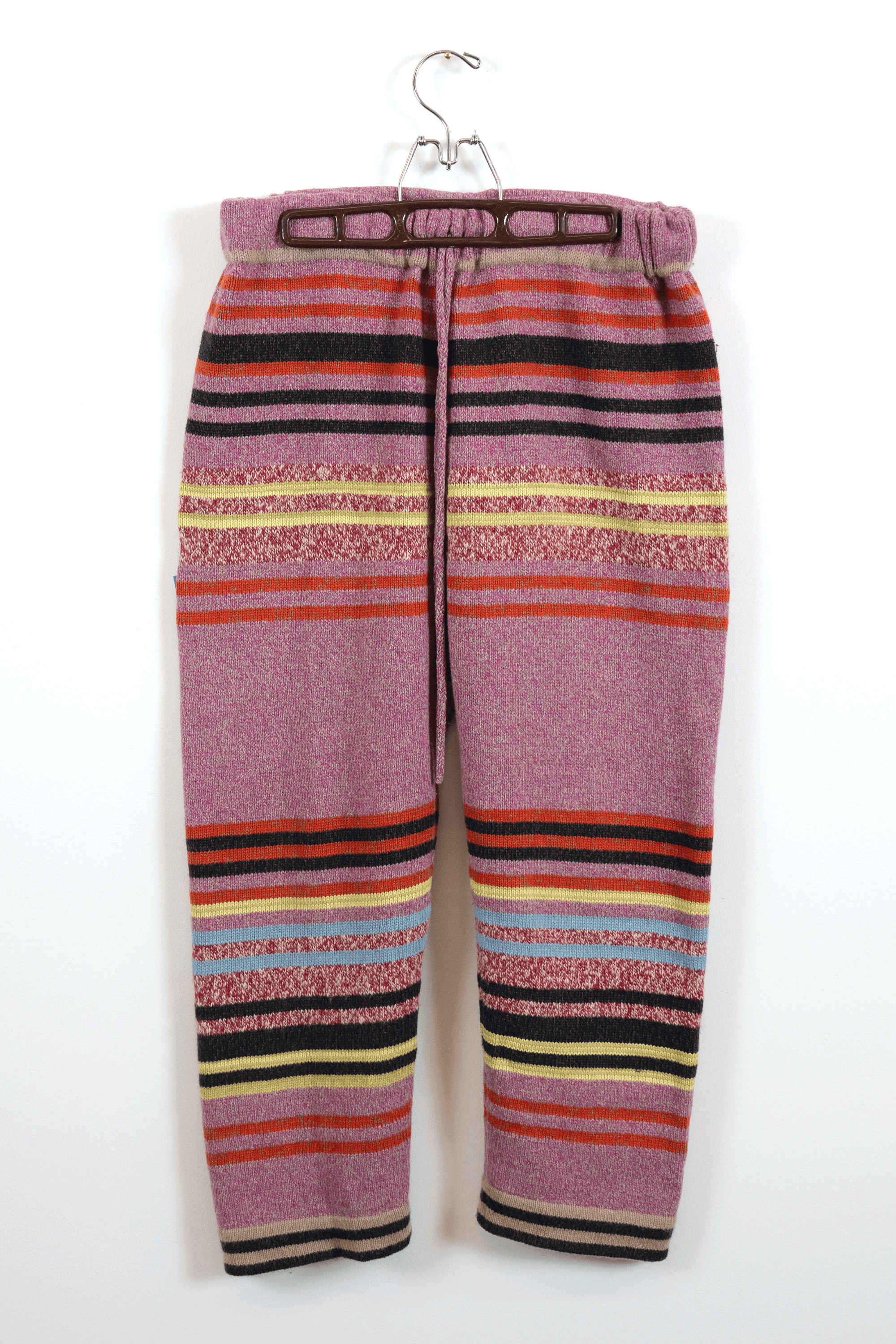
I discovered the knitting machine as early as 2010. Something about this instrument - its bed of needles, tension rods and rolling carriage - reminded me of my experience as a classically trained cellist. Tools become the voice of the artist, and I chose the knitting machine as my voice in the same way a weaver chooses their loom.I am self-taught in fashion design, pattern making and garment construction. I took one class in 2022 at the Textile Arts Center in Brooklyn, New York to learn the basics of the knitting machine, and after that my knowledge comes from online tutorials, books, and trial and error. I worked on tech packs for the made-to-order fashion line with Tailored Industry while I tinkered with my own machine, and both avenues helped me translate my visual language into knitwear. By 2025 I could finish handmade samples of pieces eventually produced by the factory.In 2024 I began stretching my knitted pieces over frames, with the purpose of elevating the work beyond a domestic textile and into the realm of fine art. I often asked myself why weaving has more presence in a gallery and museum compared to knitting. For this reason I continue to produce work in the context of non-functional, decorative art.I use intarsia, stranded yarn (fair isle), and plain jersey knit techniques in my work.Machine knitting is preceded by my first collection of handmade textiles cut and sewn from vintage quilts in 2020.Material
I focus on cashmere yarns because I enjoy not only the way the raw material feels while I'm working on it, but also the softness of the cloth when worn or touched. It is also interesting for me to use this material in the context of fine art, where the gallery setting requests that the work not be touched. In addition to cashmere, I work with a variety of blends including wool, alpaca, cotton, and more. I focus on color and material simultaneously, choosing to source finished yarns and not dye or spin my own raw material.Further Reading
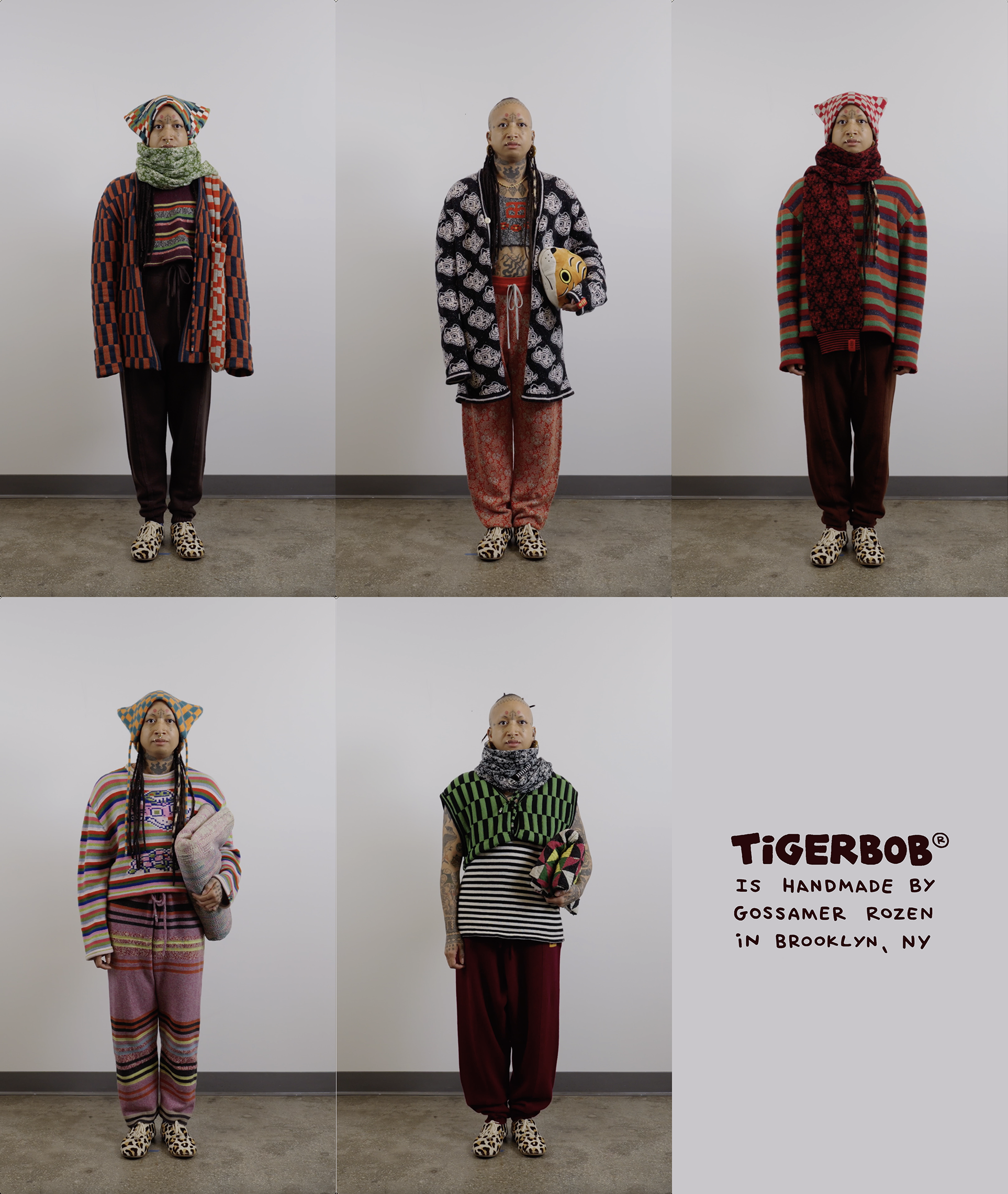
Check out this blog post for more context & background about the work.INTARSIACORE - My current body of work with the intarsia color work technique.GRID INPUTS - A detailed description of the invisible charts necessary to construct the artwork.FASHION - Information about the made-to-order fashion line produced by Tailored Industry.VISUAL LANGUAGE - A mostly complete description and history about the style of the artwork.DESIGN & PROCESS: Review the PROCESS: MACHINE KNITTING section of this page for a behind-the-scenes look.2025
2024
2023
2022