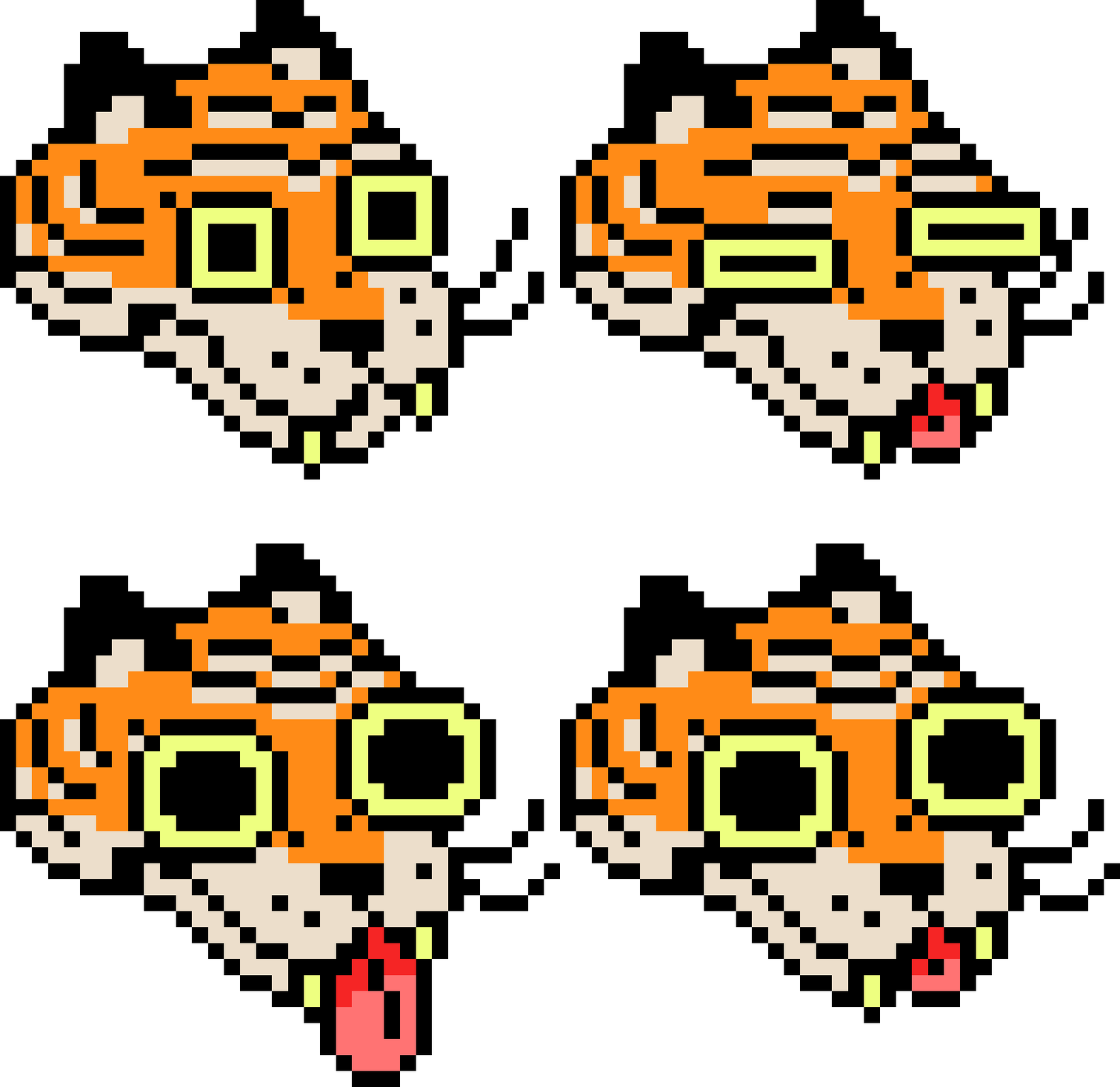
DESIGN & PROCESS
On this page are examples of in-progress work separated by medium, as well as all stages of the design process. As all the methods are intertwined and inform one another, this page includes all processes utilized in my current body of work.The processes interpreting art between mediums via grid inputs is outlined separately here.
This page is separated into six sections in the following order. Scroll down this page to view.INSPIRATION.
PROCESS: DRAWING.
DESIGN: COLOR & MOOD.
DESIGN: TEXTILES & APPAREL.
DESIGN: CHARTED (PIXEL) ILLUSTRATIONS.
PROCESS: MACHINE KNITTING.
INSPIRATION
Below are examples of art, objects, and aspects of the world that influence my visual language. Learn more about my visual langue here.TEXTILE
Vintage textiles have inspired my work since the early 2010's. I've amassed a small collection of pieces for study and enjoyment. I am fond of their utilitarian nature and the patina showing their use in everyday life. They are notable in their patterns, textures, material, and color. 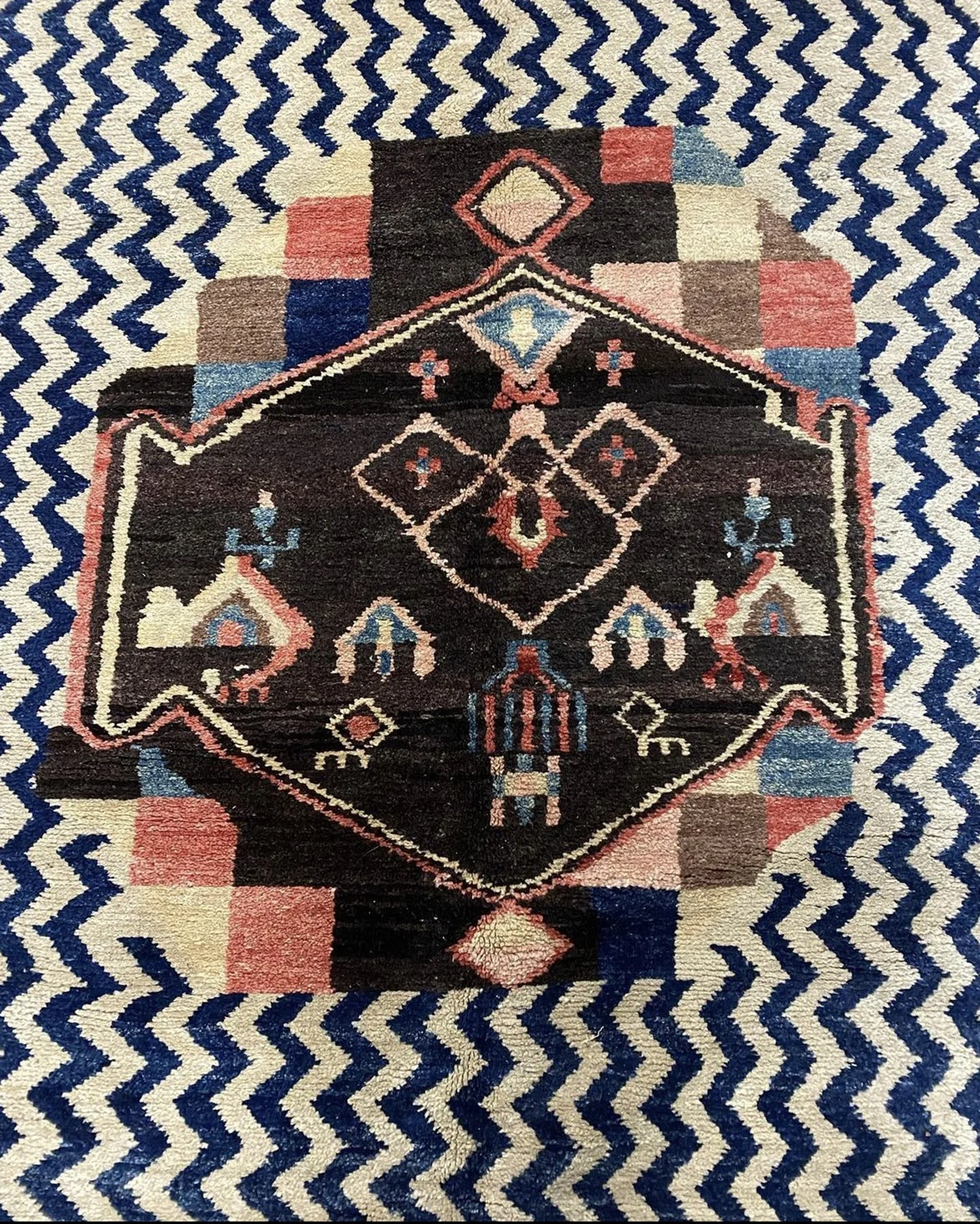
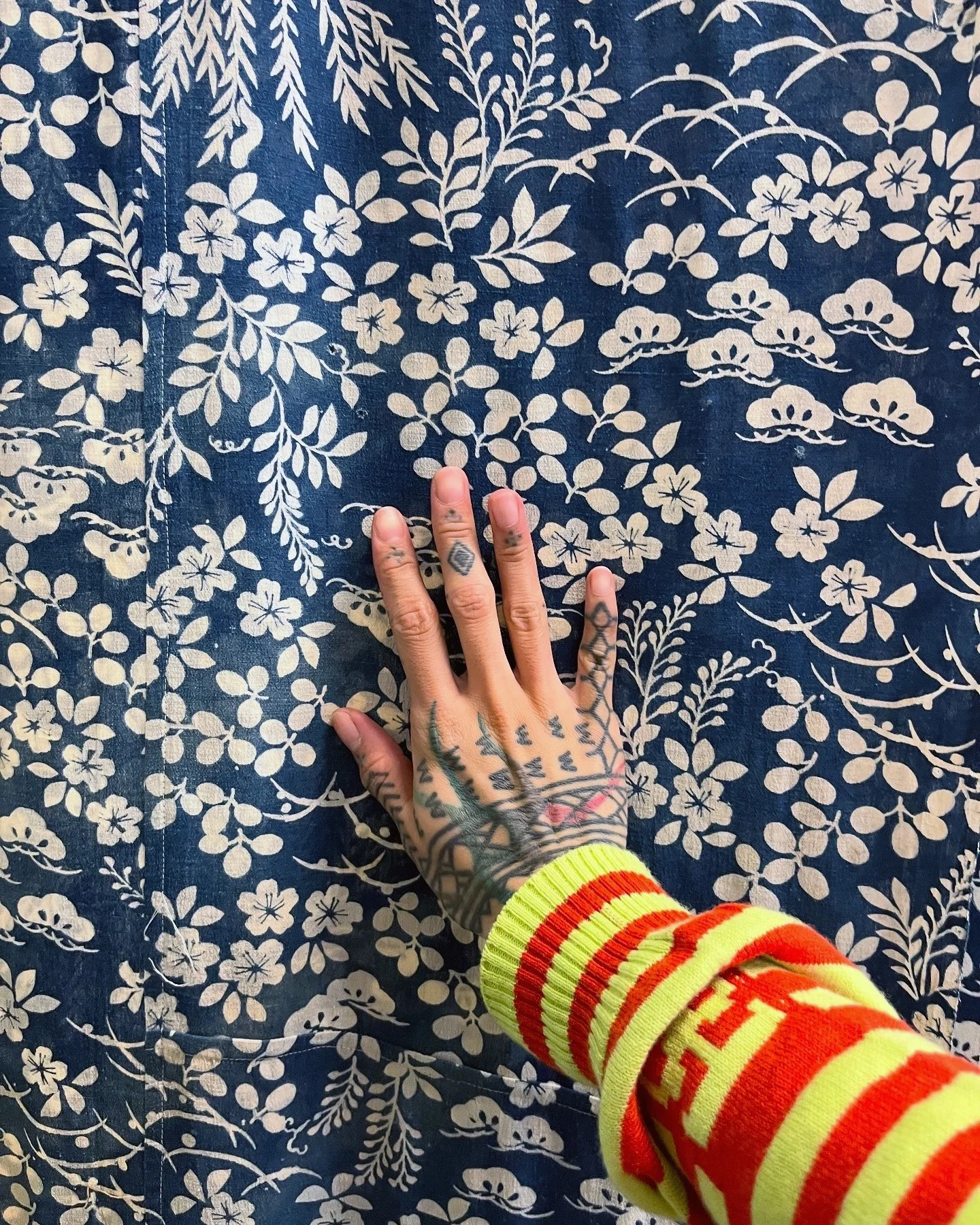
Textiles from my personal collection. Left: Japanese indigo resist-dye cotton (tsutsugaki technique). Right: Medallion on a Moroccan rug.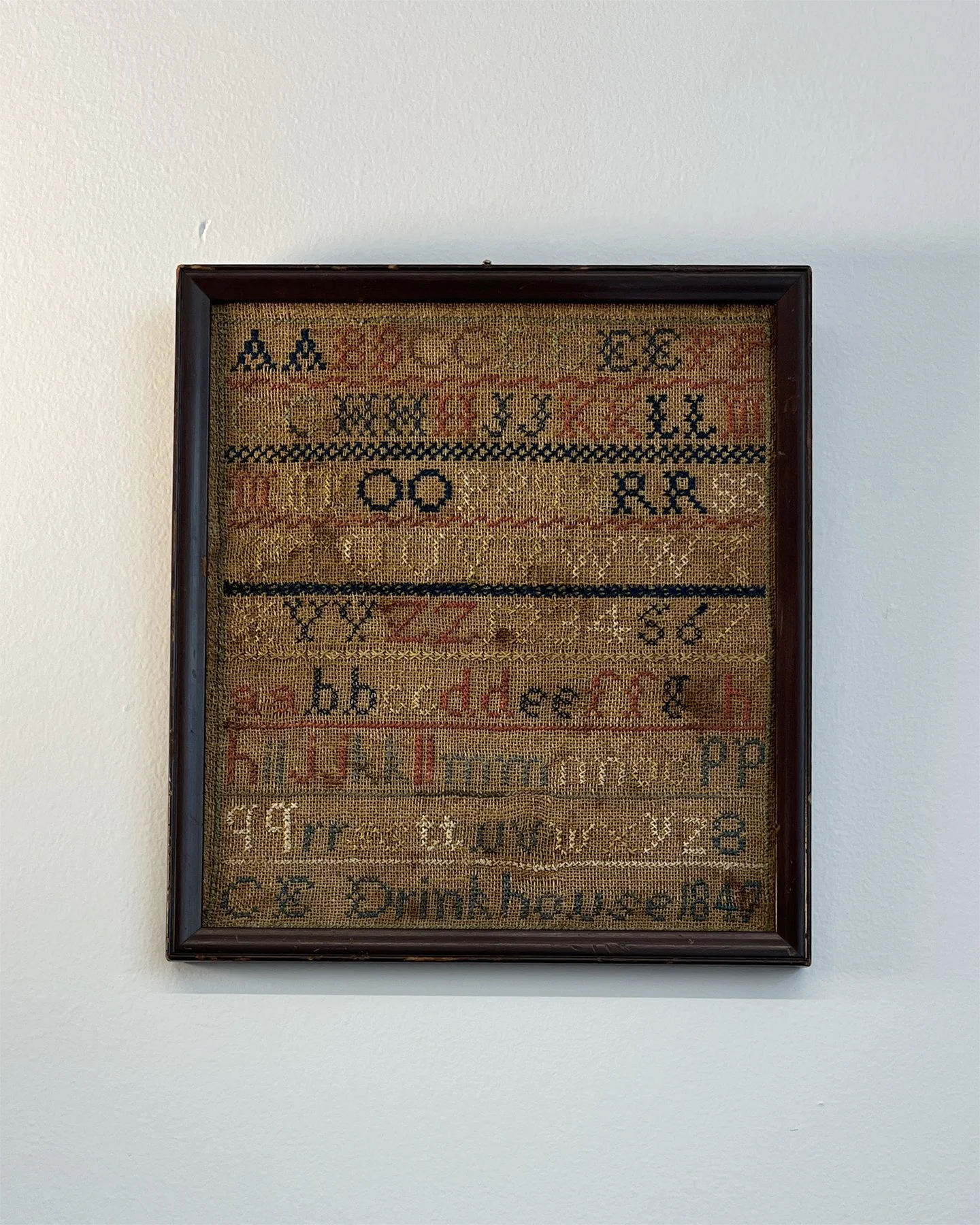
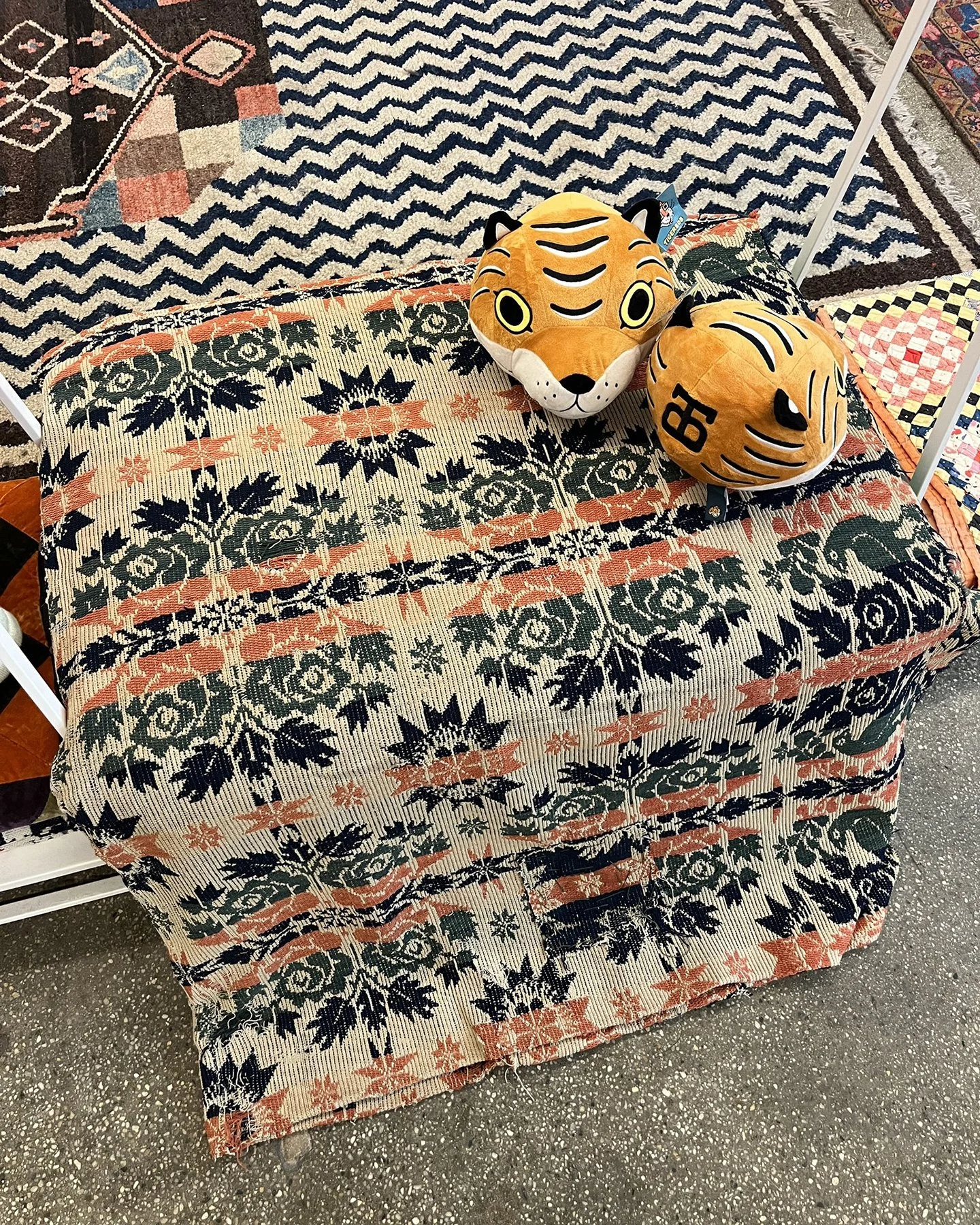
Textiles from my personal collection. Left: Counted-thread embroidery sampler dated 1847. Right: View of an American woven coverlet.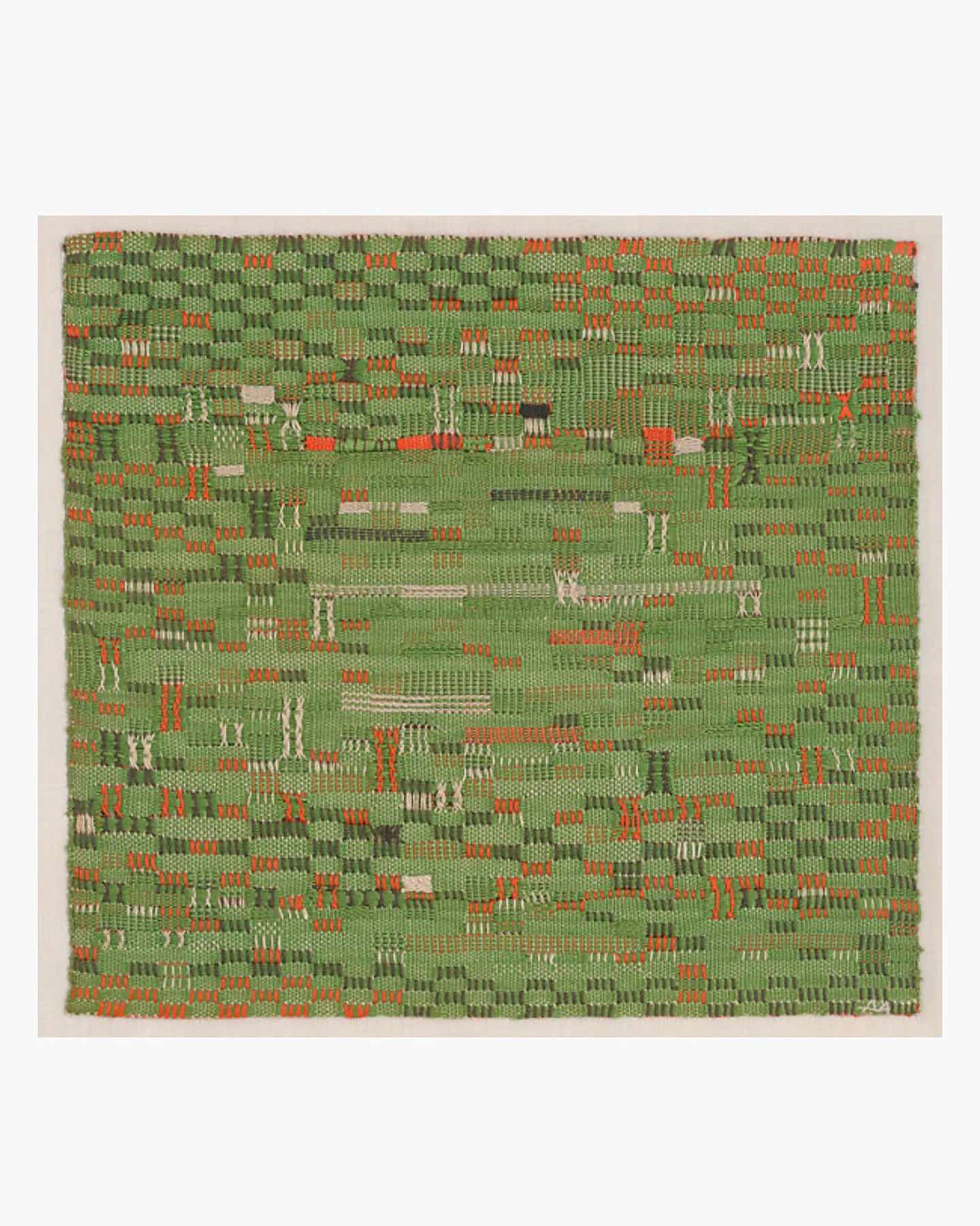
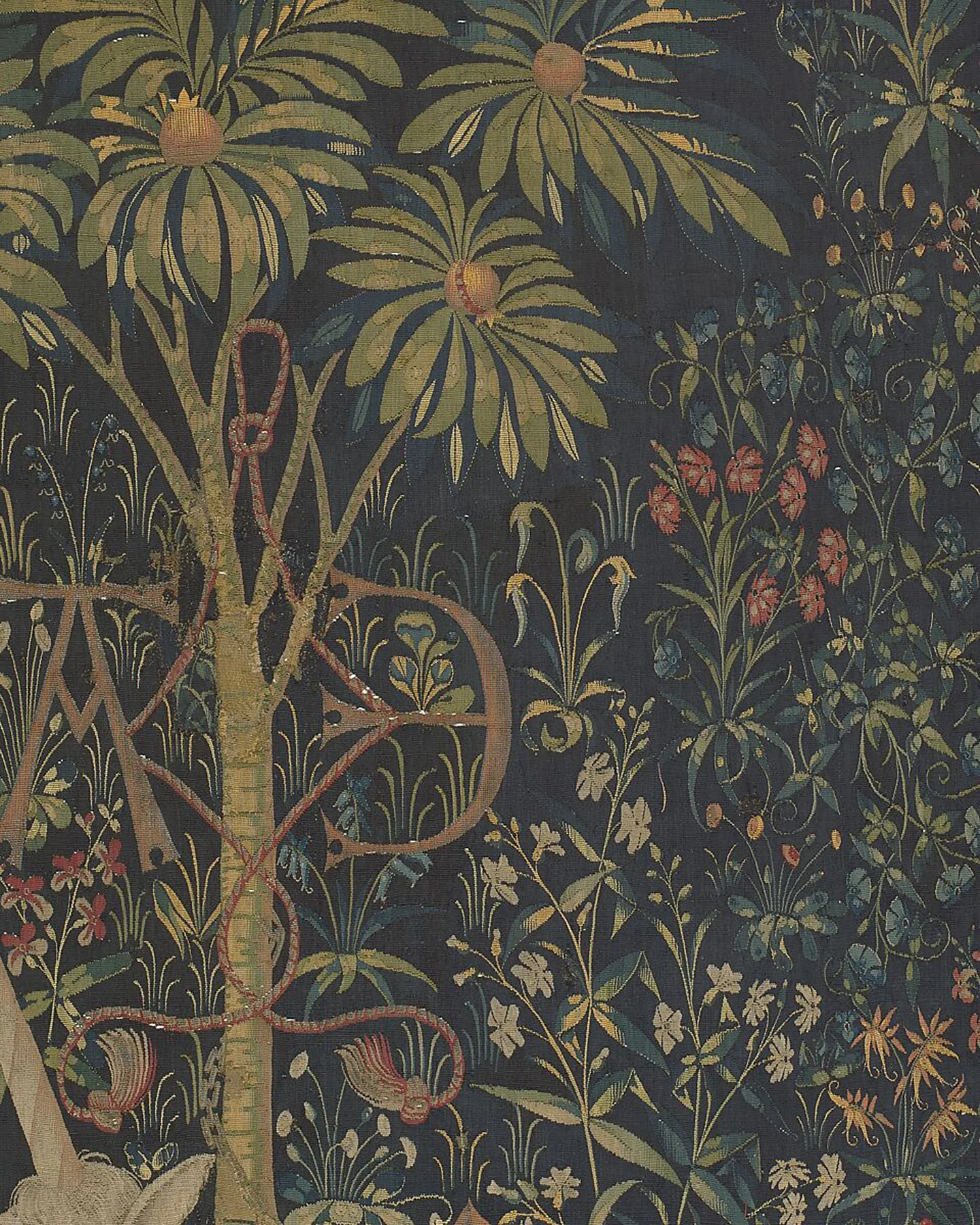
Not owned by me. Left: A close-up of the floral motifs in the woven Unicorn Tapestry, an example of millefleurs. Right: “Pasture” by Anni Albers.LANDSCAPE
The living world provides me a sense of peace. Native patterns and texture emerge from sea, sky, and foliage. I find inspiration from both natural landscapes and curated gardens.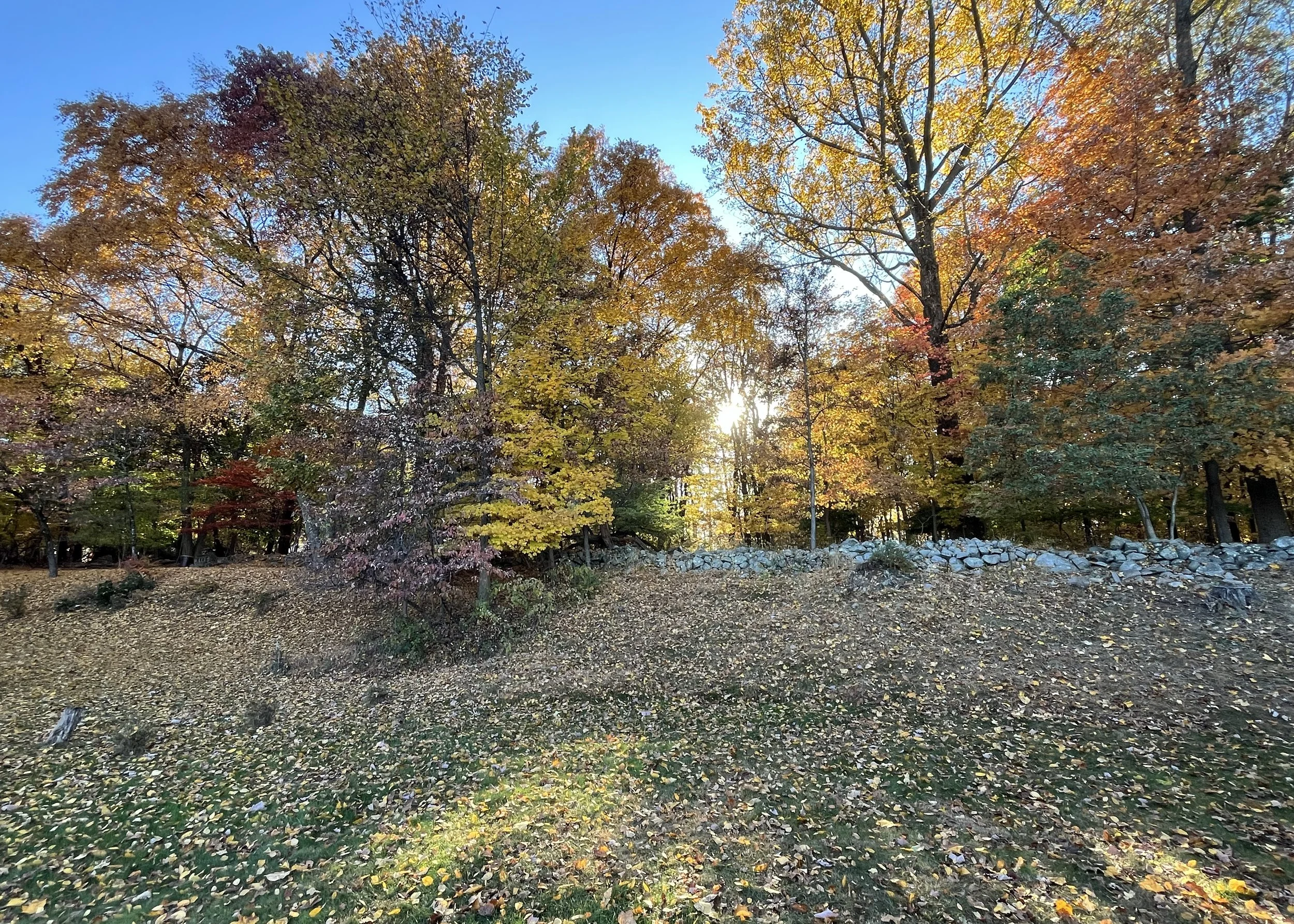
Above: My photo of an autumnal view in Hudson Valley, New York.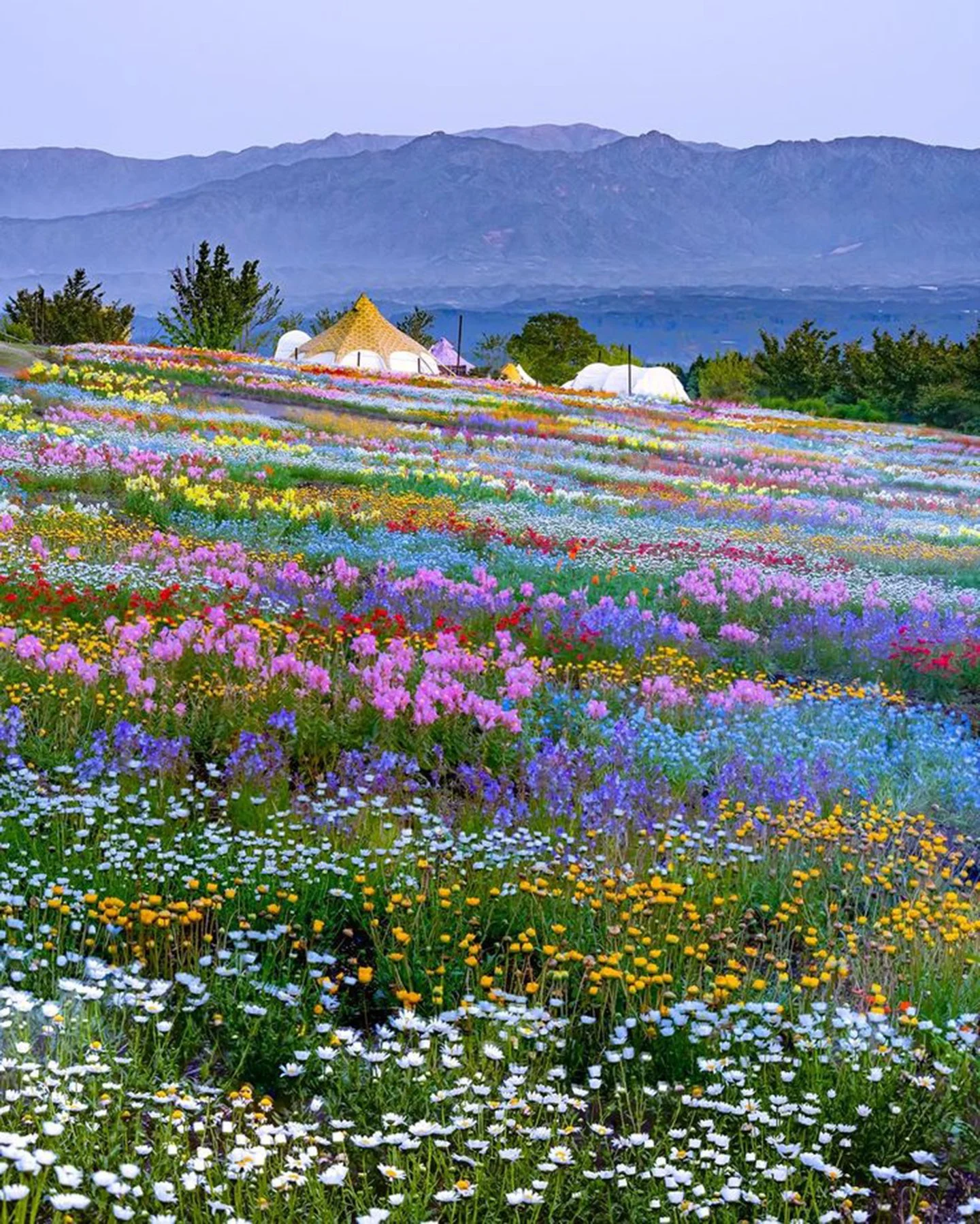
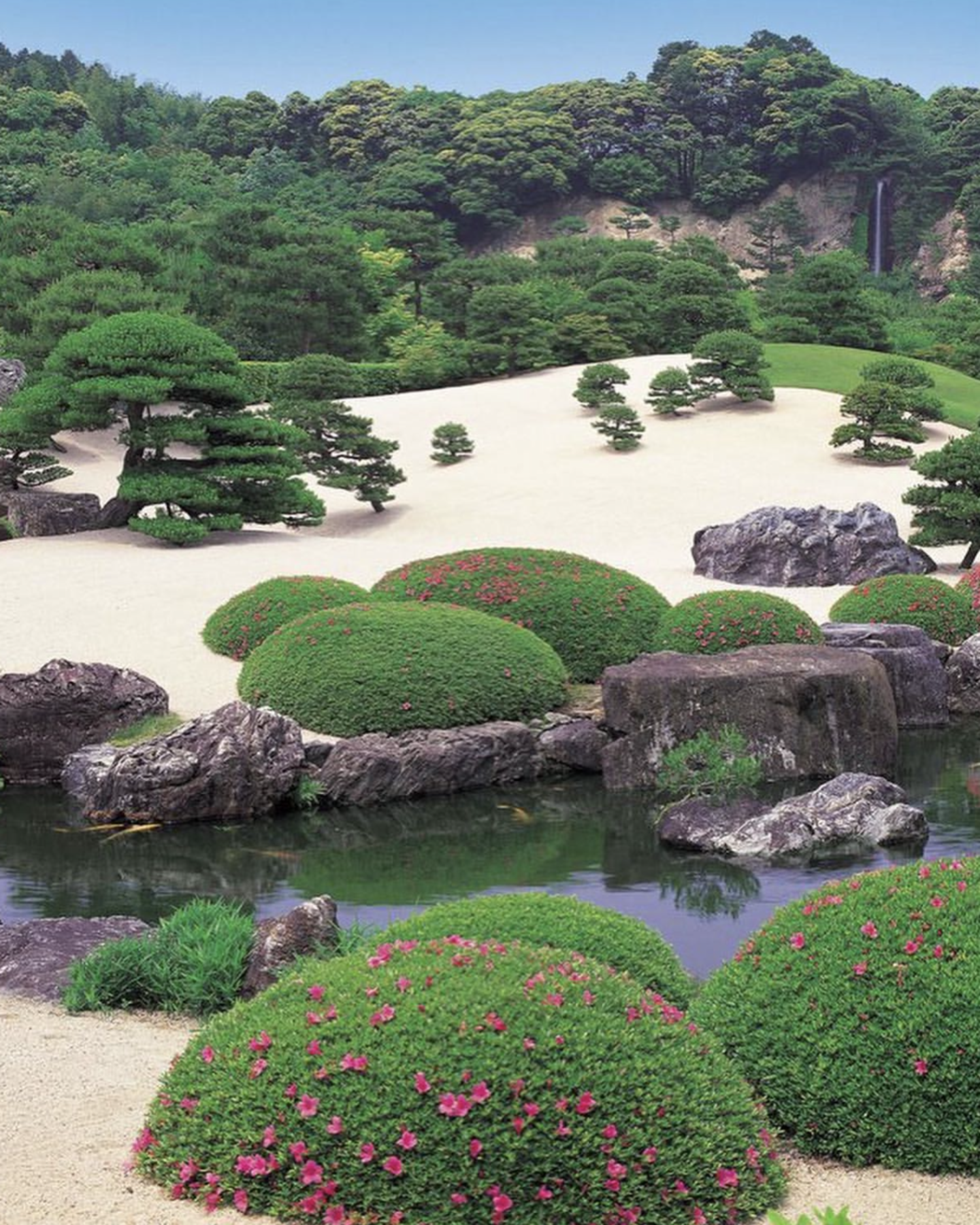
Left: A photo of the Kuju Flower Park in Oita Prefecture, Japan. Right: A photo of the gardens at the Adachi Museum of Art in Yasugi, Shimane, Japan.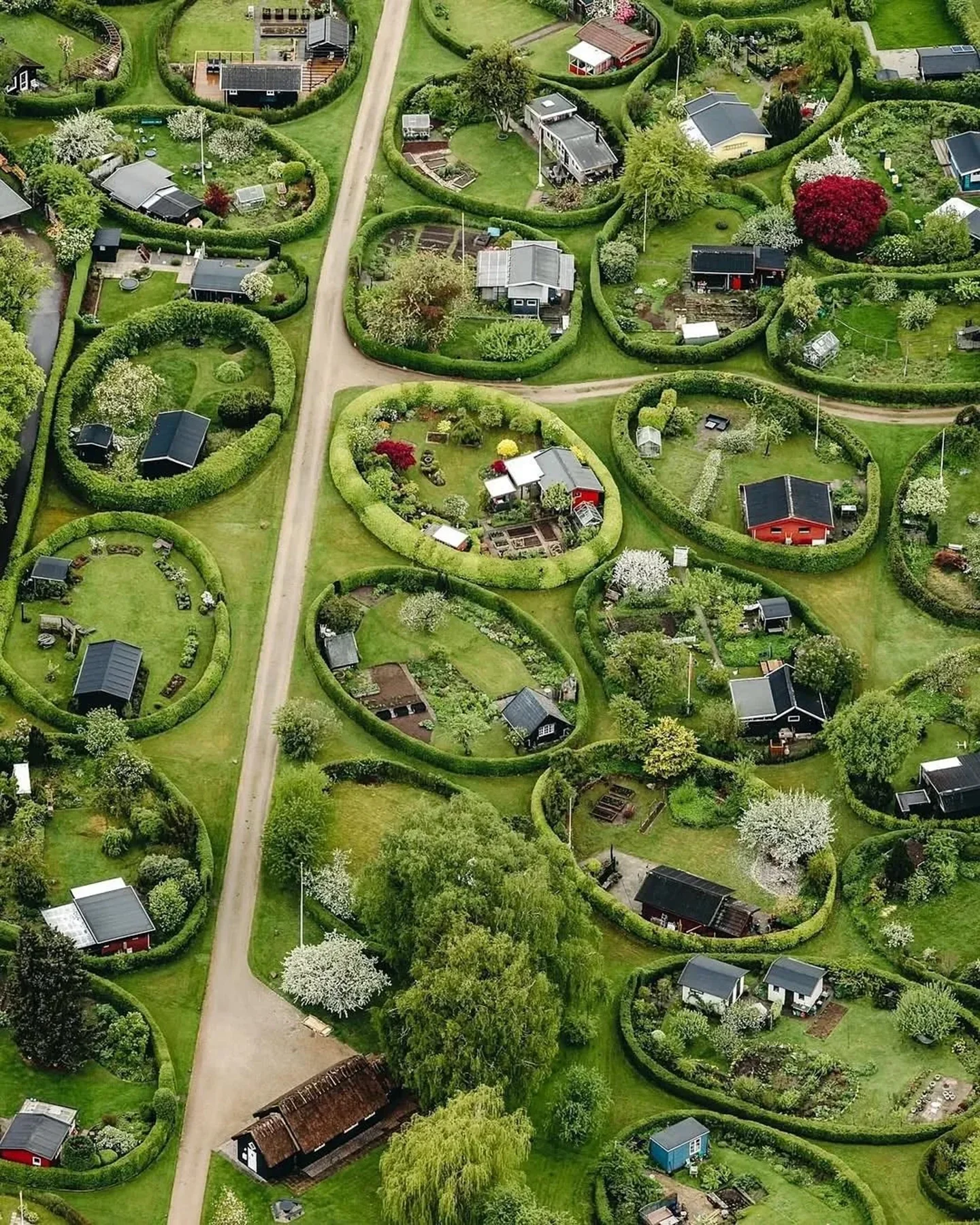
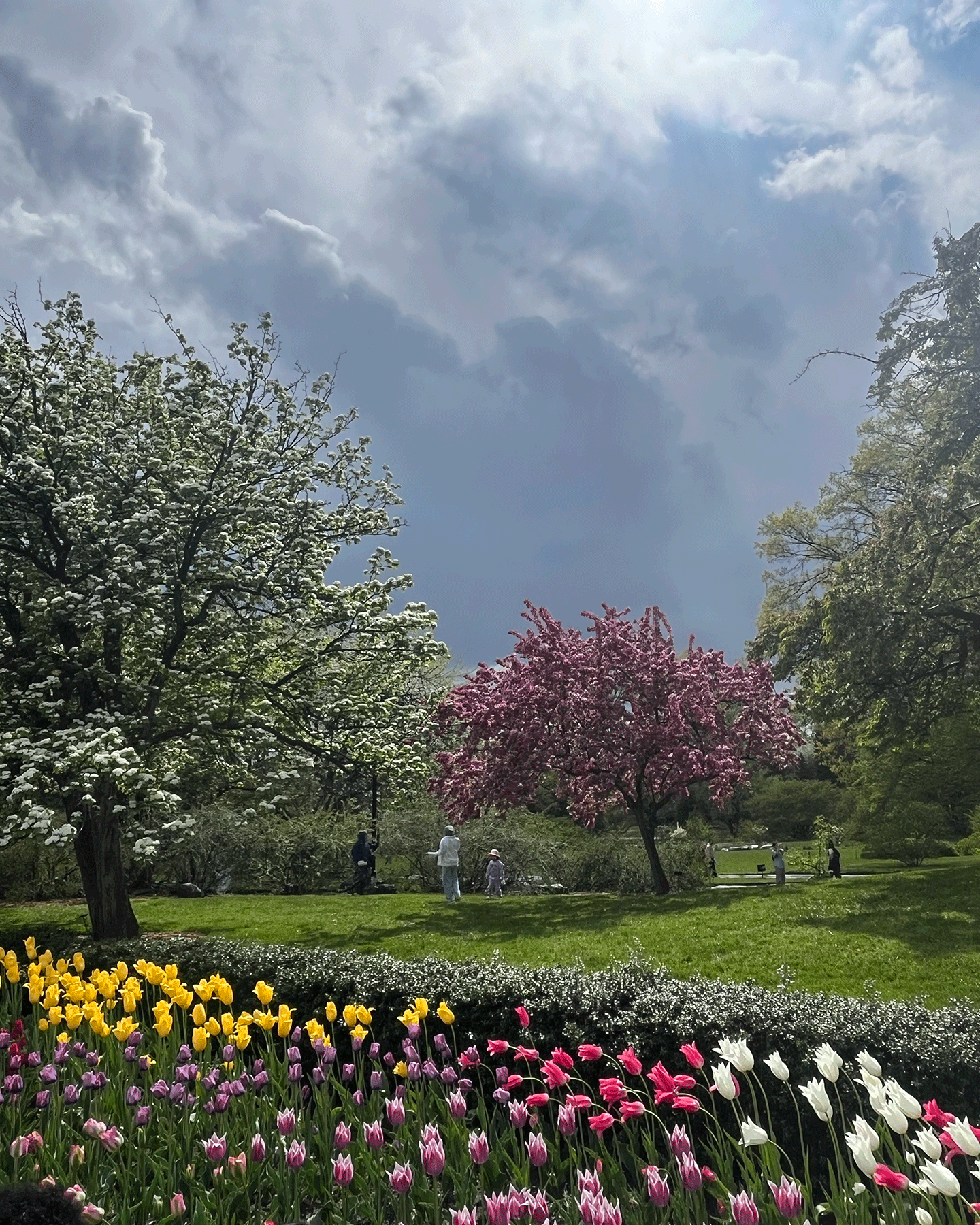
Left: A photo of the Nærum gardens in Copenhagen, Denmark. Right: My photo from the Brooklyn Botanic Garden in Brooklyn, New York.DRAWING & PAINTING
My drawing style began with comics, games, and animation and matured with Asian folk art and European illustrations.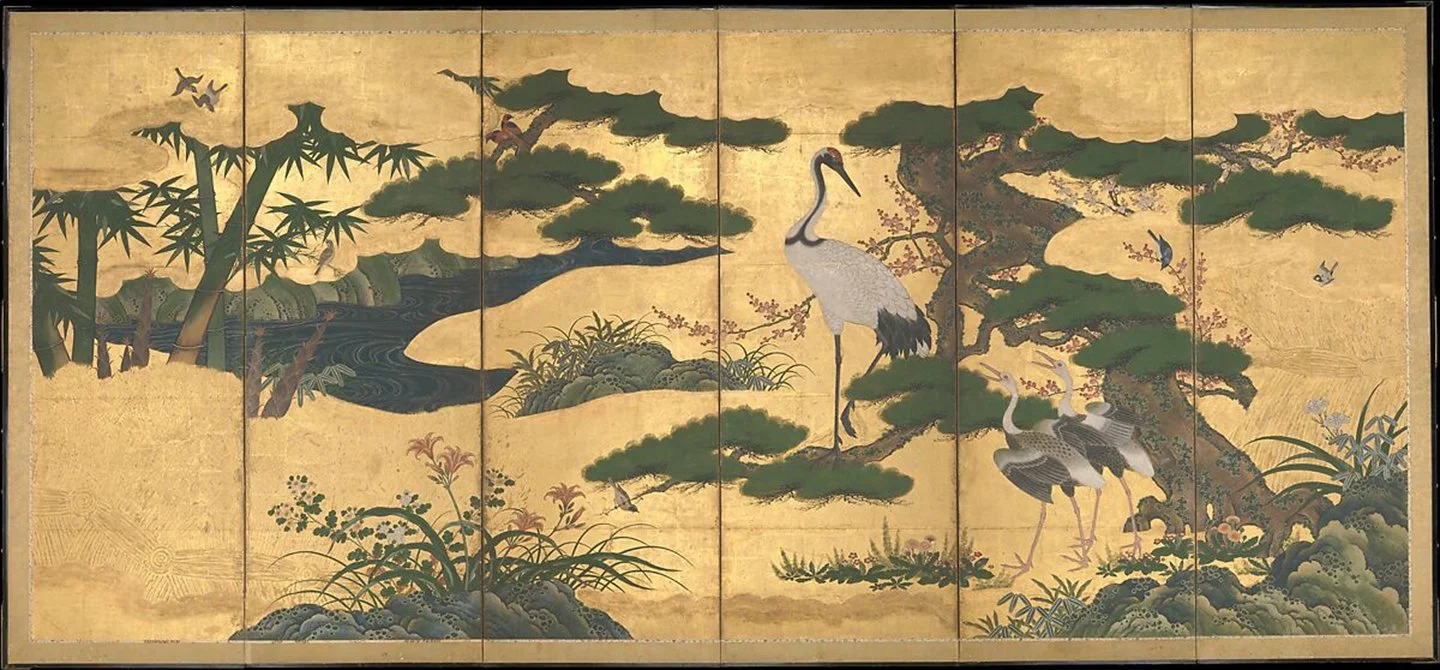
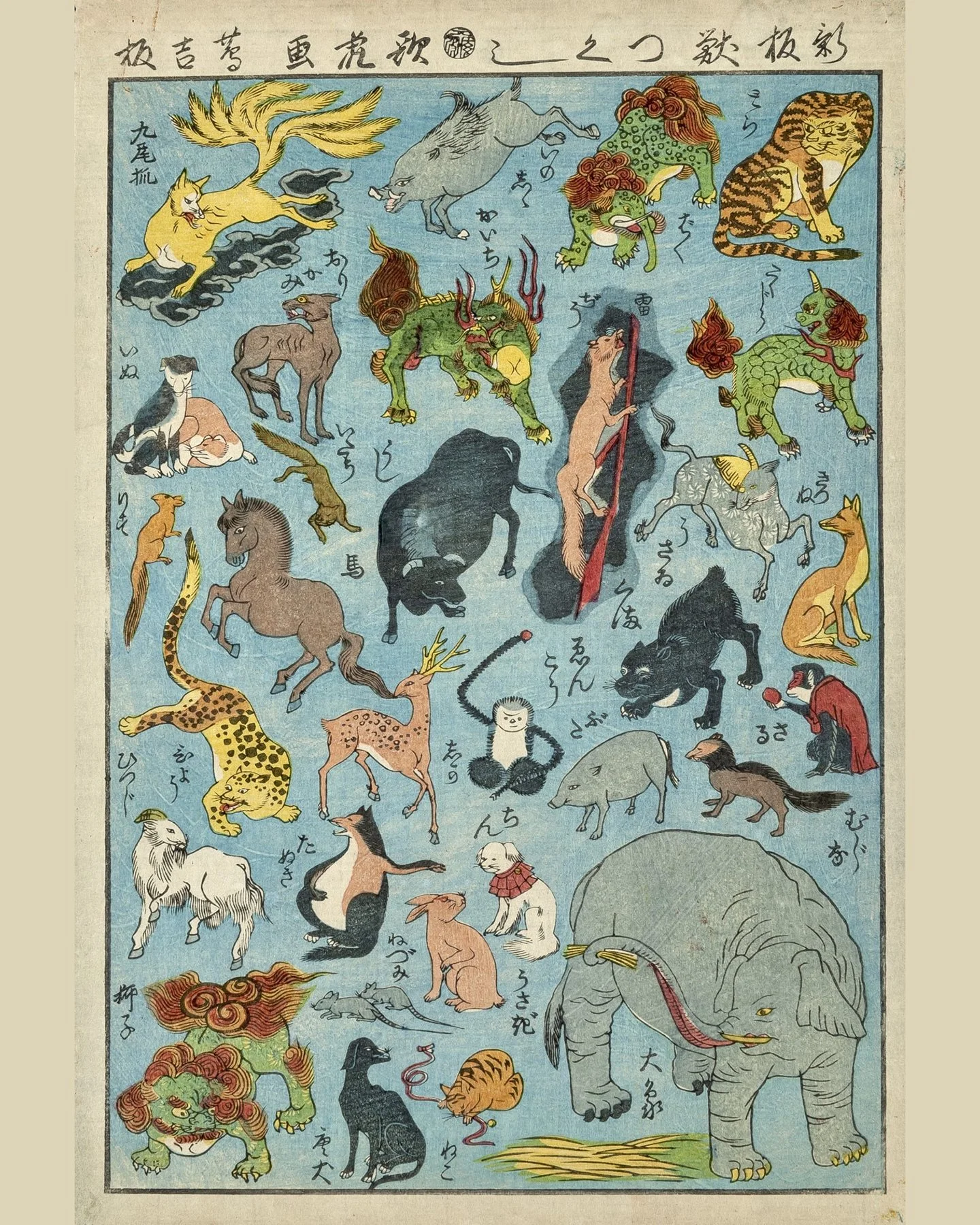
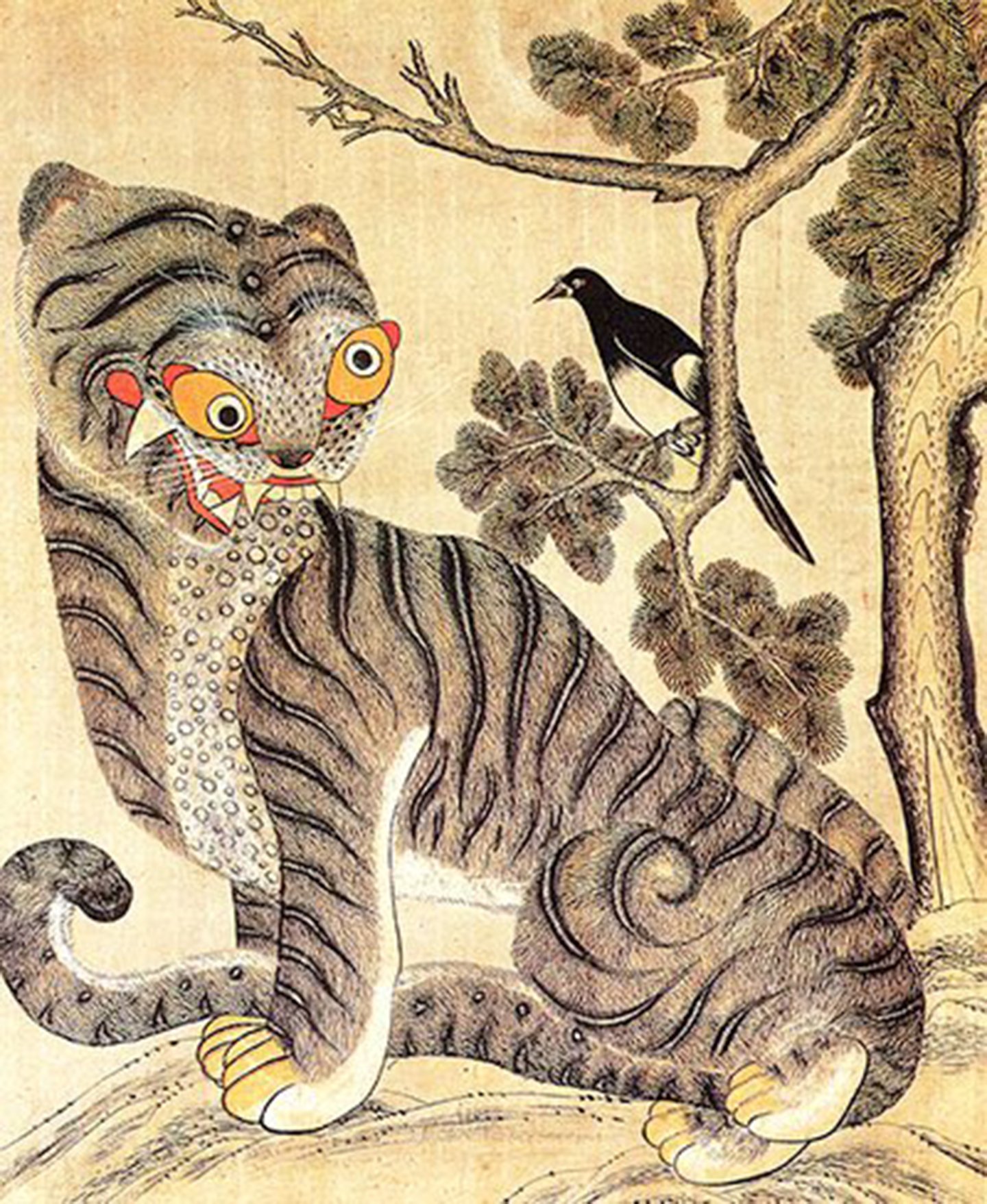
Left: 19th-century Japanese ukiyo-e woodblock print. Right: An example of Korean Minhwa folk art painting.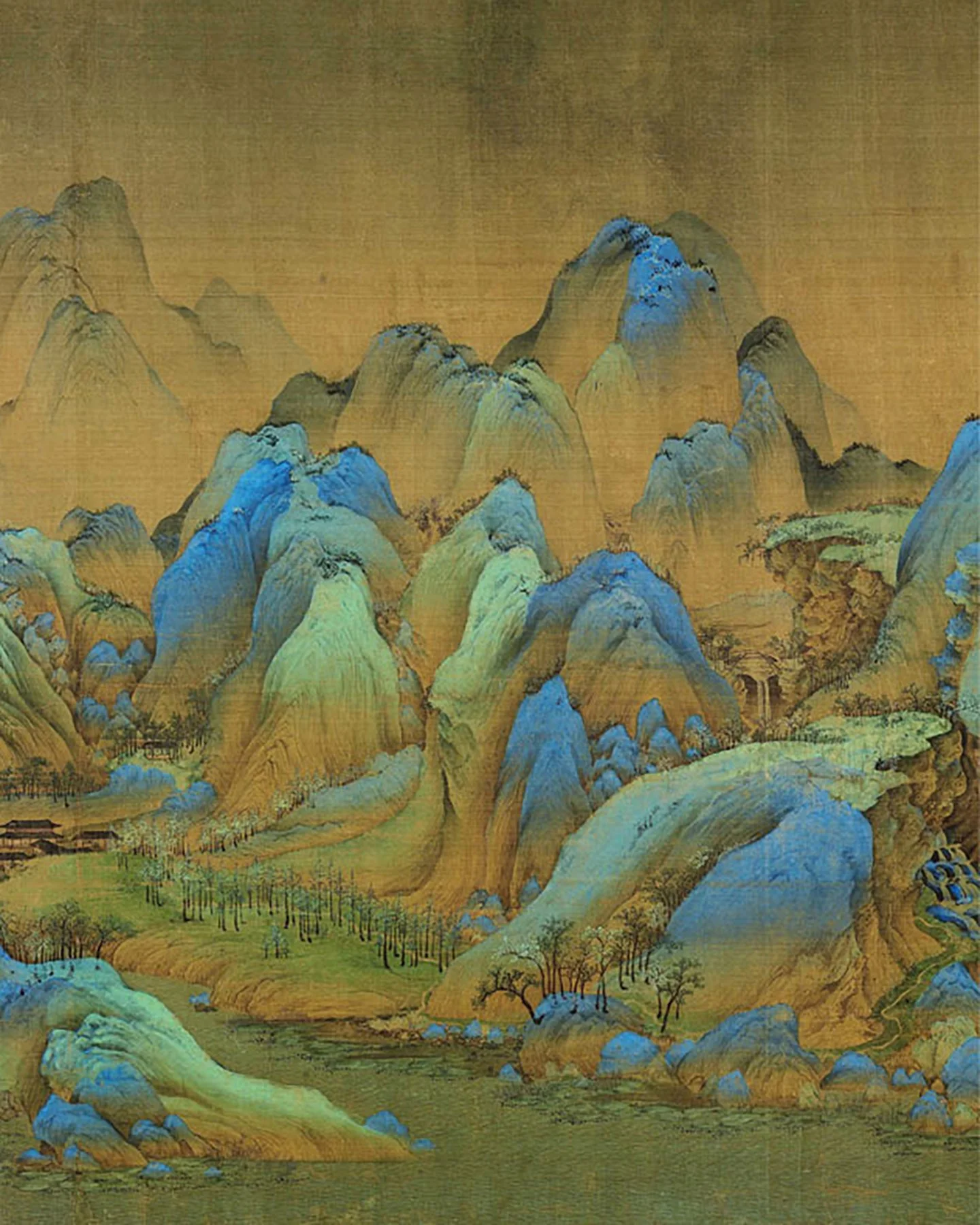
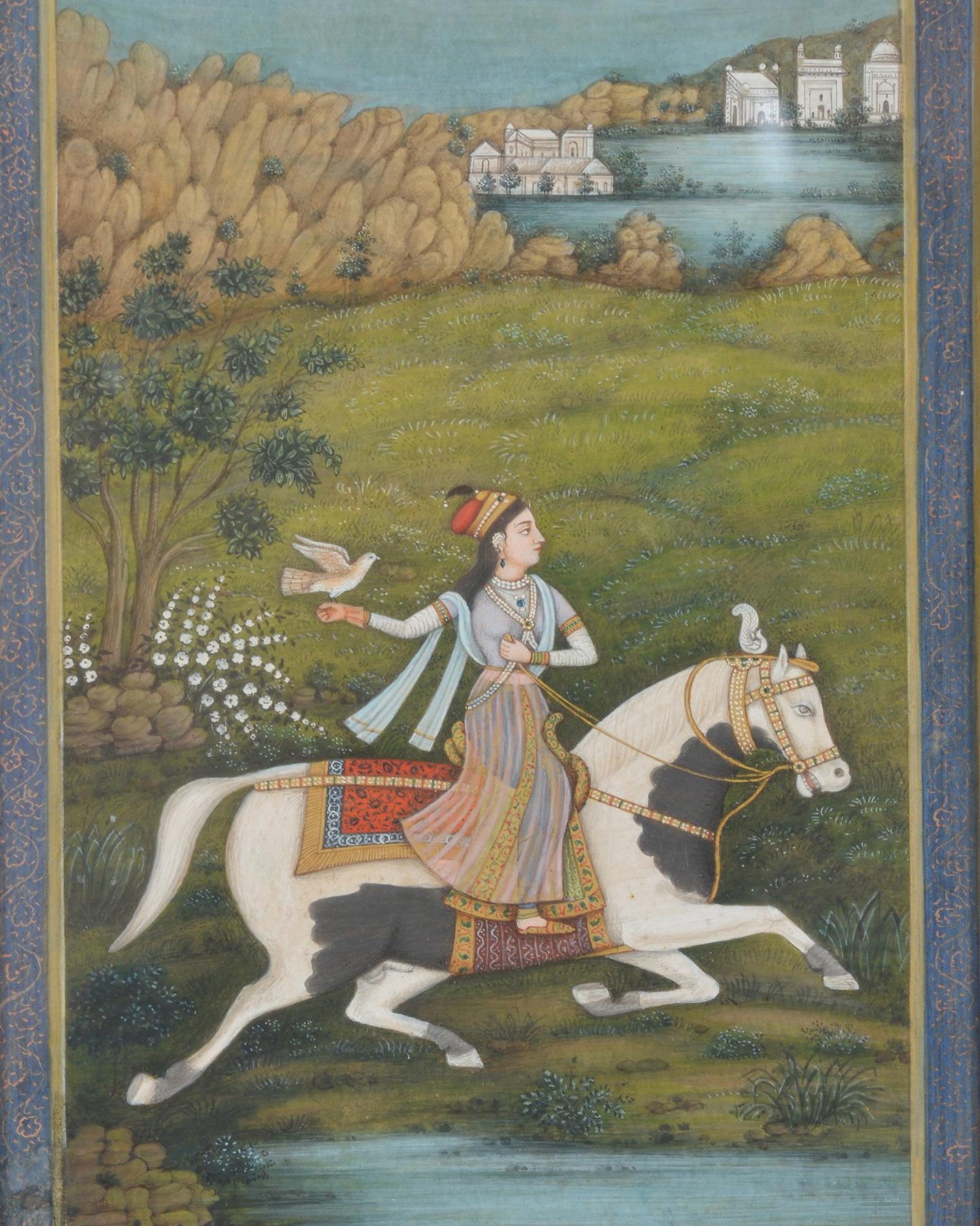
Left: An example of Chinese landscape shan-sui painting. Right: An Indian miniature painting.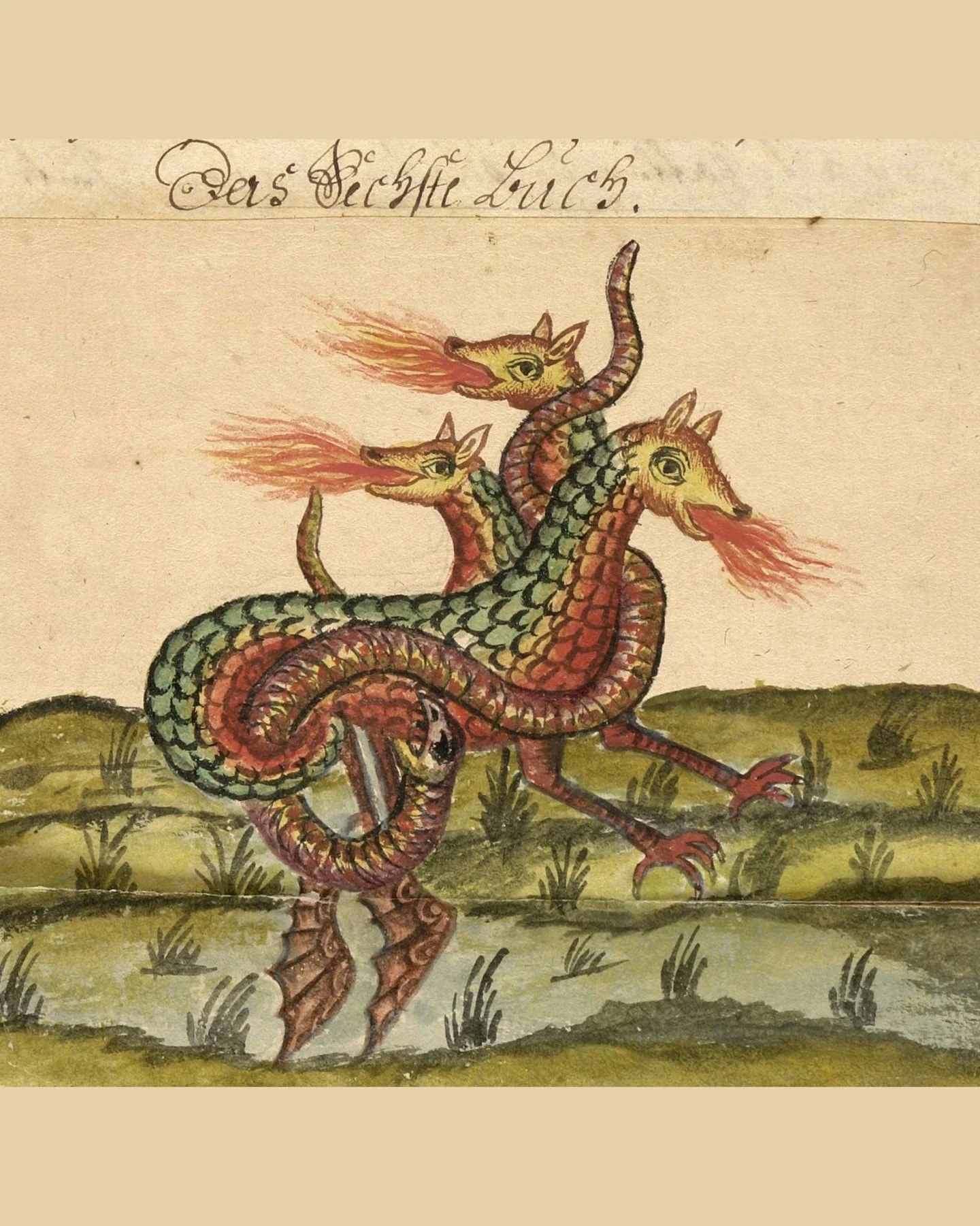
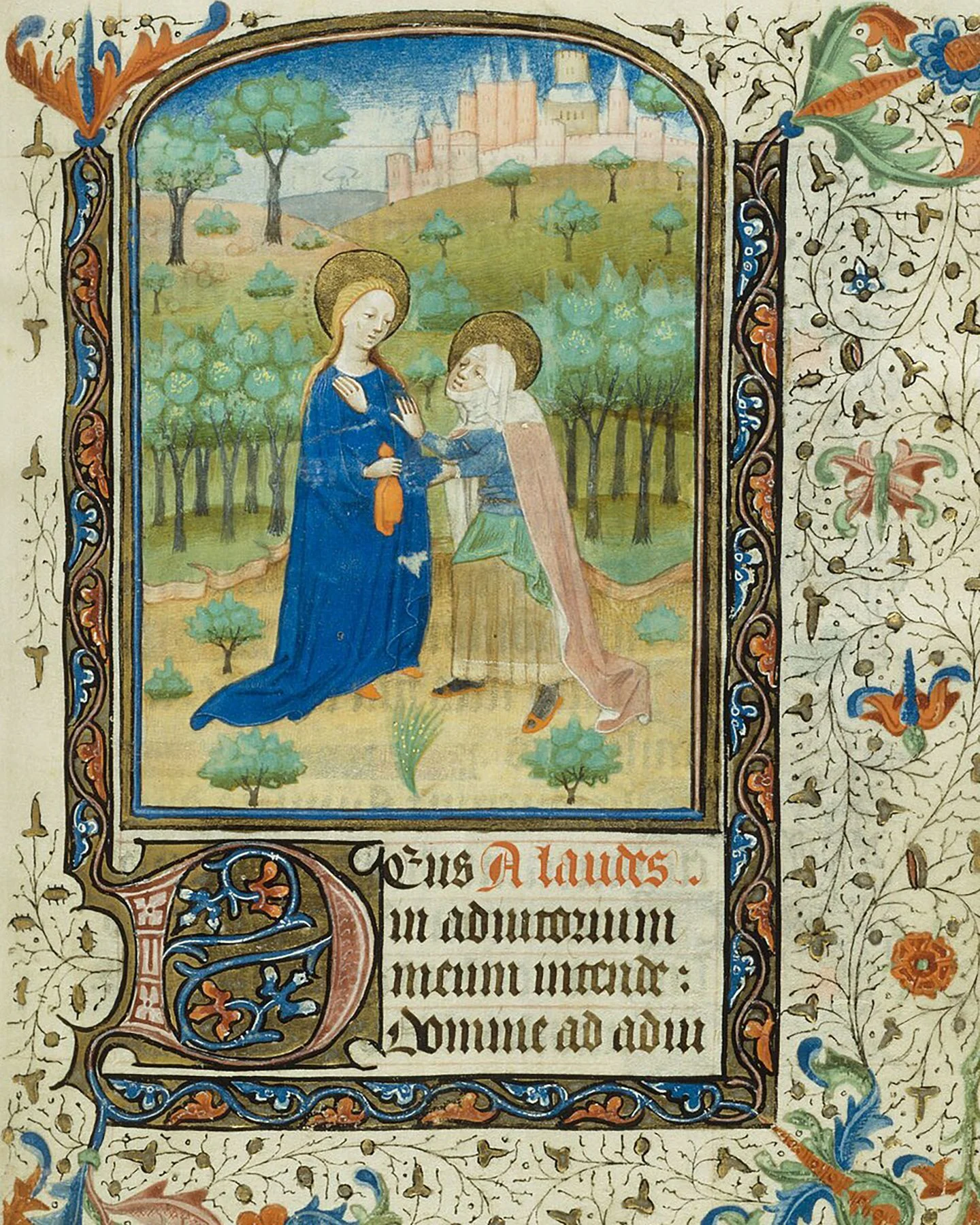
Left: An illuminated page from a book of hours, or Christian prayer book, from the Middle Ages. Right: An illustration from the Clavis Artis, a mysterious alchemical manuscript from Germany.SURFACE PATTERN DESIGN
I find repeating patterns of all kinds an inspiration to my work, regardless if the finished work resembles a repeating pattern or not. Most often these are found in vintage textiles, but I’ve also been inspired by repetitions in the natural world, in tattoo designs, and in video games. Top, first left is an in-progress photo of an intarsia piece knit by me, and bottom second from right is a jacquard scarf produced by the factory.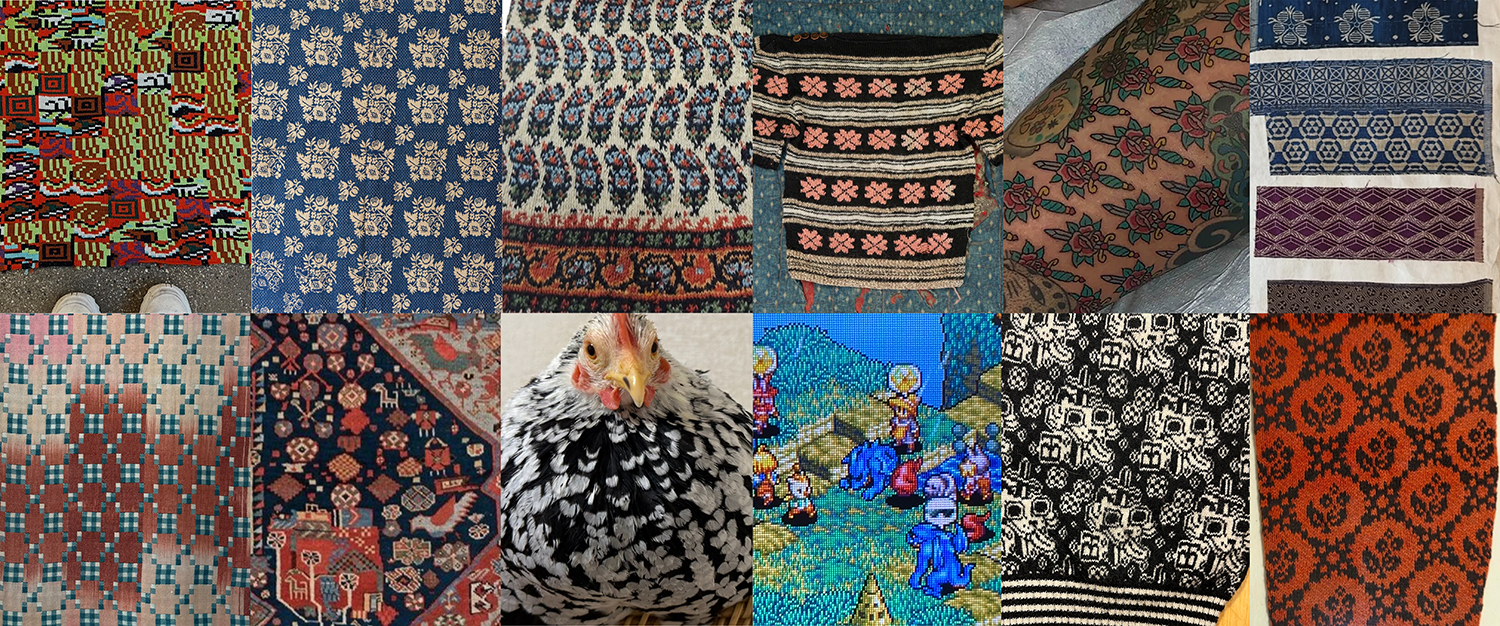
PROCESS: DRAWING
Drawing remains the base of my design processes. Everything begins with a hand-drawn sketch. The oldest technique I know, included are some in-progress shots of illustration and tattoo design work. See DESIGN: COLOR & MOOD below for information on how I choose colors for my illustrations.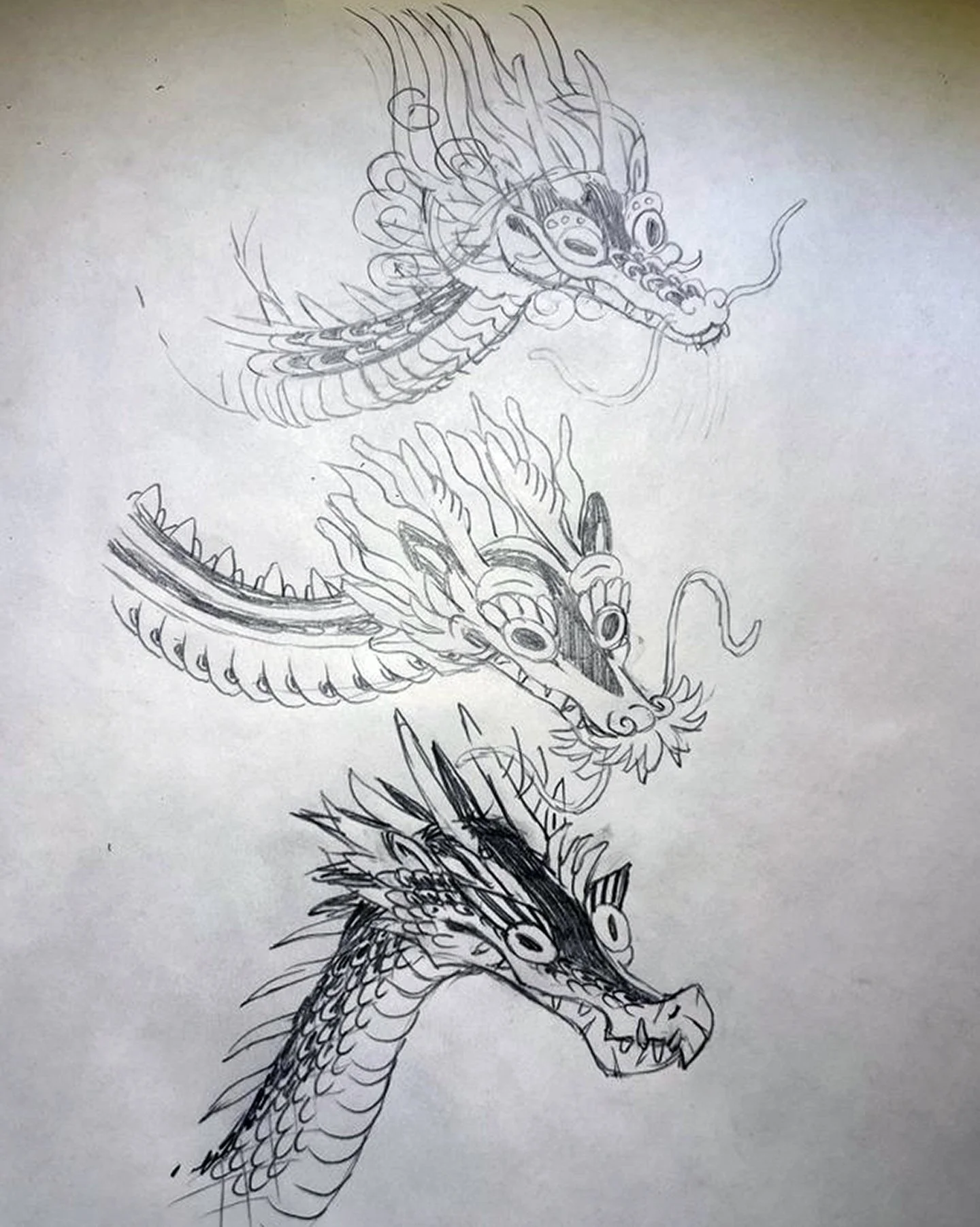
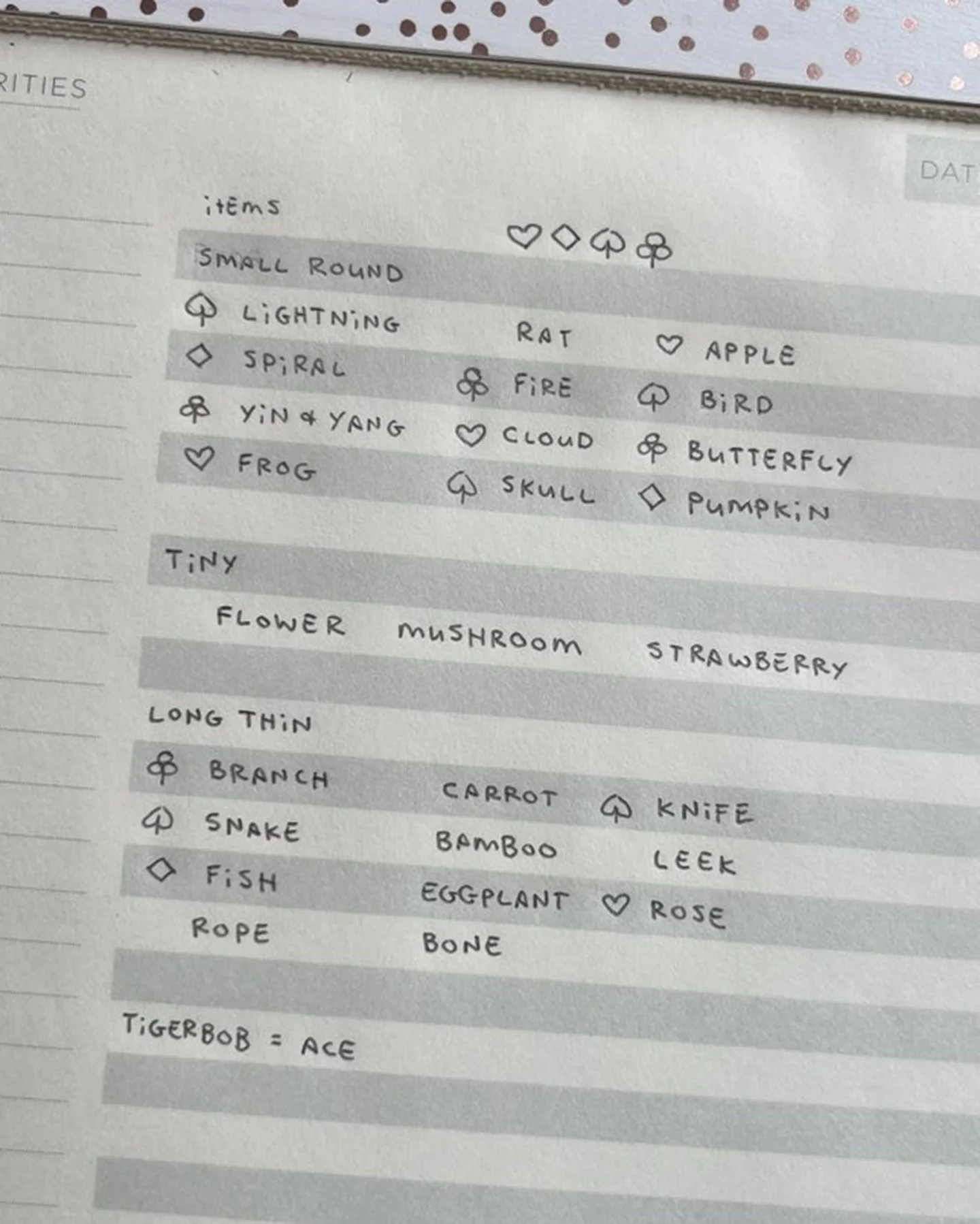
Drawing and writing are hand-in-hand in all stages of production. Left: Handwritten list of drawing prompts organizing objects to design and draw for Tigerbob Playing Cards. Right: Sketches of dragon heads.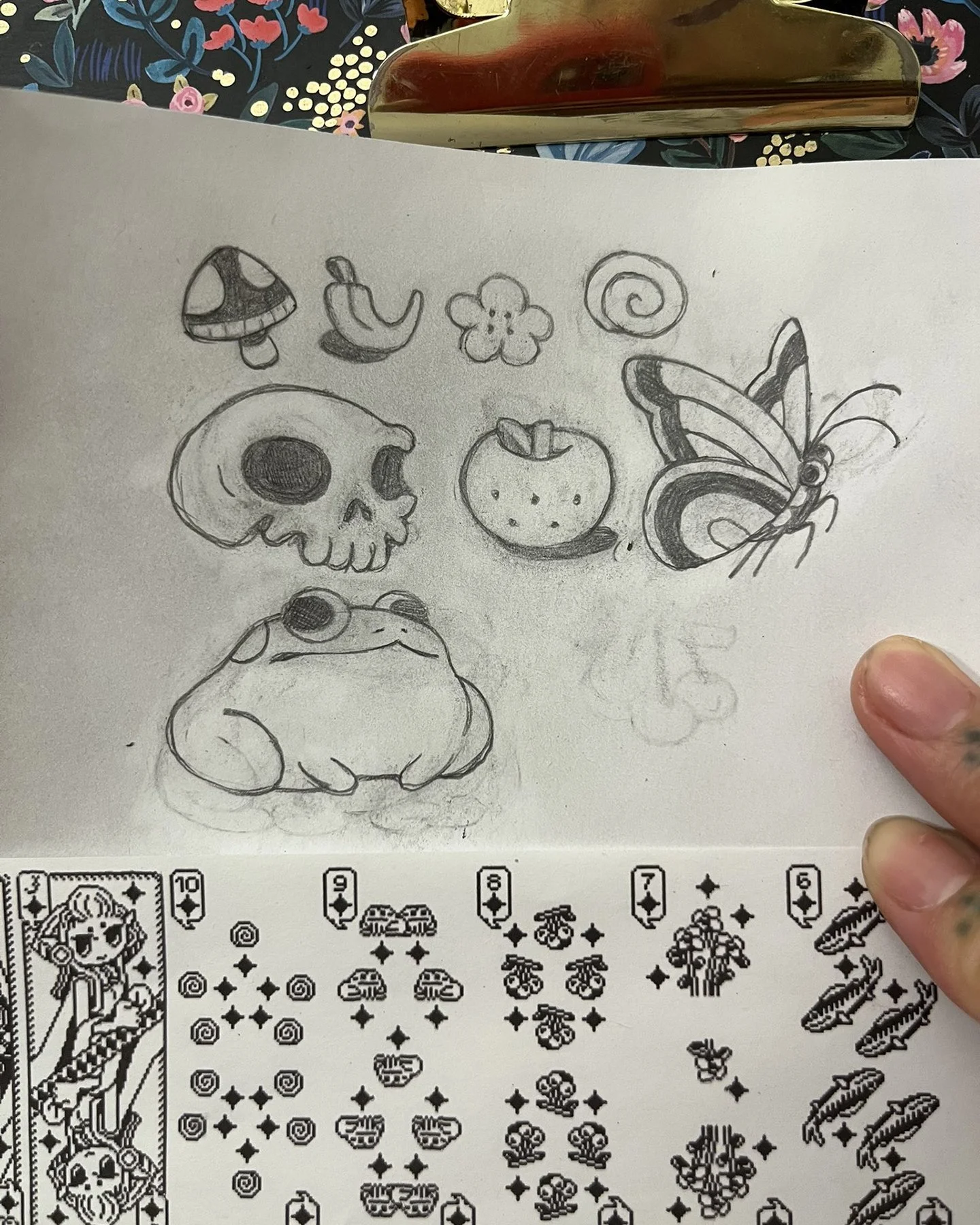
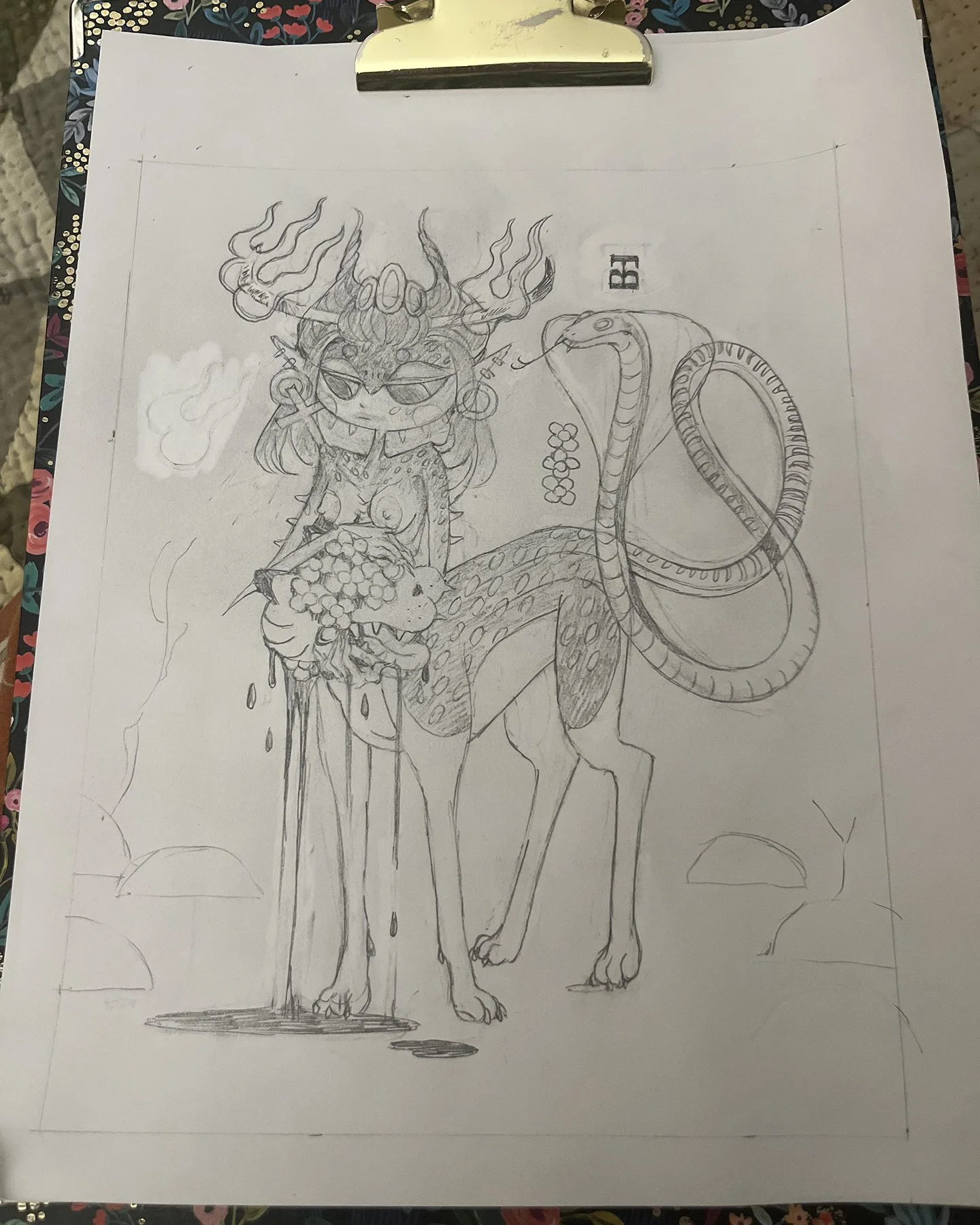
Left: Early composition sketch for an illustration in Tigerbob Bestiary. Right: Hand-drawn illustrations based on pixel art from Tigerbob Playing Cards. I often move in and out of mediums and art styles to further refine the visual language across products over time.DRAWING TO COMPLETION
If my goal is to sketch for another product, I take my drawing into the design phase for that medium. For finished illustrations, sketches move into the inking and coloring phases, below.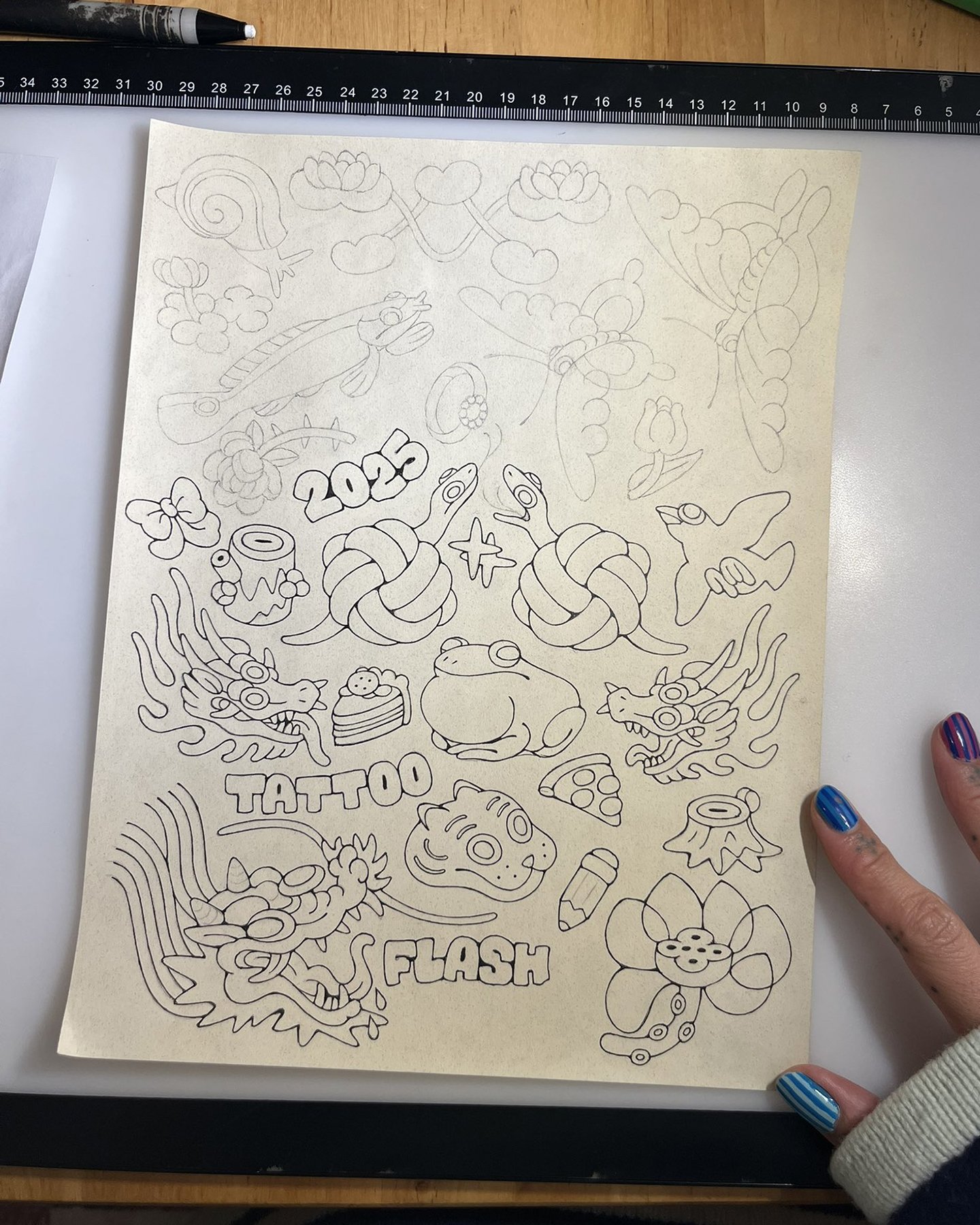
Above: Inking process. Once I have finalized the sketch, I trace the sketch onto the finishing paper with a light box. I use ink pens to outline the drawing.My favorite drawing techniques are analog. I use digital drawing tools, like Adobe Photoshop and a Wacom tablet or Procreate on my iPad with an Apple Pencil to assist with sketching or the tattoo process. I have made many finished works with digital drawing tools, but I prefer to use traditional media.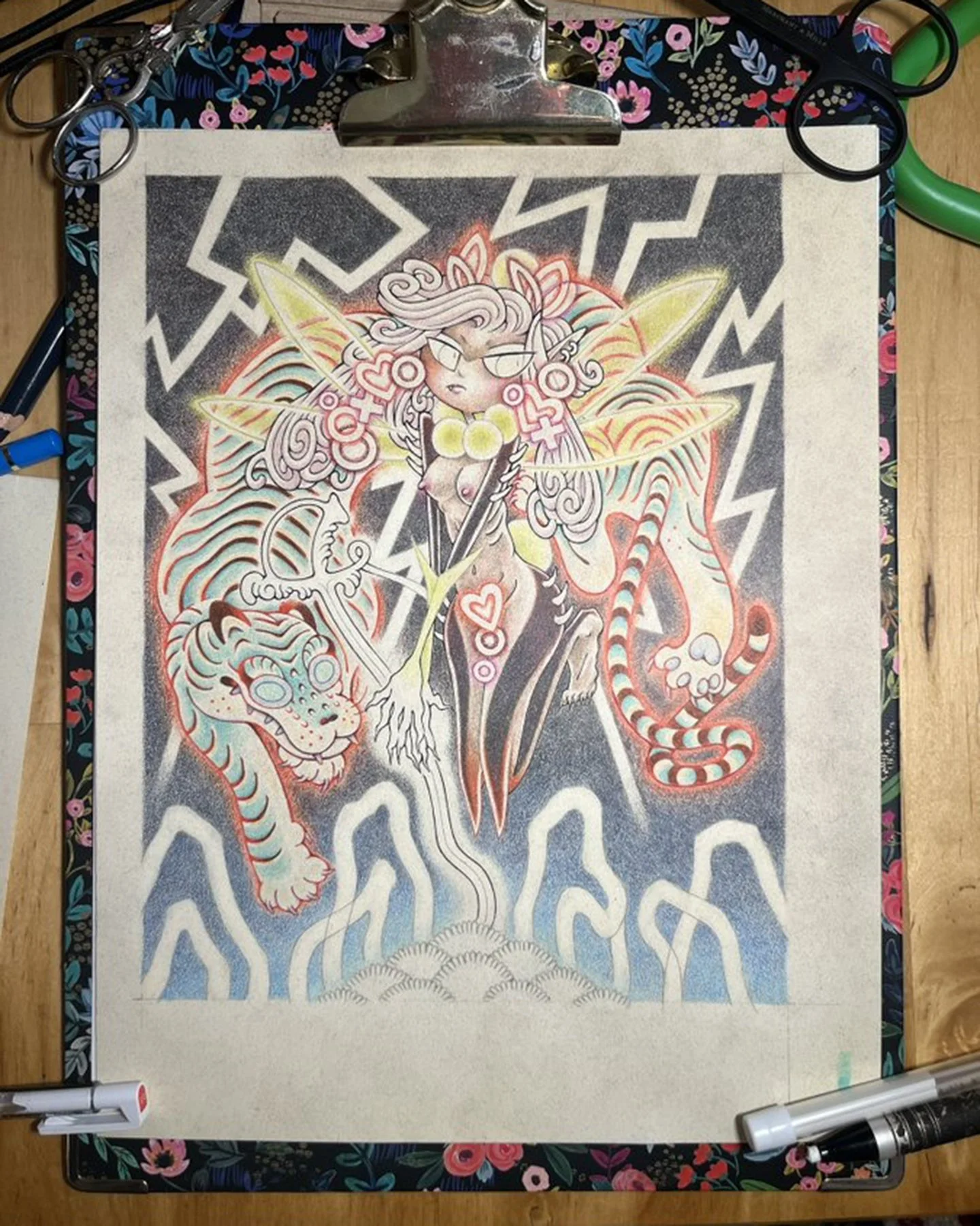
Above: Coloring process with colored pencils. I’ve been using colored pencils almost as long as I have been drawing, perfecting my technique since I was in my early teens. This process involves careful layering of the wax crayons in very small, even strokes. This process has carried over to my handpoke tattoo technique (one dot of ink at a time) and textile techniques (one knit row at a time, one stitch at a time) etc. Processes I find affinity with tend to have something in common with this mindful, one-at-a-time, intentional mark-making.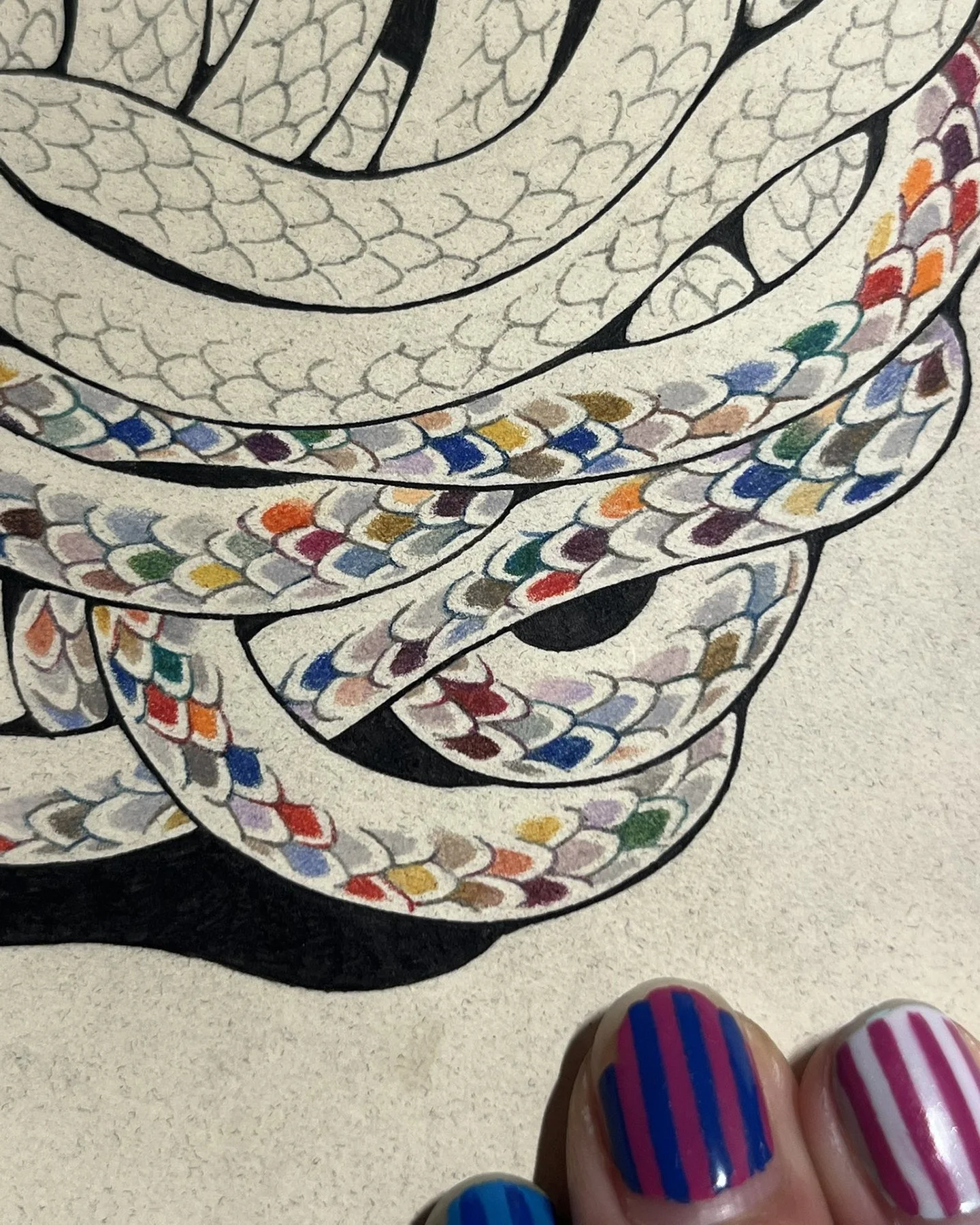
Above: Close-up of minute details produced with colored pencils on an illustration.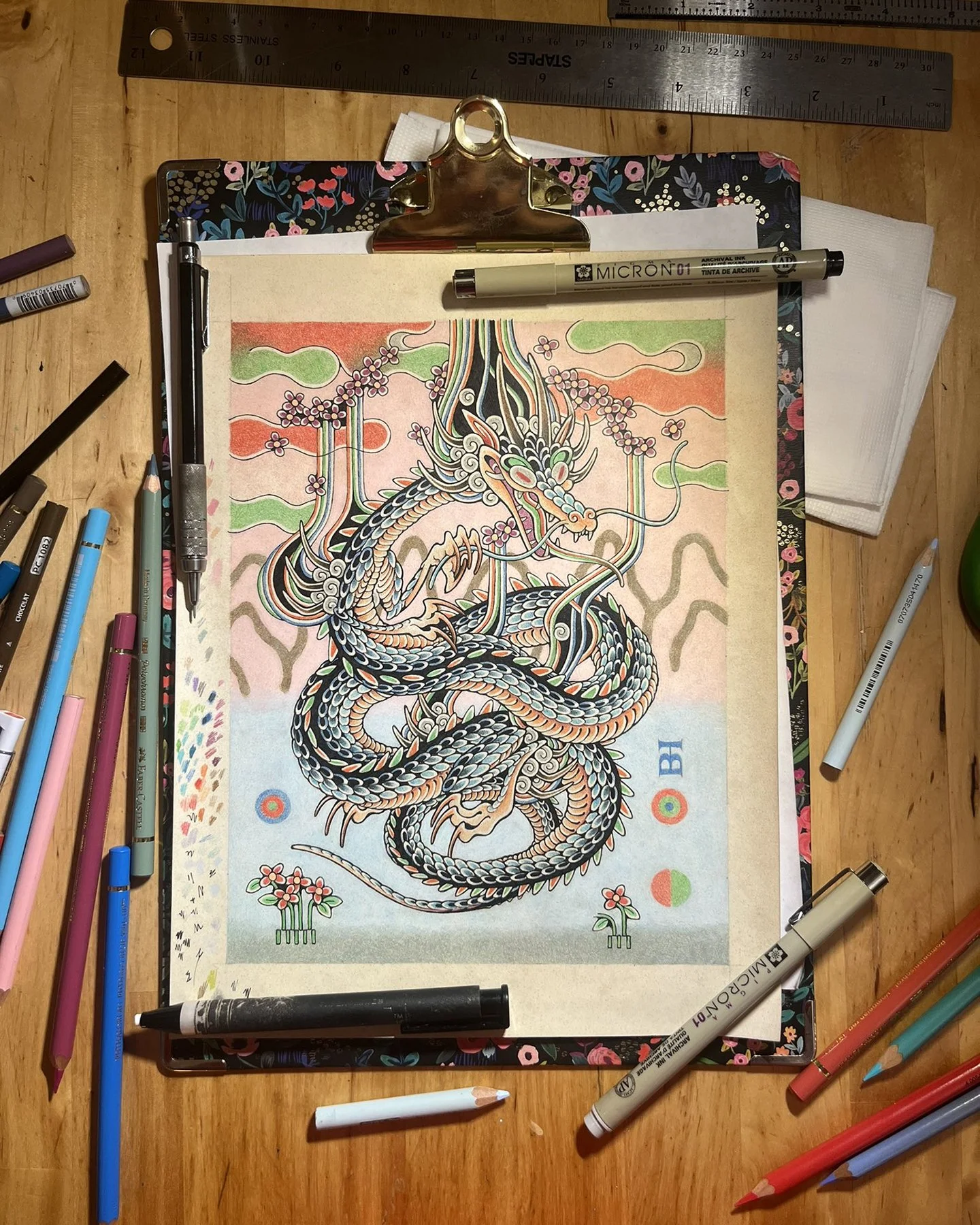
Above: View of a completed illustration. If the illustration does not go all the way to the edge of the paper, I cut it out at this stage. I sometimes use the edge of the paper to test colors and pressure for layering.DESIGN: COLOR & MOOD
I begin working color alongside drawing and sketching. I use yarn swatches in addition to digital swatches. Colors are often sampled from real-life inspirations like those shown in the section above.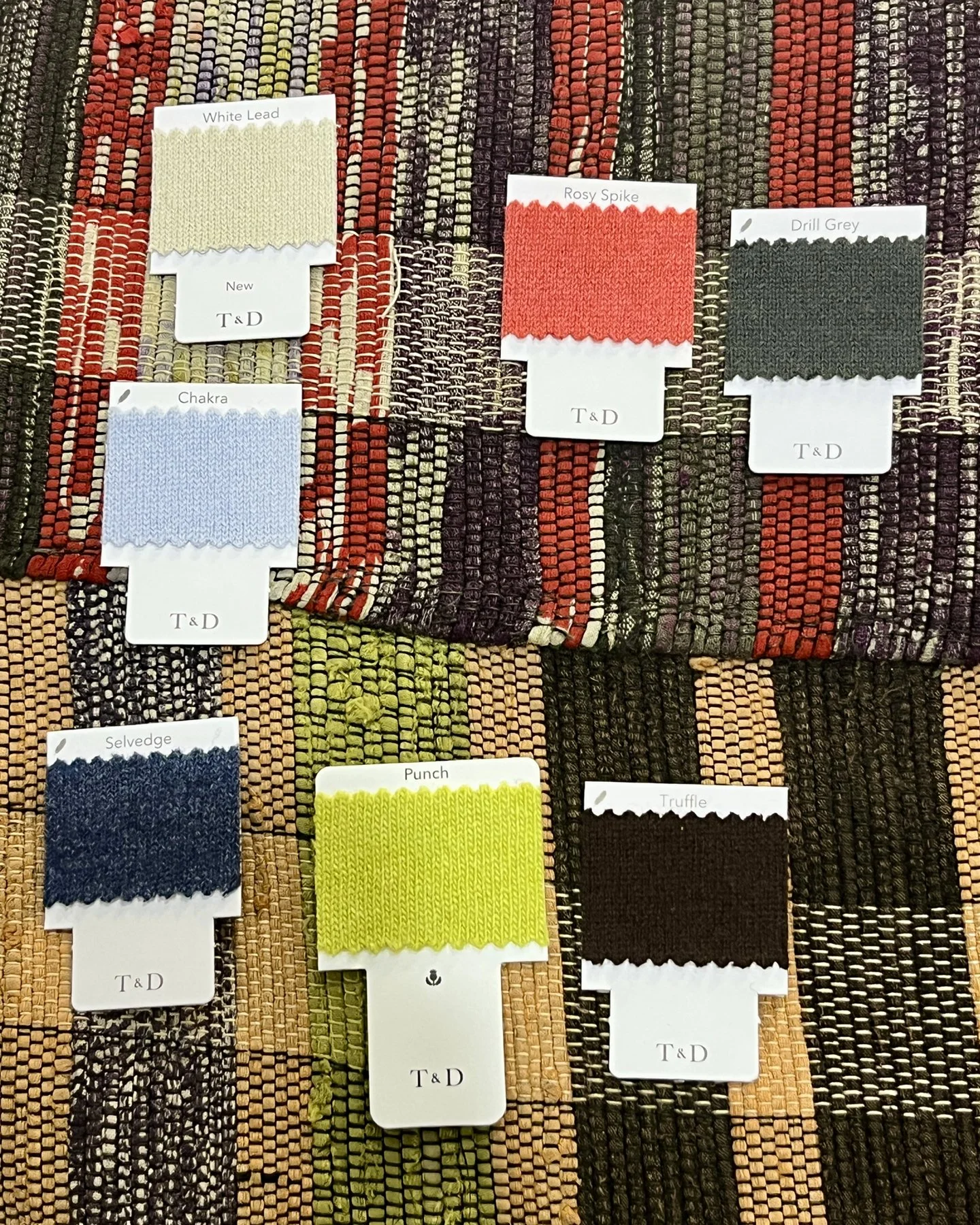
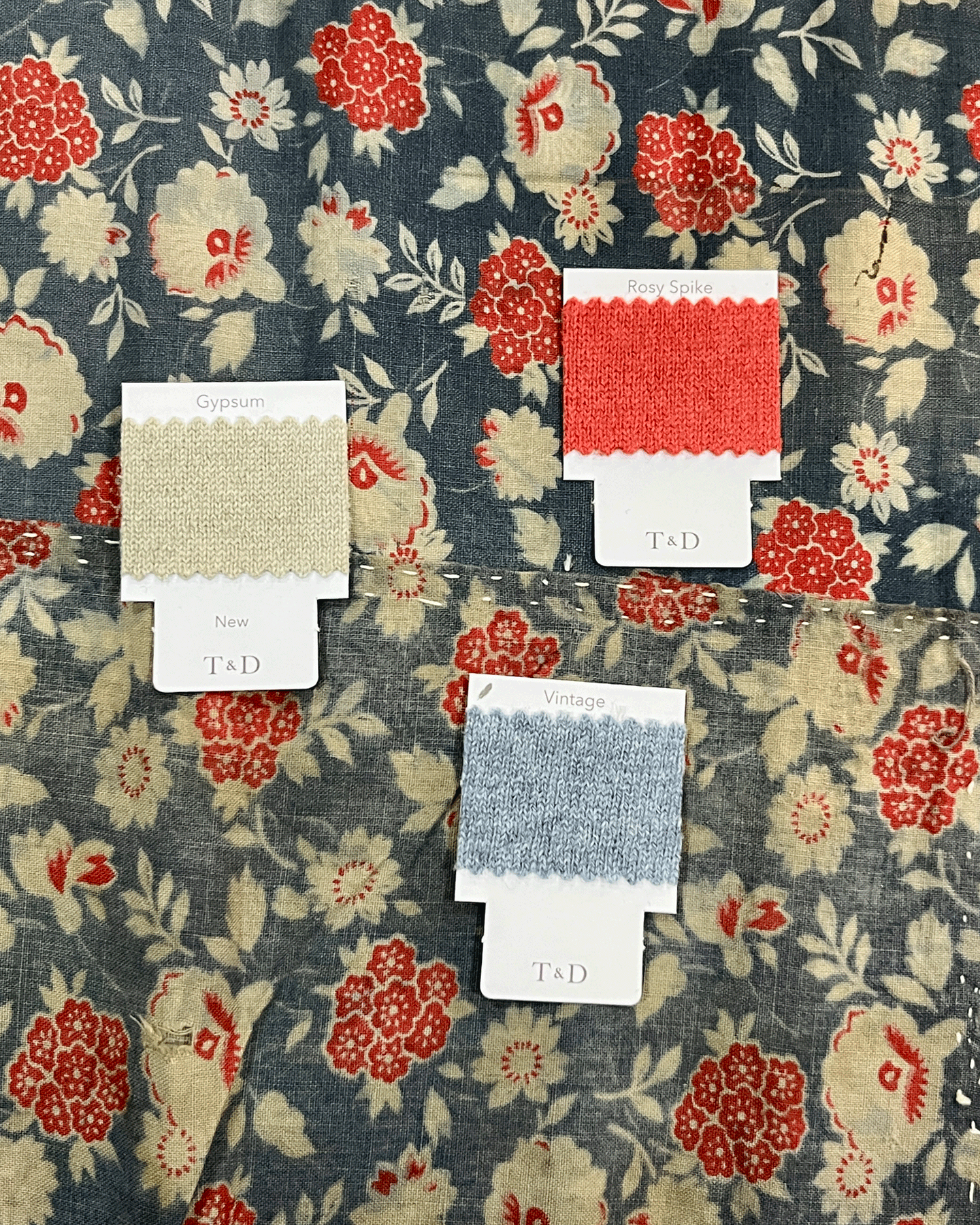
Left & right: Colors swatched with cashmere yarn cards from vintage textiles in my collection.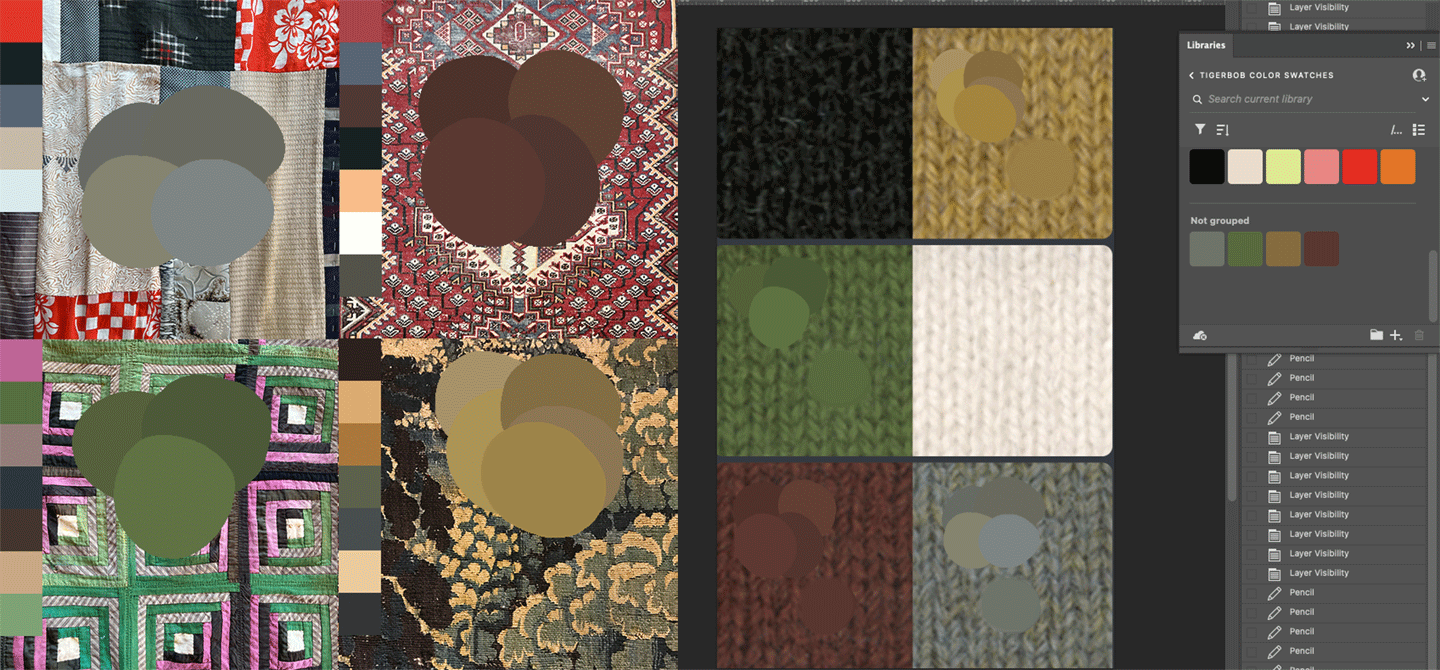
Above: Digital swatch process in Adobe Photoshop from photos of vintage textiles in my collection. Below: The same digital swatches placed in pairs to explore color combinations.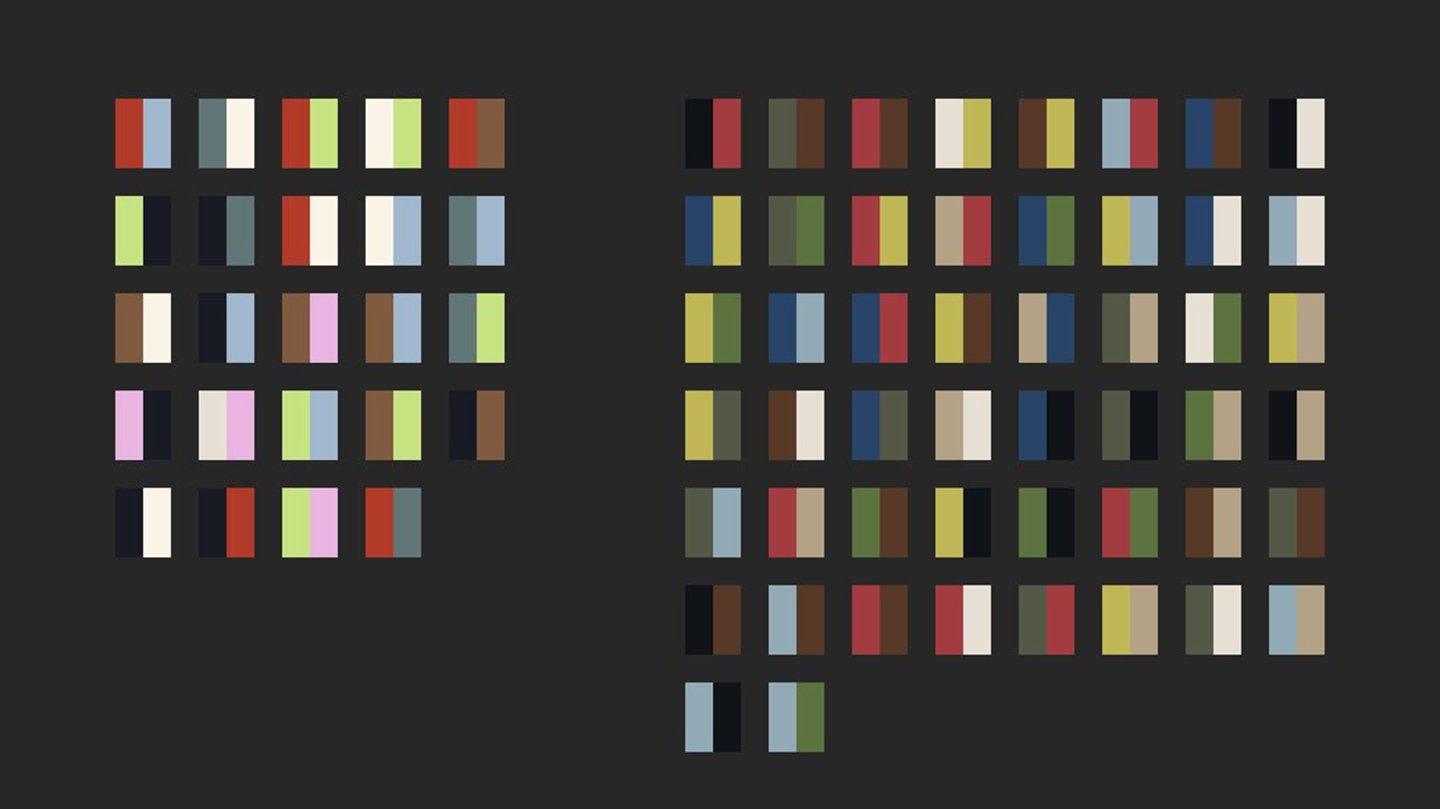
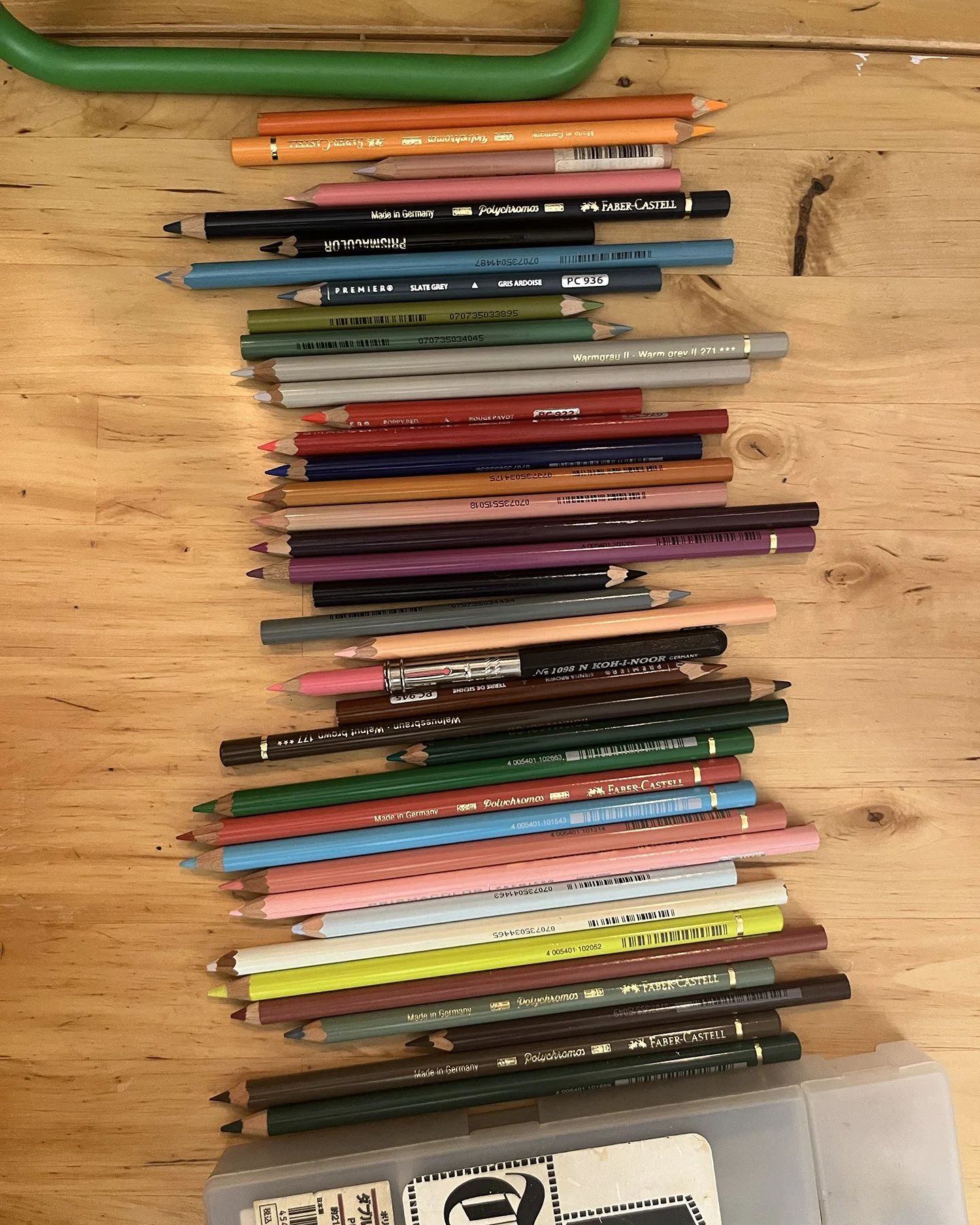
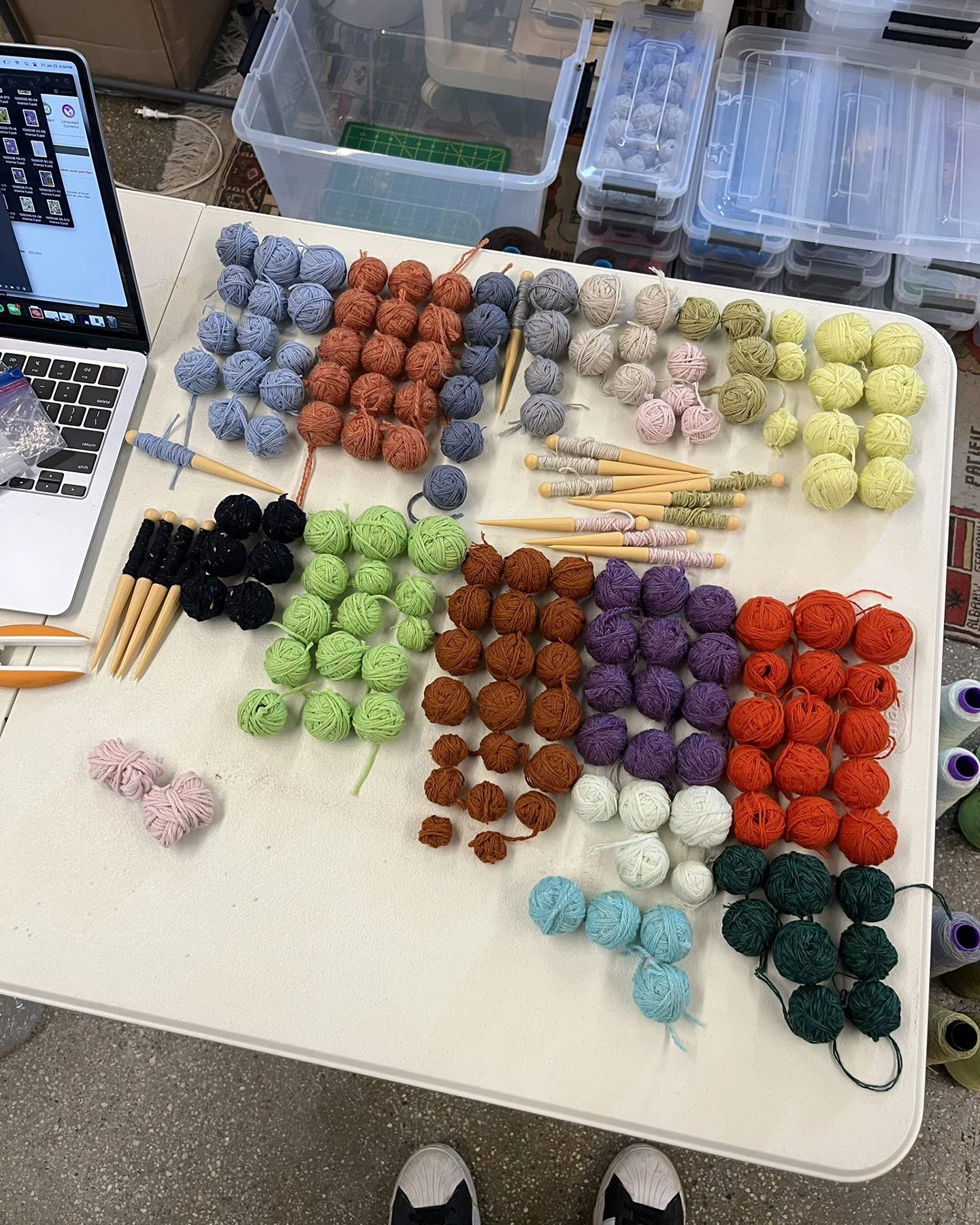
Left: Balls of yarn organized by color during intarsia knitting planning. Right: Colored pencils selected for drawing.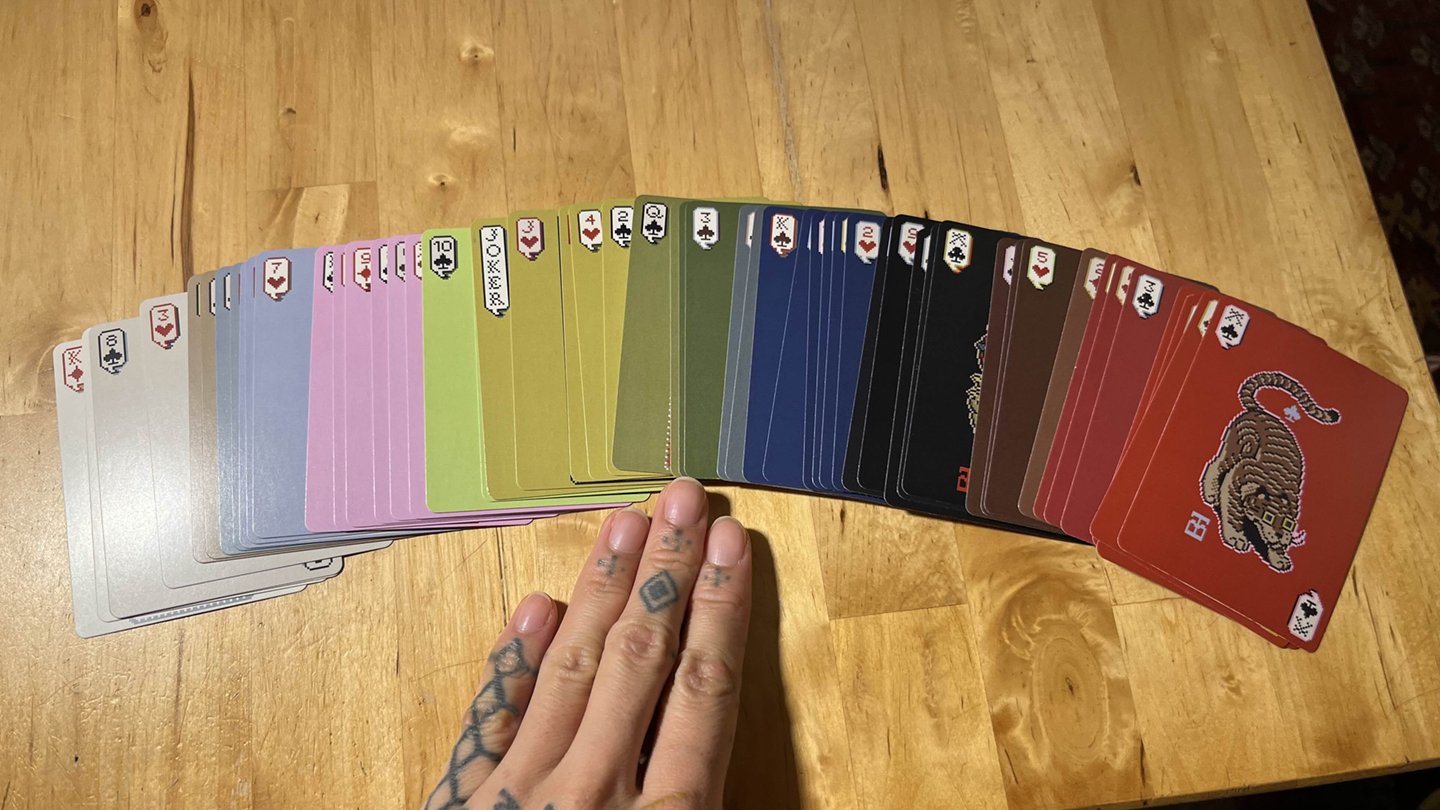
A post-production view of the Tigerbob Playing Cards, showing the palette in a new fashion. Review of color and form in past projects helps solidify brand identity for current and future projects.DESIGN: TEXTILES & APPAREL
Design processes for knitted textiles, apparel, and accessories on my knitting machine or for Shima Seiki made-to-order production.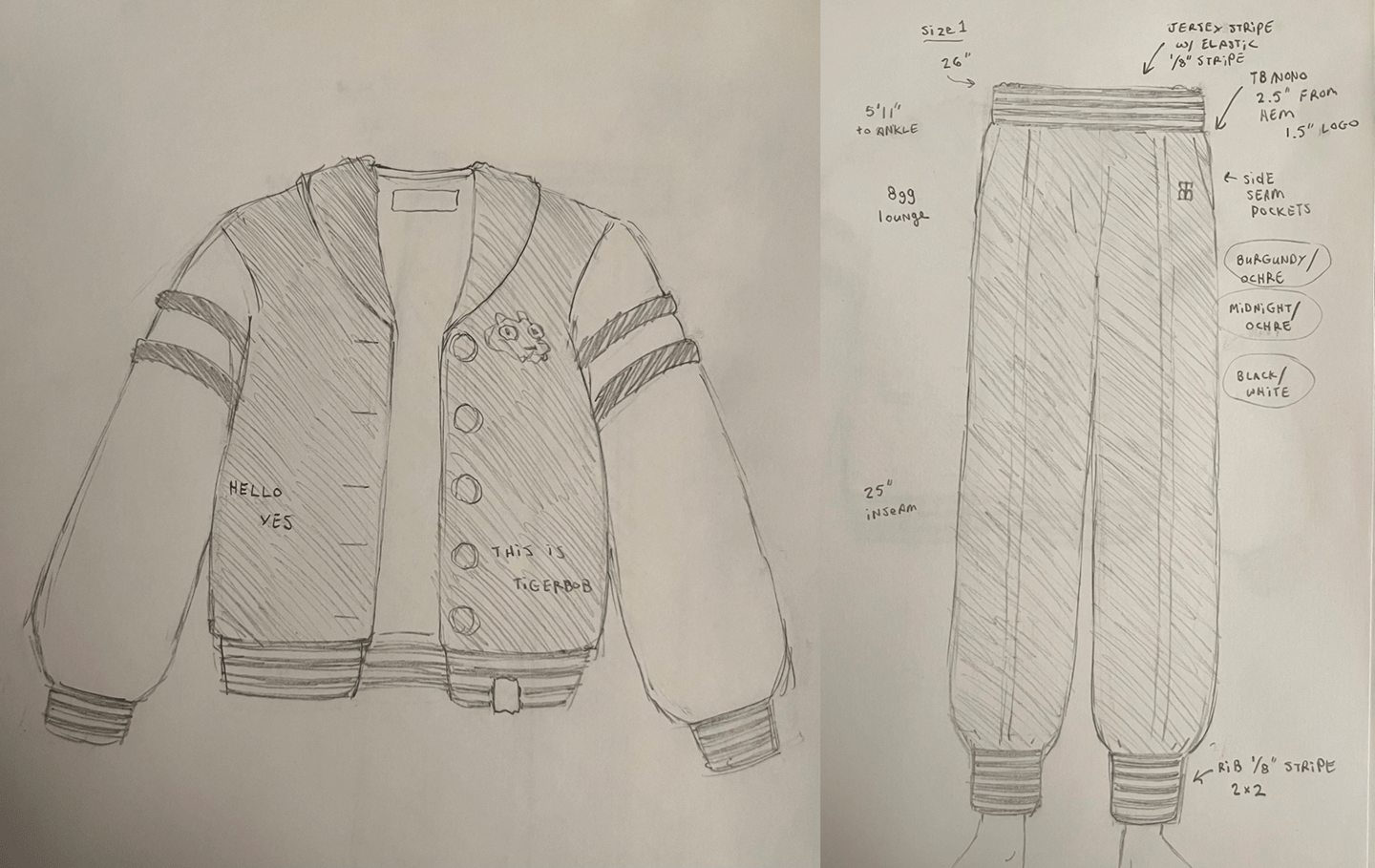
Above: Sketches for fashion illustrations made in 2023. Sketches are digitized and included in tech packs with instructions similar to what is shown here.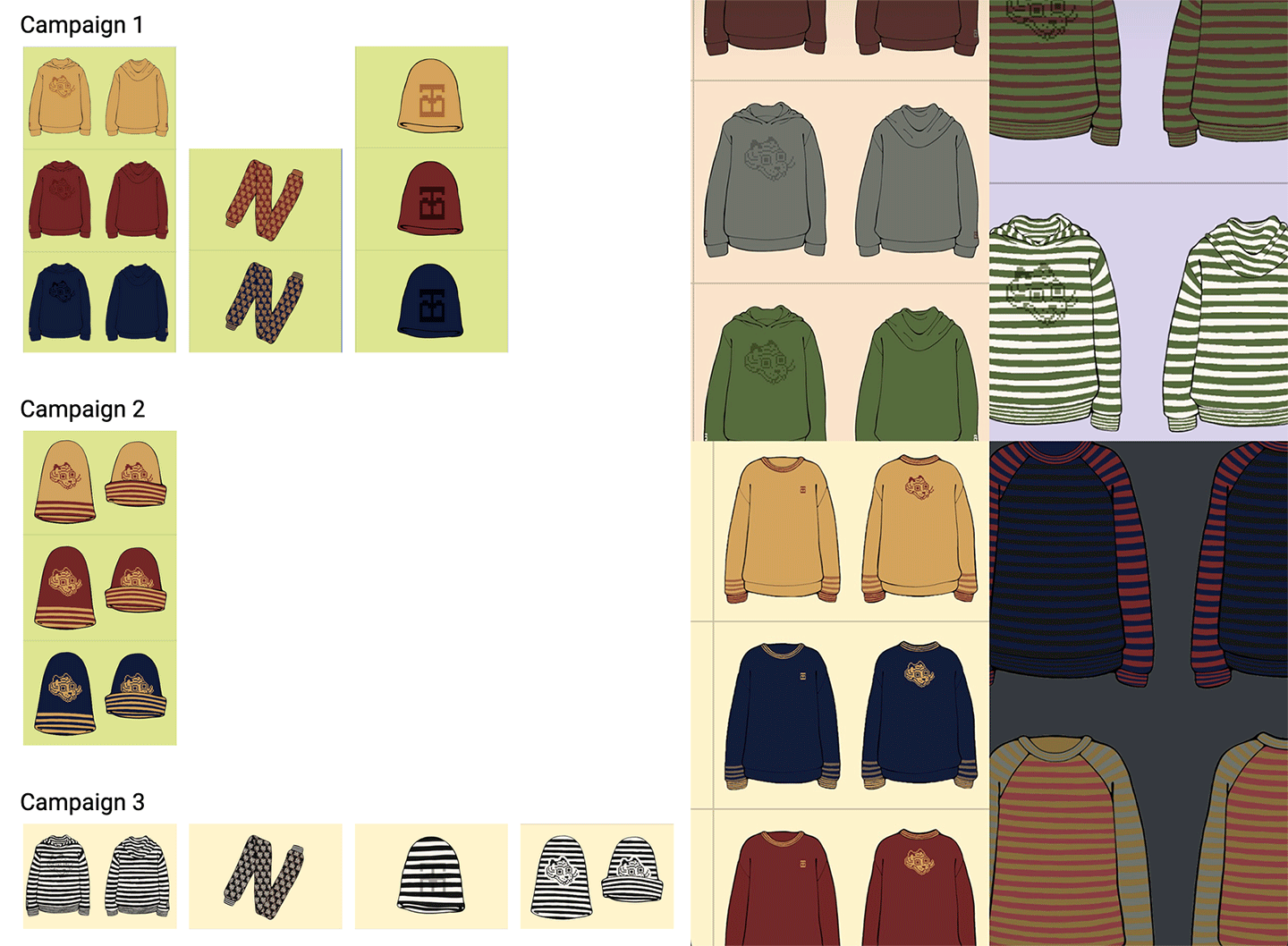
Above & below: A collection of digital fashion illustrations for the 2023 made-to-order apparel collection.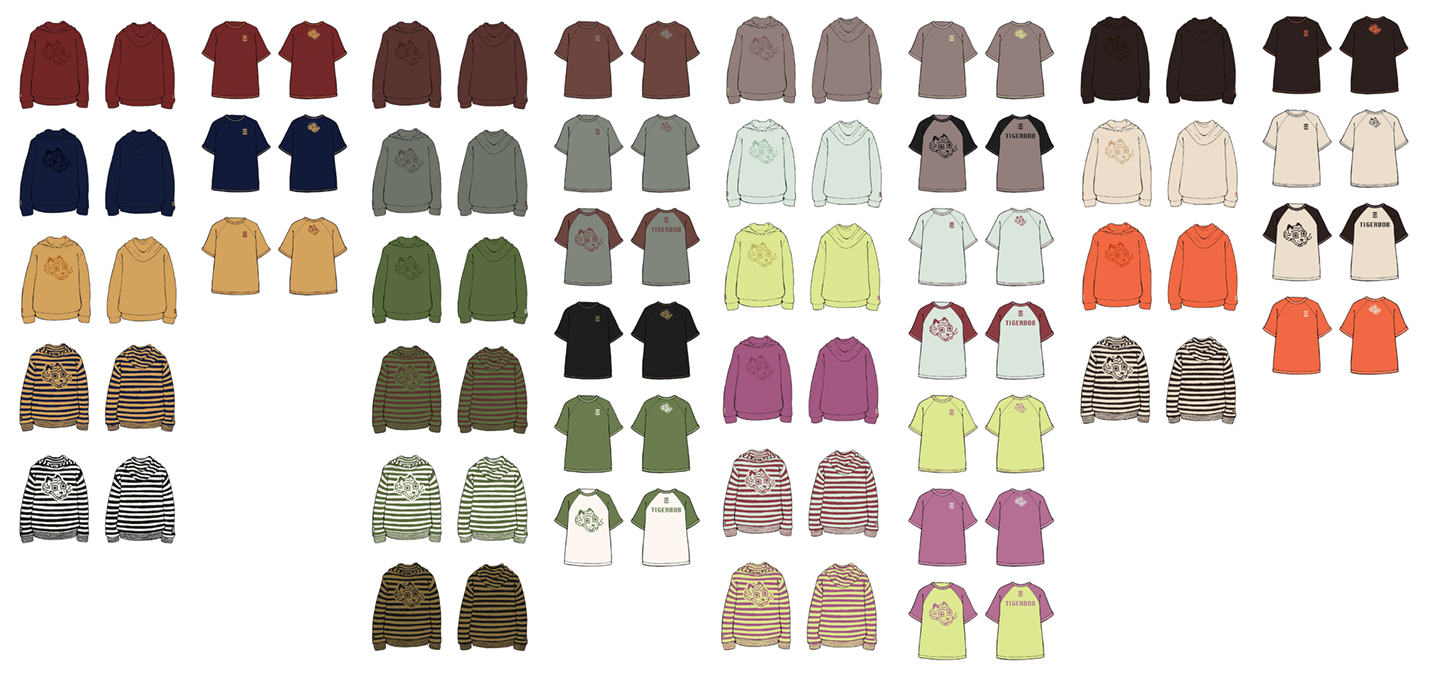
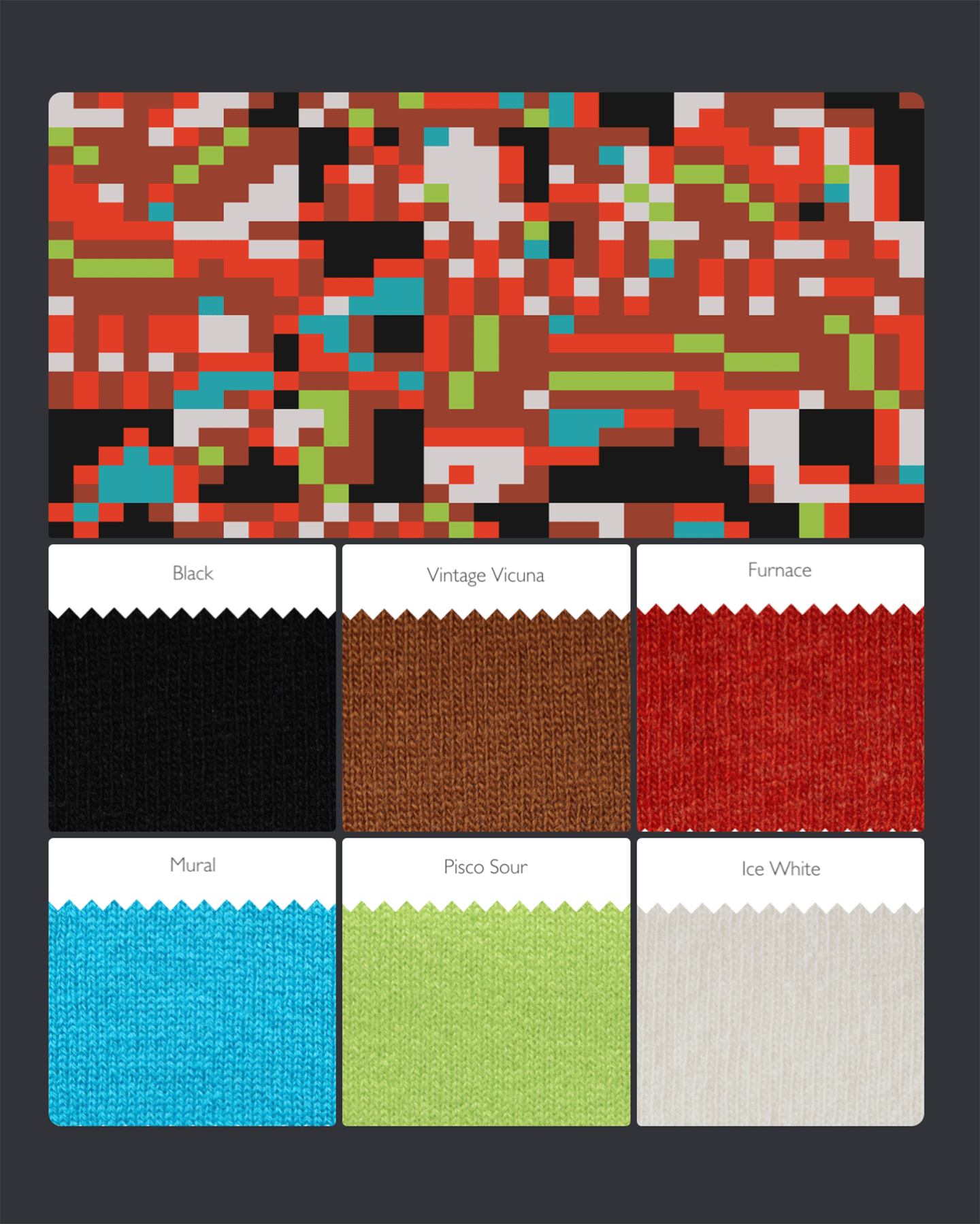
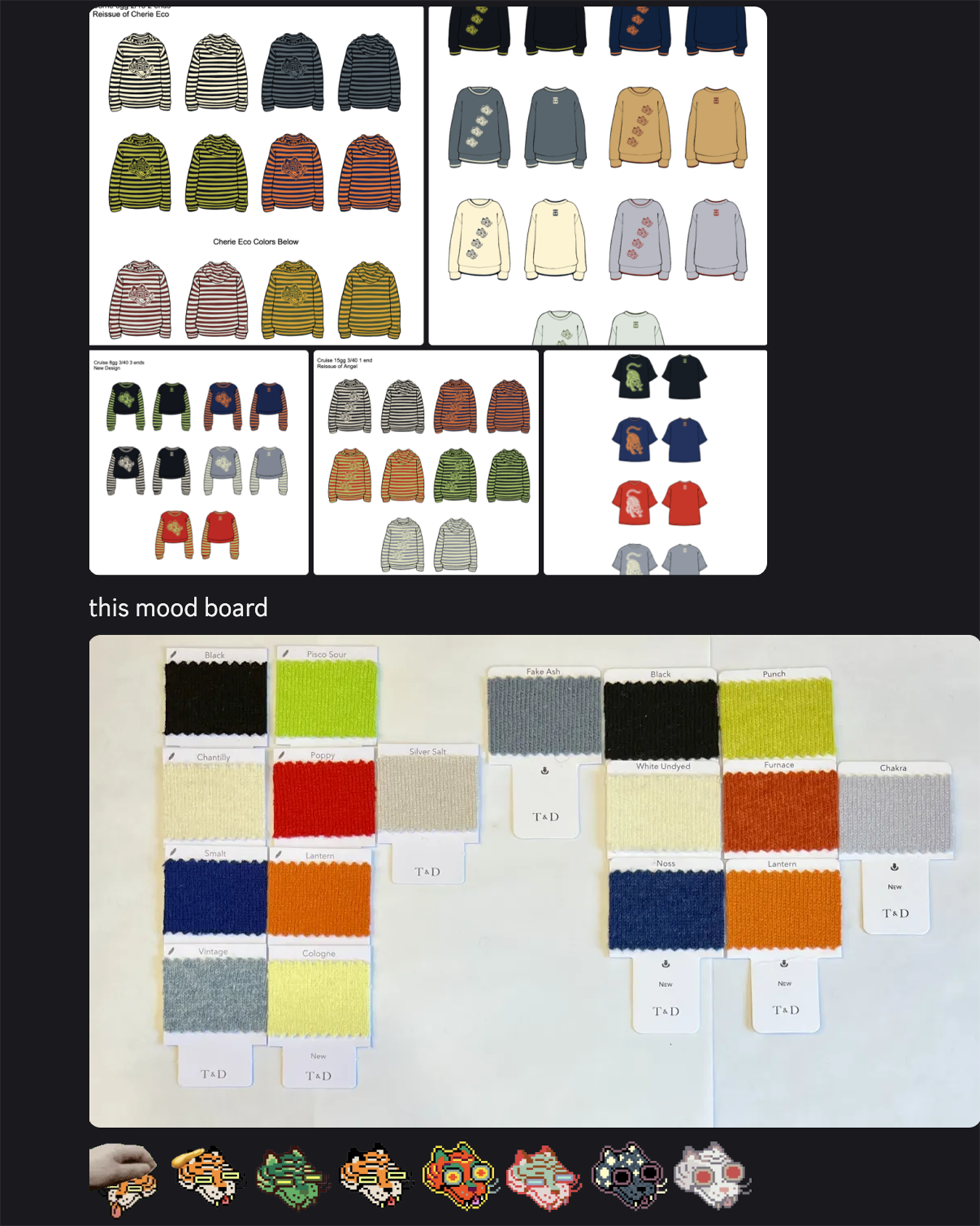
Left: Swatching a six-color textile sketch created in p5js (JavaScript). Right: New fashion illustrations (2024-2025), a collection of yarn swatches, and pixel Tigerbob illustrations (2022) side-by-side during exploration for the 2025 made-to-order apparel collection.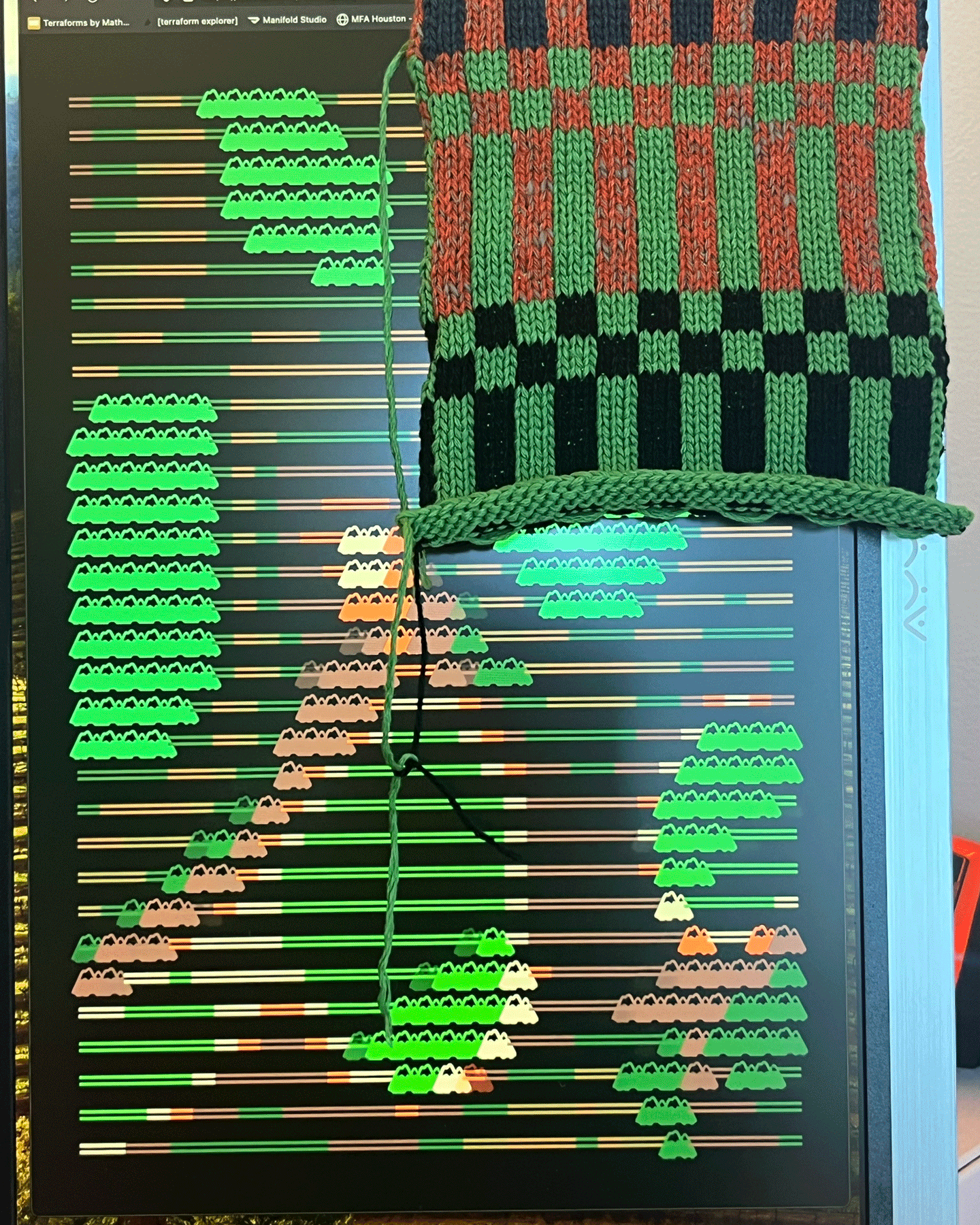
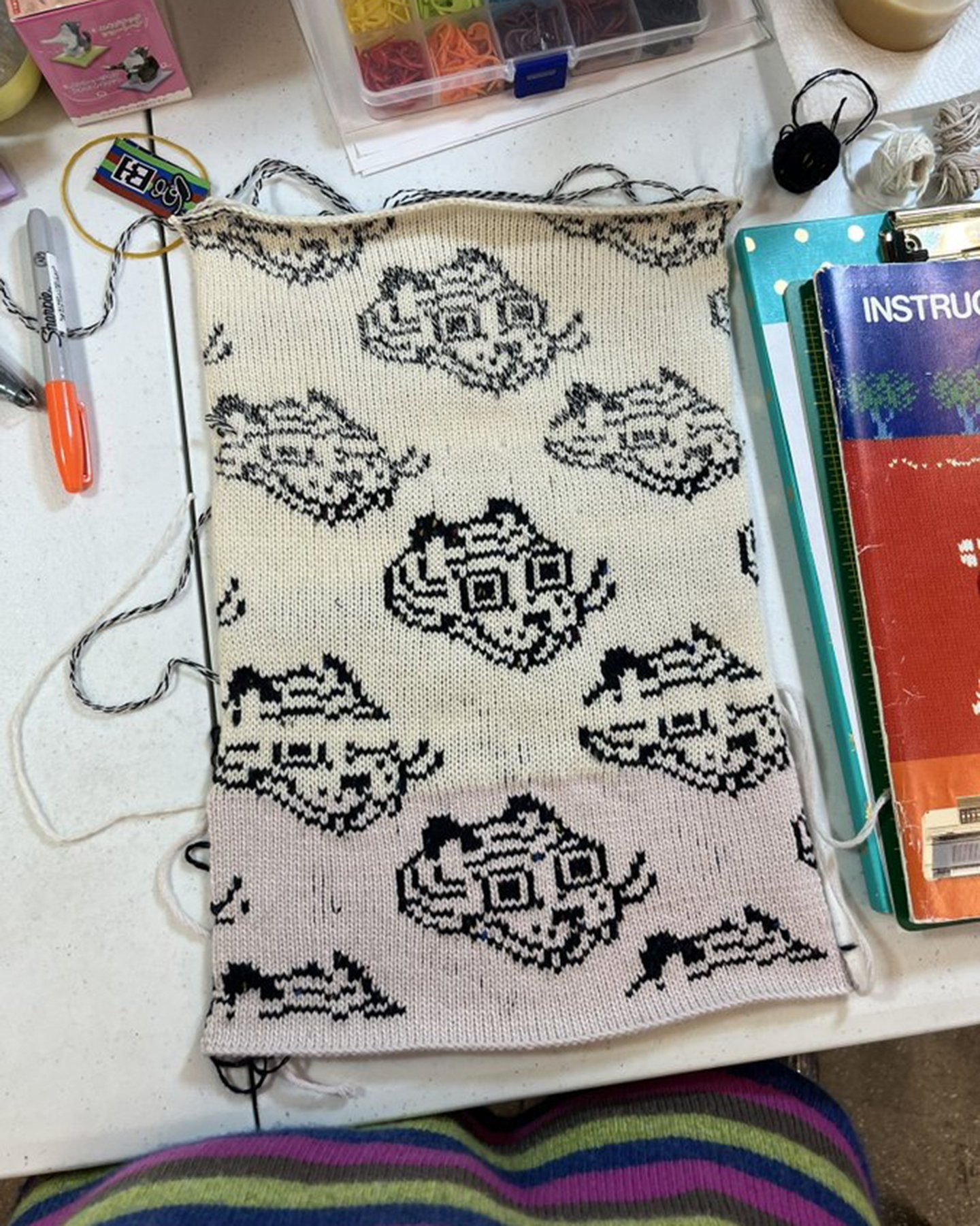
Left: A machine-knitted swatch by me based on colors sampled from a digital art piece called Terraforms by Mathcastles. Right: A machine-knitted swatch by me testing a repeating design input via mylar card.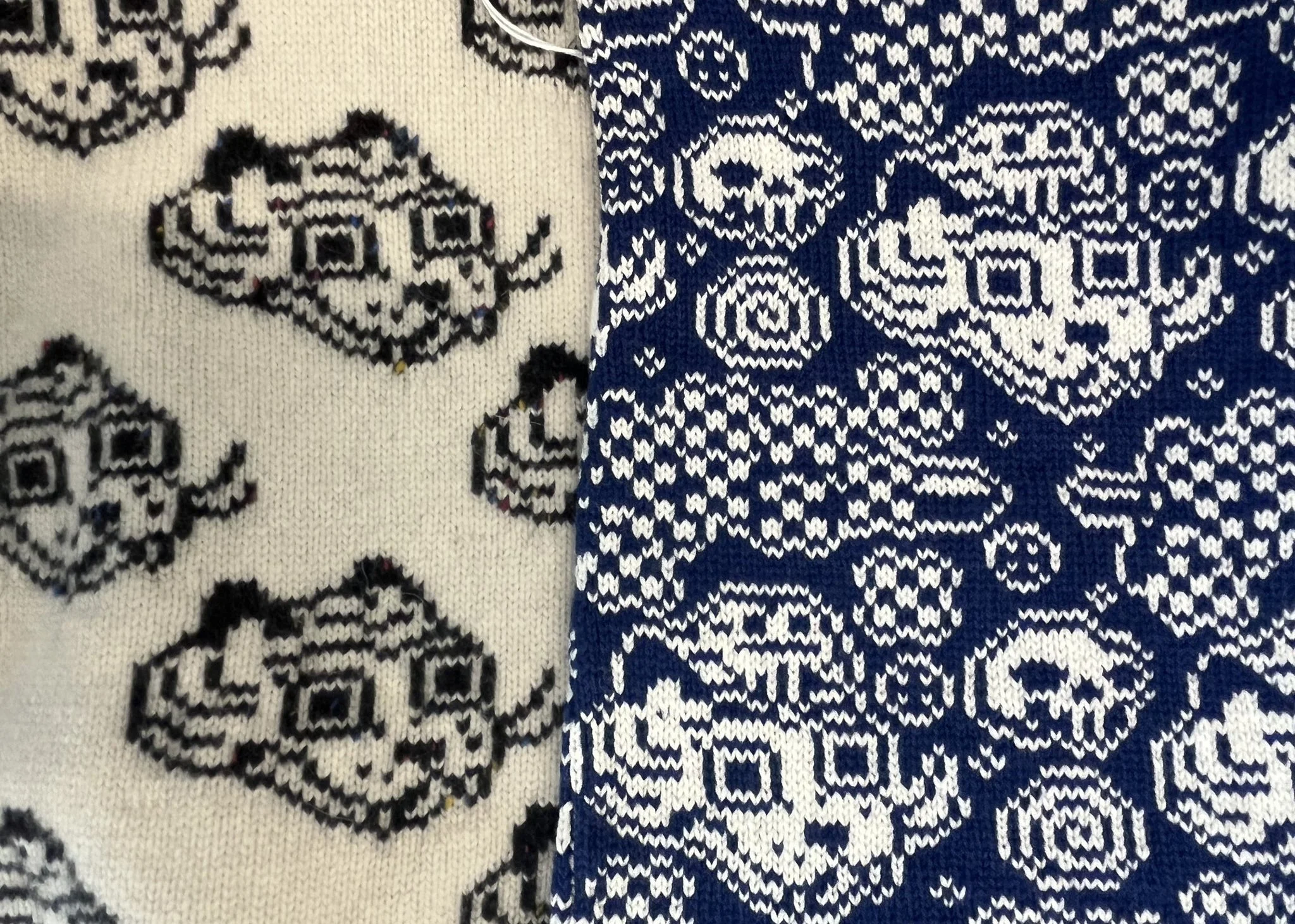
I knit samples of apparel and fabric myself before sampling a design for the made-to-order line.Above: Two swatches showing development of knit fabric. Left: Stranded-yarn repeating motif machine-knit by me. Right: Stranded-yarn repeating motif designed by me and produced by Tailored Industry for the made-to-order line.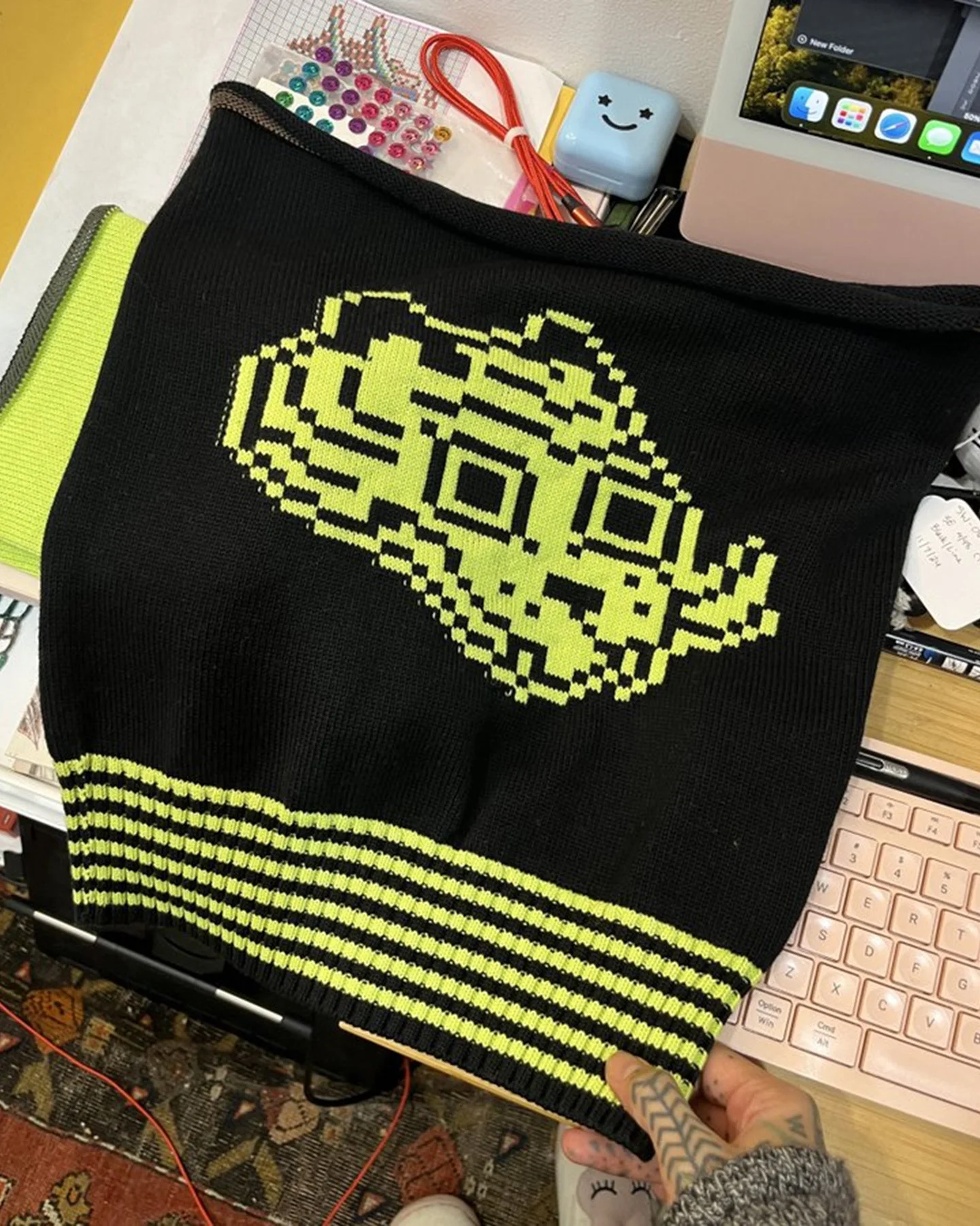
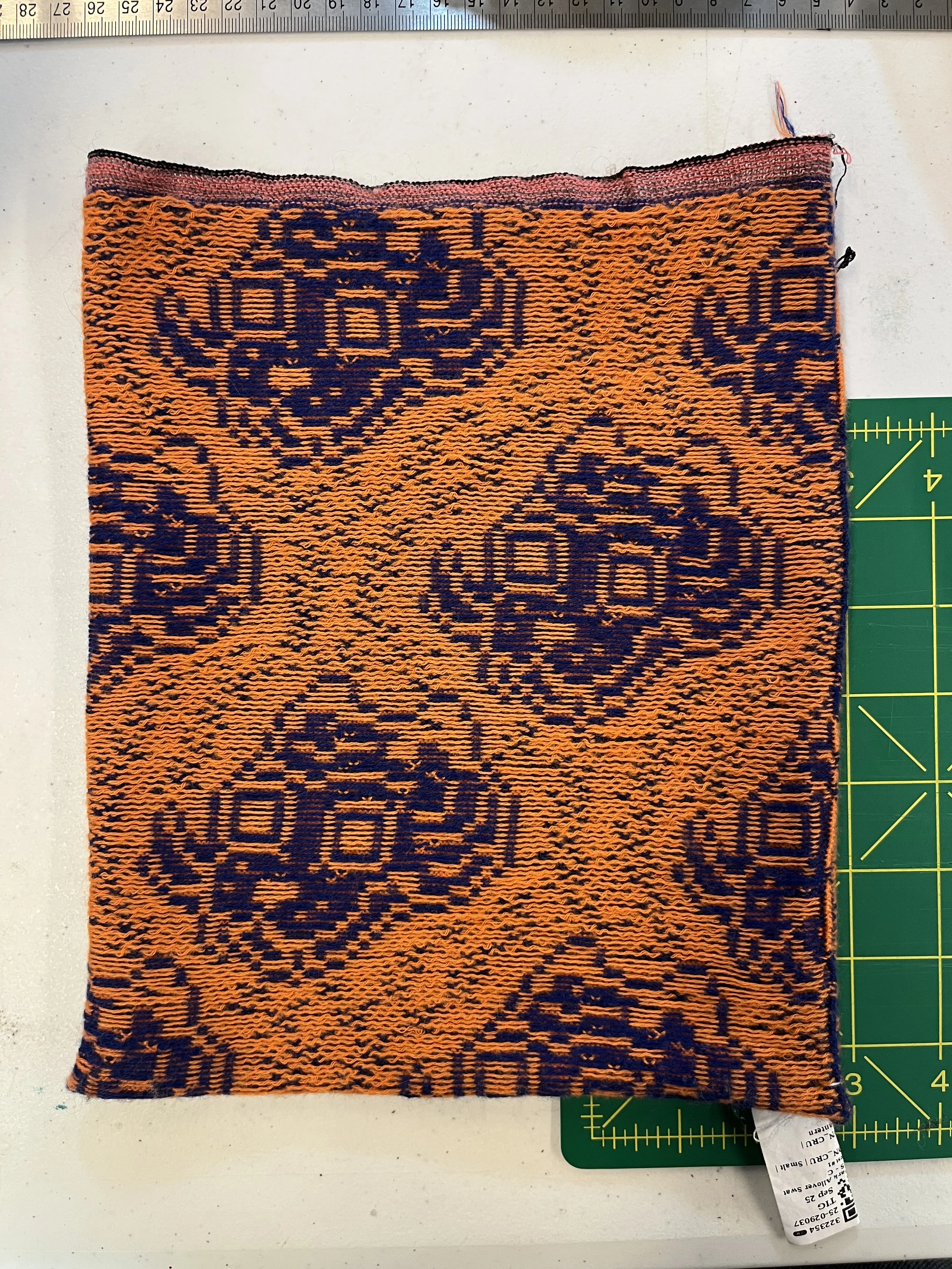
Left & right: Two swatches designed by me and produced by Tailored Industry during development.TYING IT ALL TOGETHER
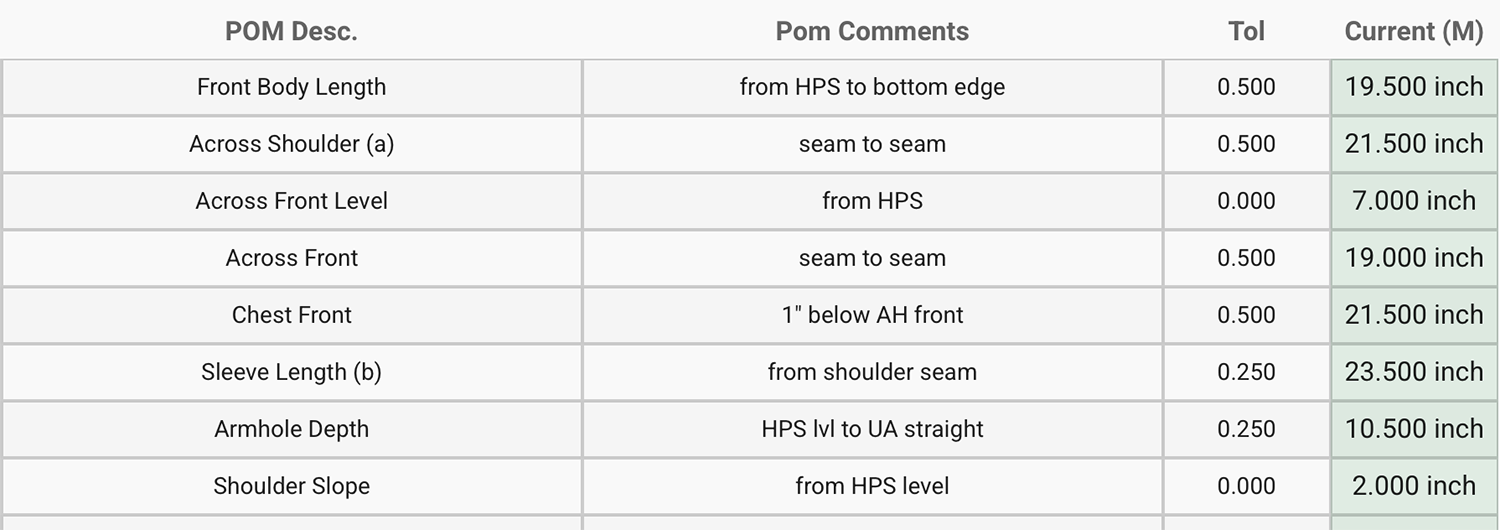
The final step is to submit my design for sampling. I include the flat illustration and technical callouts, including knit stitches, collar, and cuff details. I also include any additional sewing like woven tags, which I also design myself. The specifications are also included exactly as I design.Below are the details for a sweater from the 2025 collection below.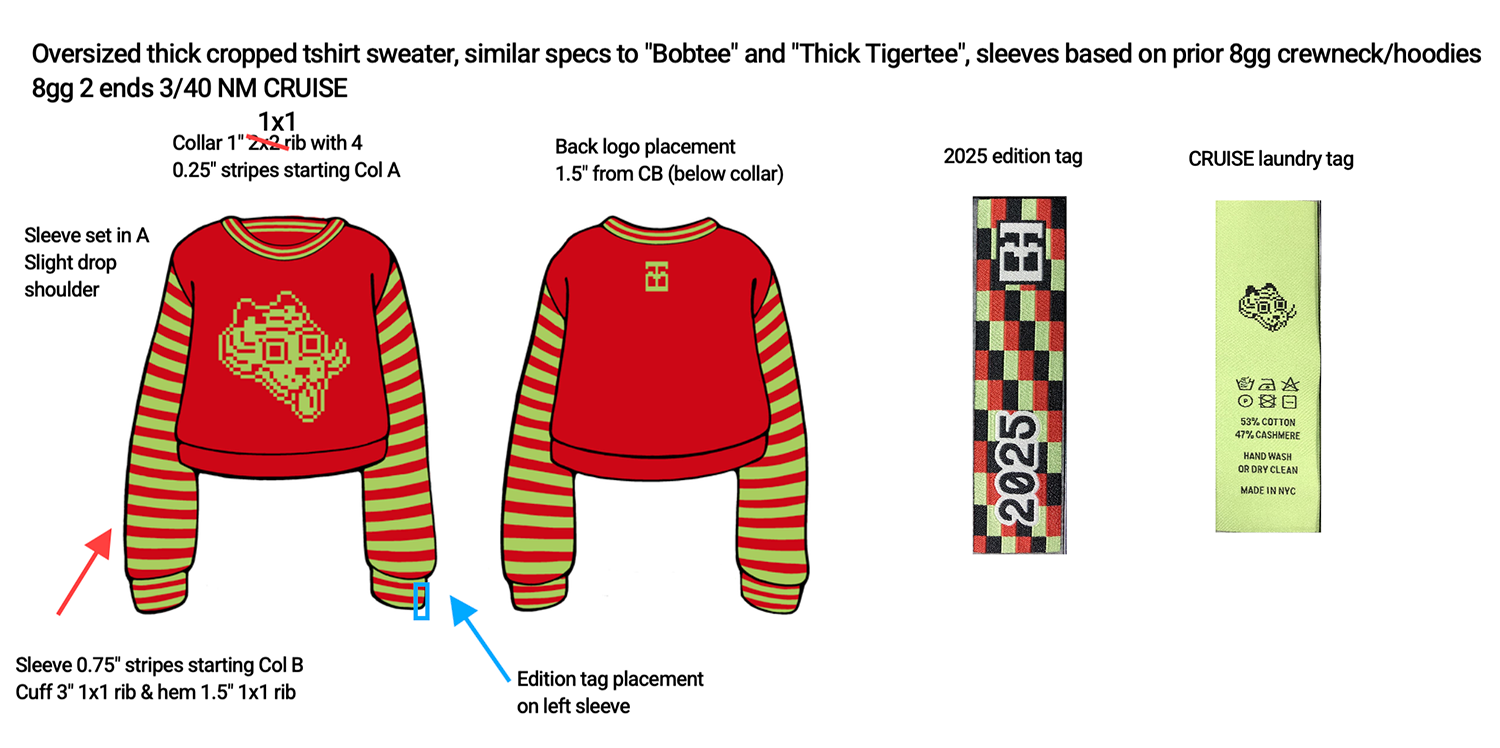
DESIGN: CHARTED (PIXEL) ILLUSTRATIONS
This section was formally called Pixel Illustrations. “Charts” accurately represents my method for creating individual patterns and surface pattern designs.
Pixel art drawings are useful interpretations of my visual language before they are translated into gridded formats for machine knitting, knit garment programming (Shima Seiki), and digital art (JavaScript). I also use this process to develop seamless, repeating tiles for digital and physical outputs.
Learn more about the grid inputs derived from my pixel art here.
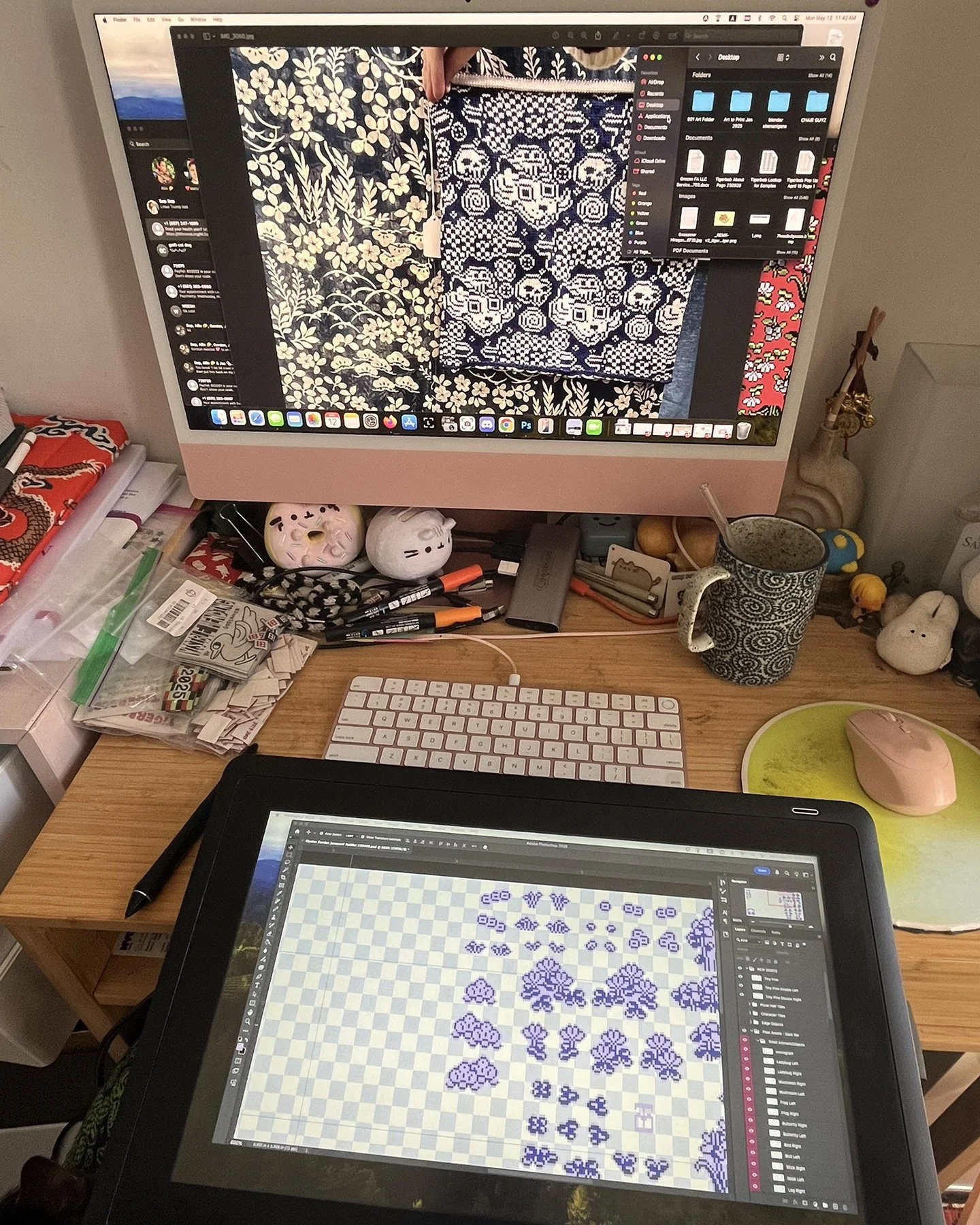
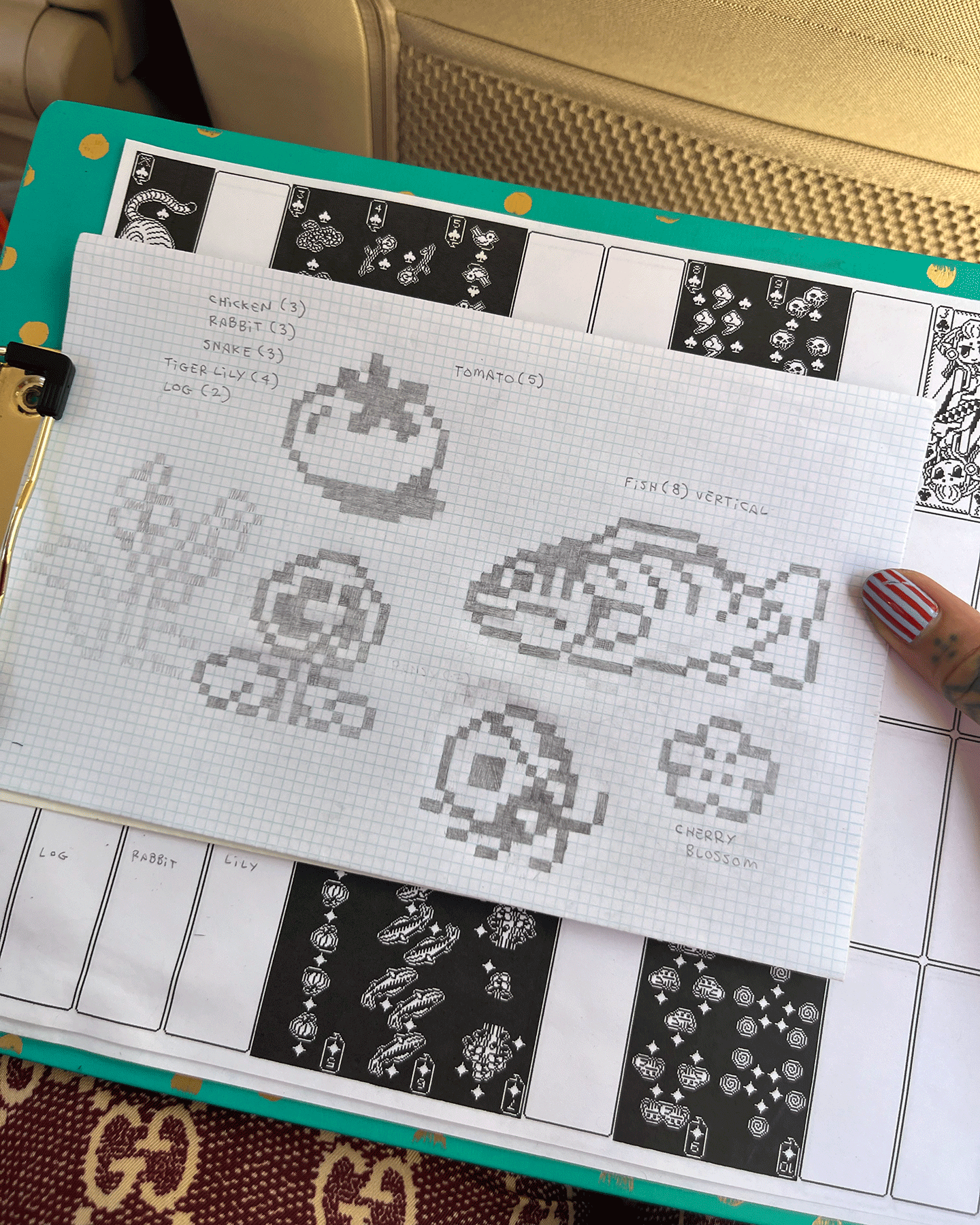
Analog and digital pixel art design. Left: Hand-drawn sketches on graph paper for Tigerbob Playing Cards. Right: Digital sketching in Adobe Photoshop, referencing knit swatches and vintage textiles for a surface pattern design.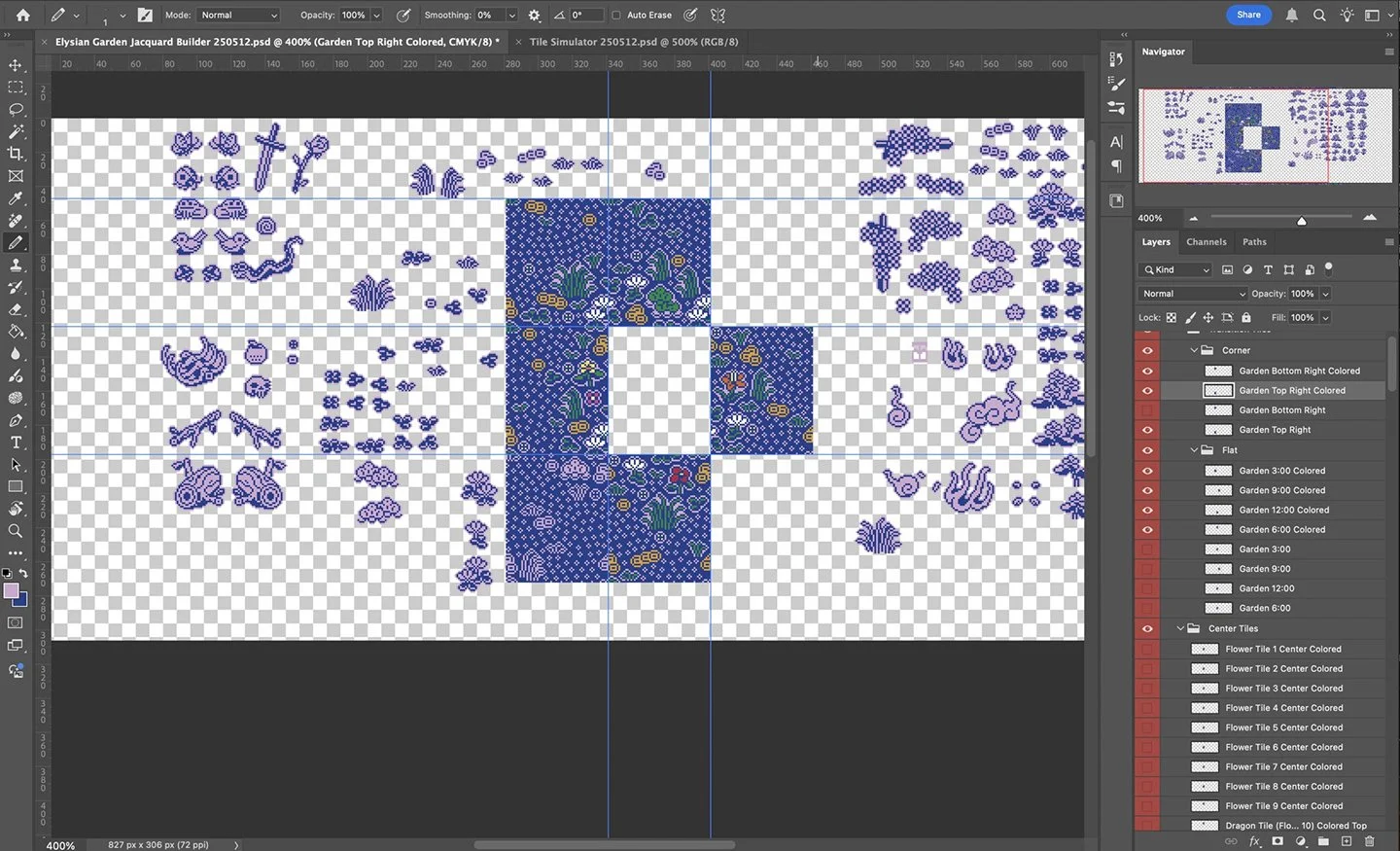
Above: Digital drawing process for Undulation and Tigerbob Mystery Garden. Designed in Adobe Photoshop, I created a system of character and foliage “stamps” that encompass all the pre-drawn art. Each tile is a repeating surface design. The PSD file includes a complex system for organizing the tiles needed for the work.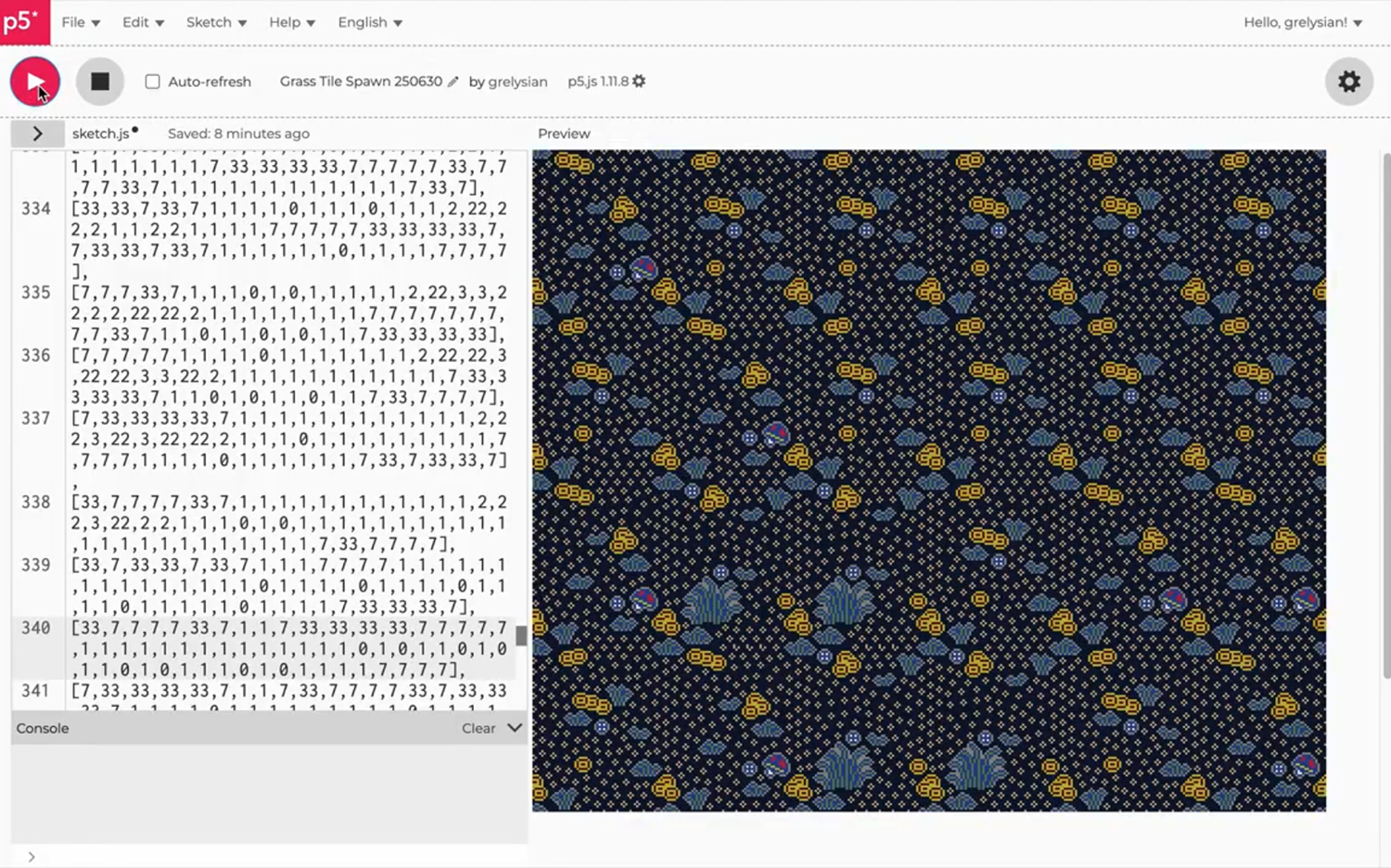
Above: Tiles arranged in matrices and rendered with JavaScript. I wanted the tiles to appear according to a strict set of rules.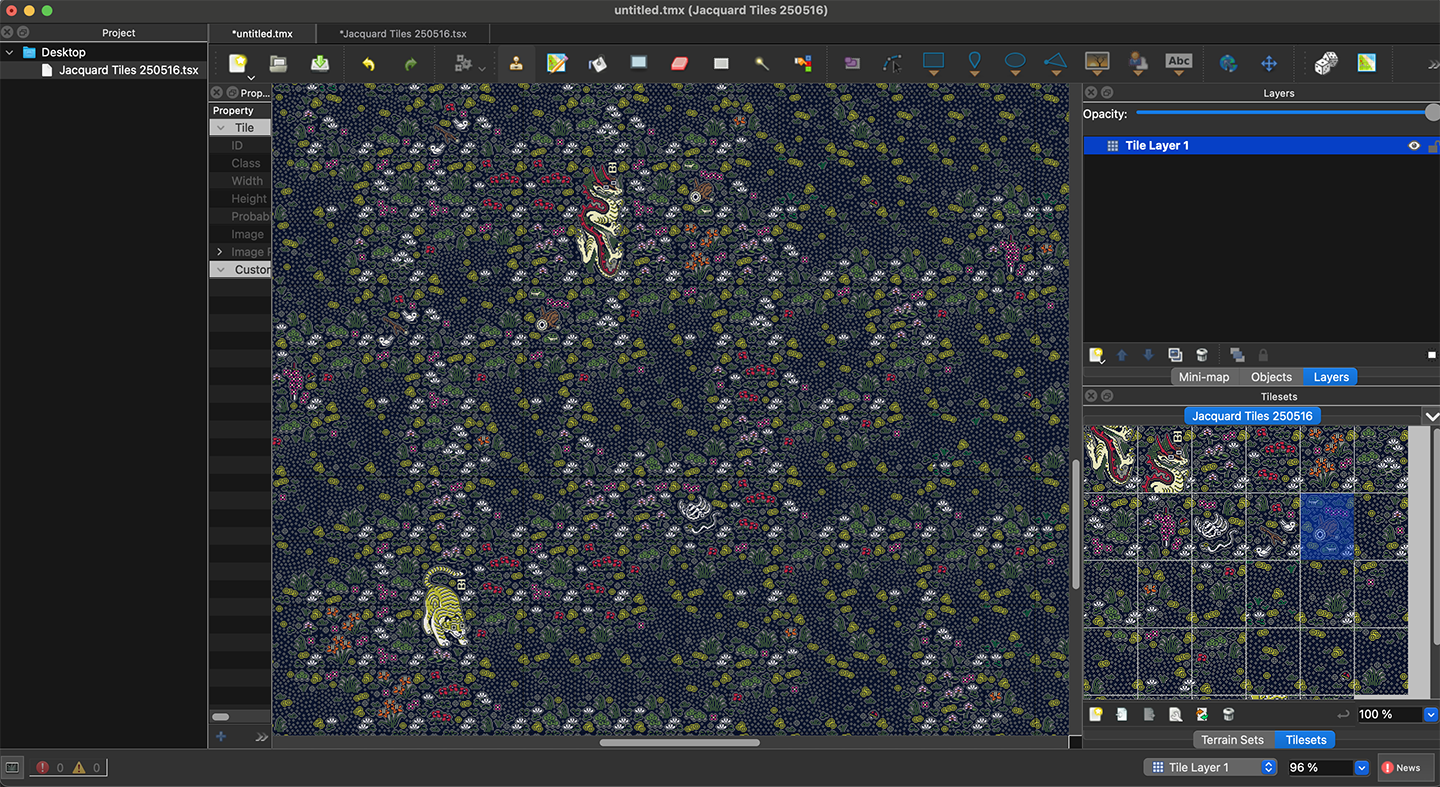
Above: A sketch made from a selection of pixel tiles organized with rules in the Tiled game development software, to aid in writing rules for tile generation and for designing additional tiles. FROM DESIGN TO TEXTILE (2026)
Below I detail the process to transform a digital design into a knitted swatch with APEX on the Shima Seiki WHOLEGARMENT machines for the 2026 collection (work in progress!)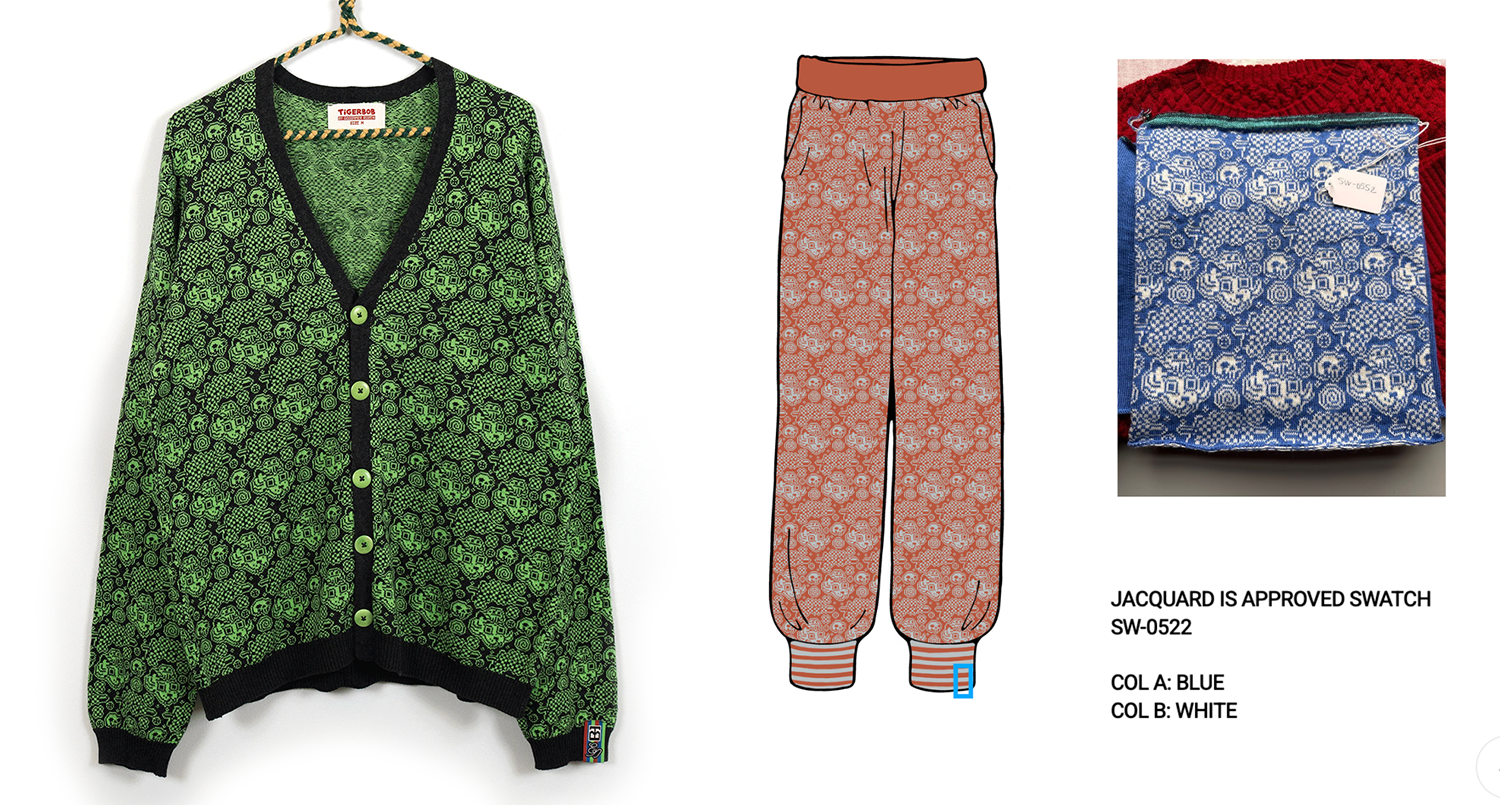
Above: Repeating jacquard set from the 2024 Garden Collection. This design served as inspiration for the next Jacquard. Now that I had successfully designed complex, rule-based surface pattern designs for Tigerbob Mystery Garden and Tigerbob Charm Packs, I wanted to bring that same feeling into my garments. 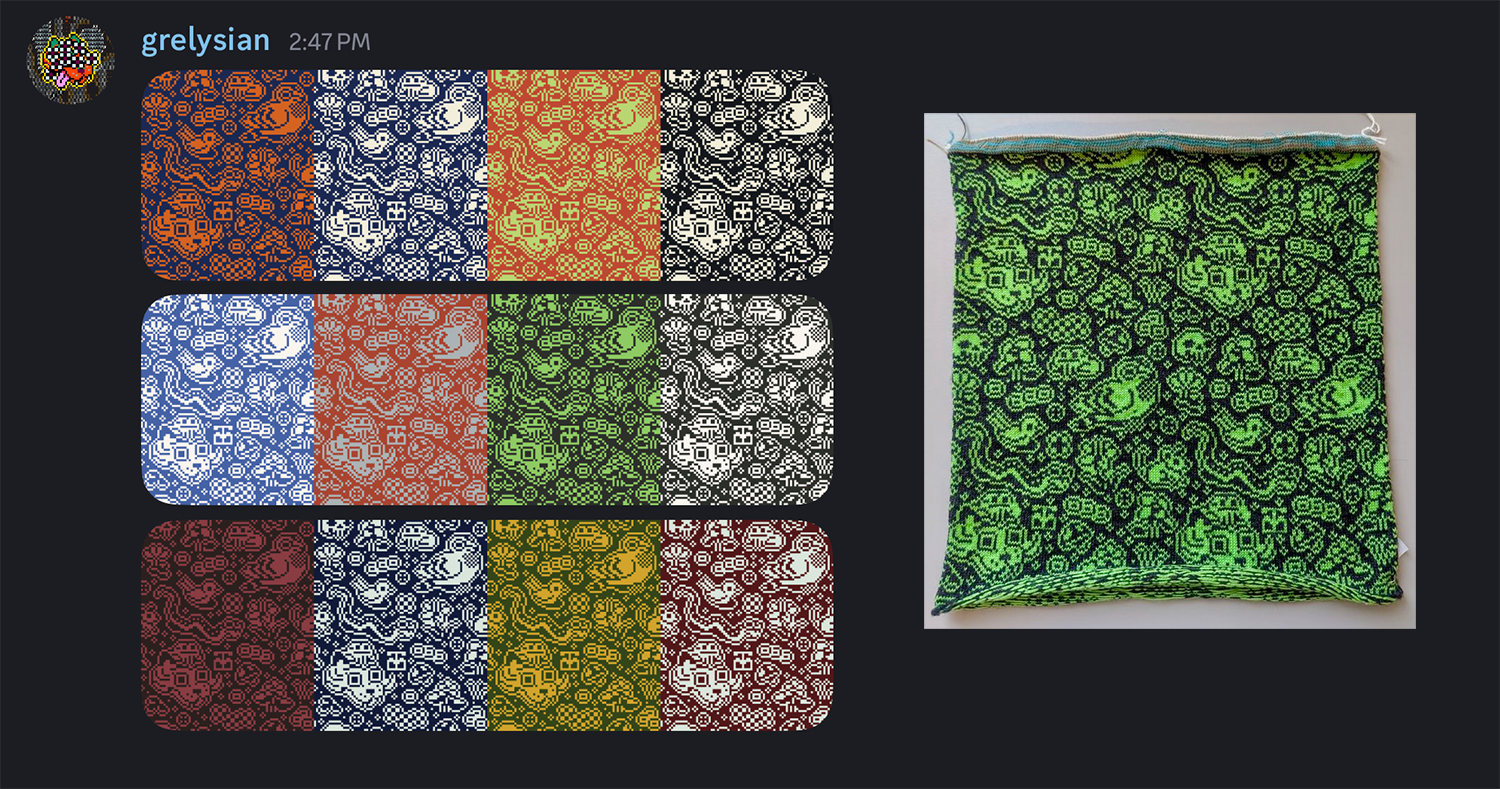
Above: The first version of the new jacquard. I liked this one, but it felt very jumbled and busy. One key limitation is that the textile must be a float (or stranded) jacquard. The floats must be small, so the design needs to reduce the number of large blocks of color in any single row for structural integrity.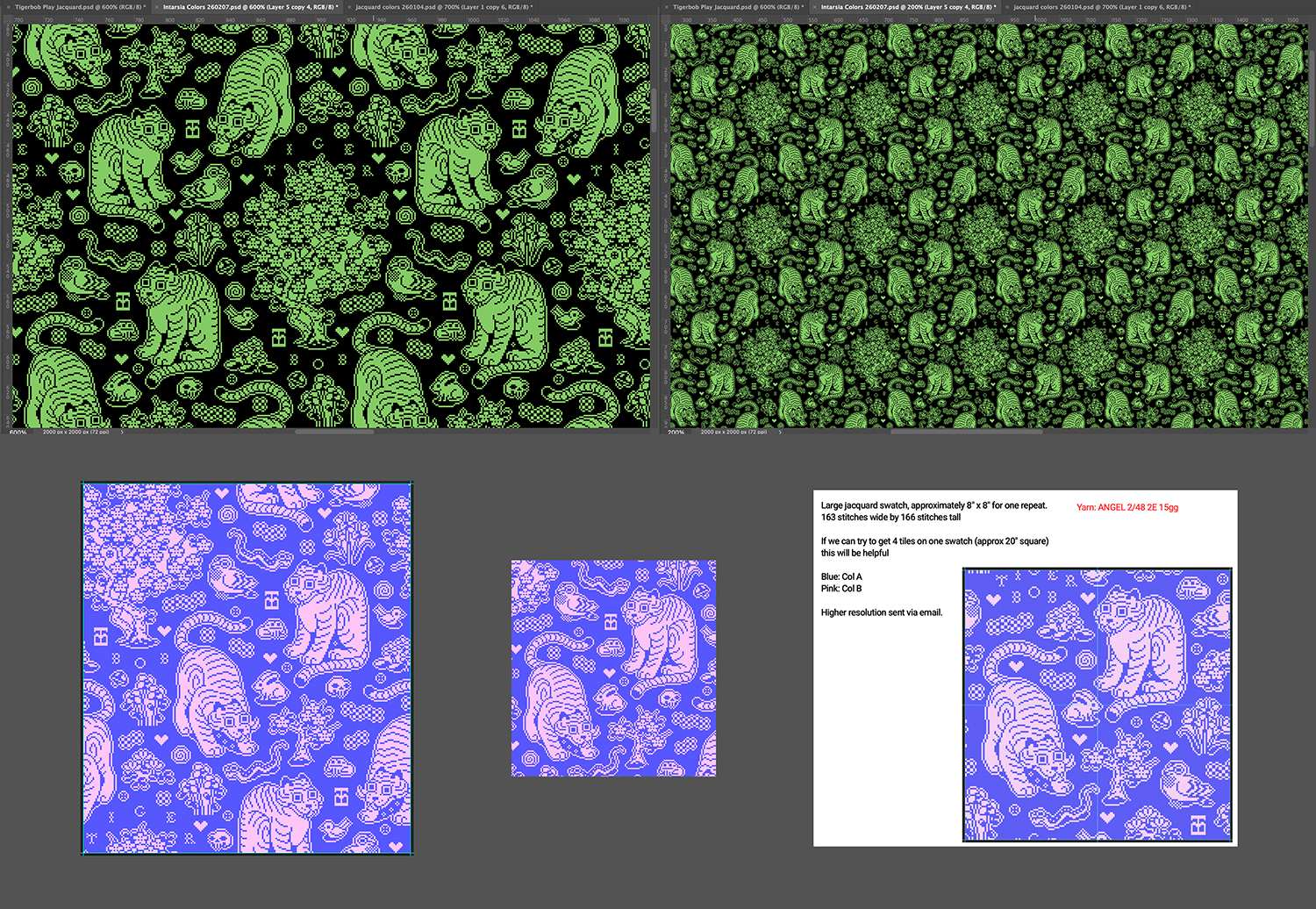
Above: The process to the final design. I decided to go big, including the two full tiger bodies and a large third element, the tree. I ended up simplifying the elements based on the scale of the stitches.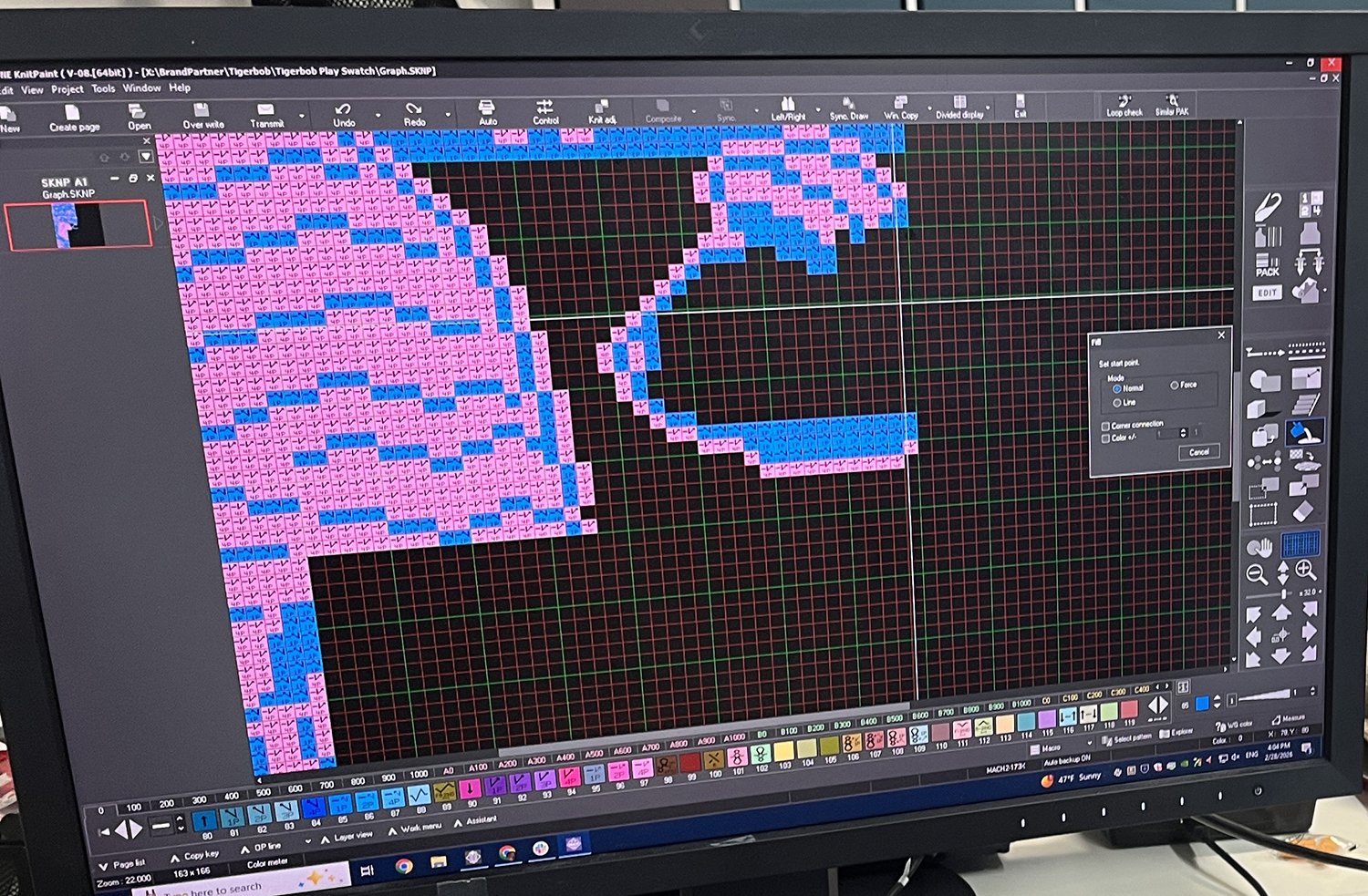
Above: Charting the design in APEX (KnitPaint). The process is synonymous with my other digital charts where I review the location of the pixel on my reference grid and place it in the appropriate position on the new grid.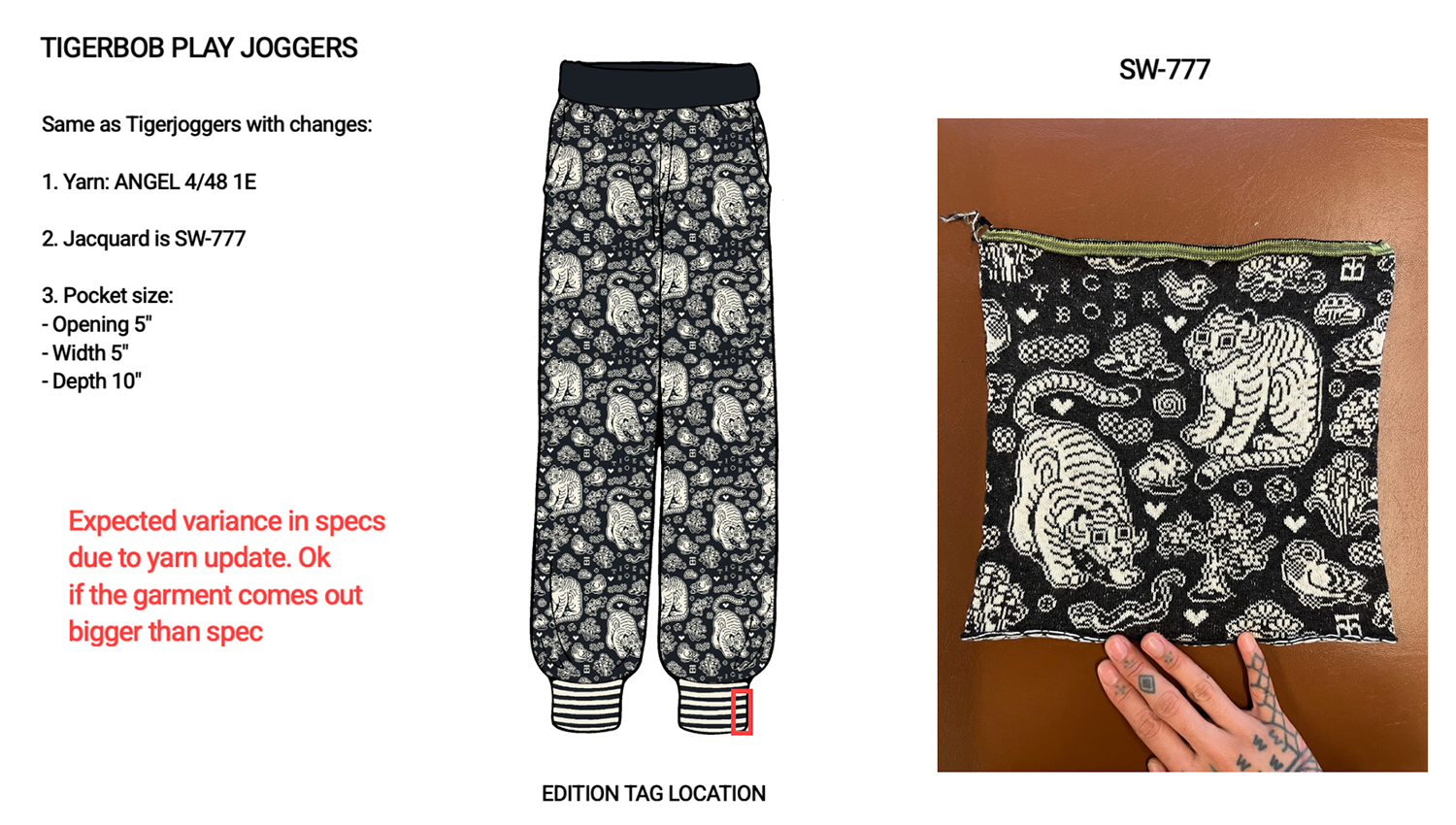
Above: The complete knitted swatch (right) and an example of how this textile will be used on a garment.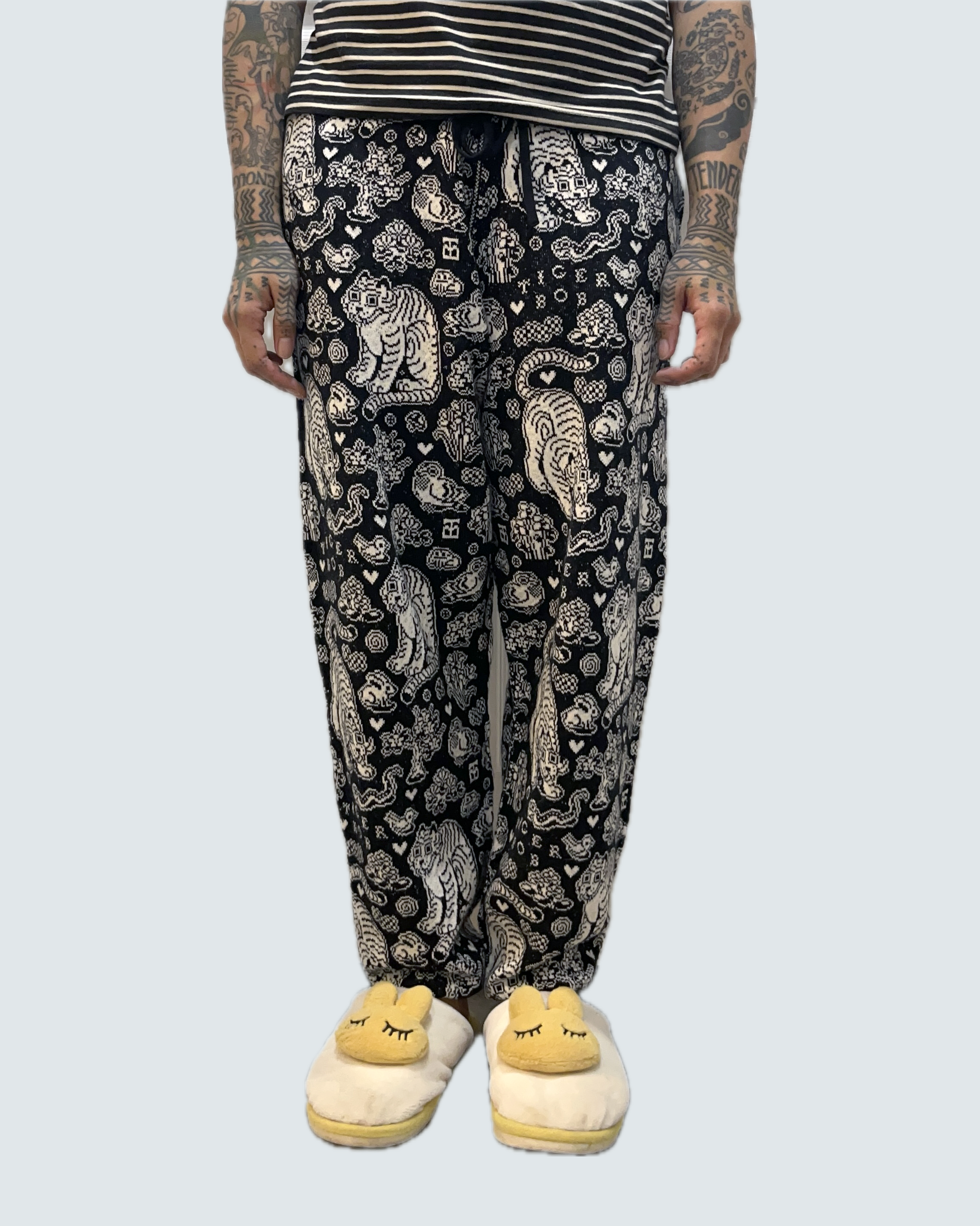
Above: A quick edited iPhone photo of the completed sample, ready for a production run!PROCESS: MACHINE KNITTING
A behind-the-scenes look at work made on my vintage knitting machines, including finishing processes completed off the loom. Learn more about my work produced on the knitting machine here.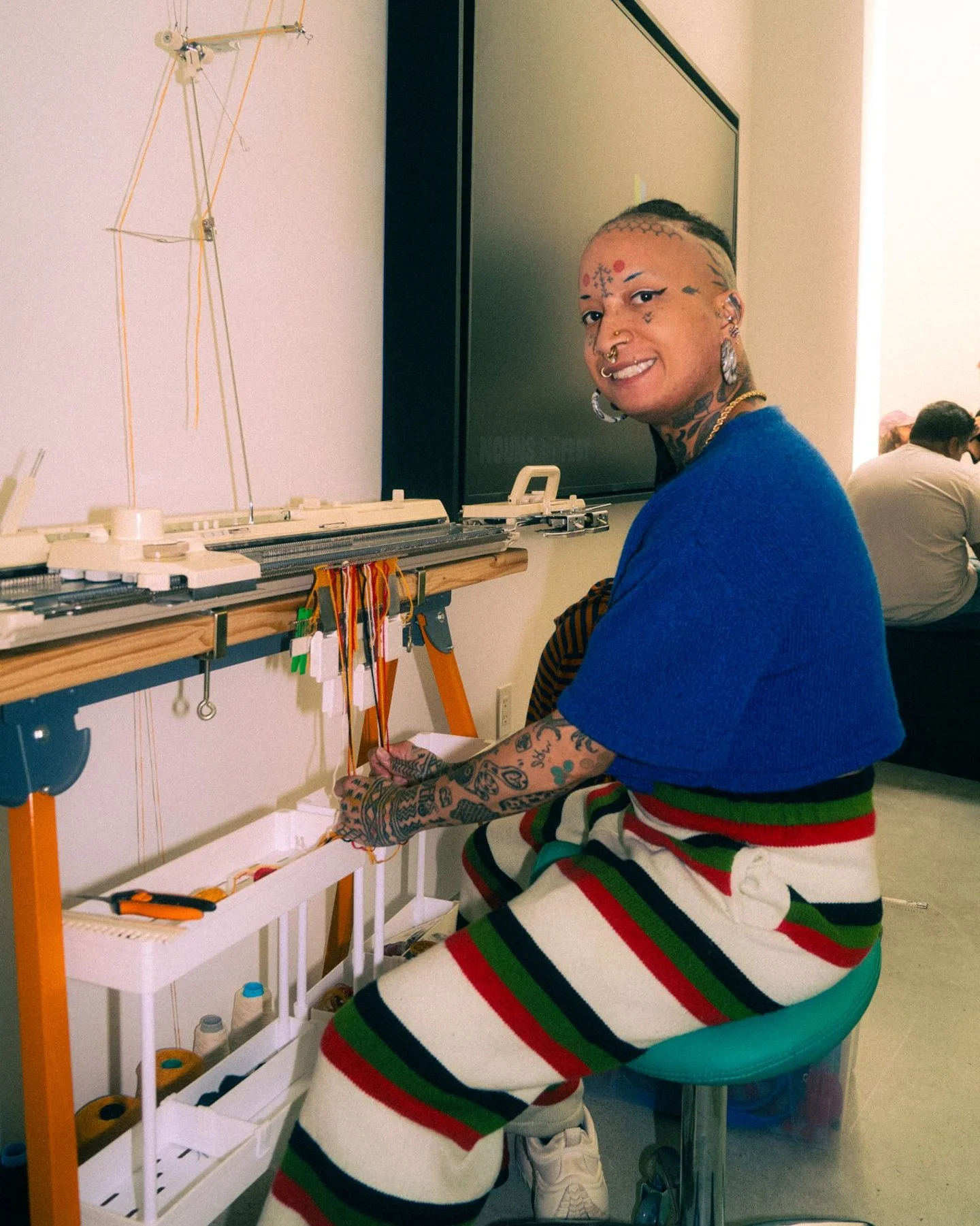
A portrait of me using the intarsia knitting technique on one of my vintage knitting machines.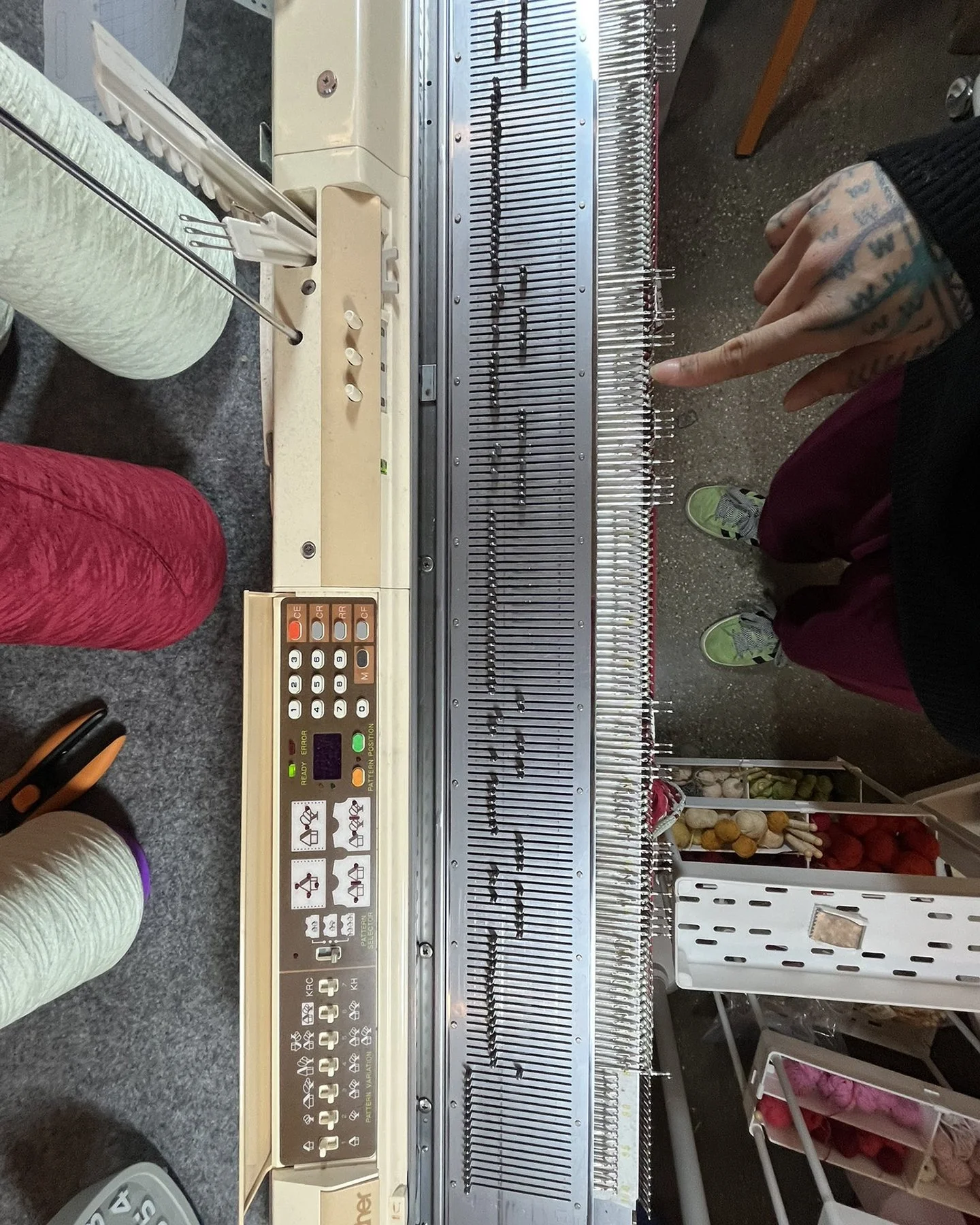
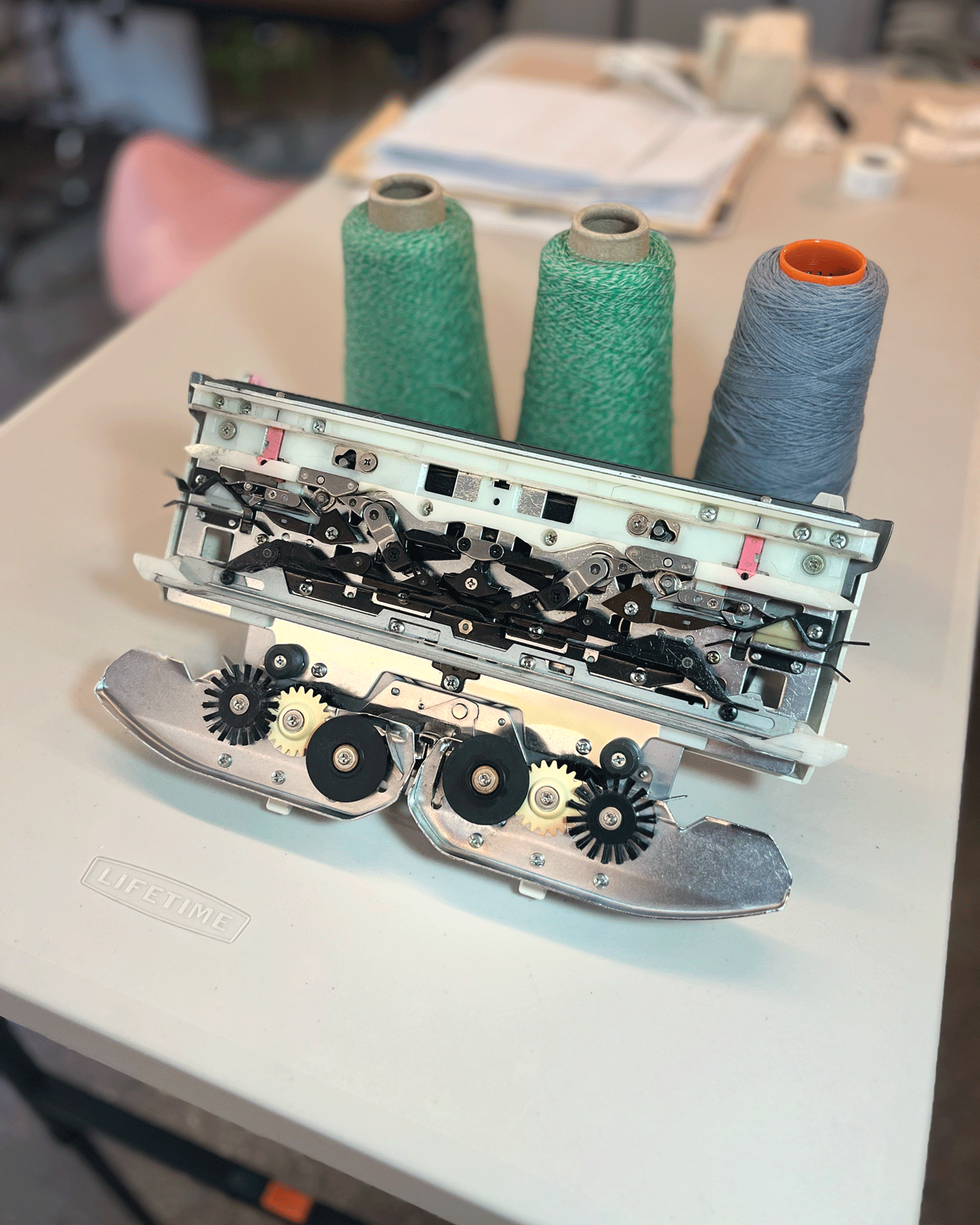
Left: A top-down view of the bed of the vintage knitting machine, showing computerized inputs controlling the bed of needles. Right: A view of the underside of the knitting carriage, which uses a complex set of levers to manipulate the positions of the needles on the knitting bed according to mechanical settings.Modern knitting machines have similar parts and functions, except the machine is completely computerized and motorized.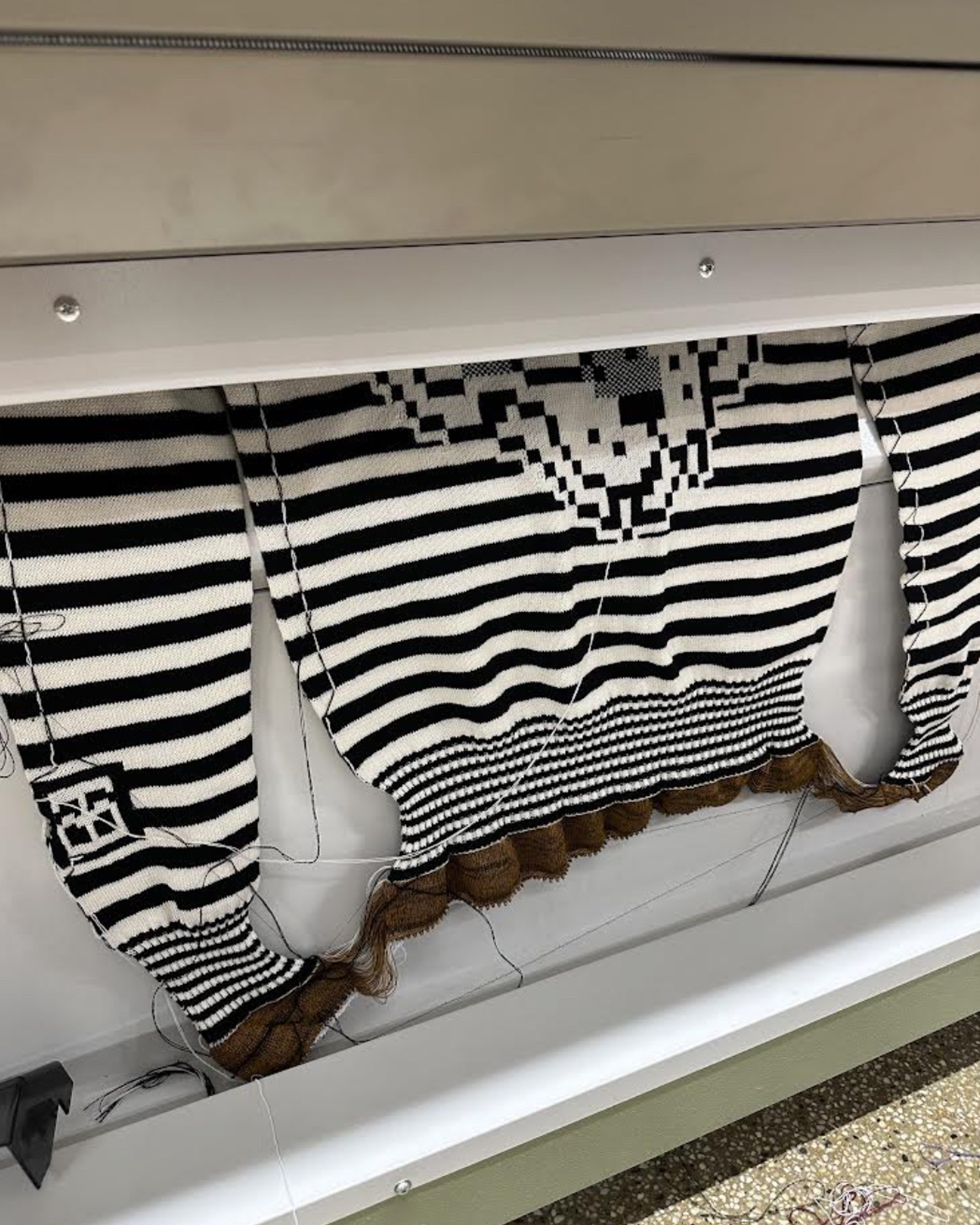
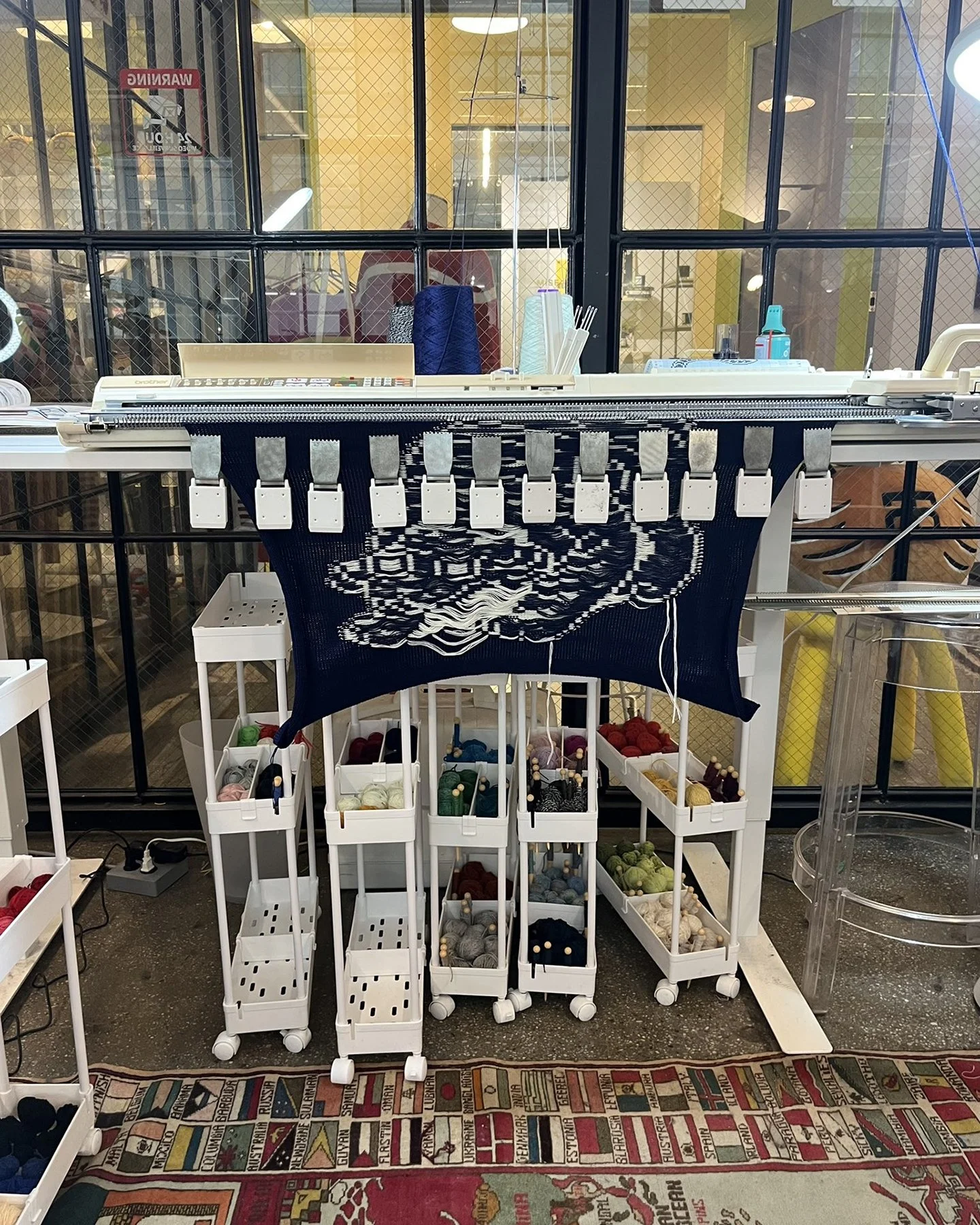
Left: In-progress view of the front of a garment knit on my vintage knitting machine with a mylar card input. Right: In contrast, in-progress view of a garment knitting on a Shima Seiki WHOLEGARMENT machine at Tailored Industry. Learn more about the made-to-order fashion line here.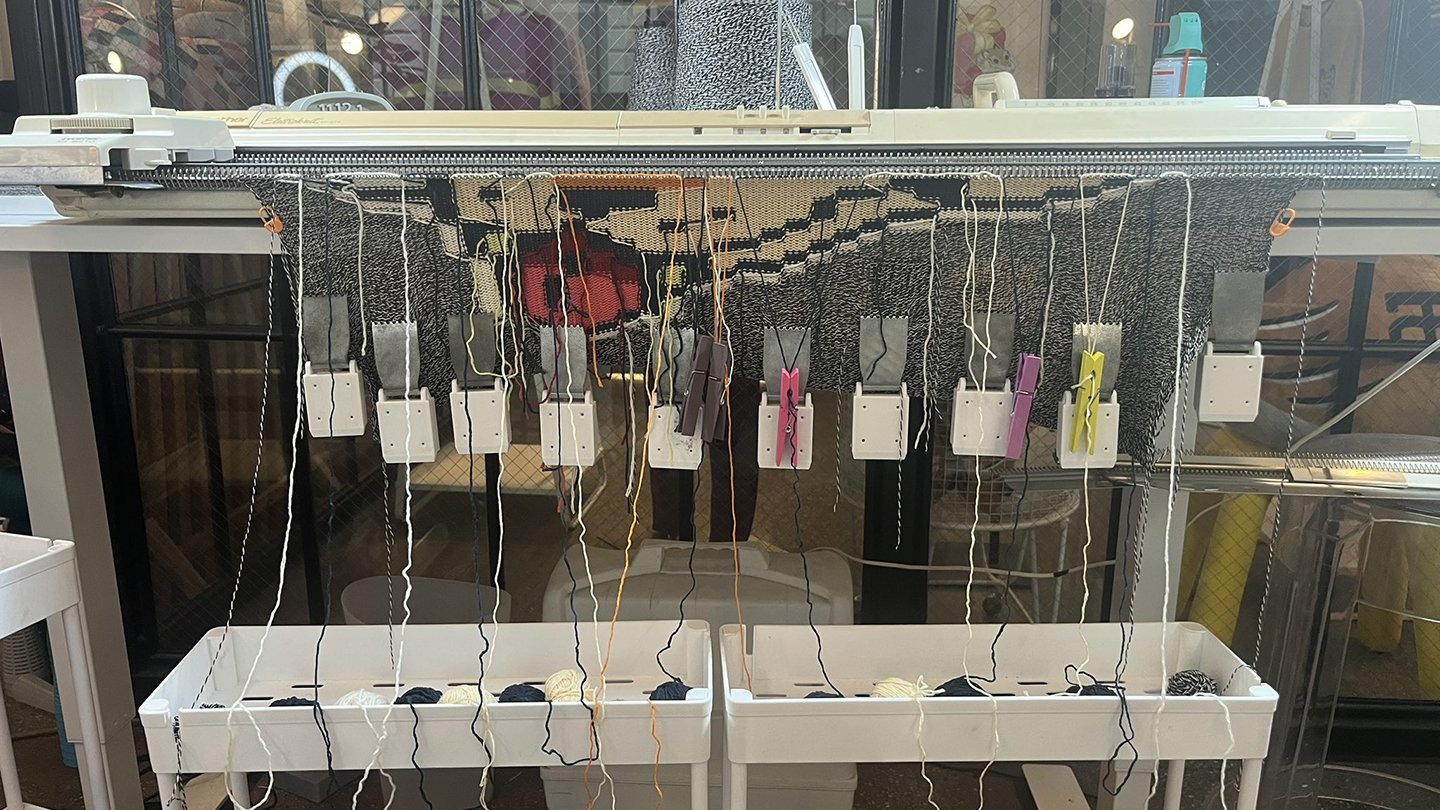
Above: An example of the knitting machine used for the intarsia knitting technique. In contrast with knitting produced by inputs directly into the machine (punched card, mylar card, or computerized), intarsia knitting is done mostly by hand by placing yarns across the needles. The carriage shown here is specially designed for this technique by knitting in the yarn for you only after yarns have been placed across needles. (This process can be done manually by hand.)Learn more about my intarsia knitting projects here.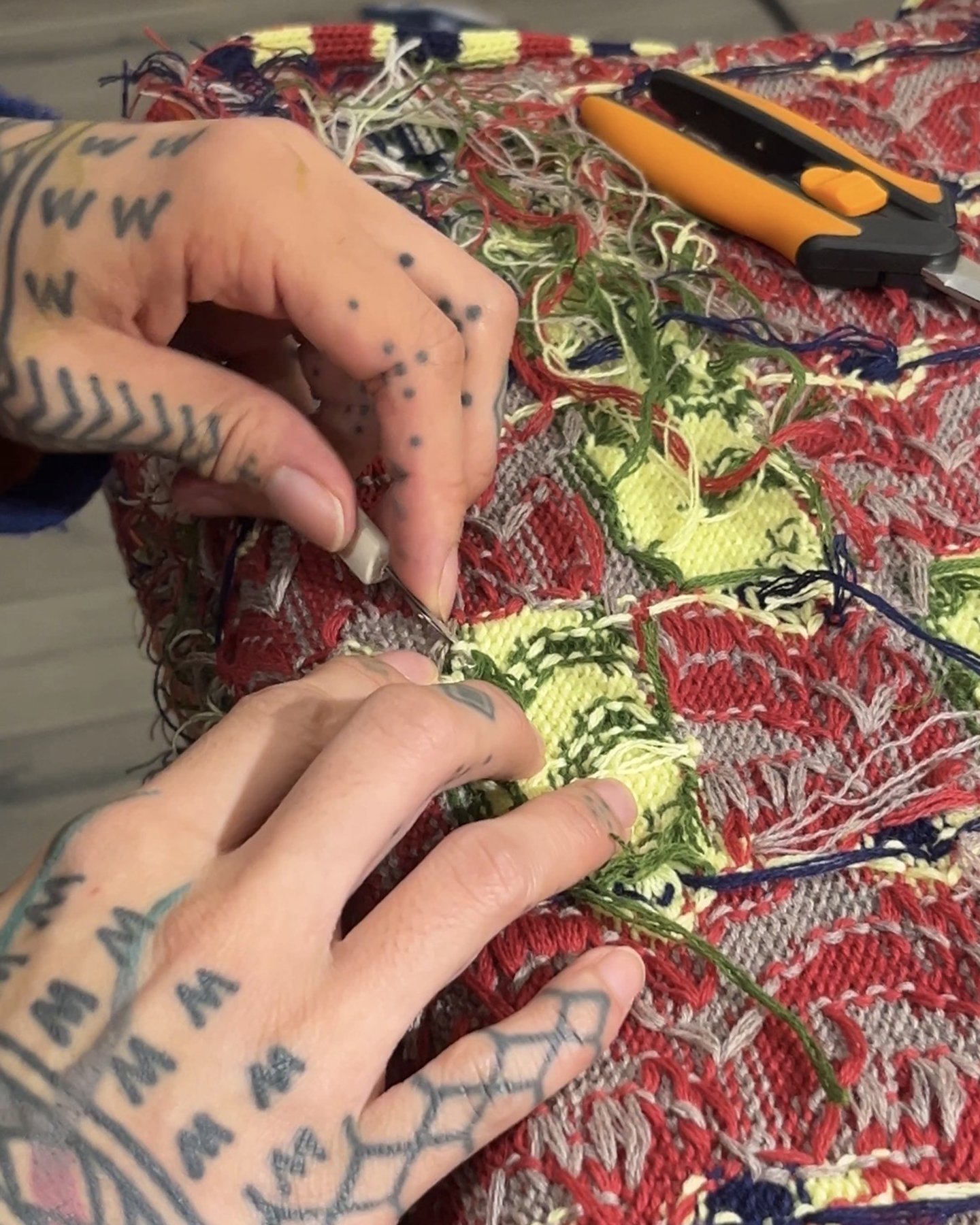
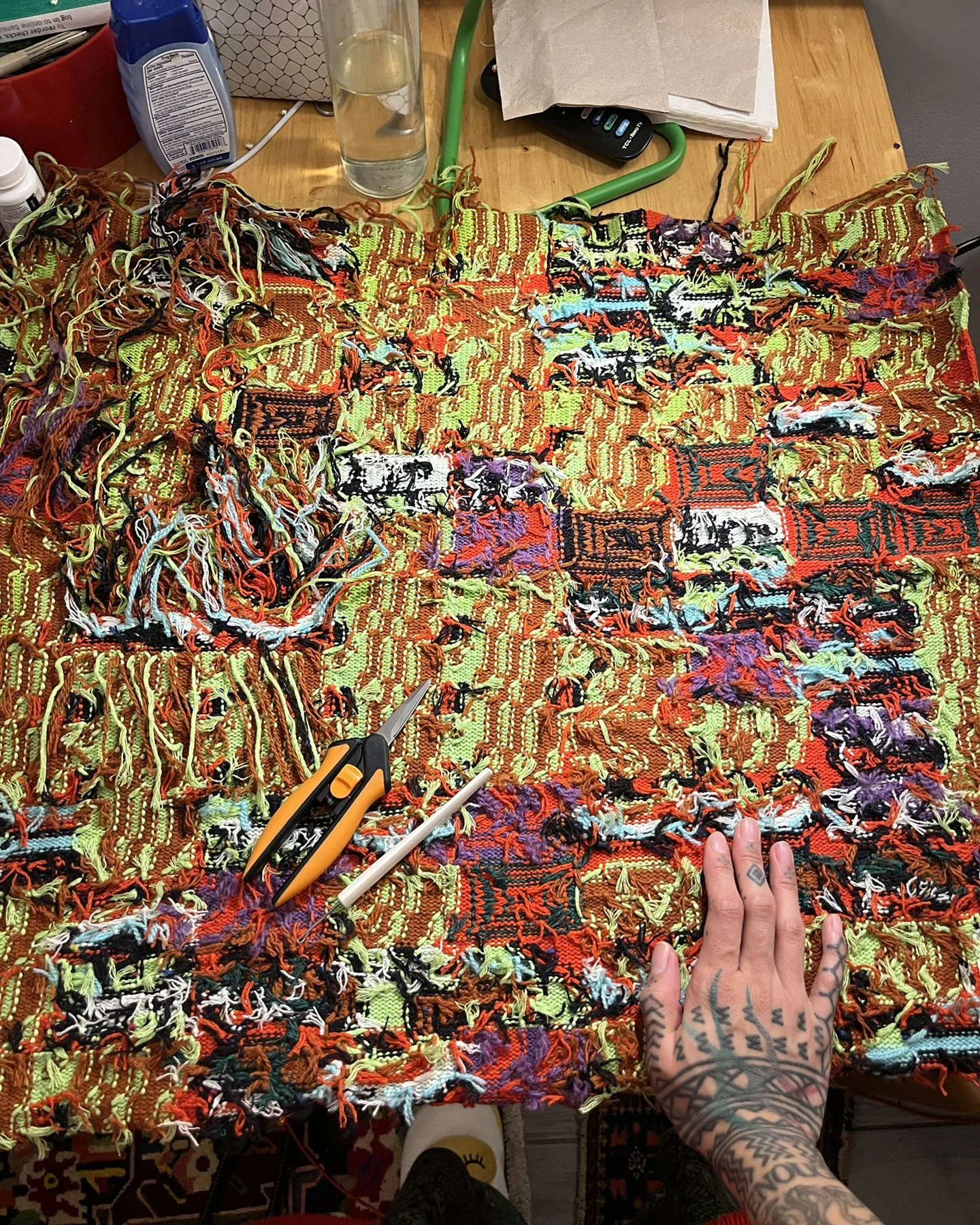
Left & right: Off-loom techniques. Once knitted, cut yarns on the back of the fabric must be woven in. The more colors are used, the more yarns must be tidied. This work is more evident for intarsia knitting.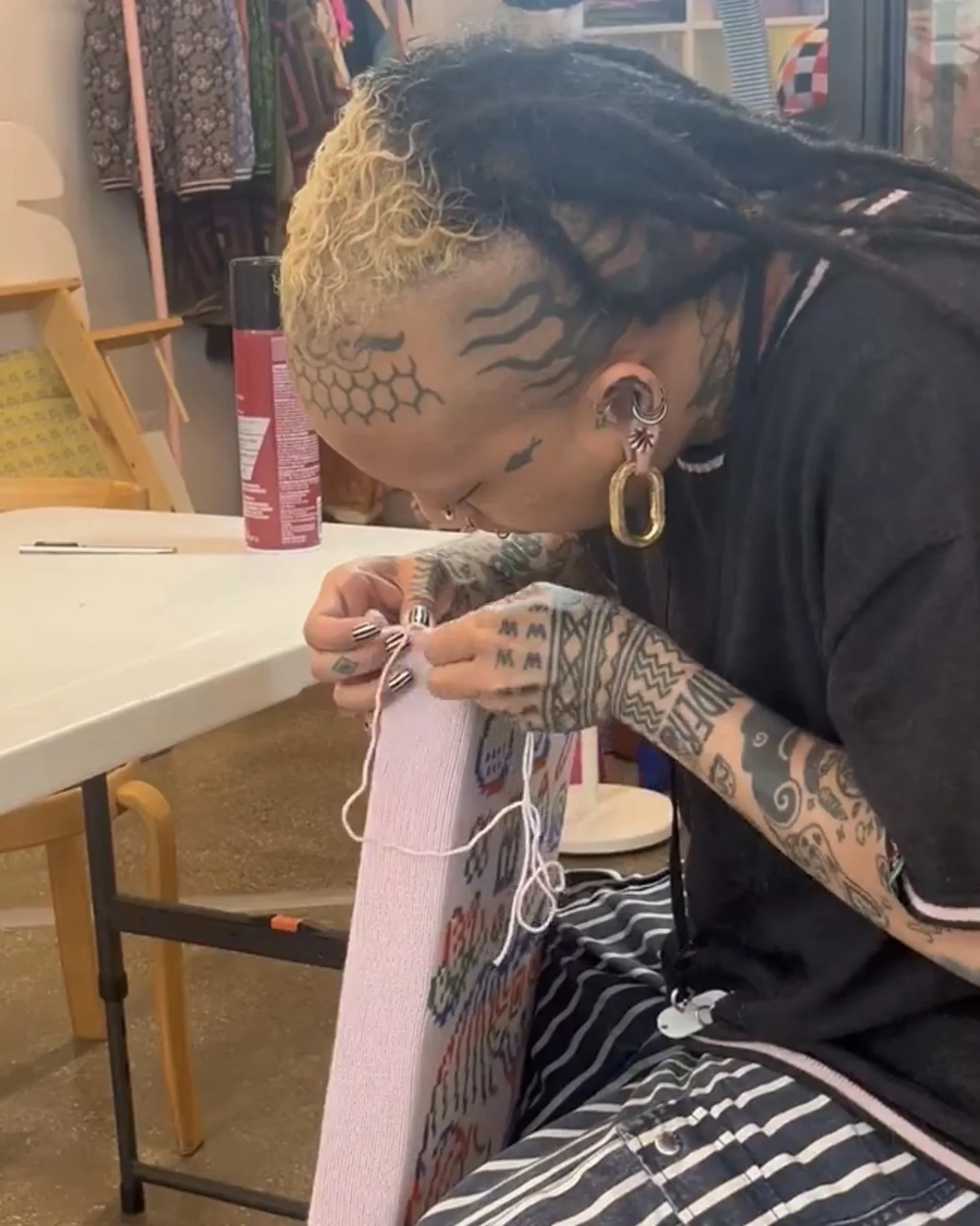
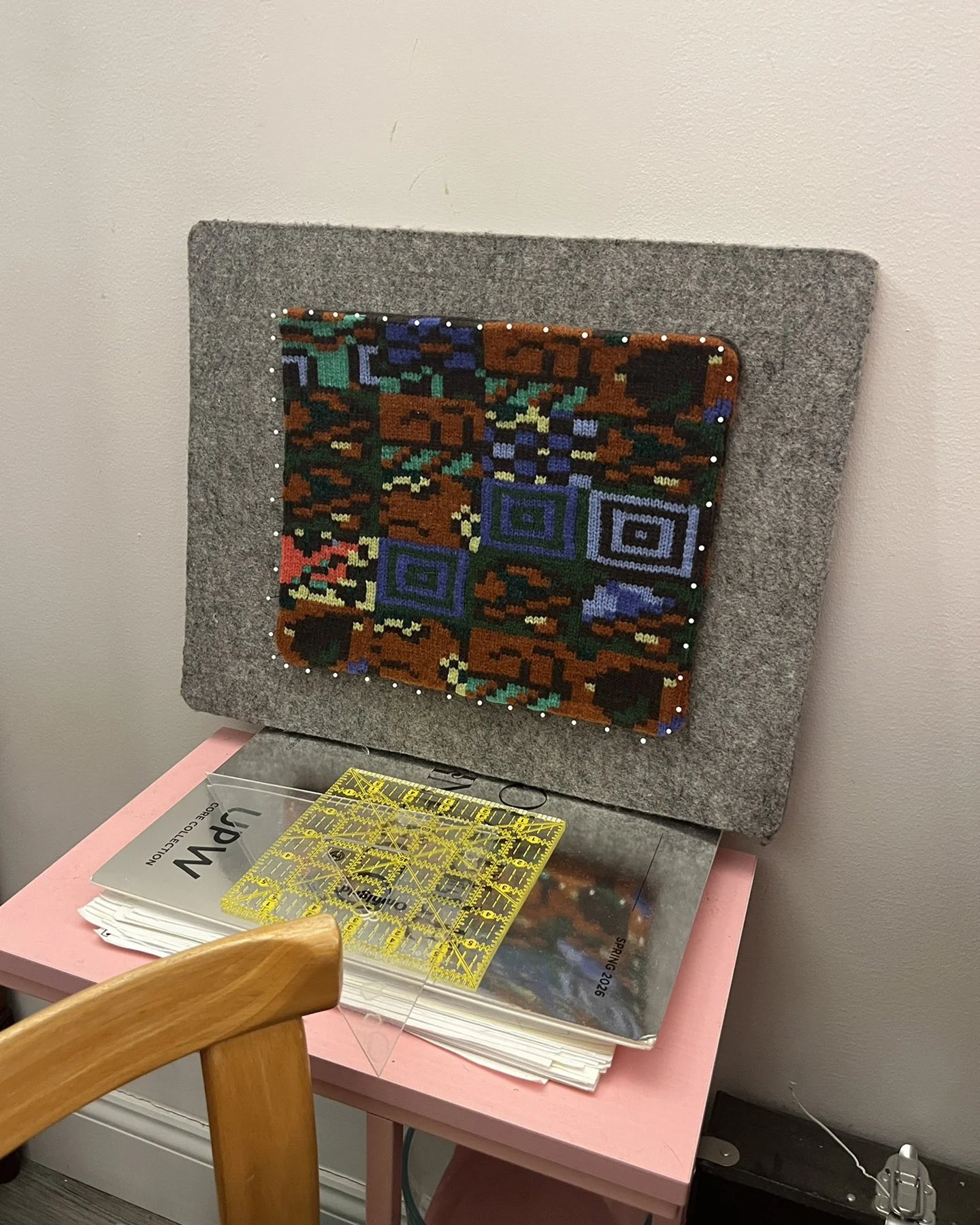
Finishing techniques. Left: Sewing. In this photo I am sewing the finished, washed fabric onto a frame. When completing a garment or object, the fabric must be sewn together before washing. Right: Once washed, the fabric is blocked, or stretched, with pins to dry. This assists in creating the final, finished shape of the fabric.